
Exterior signs might seem like simple branding tools seen on every high street, but recent research shows that 75% of customers recommend a business purely because of its signage quality. Many assume you need flashy adverts and expensive online campaigns to earn that attention. Strangely, a well-designed sign on your shopfront often does more to build trust and pull in new faces than any digital effort ever could.
Table of Contents
Table of Contents
- Why Exterior Signs Matter For Branding
- Choosing The Right Signage For Your Business
- Design Tips For Effective Shop Signs
- Regulations And Best Practices In London
Quick Summary
| Takeaway | Explanation |
|---|---|
| Invest in high-quality exterior signage | Quality signs enhance brand visibility and recognition, acting as effective, cost-efficient marketing tools. |
| Tailor signage to your business identity | Signage must reflect your brand’s unique personality, improving customer engagement and attraction. |
| Consider local regulations and aesthetics | Understand and comply with municipal signage guidelines to avoid fines and ensure effective branding. |
| Focus on legibility and visual hierarchy | Clear typography and contrasting colours are essential for effective communication and immediate viewer understanding. |
| Engage professionals for design and compliance | Utilizing experts can streamline the sign creation process while ensuring adherence to local regulations and brand standards. |
Why Exterior Signs Matter for Branding
Branding with exterior signs represents a critical visual communication strategy that transforms how businesses present themselves to potential customers. These powerful visual elements do far more than simply display a company name – they create an immediate first impression that can significantly influence customer perception and engagement.
The Visual Language of Business Identity
Exterior signs serve as a silent yet powerful ambassador for your brand. Research from the Sign Research Foundation reveals that 75% of consumers have recommended a business based solely on its signage quality, demonstrating the profound impact visual branding can have on customer attraction and retention. These signs communicate your business’s personality, professionalism, and unique market positioning before a potential customer even steps through the door.
Below is a summary table highlighting statistical data and key research findings from the article, giving you a quick reference to the impact of sign quality and relevance for business branding.
| Statistic / Research Finding | Source/Context | Impact on Business |
|---|---|---|
| 75% of customers recommend a business due to signage quality | Sign Research Foundation cited in article | Indicates strong influence of sign quality on referrals |
| Up to 50% increase in brand recognition with high-quality signage | International Sign Association study | High-quality exterior signs significantly boost brand awareness |
| 45% higher customer recognition by matching signage to brand | International Sign Association signage selection research | Customised, brand-aligned signs raise customer engagement |
The strategic design of an exterior sign goes beyond mere aesthetic appeal. It encapsulates your brand’s core values, professional standards, and distinctive character. A well-crafted sign tells a story – whether you’re a sleek modern tech startup, a traditional family-owned business, or a creative design agency. Every colour, font, and design element contributes to creating a memorable visual narrative that distinguishes your brand from competitors.
Building Trust Through Visual Communication
According to a study by the International Sign Association, businesses with high-quality exterior signage experience up to 50% increase in brand recognition compared to those with minimal or poorly designed signs. This statistic underscores the critical role of exterior signs in establishing credibility and trust.
Effective branding with exterior signs involves more than just displaying a logo. It requires a thoughtful approach that considers architectural context, local aesthetic standards, and your specific business identity. The sign must be legible from a distance, visually appealing, and aligned with your overall brand strategy. Consider how the sign integrates with your building’s architecture, reflects your brand colours, and communicates your professional ethos.
Moreover, exterior signs play a crucial psychological role in customer perception. They create a sense of permanence and reliability. A well-designed sign suggests that your business is established, professional, and committed to quality. This visual assurance can be particularly important for new businesses seeking to build initial customer confidence.
Strategic Signage Investment
Investing in high-quality exterior signage is not an expense but a strategic marketing tool. It provides continuous brand exposure without recurring advertising costs. Unlike digital or print marketing that requires repeated investment, a well-designed exterior sign works tirelessly 24 hours a day, seven days a week, attracting potential customers and reinforcing your brand identity.
The versatility of modern signage technologies means businesses can choose from a wide range of materials, lighting options, and design approaches. From classic hand-painted signs that evoke traditional craftsmanship to cutting-edge illuminated displays that capture attention in low-light conditions, the options for expressing your brand are virtually limitless.
Learn more about our custom exterior sign solutions that can transform your business visibility and brand perception. Our team specialises in creating bespoke signage that not only meets your functional requirements but also tells your unique brand story with visual elegance and professional precision.
Choosing the Right Signage for Your Business
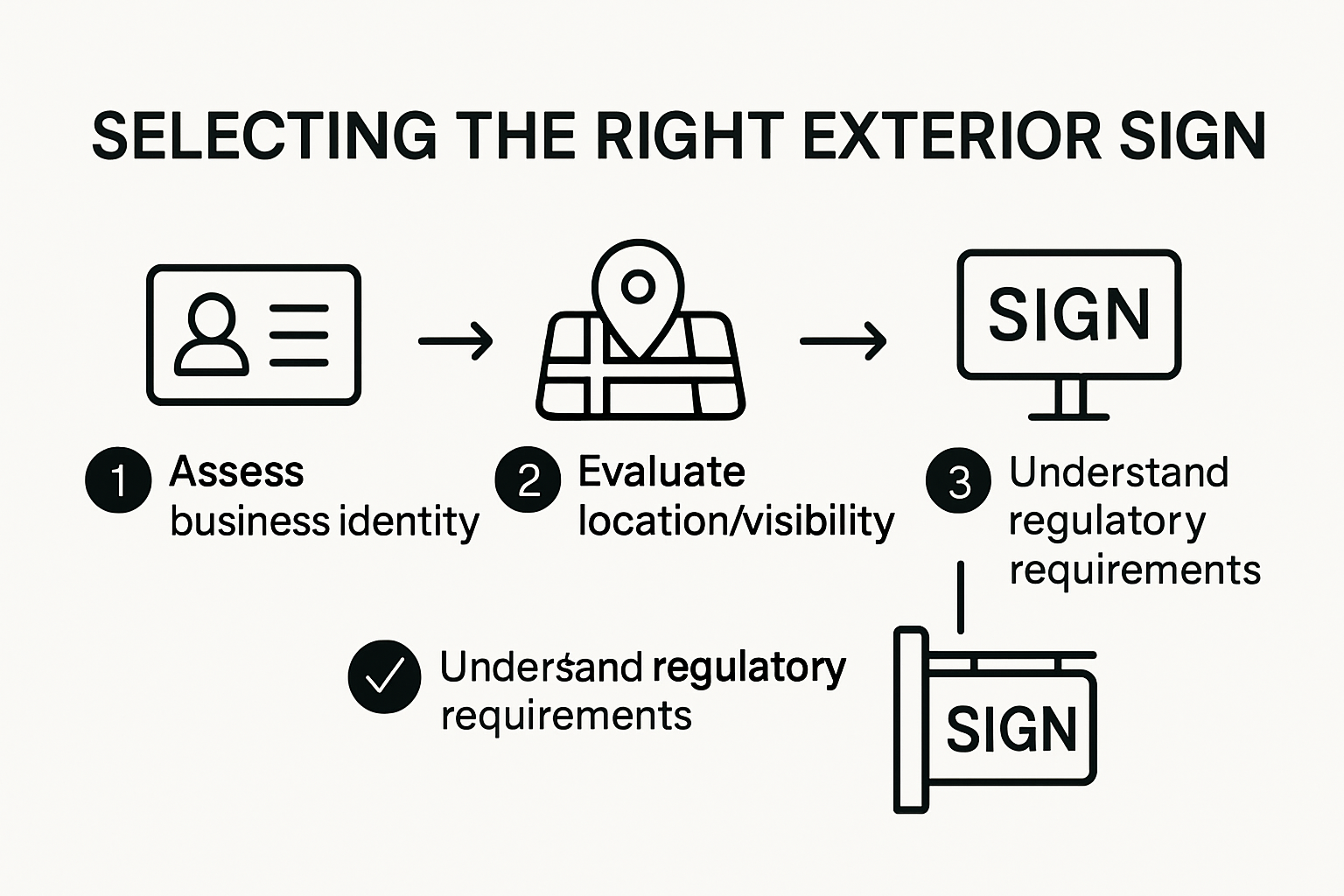
Selecting the ideal exterior sign requires strategic consideration of multiple factors that go beyond simple aesthetic preferences. The right signage acts as a critical communication tool that represents your business’s unique identity, attracts potential customers, and differentiates you from competitors in an increasingly crowded marketplace.
Understanding Your Business Signage Needs
Research from the International Sign Association indicates that businesses who carefully match their signage to their brand personality experience 45% higher customer recognition and engagement. This means understanding your specific business requirements is the foundational step in choosing effective exterior signs.
The selection process involves evaluating several key dimensions. First, consider your business type and industry sector. A tech startup might opt for sleek, minimalist designs with modern materials, while a traditional artisan business might prefer hand-crafted, classic signage that communicates heritage and craftsmanship. Your sign must communicate your professional ethos visually before a customer reads a single word.
Location plays a critical role in signage selection. Urban environments with high foot traffic require different design approaches compared to suburban or industrial settings. Visibility, viewing angles, and local architectural context become paramount considerations. Urban design experts recommend assessing factors like building height, surrounding structures, typical pedestrian or vehicle traffic patterns, and ambient lighting conditions.
Material and Design Considerations
Modern signage offers an incredible range of material options, each with unique characteristics. Aluminium provides durability and a contemporary aesthetic, perfect for businesses seeking a professional, low-maintenance solution. Acrylic signs offer vibrant colour possibilities and can be illuminated for enhanced nighttime visibility. Wooden signs communicate warmth and traditional craftsmanship, ideal for businesses wanting to project an artisanal or boutique image.
To help you compare material options for exterior signage, the table below summarises the main characteristics, advantages, and recommended uses for each type mentioned in the article.
| Material | Key Features | Advantages | Recommended Use |
|---|---|---|---|
| Aluminium | Durable, modern look | Low maintenance, weather resistant | Contemporary/professional businesses |
| Acrylic | Vibrant, can be lit | Colourful, suitable for illumination | Businesses needing high visibility, especially at night |
| Wood | Warmth, traditional | Artisanal feel, unique appearance | Boutiques, businesses wanting to convey heritage |
Design complexity must balance aesthetic appeal with practical legibility. Signs must be readable from a distance, with clear typography and sufficient contrast. Professional designers recommend using no more than two complementary fonts and ensuring letter height is proportional to viewing distance. A sign viewed from a busy street requires different design considerations compared to one in a pedestrian-friendly shopping district.
Technical and Regulatory Considerations
Beyond aesthetic choices, businesses must navigate local signage regulations. Many municipalities have specific guidelines regarding sign size, placement, illumination, and materials. Failing to comply can result in costly fines or mandatory sign modifications. Learn more about our comprehensive sign selection process that ensures your signage meets all local regulatory requirements while maintaining your brand’s visual integrity.
Technical considerations extend to durability and maintenance. High-quality signs represent a long-term investment. Consider factors like weather resistance, UV protection, and ease of cleaning. Illuminated signs require additional electrical infrastructure and ongoing maintenance, which should be factored into your budgetary planning.
Ultimately, choosing the right signage is about creating a visual communication tool that represents your business’s unique personality. It’s an investment in your brand’s first impression, customer perception, and long-term market positioning. By carefully considering design, materials, location, and regulatory requirements, you can create an exterior sign that not only attracts attention but tells your business’s distinctive story.
Design Tips for Effective Shop Signs
Creating an effective shop sign requires a strategic blend of artistic creativity and scientific precision. The visual communication of your brand through signage demands careful consideration of multiple design elements that work together to capture attention, convey information, and create a lasting impression.
Visual Hierarchy and Readability
Research from the International Sign Association reveals that successful signs follow a clear visual hierarchy that guides the viewer’s eye and communicates essential information instantly. This means prioritizing key elements like your business name, primary service, or most compelling brand message.
Typography plays a crucial role in sign design. Professional designers recommend using no more than two complementary fonts to maintain clarity. The primary font should be bold and easily readable from a distance, while a secondary font can add personality or provide supplementary information. Size matters significantly – letters should be proportional to the sign’s dimensions and viewing distance. A general rule of thumb is that for every 10 feet of viewing distance, you need one inch of letter height to ensure legibility.
Colour selection is equally critical. High-contrast colour combinations enhance readability and visual impact. According to colour psychology experts, different colours evoke specific emotional responses. Blue can communicate professionalism and trust, while red suggests excitement and urgency. Choose colours that not only align with your brand identity but also stand out in your specific environmental context.
Technical Considerations and Materiality
Material selection goes beyond aesthetic preferences. Each material offers unique characteristics that can enhance or detract from your sign’s effectiveness. Aluminium provides durability and a modern look, ideal for businesses seeking a sleek, professional appearance. Acrylic offers vibrant colour possibilities and can be backlit for enhanced nighttime visibility. Wooden signs communicate warmth and tradition, perfect for businesses wanting to project a more artisanal image.
Illumination transforms sign visibility, especially in low-light conditions. LED technologies offer energy-efficient options that can dramatically increase your sign’s impact after dark. Consider different illumination techniques – edge lighting, halo effects, or direct front lighting – each creating a distinct visual atmosphere that can reflect your brand’s personality.
Contextual Design and Regulatory Compliance
Designing an effective shop sign requires understanding your specific environmental context. Urban settings with high pedestrian traffic demand different design approaches compared to suburban or industrial locations. Urban design experts recommend conducting a thorough site analysis that considers factors like building architecture, surrounding structures, typical viewing angles, and ambient lighting conditions.
Regulatory compliance is non-negotiable. Local municipalities often have specific guidelines regarding sign dimensions, placement, illumination, and materials. Failing to adhere to these regulations can result in costly fines or mandatory modifications. Check out our comprehensive guide to navigating sign design regulations to ensure your sign meets all local requirements while maintaining your brand’s visual integrity.
Ultimately, an effective shop sign is more than a visual marker – it’s a strategic communication tool that represents your brand’s unique identity. By carefully balancing design principles, technical considerations, and contextual understanding, you can create a sign that not only attracts attention but tells your business’s distinctive story with clarity and impact.
Regulations and Best Practices in London
Navigating the complex landscape of signage regulations in London requires a nuanced understanding of local planning guidelines, aesthetic considerations, and legal requirements. Businesses must carefully balance their branding objectives with the city’s stringent urban design standards to create effective and compliant exterior signs.
Planning Permission and Legal Framework
The UK’s Department for Levelling Up, Housing & Communities provides comprehensive guidelines that govern commercial signage in urban environments. In London, most exterior signs fall under specific planning permission categories that dictate size, placement, and visual characteristics.
Under the Town and Country Planning Act, businesses must typically obtain Advertisement Consent for exterior signs that are deemed to significantly alter a building’s appearance. This process involves careful assessment by local planning authorities who evaluate factors such as visual impact, historical context, and potential obstruction of public spaces. Certain conservation areas and listed buildings have additional restrictions that can dramatically limit signage options.
The classification of signs varies based on their size and location. Smaller signs might qualify for permitted development rights, which allow installation without formal planning permission. However, signs exceeding specific dimensions or located in sensitive urban zones require detailed applications and potentially extensive consultations with local planning departments.
Design and Aesthetic Considerations
London’s architectural diversity demands a sophisticated approach to signage design. Different borough councils have unique aesthetic guidelines that reflect local architectural heritage. For instance, signage in historical districts like the City of London must carefully complement existing architectural styles, using materials and design approaches that respect the area’s historical character.
Illuminated signs present additional regulatory challenges. Detailed regulations govern brightness, positioning, and potential light pollution. Businesses must ensure that illuminated signs do not create glare for pedestrians or drivers, and comply with specific luminance standards that vary depending on the sign’s location and surrounding environment.
Practical Compliance Strategies
Successful navigation of London’s signage regulations requires a proactive and informed approach. Businesses should consider engaging local planning consultants or signage specialists who understand the nuanced requirements of different London boroughs. Preliminary consultations can help identify potential challenges and develop signs that meet both regulatory standards and branding objectives.
Our comprehensive signage compliance guide offers businesses a detailed roadmap for understanding and implementing compliant signage solutions. Key recommendations include conducting thorough site assessments, maintaining detailed documentation, and developing designs that harmonise with local architectural contexts.
It is crucial to recognise that regulations are not merely bureaucratic obstacles but mechanisms designed to maintain London’s unique urban aesthetic and ensure public safety. By approaching signage design with respect for these guidelines, businesses can create signs that not only communicate their brand effectively but also contribute positively to the city’s visual landscape.
Understanding and implementing these regulations requires patience, expertise, and a commitment to quality design. Businesses that invest time in comprehending local requirements will ultimately create more impactful, legally compliant signs that enhance their brand’s visibility and reputation in one of the world’s most dynamic urban environments.

Frequently Asked Questions
What are the benefits of high-quality exterior signage?
High-quality exterior signage enhances brand visibility, improves recognisability, and builds customer trust. Research shows that quality signs can significantly influence customer recommendations and engagement.
How can I choose the right material for my business’s exterior sign?
Choosing the right material involves considering durability, design aesthetic, and the message you want to convey. Common options include aluminium for a modern look, acrylic for vibrancy, and wood for warmth and traditional appeal.
What are the essential design tips for effective shop signs?
Key design tips for effective shop signs include maintaining clear typography, ensuring high contrast between text and background, and establishing a clear visual hierarchy. Additionally, using no more than two complementary fonts can improve readability.
Why is it important to comply with local signage regulations?
Complying with local signage regulations helps avoid fines and ensures your signage is legally acceptable. Regulations often focus on sign size, materials, and illumination, which can impact both visibility and the aesthetic of your brand in the local community.
Make Your Business Stand Out With Custom Exterior Signs
You have read how a single exterior sign can transform brand visibility and build trust. The article highlighted key challenges such as blending effective design, regulatory compliance, and real business impact. If you are facing uncertainty over how to make your shop instantly recognisable or are worried about losing foot traffic to uninspiring signage, you are not alone. Many business owners struggle with choosing materials, mastering legibility, and ensuring every sign aligns with their unique identity.
Now is the time to strengthen your brand story. Our team at PromoSigns specialises in designing, producing, and installing bespoke signage that reflects your business personality while meeting local regulations. Whether you need custom shop signs or vibrant illuminated displays, we are ready to help you boost visibility and bring new customers through your doors. Visit our main site today and let us show you real results with signage that works for your business.
Recommended
- Exterior Signs London | Trusted Sign Experts – Promo Signs
- Top Benefits of Custom Signs for London Businesses in 2025 – PromoSigns.co.uk
- How to Choose Signage: Best Tips for London Businesses 2025 – PromoSigns.co.uk
- How to Choose the Right Commercial Sign for Your Business – PromoSigns.co.uk
