

London businesses in 2025 face a new era of signage, where brand identity and strict regulations matter more than ever. Here is something you might not expect. Research shows outdated signage can actually harm brand perception and hold back business growth. But the real surprise lies in the design process itself. Most companies overlook just how much the right materials, regulatory checks and flawless installation can shape customer impressions before anyone walks through your door.
Table of Contents
Table of Contents
- Understanding Your Business Signage Needs
- Steps in the Custom Sign Design Process
- Choosing Materials and Finishes for Signs
- Tips for Working With London Sign Makers
Quick Summary
| Takeaway | Explanation |
|---|---|
| Define Your Brand Visual Identity | Understand your unique business traits and ensure your signage accurately represents your brand’s personality to attract potential customers and communicate your core message effectively. |
| Consider Regulatory Requirements | Ensure compliance with local regulations focusing on accessibility, environmental sustainability, and technological integration to create signage that is both effective and conforming. |
| Strategic Signage Planning is Crucial | Align your signage strategy with your broader business goals by considering location, target audience, and potential for future scalability to enhance brand perception and business growth. |
| Collaborate Effectively with Sign Makers | Prepare a comprehensive design brief that includes brand identity and location context, while maintaining open communication and flexibility throughout the design and refinement process. |
| Select Appropriate Materials and Finishes | Choose materials that reflect your brand aesthetic and ensure durability while also considering visibility, maintenance, and cost-effectiveness to achieve long-lasting signage solutions. |
Understanding Your Business Signage Needs
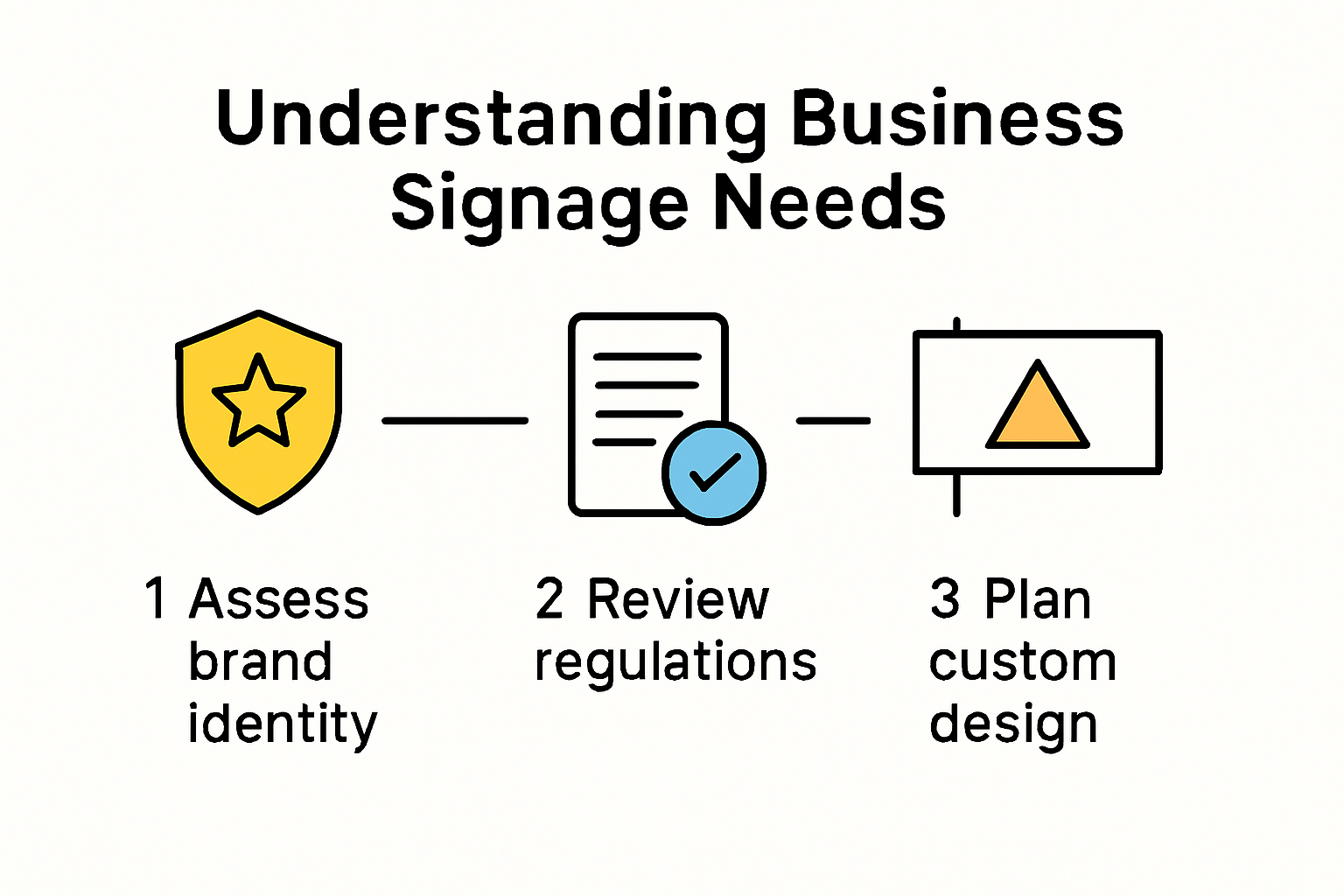
Creating an effective custom sign design process begins with a comprehensive understanding of your unique business needs. In 2025, signage is no longer just about displaying your business name. It’s a strategic communication tool that reflects your brand identity, attracts potential customers, and communicates your business’s core message.
Defining Your Brand Visual Identity
Every business has a unique story, and your signage should be the visual narrator of that narrative. The custom sign design process starts with a deep dive into your brand’s personality. What makes your business different? Are you a cutting-edge tech startup, a traditional family-run establishment, or a modern creative agency? Your signage must authentically represent these characteristics.
According to business signage strategies for 2025, businesses must prioritize clarity and simplicity in their visual messaging. This means developing a sign that communicates your value proposition instantly. A well-designed sign should enable potential customers to understand who you are and what you offer within seconds of viewing it.
Navigating Regulatory Requirements
Business signage in 2025 is not just about aesthetics but also compliance. New signage regulations emphasize critical considerations such as environmental sustainability, accessibility, and technological integration. These evolving standards mean businesses must carefully assess their signage needs beyond mere visual appeal.
For instance, businesses must now consider:
- Accessibility Standards: Ensuring signs are readable and comprehensible for all individuals, including those with visual impairments.
- Environmental Impact: Using sustainable materials and energy-efficient lighting solutions.
- Technological Integration: Incorporating digital elements that enhance user interaction and provide additional information.
Strategic Signage Planning
Beyond aesthetics and regulations, your signage strategy must align with broader business goals. Research indicates that inconsistent or outdated signage can significantly harm brand perception and potentially impede business growth.
To develop a robust signage strategy, consider the following approaches:
- Location Analysis: Understand your physical environment and how your sign will be viewed from different angles and distances.
- Target Audience Consideration: Design signage that resonates with your specific customer demographic.
- Future Scalability: Create a sign design that can adapt as your business evolves.
For more detailed guidance on selecting the perfect commercial sign, check out our comprehensive guide on choosing the right sign that can transform your business visibility and brand communication.
Steps in the Custom Sign Design Process
Navigating the custom sign design process requires a strategic approach that transforms your business vision into a compelling visual communication tool. In 2025, this process is more nuanced and technologically advanced than ever before, demanding precision and creativity at every stage.
Initial Consultation and Assessment
The journey begins with a comprehensive consultation that goes beyond surface-level discussions. Detailed sign fabrication processes highlight the importance of understanding your business’s unique requirements. During this initial phase, designers will conduct an in-depth exploration of your brand’s personality, target audience, and specific communication objectives.
Key elements explored during the initial consultation include:
- Brand Identity Evaluation: Analyzing your current branding materials and understanding your visual language.
- Location Analysis: Examining the physical environment where the sign will be installed, considering factors like lighting, visibility, and architectural context.
- Functional Requirements: Determining the primary purpose of the sign and its expected performance metrics.
Design Development and Prototyping
Commercial signage strategies for 2025 emphasize the critical nature of the design development stage. This phase transforms initial concepts into tangible visual representations. Professional designers utilize advanced digital tools to create multiple iterations, ensuring your sign meets both aesthetic and functional requirements.
The design development process typically involves:
- Digital Mockups: Creating detailed 3D renderings that provide a realistic preview of the final sign.
- Material Selection: Recommending appropriate materials that balance durability, aesthetic appeal, and environmental considerations.
- Iterative Refinement: Developing multiple design concepts and collaborating closely with you to perfect the final vision.

Final Production and Installation
The culmination of the custom sign design process involves translating approved designs into a physical product. Commercial building sign experts emphasize the importance of precision during production and installation.
This final stage encompasses:
- Precision Manufacturing: Utilizing state-of-the-art fabrication techniques to ensure accuracy and quality.
- Technical Preparation: Developing comprehensive installation plans that account for structural requirements and local regulations.
- Professional Installation: Executing the sign placement with expert precision to maximize visibility and impact.
For those interested in understanding the intricacies of professional sign installation, our comprehensive guide provides expert insights into ensuring a flawless implementation of your custom signage solution.
Choosing Materials and Finishes for Signs
Selecting the right materials and finishes for your business signage is a critical decision that impacts durability, aesthetic appeal, and brand perception. In 2025, businesses have an unprecedented range of options that blend technological innovation with design flexibility.
Material Selection Strategies
Outdoor signage trends reveal that material choice is no longer just about functionality but about creating a comprehensive brand experience. Aluminum remains a top contender, offering exceptional durability and versatility. Its resistance to rust, corrosion, and fading makes it an ideal choice for businesses seeking long-lasting signage solutions.
Key considerations for material selection include:
- Environmental Resilience: Choosing materials that withstand local weather conditions
- Brand Aesthetic: Matching material properties with your brand’s visual identity
- Long-Term Performance: Evaluating maintenance requirements and longevity
High-Density Urethane (HDU) has emerged as another innovative material, prized for its lightweight composition and ability to achieve diverse finishes. Commercial sign experts recommend considering HDU for businesses seeking intricate designs with superior weather resistance.
Exploring Finish Options
Signage material trends highlight the importance of finishes in creating a distinctive brand presence. Modern businesses can choose from an array of finishes that transform basic materials into extraordinary communication tools.
Popular finish techniques include:
- Brushed Metal: Creating a sophisticated, contemporary look
- Powder Coating: Offering durability and vibrant color options
- Metallic Treatments: Incorporating bronze, stainless steel, and copper for unique visual effects
Performance and Aesthetic Considerations
Beyond visual appeal, the right material and finish combination should address practical business needs. Factors such as visibility, maintenance requirements, and cost-effectiveness play crucial roles in the selection process.
Consider these performance metrics:
- Visibility: Ensuring the sign remains legible under various lighting conditions
- Durability: Selecting materials that maintain their appearance over time
- Cost-Effectiveness: Balancing initial investment with long-term maintenance expenses
For businesses seeking comprehensive guidance on navigating these complex choices, our expert selection guide provides in-depth insights into making the perfect material and finish selection for your unique business needs.
Tips for Working With London Sign Makers
Collaborating effectively with sign makers is crucial for transforming your business’s visual communication strategy. In 2025, the relationship between businesses and sign makers has evolved into a more strategic partnership that demands clear communication, precise expectations, and a shared vision.
Preparing Your Design Brief
Architectural signage experts emphasize the importance of a comprehensive design brief that goes beyond basic requirements. Your initial consultation should provide sign makers with a holistic understanding of your business identity, objectives, and environmental context.
Key elements to include in your design brief:
- Brand Identity Documentation: Provide comprehensive brand guidelines, including color palettes, typography, and logo specifications.
- Location Context: Share detailed information about the sign’s proposed location, including architectural details, lighting conditions, and viewing distances.
- Performance Expectations: Clearly articulate your functional and aesthetic requirements for the signage.
Understanding Technical Specifications
Custom signage guidelines for 2025 highlight the importance of technical understanding when working with sign makers. Modern signage requires a nuanced approach that balances creative vision with practical implementation.
Critical technical considerations include:
- Regulatory Compliance: Ensure your signage meets local planning regulations and accessibility standards.
- Material Compatibility: Discuss how different materials perform in your specific environment.
- Installation Requirements: Understand the technical challenges of your chosen sign location.
Collaborative Design and Refinement Process
Successful sign design is an iterative process that requires active collaboration and open communication. London’s premier sign makers recommend a structured approach to design development that allows for multiple feedback cycles and precise refinement.
Strategies for effective collaboration:
- Regular Communication: Schedule consistent check-ins throughout the design process.
- Prototype and Mock-up Reviews: Request and carefully evaluate initial design concepts.
- Flexibility and Openness: Be prepared to adapt your initial vision based on professional recommendations.
Working with experienced sign makers transforms your signage from a mere functional element to a powerful brand communication tool. By approaching the process with preparation, technical understanding, and collaborative spirit, you’ll ensure a result that truly represents your business’s unique identity and vision.
Frequently Asked Questions
What steps are involved in the custom sign design process for businesses in London?
The custom sign design process typically includes an initial consultation and assessment, design development and prototyping, followed by final production and installation. Each step ensures that the sign aligns with your brand identity and complies with local regulations.
How can I ensure my business signage complies with local regulations in London?
To ensure compliance, it’s crucial to understand the latest signage regulations that address accessibility, environmental sustainability, and technological integration. Consulting with experienced sign makers can provide valuable insights into these requirements.
What materials are recommended for custom signage in London?
Popular materials for custom signage include aluminium for its durability and versatility, and High-Density Urethane (HDU) for intricate designs. The choice should consider environmental resilience, brand aesthetics, and long-term performance.
How do I prepare a design brief for a sign maker?
When preparing a design brief, include comprehensive brand guidelines, details about the sign’s proposed location, and a clear outline of your performance expectations. This information helps the sign maker understand your vision and create an effective sign.
Make Your First Impression Count with Expert Custom Signage
Are you worried your outdated, unclear or non-compliant signs could be holding your business back? This guide has shown just how much a professional signage strategy shapes how customers see and choose you. From regulatory hurdles to aligning every detail with your brand’s personality, creating custom signs in London is no small task. The right materials and expert installation can make all the difference between being noticed and being ignored.
Take control of your brand’s visibility and compliance now. Connect with our local team at PromoSigns and get a free consultation on designing shop signs, illuminated signs or large format prints tailored for your business, whether you are in London, Essex or Kent. Make the smart move today and turn every sign into a confident invitation for customers to step inside. Visit PromoSigns to start your transformation now.
Recommended Articles
- A Step-by-Step Guide to Professional Commercial Sign Installation – PromoSigns.co.uk
- Business Signs London | Fast, Affordable, Professional Signage
- Shop Signs London | Shop Front Signage Experts – PromoSigns
