
For window graphics, vehicle livery, and hoardings, specify vinyl. For shopfront panels, illuminated sign faces, and 3D built-up letters, specify acrylic. That single rule covers the majority of signage briefs a London business owner will encounter, and understanding why each material earns its place in that list is what separates a well-specified job from an expensive rework.
- Vinyl is a self-adhesive graphic film applied to surfaces. It conforms to curves, needs no drilling, and suits any job where graphics are applied rather than structural.
- Acrylic (PMMA) is a rigid sheet material. It is machined, routed, and fixed as a panel or letter form. Its optical clarity and light transmission make it the standard choice for illuminated signage.
Table of Contents
How vinyl and acrylic compare at a glance
| Feature | Vinyl | Acrylic (PMMA) |
|---|---|---|
| Form | Flexible self-adhesive film | Rigid sheet |
| Typical thickness | 0.2–0.4mm | 3mm |
| Best uses | Windows, vehicles, hoardings, wall graphics | Shopfront panels, 3D letters, illuminated faces |
| Typical outdoor lifespan | a few years depending on grade | multiple years for UV-stabilised grade |
| Installation method | Adhesive application, no fixings | Stand-offs, pads, mechanical fixings |
| Illumination suitability | Applied over lit panels only | Excellent: even light transmission |
Three quick decision rules to keep in mind:
- Choose vinyl when you need conformability, fast production, and lower cost per square metre.
- Choose acrylic when you need a premium rigid panel, a polished edge finish, or an illuminated face.
- For large-area temporary coverage, such as a hoarding wrap or a promotional window campaign, vinyl is generally the right call on both cost and lead-time grounds.
What vinyl actually means in a signage context
In signage, “vinyl” refers specifically to self-adhesive PVC graphic films, not paint or flooring. These films are printed or cut, then applied directly to windows, vehicle panels, walls, or hoarding boards. They require no drilling and conform readily to curved surfaces, which is why they are the standard choice for vehicle graphics and window displays.
The key distinction to understand when briefing a supplier is cast versus calendared vinyl:
- Cast vinyl is manufactured by casting liquid PVC onto a release liner. It is thinner, more conformable, and dimensionally stable over time. Suppliers commonly specify 7-year polymeric or cast grades for vehicle livery and long-term exterior graphics.
- Calendared vinyl is produced by rolling PVC through a series of heated rollers. It is more economical and perfectly suited to flat-surface, short-term applications such as promotional hoardings or indoor wall graphics.
Standard self-adhesive vinyl runs between 0.2mm and 0.4mm thick, with permanent or removable adhesive options depending on the substrate and intended lifespan. Ask your supplier about UV and weather grades when the graphic will face direct sunlight.
Pro Tip: Always specify an overlaminate for outdoor vinyl. A clear UV-resistant laminate film protects the print from fading, adds abrasion resistance, and significantly extends outdoor life. In high-footfall London locations, an anti-graffiti overlaminate is worth the modest additional cost.
What acrylic (PMMA) means in a signage context
Acrylic sheet used in signage is PMMA (polymethyl methacrylate). The industry standard governing cast PMMA sheet is BS EN ISO 7823-1, and reputable manufacturers such as PERSPEX® reference EN ISO 7823 in their production specifications. When a supplier cannot tell you which standard their sheet meets, that is a red flag.
There are two main grades to know:
- Cast acrylic offers superior optical consistency, better chemical resistance, and cleaner machining results. It is the correct choice for illuminated panels, routed lettering, and any application where edge finish and light transmission matter.
- Extruded acrylic has tighter thickness tolerances but responds differently to routing and laser work, and its optical properties are generally less consistent. It suits lower-specification applications where cost is the primary driver.
UV-stabilised outdoor grades are available and should be specified explicitly for any external panel. Where sustainability is a stated objective, recycled acrylic grades exist; request the recycled-content certificate from your supplier rather than accepting a verbal claim.
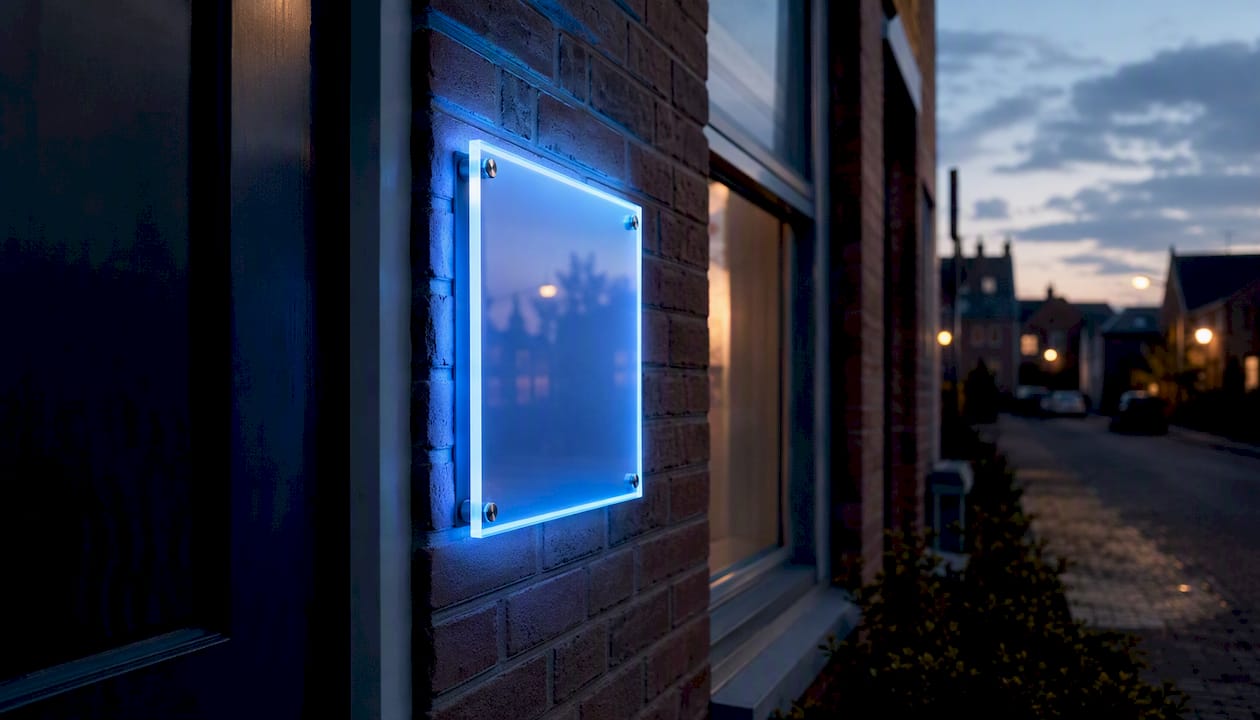
Acrylic’s light transmission properties make it the go-to material for illuminated signage. Opal and white diffusion grades scatter LED light evenly across a panel face, producing the clean, consistent glow that a vinyl-only face cannot replicate.
How each material holds up in UK outdoor conditions
The UK climate is not extreme, but persistent moisture, temperature cycling, and UV exposure in summer months all affect signage materials over time.
Vinyl lifespan by grade:
- Indoor: several years for standard self-adhesive vinyl
- Protected outdoor (under canopy, north-facing): a couple of years for standard grades
- Exposed outdoor: multiple years for cast or premium polymeric grades with overlaminate
Acrylic lifespan:
- UV-stabilised cast acrylic on a well-fixed external panel typically performs well over several years before any meaningful surface degradation
- For the longest-life external applications, solid aluminium or aluminium composite panels can outlast acrylic, but acrylic remains the preferred choice for illuminated and premium interior work
Failure modes to watch for:
- Vinyl: edge lift at cut edges (especially on curved surfaces), adhesive failure in high-heat locations, and colour fade on unlaminated prints
- Acrylic: stress crazing from solvent contact or over-tightened fixings, edge chipping during handling, and thermal expansion cracking when fixings do not allow movement
Pro Tip: Acrylic expands and contracts significantly more than the metal substrates it is often fixed to. For any external acrylic panel larger than roughly A3, specify floating fixings with oversized holes rather than rigid bolts. This single detail prevents the majority of field cracking failures.
How vinyl and acrylic look, and how they behave with lighting
Appearance is often the deciding factor once durability requirements are met. The two materials produce very different visual results.
Acrylic delivers a polished, high-gloss finish with clean machined edges that can be flame-polished for a premium look. Its optical clarity and even light transmission make it the standard for reception signs, built-up lettering, and illuminated fascia panels. A boutique retailer or hospitality brand wanting a premium shopfront finish will almost always land on acrylic.
Vinyl offers a flat visual finish available in matt, gloss, frosted, brushed metallic, and a wide range of printed effects. It cannot function as a standalone illuminated panel, but it works well applied over an illuminated acrylic or composite substrate to add colour, pattern, or printed graphics to a lit face.
- For illuminated panels, specify opal or white diffusion acrylic and confirm the manufacturer’s light transmission data before ordering.
- For a frosted window effect, cut or printed vinyl is faster and more cost-effective than etched glass or specialist glazing.
- Layering printed vinyl over acrylic combines the rigid premium finish of the substrate with the full-colour flexibility of digital print.
Pro Tip: When specifying vinyl over an illuminated acrylic face, use a translucent print film rather than an opaque white vinyl. Opaque vinyl blocks the backlight; translucent film lets the illumination show through the graphic, which is the effect most clients are actually after.
Fabrication, installation, and maintenance
Fabrication differences:
Acrylic is routed, laser-cut, or CNC-machined. Cast acrylic machines cleanly; extruded acrylic can melt or craze at incorrect laser settings, so confirm the grade before programming the cut. Vinyl is cut on a plotter or printed on a wide-format printer, then applied wet or dry depending on the size and surface.
Installation:
Vinyl requires no drilling. Surface preparation is critical: the substrate must be clean, dry, and within the correct temperature range for the adhesive to bond properly. Large-format vinyl is typically applied wet (using a slip solution) to allow repositioning before the adhesive sets. Edge sealing with a compatible sealant is good practice in high-abrasion or high-vandalism locations.
Acrylic panels are fixed with stand-offs, VHB adhesive pads, or mechanical fixings through oversized holes. Fixings must allow for thermal movement. Never over-torque a bolt through an acrylic panel.
Maintenance:
- Acrylic: use only mild, water-based detergent and a soft, non-abrasive cloth. Alcohol-based cleaners and solvents cause surface hazing and micro-crazing that permanently damages optical clarity.
- Vinyl: inspect edges regularly for lift. Re-lamination is possible on flat-surface vinyl if the base film is still adhered; full replacement is usually more cost-effective for vehicle wraps.
Pro Tip: Include a written maintenance specification in every acrylic sign handover. Clients who clean their signs with window spray or solvent-based products will void any finish warranty within months. A single A5 instruction card prevents the most common post-installation complaints.
Cost, lead time, and value for money
Vinyl is lower-cost per square metre and faster to produce. A straightforward window graphic or hoarding wrap can typically be printed, laminated, and ready for installation within two to three working days. Minimum order sizes are low, making vinyl practical for single-unit or short-run requirements.
Acrylic carries higher material and fabrication costs, particularly for custom thicknesses, polished edges, or routed letter forms. Lead times for bespoke acrylic work are longer, typically five to ten working days depending on complexity and finishing requirements.
The value-for-money calculation depends on the job:
- Large-area temporary coverage: vinyl wins on cost and speed every time.
- Premium permanent shopfront panel or illuminated sign face: acrylic’s longer lifespan and finish quality justify the higher upfront investment.
- Vehicle livery: cast vinyl is the only practical choice; acrylic is not applicable.
For large-format production combining both materials, trade large-format printing services can handle volume runs efficiently.
How to choose the right material for your project
Decision checklist by job type:
- Window graphics — Vinyl (cut or printed). Fast, removable, and cost-effective. Specify cast vinyl for graphics lasting more than two years.
- Vehicle graphics or wraps — Cast vinyl only. Specify 7-year polymeric or cast grade with UV overlaminate.
- Hoarding graphics — Printed vinyl on a substrate board. Calendared vinyl is sufficient for campaigns under 12 months.
- Shopfront fascia panel — Acrylic (cast, UV-stabilised) or aluminium composite for longest life. Acrylic for premium finish.
- Illuminated sign face — Cast acrylic, opal or diffusion grade. Confirm light transmission data with the manufacturer.
- 3D built-up letters — Cast acrylic, routed or laser-cut. Specify floating fixings for external installation.
- Interior wall graphics — Vinyl (removable adhesive) for flexibility; acrylic for permanent premium panels.
Questions to ask your supplier:
- What grade of vinyl are you specifying: cast or calendared? What is the rated outdoor life?
- For acrylic: is this cast or extruded PMMA? Does it meet BS EN ISO 7823-1?
- What overlaminate is included for outdoor vinyl?
- How are the acrylic fixings designed to allow thermal movement?
- What is the expected lifespan, and what does the warranty cover?
- What cleaning products are approved for maintenance?
Red flags in quotes:
- No mention of floating fixings for external acrylic panels
- Outdoor vinyl quoted without overlaminate
- Vague lifespan claims (“long-lasting”) with no grade or warranty detail
- No distinction between cast and calendared vinyl for a vehicle or long-term exterior job
For a broader view of durable sign materials and how they compare across different applications, Promosigns publishes a full UK buyer’s guide.
A signmaker’s perspective on specifying for London projects
The material choice is rarely the hardest part of a London signage brief. What catches projects out is the gap between what a client sees on a mood board and what the installation conditions actually allow.
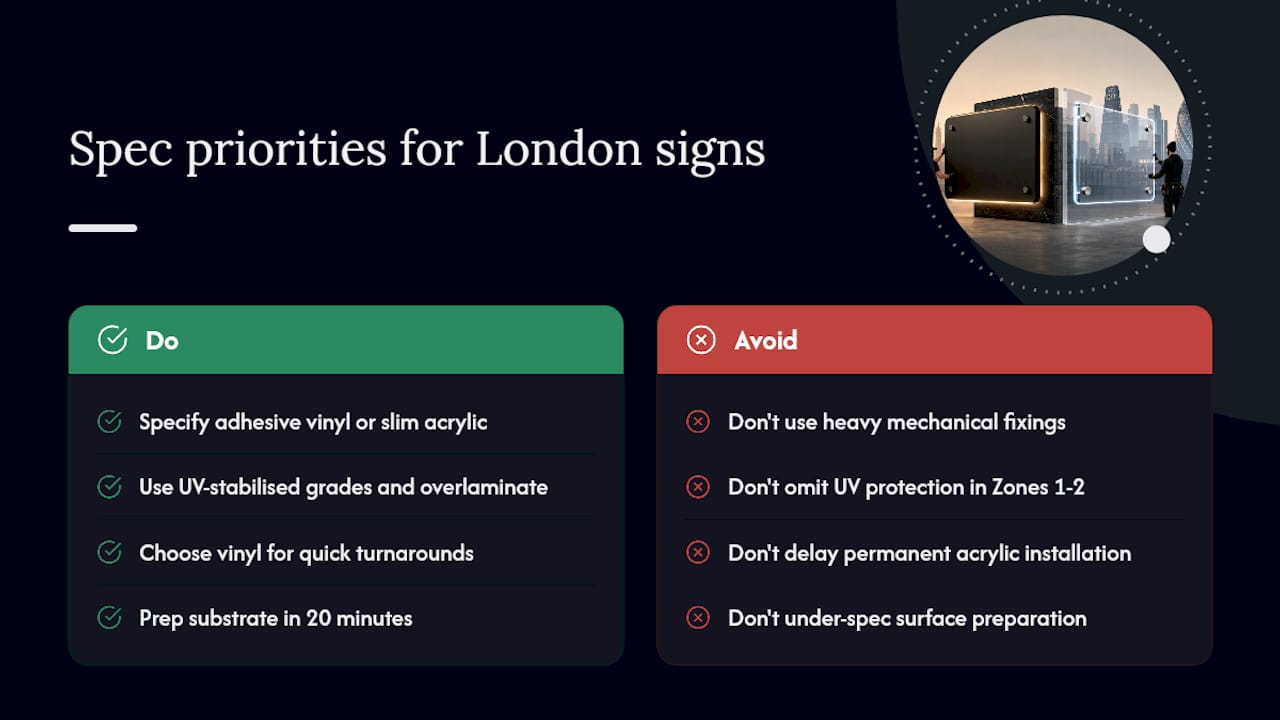
Conservation area facades in central London often restrict fixing methods and sign dimensions, which pushes projects toward adhesive-fixed vinyl or slim acrylic panels rather than heavy mechanical installations. High-pollution zones accelerate surface degradation on unprotected materials, so UV-stabilised grades and overlaminates are not optional extras in Zone 1 and 2 locations. They are the baseline specification.
Fast turnaround demands from retail and hospitality clients are real. A restaurant rebranding before a weekend opening cannot wait ten days for a bespoke acrylic fascia. In those situations, a well-specified vinyl graphic on an existing substrate buys time without compromising the visual result, and a permanent acrylic installation follows once the schedule allows.
The most consistent mistake seen in London shopfront projects is under-specifying the substrate preparation for vinyl. A dirty, damp, or cold surface will cause adhesive failure within weeks regardless of the vinyl grade. Correct surface prep takes twenty minutes and saves a full reinstallation.
Promosigns can help you specify and install the right material
Promosigns designs, manufactures, and installs bespoke vinyl and acrylic signage for retail, hospitality, and corporate clients across London, Essex, and Kent. Whether you need window graphics for a new shopfront, cast acrylic panels for an illuminated fascia, or cast vinyl livery for a fleet of vehicles, the team will confirm material grade, installation method, lead time, and maintenance requirements before a single panel goes into production.
Every quote from Promosigns includes a clear material specification: cast or calendared vinyl, cast or extruded acrylic, overlaminate type, fixing method, and expected lifespan. No vague claims. No missing details. If you are ready to brief a project or want a sample pack to compare finishes in person, contact Promosigns for a project-specific consultation. Visit Promosigns to get started.
Sources
- Acrylic vs Vinyl Signs: Which Material Lasts Longer?
To request samples, case studies, or an on-site consultation in London, contact Promosigns directly through the website.
Recommended
- Vinyl vs Acrylic Signage: The Best Choice for London Businesses 2025 – PromoSigns.co.uk
- Acrylic Signs London | Custom Designed Acrylic Signs in London
- What Is Vinyl Graphics? A Guide for London Businesses 2025 – PromoSigns.co.uk
- Graphic Design Tips for Signage: 2025 Guide for London Businesses – PromoSigns.co.uk
