
Many UK business owners assume that making their own signs is always the cheaper route. It seems logical: skip the agency, grab some materials, and save money. But the full picture includes hidden costs, brand credibility, and long-term durability that rarely appear in a DIY budget. The decision between DIY and professional signage affects how customers perceive your business before they ever walk through the door. This article breaks down the real differences, true costs, and practical guidelines to help you make a confident, informed choice for your retail or corporate location.
Table of Contents
Key Takeaways
| Point | Details |
|---|---|
| Material and quality gap | Professional signage outpaces DIY options for durability and business credibility. |
| Costs versus value | Upfront DIY savings often lead to greater expenses and less impact over time. |
| Branding matters | Your sign is a critical touchpoint influencing how customers perceive your business. |
| When to DIY | DIY can suit temporary or non-essential needs, but pros are recommended for major branding and compliance. |
| Trust expert support | Professional installation and warranties reduce hassle and preserve your investment. |
Key differences between DIY and professional signage
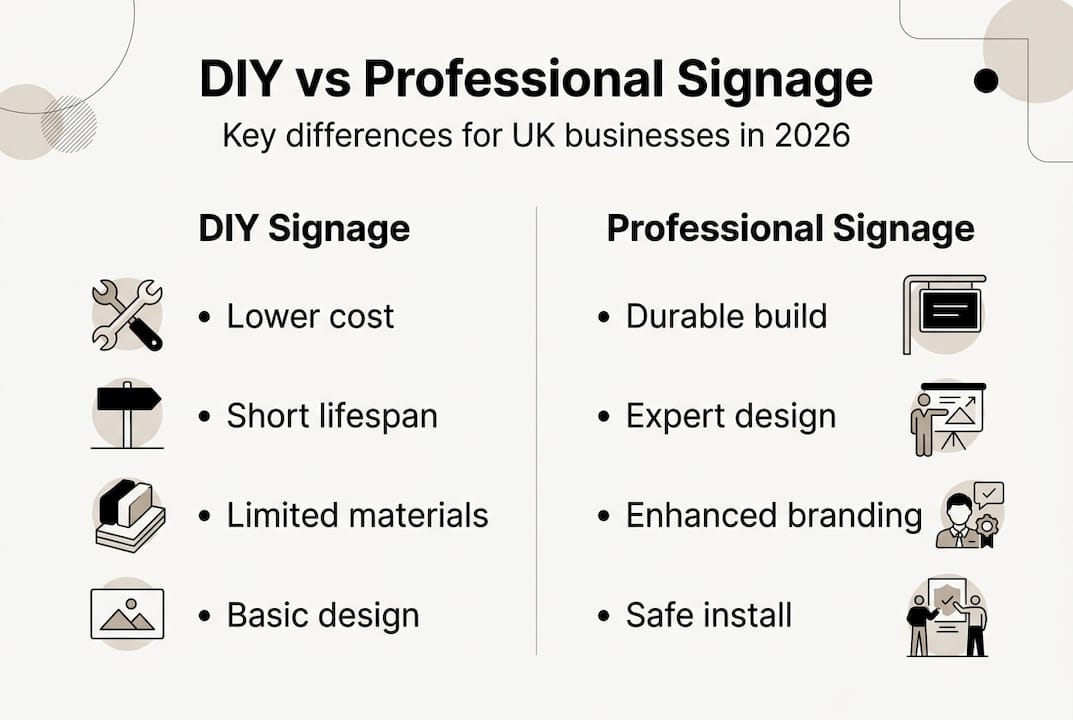
Setting the scene, let’s clearly define what separates DIY from professional signage. The gap is wider than most business owners expect, and it shows up across materials, design, installation, and ongoing support.
Materials and build quality
Professional signage uses commercial-grade substrates such as aluminium composite, acrylic, and foamex signs printing London grade PVC foam board, all selected for outdoor durability and UV resistance. These materials are engineered to withstand British weather, from driving rain to prolonged sun exposure. DIY options typically rely on basic craft materials, foam board, or entry-level vinyl that degrades quickly outdoors. Choosing the right business sign materials from the outset makes a measurable difference to how long your sign performs.
Design and brand expertise
Professional sign makers bring years of creative and technical experience. They understand colour contrast, font legibility at distance, and how to reflect your brand identity consistently. DIY designs frequently suffer from poor font choices, misaligned elements, or colours that clash. The benefits of working with custom signs London specialists extend beyond aesthetics. They include compliance with planning regulations and accessibility standards that many business owners overlook entirely.
Installation
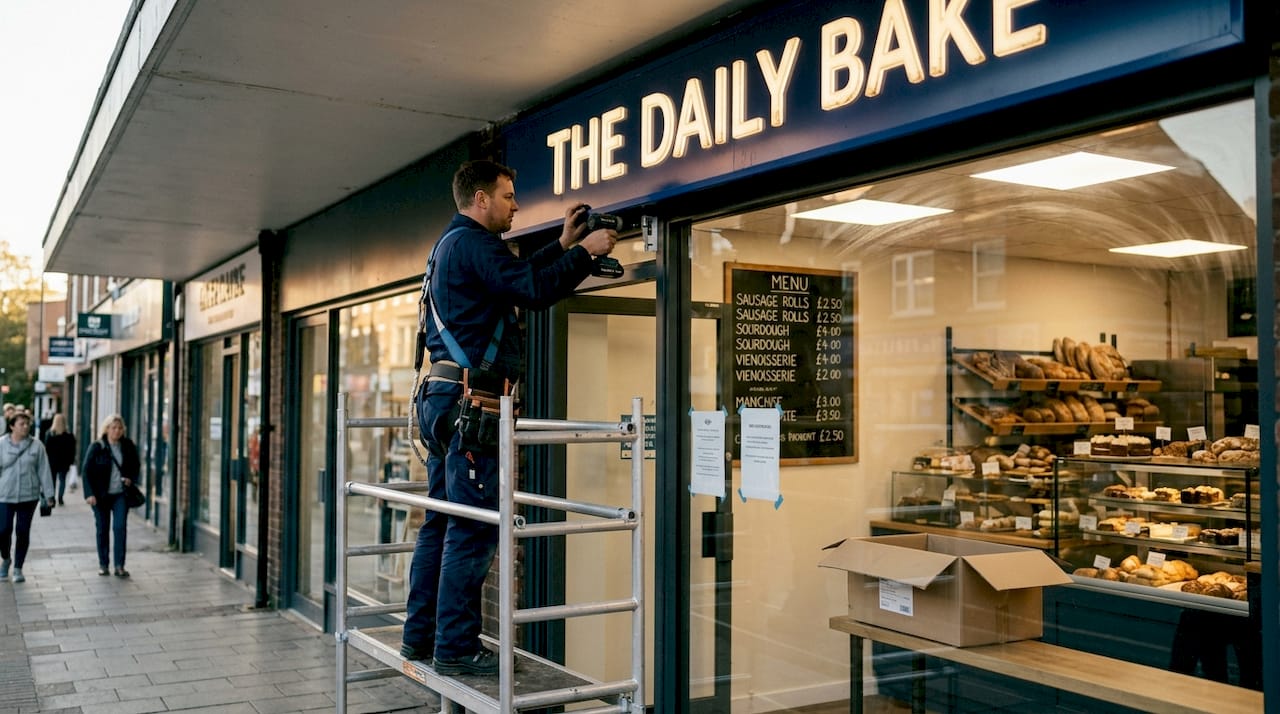
Fitting a large fascia sign or 3D lettering is not a straightforward task. It requires specialist tools, fixings rated for the substrate, and often working at height. DIY installation can be time-consuming, physically demanding, and potentially unsafe. Professional sign installation provides fitting and support that DIY options simply cannot match, reducing the risk of errors that could damage your building or void your lease.
Comparison overview
| Feature | DIY signage | Professional signage |
|---|---|---|
| Materials | Basic, low durability | Commercial-grade, weather-resistant |
| Design support | Self-managed | Expert creative and compliance input |
| Installation | DIY, risk of errors | Specialist fitting, safe and secure |
| Warranty and support | None | Ongoing maintenance and guarantees |
| Brand consistency | Variable | Aligned to brand guidelines |
Key distinctions at a glance:
- DIY relies on off-the-shelf materials with limited outdoor performance
- Professional signs are built to specification and tailored to your location
- Branding for small businesses depends heavily on visual consistency, which professionals deliver reliably
- Ongoing support from professionals can prevent costly remedial work later
Design and brand expertise
Assessing costs and value for UK businesses
Now you understand the key differences, let’s see how the costs and their value really stack up. The upfront price is rarely the whole story.
Upfront versus long-term costs
A basic DIY sign might cost between £50 and £300 depending on size and materials. Professional shop signs London for a shop front typically starts from around £500 and can reach several thousand pounds for illuminated or 3D installations. That gap looks significant. However, DIY signage often lacks the durability and long-term impact of professional options, meaning replacements and remakes quickly erode any initial savings.
Hidden costs of DIY
The true cost of DIY signage includes your time, which has a real commercial value. Designing, sourcing, and fitting a sign yourself could take 10 to 20 hours. Add the cost of mistakes, reprints, and incorrect fixings, and the savings shrink fast. A poorly positioned or visually weak sign can also reduce footfall, which is a hidden cost that never appears on a receipt.
| Cost factor | DIY estimate | Professional estimate |
|---|---|---|
| Initial production | £50 to £300 | £500 to £3,000+ |
| Lifespan | 1 to 3 years | 5 to 10+ years |
| Remake or repair | Frequent | Rare, often under warranty |
| Time investment | 10 to 20 hours | Minimal for client |
| Brand impact | Low to moderate | High |
Additional cost considerations:
- Errors in DIY installation may require professional remediation, adding unexpected expense
- Understanding the full sign installation process helps you appreciate what professional fees actually cover
- Consistent branding across all touchpoints increases customer recognition and loyalty over time
- The reasons business signs work are rooted in quality, visibility, and trust, all of which professional signage delivers more reliably
Pro Tip: Before committing to DIY, calculate your hourly rate and multiply it by the time you expect to spend. Add potential remake costs. You may find professional signage is far more cost-effective than it first appears.
The impact of signage on brand and first impressions
With value and costs examined, it’s vital to consider the influence of signage on how your business is perceived. Signage is often the very first thing a potential customer sees, and that moment matters enormously.
First impressions are formed in seconds
Research consistently shows that people form opinions about a business within seconds of seeing its exterior. Your sign communicates quality, professionalism, and relevance before a single word is spoken. A faded, misaligned, or poorly printed sign tells customers that attention to detail may not be your priority. That is a damaging message for any business.
“Well-designed, high-quality business signs London build customer trust and drive increased foot traffic.”
Professional signage differentiates your business
In competitive retail and hospitality environments, your signage is a key differentiator. A bespoke, well-lit fascia sign positions your business as established and trustworthy. DIY signs, even when carefully made, rarely achieve the same visual authority. The impact on visual branding is cumulative. Every time a customer passes your premises, your sign reinforces or undermines their confidence in your brand.
The risk of inconsistent branding
Branding consistency is one of the most underestimated factors in customer retention. DIY signs often use slightly different colours, fonts, or proportions compared to your other brand materials. This inconsistency creates a subtle but real sense of unreliability. Professional sign makers work directly from your brand guidelines to ensure every element aligns.
Key brand impact points:
- Professionally crafted signs signal quality and credibility to passing trade
- Outdoor signs that are well-positioned and well-lit attract significantly more attention
- Inconsistent DIY signage can undermine marketing spend on other channels
- Brand-aligned signage supports customer recall and repeat visits
Pro Tip: Treat your signage as part of your marketing budget, not your maintenance budget. The return on a quality sign is measured in customer confidence and footfall, not just the sign’s physical lifespan.
When DIY signage makes sense (and when to hire a professional)
After understanding impact, how do you decide if DIY or professional signage fits your particular needs? The answer depends on context, scale, and what is at stake for your business.
When DIY is a reasonable option
DIY signage suits small non-essential applications, while commercial-facing signage benefits far more from professional support. Here are the scenarios where DIY can work:
- Temporary event signage such as pop-up stalls, market stands, or short-term promotions where longevity is not required
- Internal wayfinding in low-visibility areas, such as staff-only corridors or storage rooms
- Early-stage businesses testing a location before committing to permanent branding
- Small A-frame boards placed on pavements for daily specials, where replacement is easy and low-cost
- Supplementary signage that supports but does not replace your primary branded display
When you must hire a professional
Certain signage situations require specialist expertise, and cutting corners here carries real risk:
- Shop front and fascia signs that represent your primary brand identity to the public
- Illuminated and LED signage, which involves electrical work and must comply with BS7671 wiring regulations
- Building-mounted signs at height, requiring safe working practices and structural assessments
- Signage in conservation areas or listed buildings, where local council approval is mandatory
- Brand-driven sectors such as hospitality, retail, and corporate offices, where first impressions directly affect revenue
Pro Tip: Always check with your local planning authority before installing any sign on a building exterior. Many permanent signs require advertisement consent, and non-compliance can result in removal orders and fines. Working with professional signage companies London means the team is already familiar with these requirements and can manage the process for you.
Our take: why business owners should think beyond cost
The conversation around DIY versus professional signage too often starts and ends with upfront price. In our experience working with business owners across London, Essex, and Kent, this is the most common and costly mistake.
The lowest upfront cost rarely equates to the best value. Non-specialists consistently underestimate local council rules, structural requirements, and the ongoing costs of maintaining a substandard sign. We have seen businesses spend more on replacing a failed DIY installation than they would have paid for professional signage from the outset.
More importantly, your sign is not just a label. It is a business asset. The reasons business signs work are deeply connected to brand authority and customer confidence. A sign that looks temporary or poorly made tells your market that your standards may be equally inconsistent. That perception is difficult to reverse.
We believe every business owner deserves to make this decision with full information, not just a comparison of material costs. Think about brand growth, planning compliance, and the impression you want to leave on every person who walks past your premises. That is where the real return on signage investment is found.
Find the right signage solution for your business
Taking the next step is straightforward when you want confidence and results from your business signage. At PromoSigns, we provide expert consultation, bespoke design, and professional installation for every type of business signage, from shop signs Barnet to large-scale retail fascias across the UK.
Whether you are considering illuminated signage advantages for maximum visibility or need guidance on the right materials and planning permissions, our team is ready to help. We manage every stage from design to installation, so you can focus on running your business. Get in touch today for a no-obligation consultation and discover what high-quality, professionally installed signage can do for your brand.
Frequently asked questions
Are DIY business signs allowed in the UK?
DIY signs are permitted, but they must comply with local council regulations and safety standards. For illuminated or building-mounted signs, professional installation is often required to meet planning and electrical safety rules.
How long will a DIY sign last compared to a professional one?
DIY signs typically last 1 to 3 years before fading or deteriorating, while professionally made signs using commercial-grade materials regularly exceed 5 to 10 years with proper maintenance.
Can professional signage really increase customer footfall?
Yes. High-quality signs build customer trust and improve visibility, both of which directly contribute to increased foot traffic and brand recognition over time.
Is it cheaper to update or repair a professional sign than a DIY one?
Professional signs frequently include maintenance warranties, making repairs and updates more cost-effective. Ongoing professional support prevents the full replacement costs that are common with DIY signage.
Recommended
- How to Futureproof Signage for Maximum Business Impact – PromoSigns.co.uk
- Overcome common sign installation challenges in 2026 – PromoSigns.co.uk
- 7 Key Signage Trends in 2025 Every Business Must Know – PromoSigns.co.uk
- Choosing Outdoor Signage: A Step-by-Step Guide for 2025 – PromoSigns.co.uk
- Woodworking Trends 2026: Innovations Shaping DIY
