
Over 60 percent of companies say customers now expect them to act on environmental issues. Choosing eco-friendly signage is a direct way to meet those expectations while sending a clear sustainability message. Today’s businesses want visual communication solutions that do more than just stand out — they want signs that minimise harm, reduce waste, and still look sharp. Discover how modern materials and production methods make it possible to go green without sacrificing quality or impact.
Table of Contents
Key Takeaways
| Point | Details |
|---|---|
| Eco-friendly materials | Utilize biodegradable and recyclable materials to minimize ecological footprint. |
| Community engagement | Involve local communities in signage creation to enhance environmental awareness and responsibility. |
| Economic advantages | Consider long-term savings and brand reputation benefits when investing in sustainable signage solutions. |
| Regulatory compliance | Ensure adherence to environmental standards and safety regulations for sustainable signage practices. |
Defining Eco-Friendly Signage Solutions
Eco-friendly signage represents an innovative approach to visual communication that prioritises environmental sustainability without compromising design quality or messaging effectiveness. Unlike traditional signage solutions that often rely on petrochemical-based materials, these alternatives focus on minimising ecological impact while delivering powerful visual communication.
At the core of eco-friendly signage are materials and production processes designed to reduce environmental footprint. Emerging solutions like biodegradable, non-petrochemical signage films are replacing conventional PVC materials. These innovative materials offer safer alternatives for retail signs signage, exhibition, and event graphics while maintaining high visual standards.
Key characteristics of eco-friendly signage solutions include:
- Using renewable or recycled base materials
- Minimising chemical processing
- Reducing carbon emissions during production
- Ensuring complete biodegradability or recyclability
- Supporting circular economy principles
Engaging communities in creating environmentally conscious signage can foster deeper environmental awareness. This approach transforms signage from a mere communication tool into an educational opportunity that connects people more intimately with sustainable practices.
By embracing eco-friendly signage, businesses can demonstrate environmental responsibility while maintaining professional, high-impact visual communication strategies. The future of signage is green, innovative, and increasingly sophisticated.
Sustainable Materials and Production Methods
Sustainable signage production represents a transformative approach to visual communication, focusing on environmentally responsible materials and manufacturing processes that minimise ecological impact. By reimagining traditional production methods, businesses can create compelling signage solutions that are both visually striking and environmentally conscious.
Performance plastics are emerging as a groundbreaking alternative in sustainable signage manufacturing. High-density polyethylene (HDPE) offers a durable and recyclable alternative to conventional signage materials. This innovative material provides exceptional environmental benefits while maintaining the structural integrity required for professional signage applications.
Key sustainable production strategies include:
- Utilising recycled and renewable base materials
- Implementing energy-efficient manufacturing processes
- Selecting low-impact printing technologies
- Designing for long-term durability and eventual recyclability
- Minimising waste throughout the production cycle
Printing techniques play a crucial role in sustainable signage development. Eco-friendly inks, such as soy-based and water-based alternatives, substantially reduce environmental impact while enhancing print quality. For large format printing London applications, these advanced printing methods demonstrate that sustainability and visual excellence can coexist harmoniously.
By embracing these innovative materials and production methods, businesses can create signage solutions that not only communicate their message effectively but also reflect a genuine commitment to environmental responsibility.

Key Benefits for Businesses and Communities
Eco-friendly signage represents a powerful strategy for businesses to demonstrate environmental leadership while simultaneously creating tangible benefits for both commercial enterprises and local communities. By adopting sustainable signage solutions, organisations can transform their visual communication into a meaningful statement of corporate social responsibility.
Energy efficiency stands at the forefront of sustainable signage benefits. Energy-efficient shop signs London using LED lights and recycled materials can significantly reduce energy consumption while appealing to environmentally conscious consumers. This approach not only minimises operational costs but also positions businesses as forward-thinking and environmentally responsible.
Key advantages of eco-friendly signage include:
- Reduced carbon footprint
- Lower long-term operational costs
- Enhanced brand reputation
- Increased customer loyalty among environmentally aware consumers
- Contribution to local environmental sustainability efforts
Sustainable manufacturing strategies benefit both businesses and communities by minimising ecological footprints. These strategies extend beyond mere material selection, encompassing holistic approaches that consider energy efficiency, waste reduction, and community engagement.
Beyond immediate business benefits, eco-friendly signage contributes to broader community well-being. By showcasing commitment to sustainable practices, businesses inspire local stakeholders, encourage environmental consciousness, and create a ripple effect of positive ecological action.
Legal, Safety and Certification Standards
Navigating the complex landscape of legal and safety requirements is crucial for businesses implementing eco-friendly signage solutions. Compliance isn’t just about meeting minimum standards — it’s about creating signage that protects both businesses and their communities while demonstrating environmental responsibility.
The regulatory framework for sustainable signage involves multiple considerations. Comprehensive guidance on sustainable production recommends specific standards for materials and manufacturing processes. These recommendations emphasise the importance of using recyclable materials and eco-friendly inks that meet rigorous environmental certification standards.
Key legal and safety compliance considerations include:
- Adherence to material safety regulations
- Meeting environmental performance standards
- Ensuring structural durability and reliability
- Compliance with accessibility guidelines
- Maintaining transparency in material sourcing
Outdoor signage standards highlight the use of recycled plastics that meet stringent safety and durability requirements. This guidance demonstrates that sustainable materials can simultaneously satisfy legal obligations and environmental objectives.
Working with professional signage companies London ensures businesses can approach eco-friendly signage certification as a holistic process, embedding sustainability into every aspect of signage design, production, and implementation.
Cost Comparison and Long-Term Value
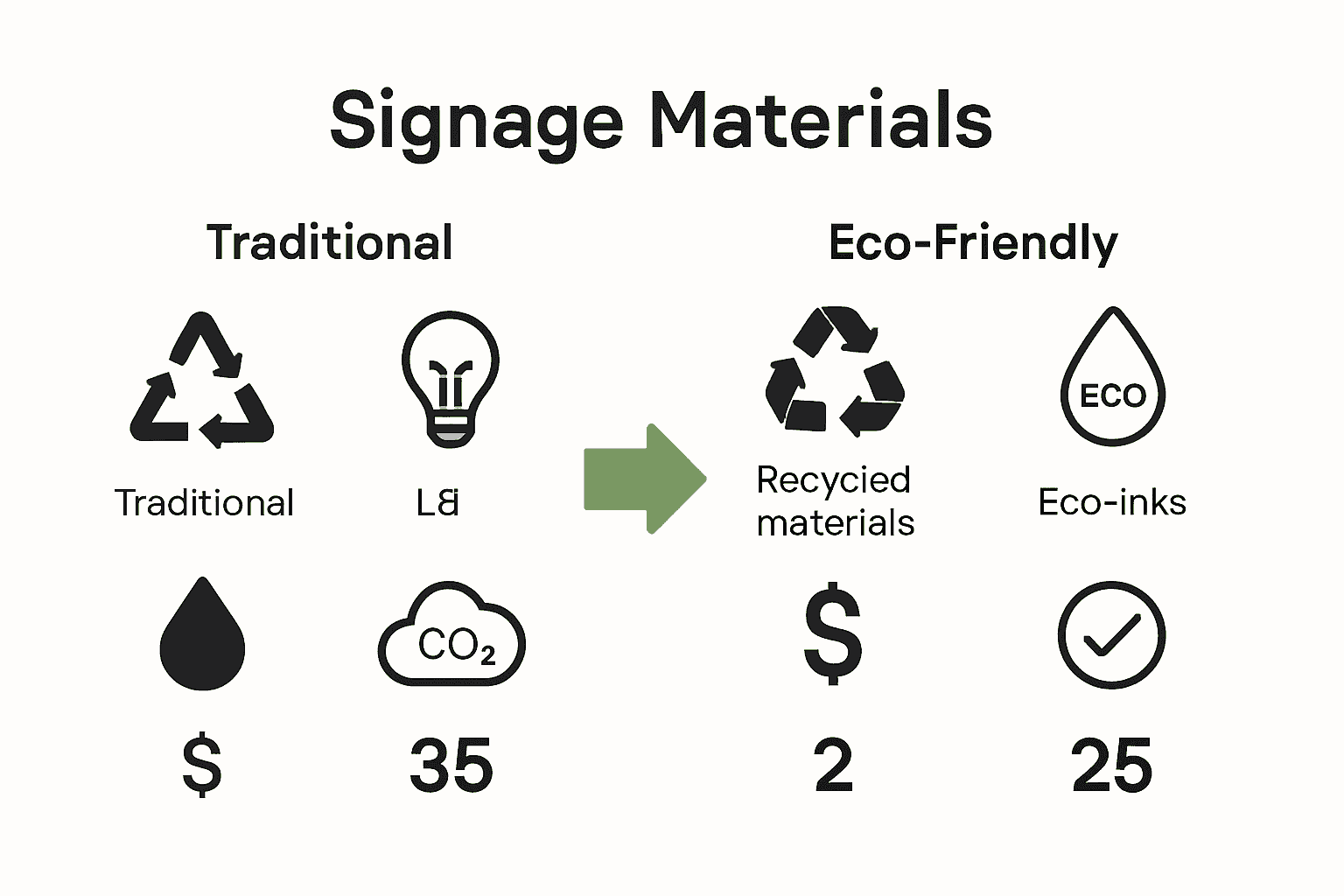
Businesses evaluating eco-friendly signage solutions must look beyond initial investment and consider the comprehensive financial landscape of sustainable visual communication. The true economic value of environmentally responsible signage extends far beyond immediate purchasing costs, encompassing long-term operational savings, brand perception, and environmental impact.
Strategic material selection plays a critical role in determining overall economic efficiency. Investing in high-quality, reusable materials can lead to significant cost savings over time. Research demonstrates that initial higher expenditures on sustainable materials are often offset by reduced replacement frequencies and lower maintenance requirements.
Key financial considerations for eco-friendly signage include:
- Lower energy consumption costs
- Reduced material replacement expenses
- Enhanced brand reputation and customer loyalty
- Potential tax incentives for sustainable practices
- Decreased long-term environmental compliance expenses
The economic advantages of integrating local craftsmanship and recycled materials in banner printing London are substantial. By supporting local economies and minimising resource extraction, businesses can create a more sustainable economic model that provides value beyond traditional cost metrics.
Ultimately, the cost of eco-friendly signage represents an investment in both corporate responsibility and future-proofing. Companies that strategically approach sustainable signage will find themselves positioned to benefit from reduced operational costs, improved brand perception, and alignment with increasingly stringent environmental regulations.
Transform Your Business with Sustainable Signage Solutions
Eco-friendly signage is more than just a trend. It answers the growing need to reduce environmental impact while maintaining eye-catching design and durability. If you want to overcome challenges like finding truly sustainable materials, ensuring energy efficiency, and adhering to safety standards without compromising your brand’s message, Promo Signs is here to help. We specialise in bespoke shop signs, illuminated options, and large format printing tailored for businesses across London, Essex, and Kent.
Discover how we combine innovative eco-friendly materials and responsible production processes to deliver signage that reflects your commitment to sustainability. Act now to enhance your brand reputation, reduce operational costs, and inspire your community with signage that is both striking and environmentally conscious. Explore our full range of custom signage services at Promo Signs and start your journey towards greener, smarter visual communication today.
Frequently Asked Questions
What materials are commonly used in eco-friendly signage?
Eco-friendly signage typically uses renewable or recycled base materials such as high-density polyethylene (HDPE), biodegradable signage films, and eco-friendly inks like soy-based or water-based alternatives.
How does eco-friendly signage contribute to environmental sustainability?
Eco-friendly signage reduces carbon emissions during production, minimises chemical processing, and ensures complete biodegradability or recyclability, thereby lowering the overall ecological footprint of visual communications.
What are the long-term cost benefits of choosing eco-friendly signage?
While initial costs may be higher, eco-friendly signage can result in lower energy consumption costs, reduced material replacement expenses, and potential tax incentives, ultimately leading to long-term financial benefits for businesses.
How can businesses ensure compliance with legal and safety standards in eco-friendly signage?
Businesses can ensure compliance by adhering to material safety regulations, meeting environmental performance standards, ensuring structural durability, and maintaining transparency in material sourcing to meet certification requirements.
Recommended
- Understanding Eco Friendly Signage Solutions – PromoSigns.co.uk
- LED vs. Traditional Storefront Signage: Which is Right for You? – PromoSigns.co.uk
- Shop Sign Types Explained for UK Businesses in 2025 – PromoSigns.co.uk
- Event Signage Best Practices 2025: Essential Tips for London Businesses – PromoSigns.co.uk
