
Nearly 80 percent of consumers say signage directly influences their decision to enter a business. In today’s crowded market, standing out goes far beyond having a good product or service. The way your brand appears on signs shapes how customers perceive and remember you. Understanding what branding with signage means can help turn ordinary spaces into powerful statements of your company’s identity and values.
Table of Contents
- What Does Branding With Signage Mean
- Key Signage Types And Their Roles
- How Signage Boosts Brand Recognition
- Legal And Safety Requirements UK
- Cost Considerations And Budget Planning
- Common Mistakes And Best Practices
Table of Contents
Key Takeaways
| Point | Details |
|---|---|
| Branding with Signage | Signage effectively communicates a company’s identity, reinforcing brand narrative through visual elements like color, typography, and logo placement. |
| Signage Types and Roles | Different signage types serve unique purposes, including providing information, navigating spaces, and promoting products, each aligned with brand objectives. |
| Enhancing Brand Recognition | Consistent signage design across touchpoints boosts brand recognition, fostering customer familiarity and trust through a cohesive visual message. |
| Legal and Budget Considerations | Awareness of legal requirements and careful budgeting are essential in signage investment, ensuring compliance and maximizing return on investment in brand visibility. |
What Does Branding With Signage Mean
Branding with signage represents the strategic visual communication of a company’s identity through purposeful sign design and placement. Signage involves designing symbols and visual representations that communicate a brand’s core messages and establish instant recognition.
At its core, branding with signage transforms physical spaces into storytelling platforms. Effective signage goes beyond mere information display — it serves as a constant, visible representation of a business’s values, mission, and personality. This means every sign becomes an opportunity to reinforce your brand’s unique narrative.
The key elements of successful branding through signage include:
- Consistent colour schemes that match your brand palette
- Strategic logo placement and sizing
- Typography that reflects your brand’s personality
- Cohesive design across different sign types and locations
By integrating these elements, businesses can create a powerful visual language that communicates their brand’s essence instantly. Whether it is a sleek shop signs London installation, a vibrant storefront display, or directional signage, each sign becomes a brand ambassador, silently communicating your organisation’s identity to potential customers. For more insights into maintaining brand consistency, check out our guide on understanding brand consistency in signage.
Ultimately, branding with signage is about creating memorable, meaningful visual experiences that connect with your audience and differentiate your business in a crowded marketplace.
Here’s a summary of the primary signage types and their key roles:
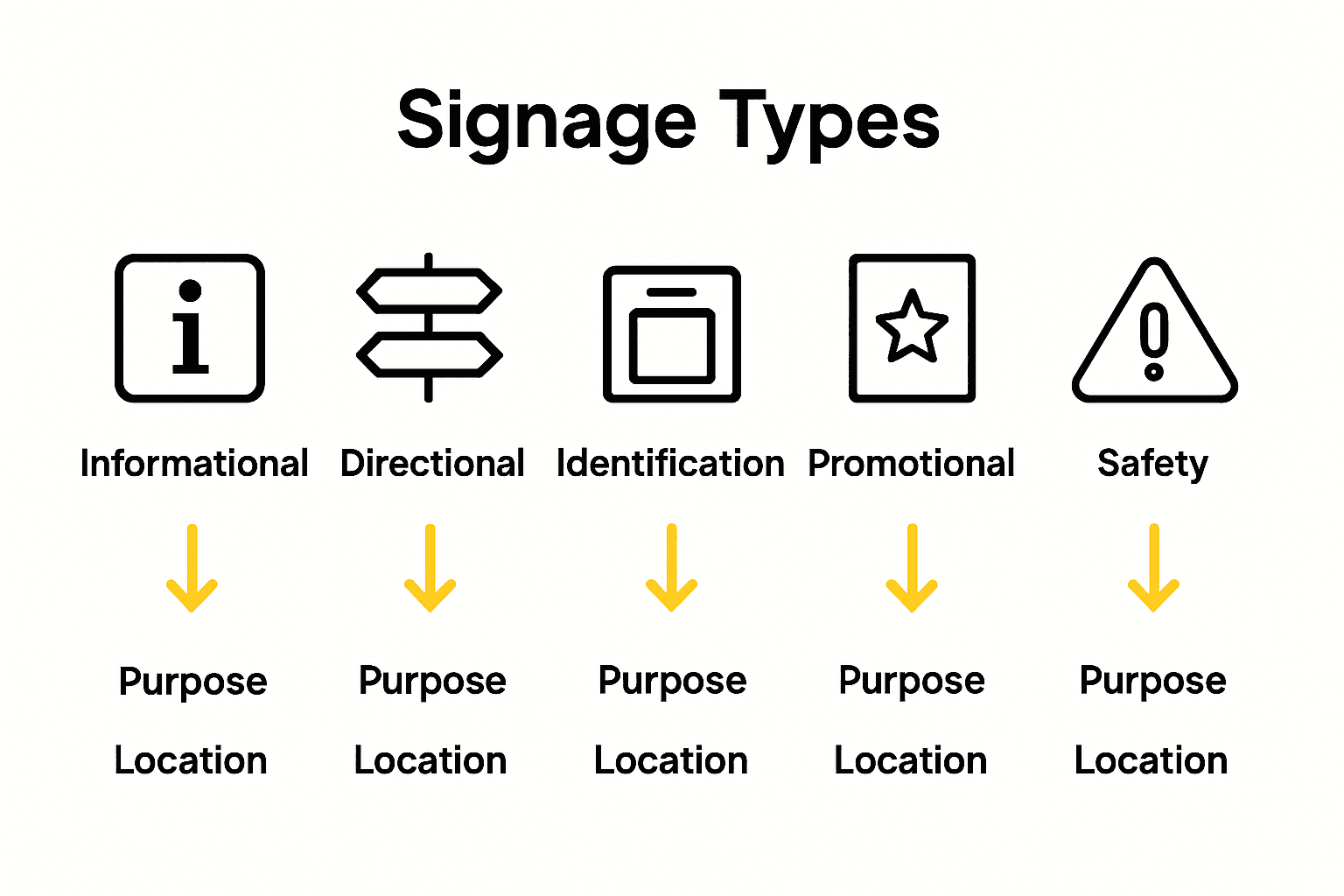
| Signage Type | Main Purpose | Typical Locations |
|---|---|---|
| Informational Signs | Provide guidance Clarify surroundings |
Entrances Lobbies Public areas |
| Directional Signs | Assist navigation Guide movement |
Corridors Car parks Venues |
| Identification Signs | Mark areas Specify services |
Offices Departments Bathrooms |
| Promotional Signs | Attract attention Market products |
Shop windows Events Retail aisles |
| Safety Signs | Warn hazards Provide instructions |
Workplaces Construction sites Exits |
- Informational Signs: Provide guidance and clarify surroundings
- Directional Signs: Help customers navigate spaces efficiently
- Identification Signs: Mark specific areas or services
- Promotional Signs: Attract attention and market products
- Safety Signs: Communicate critical warnings and instructions
Each sign type plays a strategic role in organising and enhancing user experience. Informational signs like directories and maps help visitors understand their environment, while retail signs signage promotional displays create visual engagement that drives customer interest.
To optimise your signage strategy, businesses should consider comprehensive sign solutions that integrate multiple types. From welcoming storefront signs to interior wayfinding markers, each sign contributes to a cohesive brand narrative. For a deeper exploration of how different sign types can transform your business, explore our guide on types of shop signage for business success.
How Signage Boosts Brand Recognition
Brand recognition is a critical marketing objective that can be significantly enhanced through strategic signage design. Effective signage creates a professional and cohesive visual identity by consistently incorporating a company’s unique visual elements across multiple customer touchpoints.
The power of brand recognition through signage lies in its ability to create visual consistency and memorable experiences. Key strategies include:
- Consistent colour schemes that match brand guidelines
- Strategic logo placement
- Uniform typography across different sign types
- Repeating design elements that trigger brand recall
An effective outdoor sign does more than just display information — it builds trust, communicates brand values, and creates genuine customer interest. By presenting a unified visual message, businesses transform simple signs into powerful brand ambassadors that foster familiarity and connection.
Custom signs London solutions allow businesses to create a fully bespoke visual language that is consistent across every sign format, from exterior fascias to interior wayfinding, ensuring every customer touchpoint reinforces the same brand impression.
For businesses looking to maximise their brand recognition potential, comprehensive signage strategies are essential. Explore our guide on signage and brand recognition for London businesses to understand how targeted signage can elevate your brand’s visual communication.
Legal And Safety Requirements UK
Navigating the legal landscape of signage in the United Kingdom requires a comprehensive understanding of specific regulations and standards. Businesses must comply with British Standards for Signage BS559 2020 and Consumer Rights regulations, ensuring both safety and legal adherence in sign design and implementation.
Key legal considerations for UK businesses include:
- Adherence to British Standards BS559 2020
- Compliance with Consumer Rights regulations
- Ensuring clear and unambiguous messaging
- Meeting health and safety requirements
- Avoiding misleading or potentially offensive visual communication
Safety signs play a critical role in warning about potential hazards, indicating mandatory actions, and marking essential safety equipment and exit routes. This means businesses must design signs that not only communicate effectively but also meet strict design and layout standards to ensure workplace safety and legal compliance.
Working with professional signage companies London ensures your signage meets the relevant British Standards and local planning requirements from the outset, reducing the risk of costly compliance issues. For a detailed exploration of current signage regulations, businesses can refer to our guide on retail signage compliance for London businesses.

Cost Considerations And Budget Planning
Investing in signage is a strategic decision that requires careful financial planning and understanding of potential returns. Bold and relevant signage can create lasting first impressions that drive interest and conversions, ultimately reflecting a business’s professional ethos.
Key budget considerations for businesses include:
- Material costs (metal, acrylic, illuminated vs. non-illuminated)
- Design and customisation expenses
- Installation and mounting requirements
- Maintenance and potential replacement costs
- Potential return on investment through brand visibility
Smart businesses view signage not as an expense, but as a strategic investment in brand communication and customer engagement. Large format printing London solutions offer excellent value at scale, allowing businesses to achieve high-impact visual presence across shop fronts, hoardings, and event displays without the cost of fabricated illuminated signs.
To help businesses navigate the financial aspects of signage investment, we recommend a comprehensive approach that balances quality, effectiveness, and budget constraints. For detailed insights into current market pricing, explore our guide on the cost of shop signage in London.
Common Mistakes And Best Practices
Navigating the complex world of signage design requires a nuanced understanding of both potential pitfalls and strategic approaches. Poor-quality signage can actively deter customers and create confusion, while well-designed signage instils trust and professionalism.
Common signage mistakes businesses often encounter include:
- Overcrowded design with too much information
- Inconsistent branding across different sign types
- Poor colour and typography choices
- Ignoring visibility and legibility
- Neglecting maintenance and sign condition
Best practices involve creating signs that are clear, consistent, and strategically aligned with your brand’s visual identity. This means carefully considering every design element, from colour selection to font choice, ensuring each sign tells a cohesive story.
To help businesses avoid common pitfalls and develop more effective signage strategies, we recommend a comprehensive approach that prioritises clarity, brand consistency, and visual impact. Businesses looking to refine their signage approach can dive deeper with our guide on understanding brand consistency in signage.
Ultimately, successful signage is about creating a visual language that speaks directly to your audience, communicates your brand’s essence, and creates lasting, positive impressions.
Elevate Your Brand Identity with Expert Signage Solutions
The challenge of creating consistent and impactful branding through signage is clear. Businesses often struggle with maintaining a cohesive visual language across multiple sign types while meeting legal standards and budget constraints. Key pain points include ensuring brand consistency, selecting effective design elements, and investing wisely in signage that truly connects with customers.
At Promo Signs, we understand how crucial your signage is for telling your brand story and building recognition. We specialise in custom shop signs, illuminated signage, and large format printing across London, Essex, and Kent. Our expert team works closely with you to craft signs that reflect your brand’s colours, typography, and values, without sacrificing compliance or quality.
Ready to transform your signage into a powerful branding tool that captures attention and builds trust? Explore how our bespoke solutions can meet your business needs now. Start by visiting Promo Signs to request a consultation or browse our offerings and see how expert signage can boost your brand visibility today.
Frequently Asked Questions
What is the significance of branding with signage?
Branding with signage is important as it serves as a visual representation of a company’s identity, reinforcing core messages and enhancing customer recognition through consistent design elements and strategic placements.
What are the different types of signage and their purposes?
The main types of signage include informational signs (provide guidance), directional signs (assist navigation), identification signs (mark areas/services), promotional signs (attract attention), and safety signs (warn hazards). Each type plays a crucial role in enhancing user experience and supporting branding goals.
How can effective signage improve brand recognition?
Effective signage enhances brand recognition by creating a consistent visual identity across different customer touchpoints. This includes using matching colour schemes, strategic logo placements, and uniform typography, all of which contribute to brand recall and customer trust.
What are some common mistakes to avoid when designing signage?
Common signage mistakes include overcrowded designs, inconsistent branding, poor colour and typography choices, neglecting visibility, and failing to maintain sign quality. Avoiding these pitfalls is essential for creating effective and professional signage.
Recommended
- Signage and Brand Recognition: Boost Your London Business in 2025 – PromoSigns.co.uk
- Signage for Interior Designers: Trends and Solutions 2025 – PromoSigns.co.uk
- Choosing Outdoor Signage: A Step-by-Step Guide for 2025 – PromoSigns.co.uk
- Restaurant Branding with Signage: 2025 Guide for London Businesses – PromoSigns.co.uk
- What Is Signage Printing? Complete Guide for Businesses – www.printcafeusa.com
- Understanding the Role of Visual Branding in Business – Blog
