

Event signage can make or break how your business is remembered at a London event. Here is what catches most by surprise. Digital signage is set to drive a market worth over £18 billion by 2025, but choosing the right material and placement still decides who stands out in a crowded space. Most businesses fuss over flashy graphics yet overlook how sustainable materials and legal compliance could be what really shapes their brand impact this year.
Table of Contents
Table of Contents
- Choosing The Right Event Signage Materials
- Design Tips For Clear And Impactful Signs
- Strategic Placement For Maximum Visibility
- Compliance, Sustainability And Local London Insights
Quick Summary
| Takeaway | Explanation |
|---|---|
| Sustainable Material Selection | Businesses should prioritise eco-friendly materials like recycled plastics and bamboo composites for event signage to align with modern sustainability goals. |
| Effective Sign Design Principles | Implement clean typography, visual hierarchy, and interactive elements to enhance clarity and engagement in signage for better audience connection. |
| Strategic Sign Placement | Position signage in high-traffic areas and at decision points to maximise visibility and inform attendees effectively, considering psychological placement factors. |
| Compliance with Local Regulations | Understand and adhere to the Town and Country Planning regulations regarding sign placement in London, including size limitations and consent requirements. |
| Accessibility and Inclusivity | Incorporate design elements that enhance visibility and readability to meet accessibility standards, such as proper contrast ratios and multilingual options. |
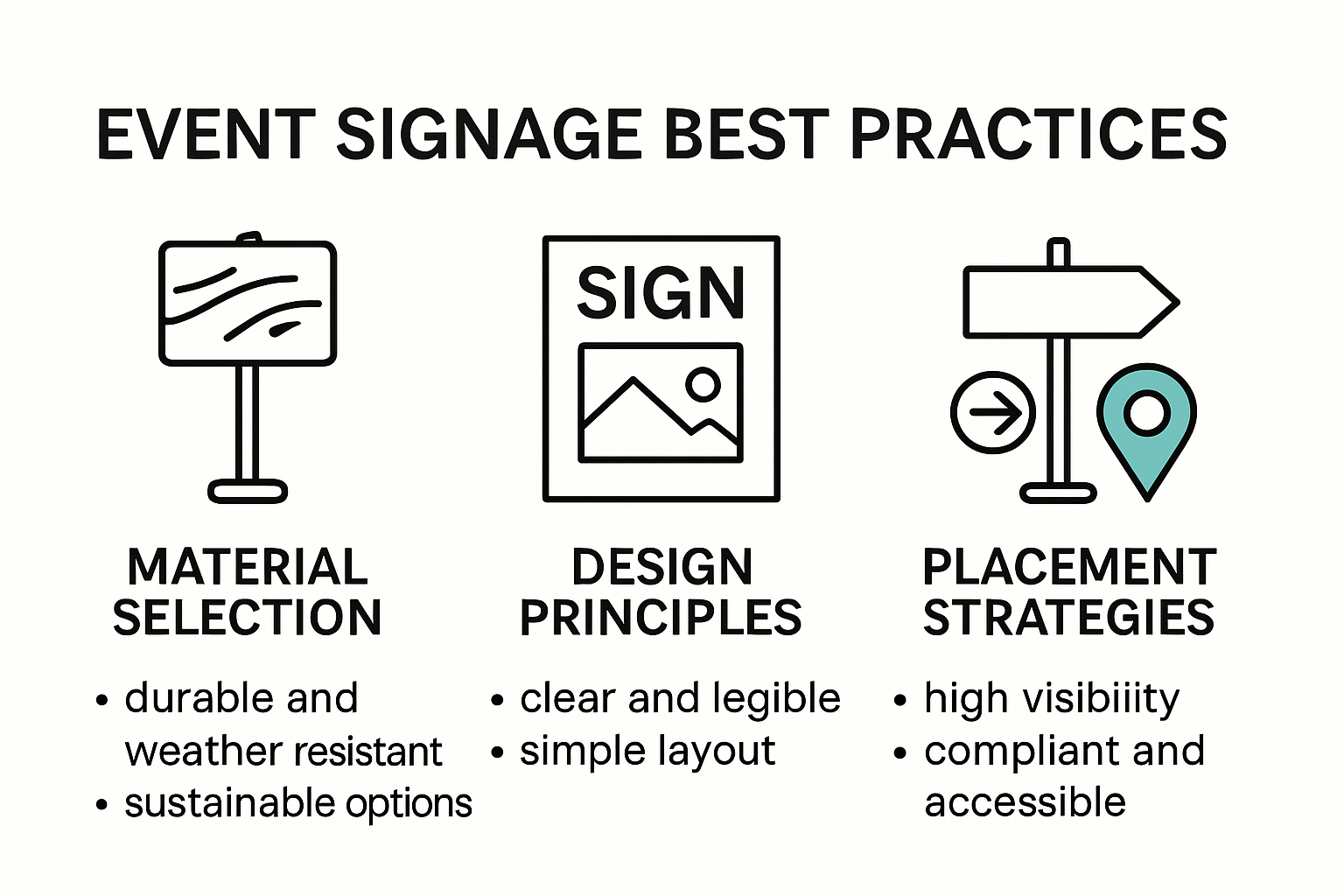
Choosing the Right Event Signage Materials
Selecting the appropriate materials for event signage represents a critical decision for London businesses in 2025. The right materials can transform an ordinary event display into a compelling visual communication tool that captures attention and reinforces brand messaging.
Sustainability and Performance: Modern Material Considerations
In 2025, event signage materials are no longer just about visual appeal but also environmental responsibility. Research from business sustainability experts reveals a significant industry shift towards eco-friendly options. Businesses are now prioritising materials that offer both performance and minimal environmental impact.
Modern composite materials like high-impact polystyrene (HIPS) and aluminum composite panels (ACM) have emerged as top choices. According to industry analysis, these materials provide exceptional durability and versatility. They can withstand varying weather conditions while remaining lightweight enough for easy transportation and installation.
Key sustainable material options include:
- Recycled Plastics: Environmentally conscious alternative with reduced carbon footprint
- Bamboo Composites: Renewable material offering natural aesthetic and structural integrity
- Low-Energy LED Components: Energy-efficient illumination solutions

Material Selection Strategy for Maximum Impact
Choosing event signage materials requires a strategic approach that balances multiple factors. Sustainable event planning experts recommend evaluating materials based on several critical criteria:
- Durability: Can the material withstand expected environmental conditions?
- Weight: Is the material lightweight enough for easy transportation?
- Visual Quality: Will the material effectively communicate your brand message?
- Environmental Impact: Does the material align with sustainability goals?
For businesses seeking comprehensive signage solutions, learn more about our innovative signage materials that combine cutting-edge design with environmental consciousness.
The material selection process goes beyond aesthetic considerations. Modern event signage demands a holistic approach that considers performance, sustainability, and brand representation. By carefully evaluating material properties and aligning them with event objectives, businesses can create signage that not only looks impressive but also communicates their commitment to quality and environmental responsibility.
Ultimately, the right material transforms event signage from a mere functional element into a powerful communication tool that engages audiences and reinforces brand identity. As London businesses continue to innovate, material selection will remain a critical aspect of successful event presentation strategies.
Design Tips for Clear and Impactful Signs
Creating visually compelling and effective event signage requires a strategic approach that goes beyond mere aesthetic considerations. In 2025, successful sign design demands a nuanced understanding of visual communication, audience engagement, and brand representation.
Typography and Visual Hierarchy
Research from sign design experts reveals that bold, impactful typography and minimalist layouts are crucial for creating memorable event signage. The strategic use of negative space allows core messages to stand out, ensuring readability from a distance.
Key typographic principles include:
- Font Selection: Choose clean, legible typefaces that reflect your brand identity
- Size Variation: Use font sizes to create visual hierarchy and guide viewer attention
- Colour Contrast: Implement high-contrast colour combinations for maximum visibility
Professional designers recommend maintaining a clear visual hierarchy that guides the viewer’s eye naturally through the sign’s content. This means prioritising the most critical information and using size, colour, and placement to create a logical flow of visual communication.
Interactive and Engaging Design Elements
Interactive signage trends demonstrate that modern event signs are no longer static communication tools. Incorporating elements like QR codes, touch-sensitive displays, or augmented reality features can significantly enhance audience engagement.
Learn more about innovative sign design strategies that can transform your event communication approach. These interactive elements not only provide additional information but also create memorable experiences that extend beyond traditional signage.
Clarity and Simplicity: The Core of Effective Signage
Signage design specialists emphasise the importance of clean, uncluttered designs. A clear focal point—whether a brand logo or key message—combined with large fonts and strategic use of negative space ensures maximum visibility in busy event environments.
The most effective signs communicate their message instantaneously. This requires:
- Ruthless editing of text content
- Clear, concise messaging
- Immediate visual comprehension
Beyond visual design, consider the practical context of your event signage. Factors like lighting conditions, viewing distance, and potential environmental challenges should inform your design choices. A sign that looks perfect in a design studio might struggle in real-world event settings.
Ultimately, exceptional event signage is a delicate balance of art and communication. It requires understanding your audience, your brand’s core message, and the unique context of your event. By focusing on clarity, engagement, and strategic design, businesses can create signs that not only inform but truly connect with their audience.
Strategic Placement for Maximum Visibility
Effective event signage goes far beyond design and material selection. Strategic placement becomes the critical factor that transforms a well-crafted sign from a passive visual element into an active communication tool that captures attention and drives engagement.
High-Impact Placement Zones
Research on event marketing reveals that two-thirds of event attendees develop more positive brand perceptions through strategic signage interactions. This underscores the importance of identifying and leveraging high-traffic areas for maximum visibility.
Key strategic placement considerations include:
- Entry Points: Position signs where attendees first enter the event space
- Decision Junctures: Install signage near areas where participants make key choices
- Natural Traffic Flow: Align signs with the most common movement patterns
Understanding spatial dynamics is crucial. Signs should not merely occupy space but actively guide and inform attendees. This requires a deep understanding of event layout, audience movement patterns, and psychological engagement triggers.
Digital Signage and Technological Integration
Global market projections indicate the digital signage market will reach $23.05 billion by 2025, highlighting the growing importance of technology-enhanced visibility strategies. Digital signs offer unprecedented flexibility in placement and content delivery.
Advanced placement techniques for digital signage include:
- Multilevel positioning for diverse viewing angles
- Interactive touchpoints at strategic locations
- Dynamic content rotation to maintain audience interest
Explore our comprehensive guide on innovative sign placement to understand how technology can revolutionise your event communication approach.
Psychological Considerations in Sign Placement
In-person event marketing research confirms that 78% of organisers consider physical events the most impactful marketing channel. This emphasises the critical role of psychological placement strategies.
Effective placement requires understanding:
- Attendee eye-level perspectives
- Natural sightlines and peripheral vision patterns
- Contextual relevance of sign positioning
Consider the psychological journey of event attendees. Signs should not feel intrusive but instead appear as natural, helpful wayfinding elements that seamlessly integrate into the event experience.
The art of sign placement is a nuanced blend of spatial awareness, technological integration, and psychological insight. By treating signage as a dynamic communication tool rather than a static display, businesses can create more engaging, informative, and memorable event experiences.
Ultimately, strategic sign placement transforms information delivery from a passive broadcast into an interactive, intuitive navigation experience that guides, informs, and delights event participants.
Compliance, Sustainability and Local London Insights
Navigating the complex landscape of event signage in London requires a comprehensive understanding of local regulations, sustainability standards, and accessibility requirements. Businesses must balance creative expression with legal compliance and environmental responsibility.
Regulatory Landscape for Event Signage
Outdoor signage regulations in London are governed by the Town and Country Planning (Control of Advertisements) Regulations 2007. These regulations provide a detailed framework for sign placement, with specific considerations for illuminated and non-illuminated signs.
Key regulatory considerations include:
- Consent Requirements: Illuminated signs always require express planning consent
- Size Limitations: Specific restrictions on sign dimensions and placement
- Temporary Event Signage: Strict guidelines for installation and removal
Temporary traffic signs for special events must adhere to additional protocols. Event organisers must submit detailed proposals to traffic authorities at least 4 weeks in advance, including comprehensive event details such as visitor numbers and parking provisions.
Accessibility and Inclusive Design
London businesses are increasingly required to implement signage that meets enhanced visibility and accessibility standards. This involves more than aesthetic considerations, focusing on creating inclusive communication experiences.
Critical accessibility design elements include:
- Contrast Ratios: Specific requirements for visual legibility
- Tactile Lettering: Dimensions and placement for enhanced readability
- Multilingual Considerations: Supporting diverse communication needs
Explore our comprehensive guide to inclusive signage design to understand how businesses can create more accessible event communication strategies.
Sustainability and Environmental Responsibility
Modern event signage must go beyond compliance, embracing a holistic approach to environmental sustainability. This means selecting materials, production methods, and disposal strategies that minimise ecological impact.
Sustainability strategies for event signage include:
- Using recycled or biodegradable materials
- Implementing energy-efficient production techniques
- Designing for reusability and long-term application
- Developing circular economy approaches to sign design
Businesses that prioritise sustainability not only meet regulatory requirements but also demonstrate corporate social responsibility. This approach resonates with environmentally conscious consumers and positions brands as forward-thinking and responsible.
The intersection of compliance, accessibility, and sustainability represents the future of event signage in London. By understanding and proactively addressing these multifaceted requirements, businesses can create signage that is not just legally compliant, but truly effective and responsible.
Successful event signage in 2025 requires a holistic approach that balances creative expression, legal adherence, technological innovation, and environmental consciousness. London businesses that master this balance will set new standards in communication and design.
Frequently Asked Questions
What are the best materials for event signage in 2025?
Selecting sustainable materials is crucial. Popular options include recycled plastics, bamboo composites, and low-energy LED components, which balance durability and environmental responsibility.
How can I ensure my event signage is compliant with London regulations?
Familiarise yourself with the Town and Country Planning regulations, which govern signage in London. Ensure your signs meet consent requirements, size limitations, and follow guidelines for temporary signage related to events.
What design elements make event signage more effective?
Effective event signage should feature clear typography, a strong visual hierarchy, and engaging elements like QR codes. Clarity and simplicity are essential, ensuring that key messages are instantly understandable.
How should I strategically place my signage at an event?
Position signage in high-traffic areas, near entry points, and at decision junctures. Consider attendee behaviour and sightlines to optimise visibility and guide movement through the event.
Transform Your London Event Presence with Sustainable, Impactful Signage
Struggling to choose eco-friendly materials, achieve legal compliance and grab real audience attention at your next London event? Our team at PromoSigns understands that finding signage solutions that tick every box — from sustainable composites to stand-out illuminated signs — can feel like a balancing act. As highlighted in the article, clarity in design and strategic placement are essential for making your brand memorable, yet many businesses miss out on expertly crafted signage that aligns with their vision and new 2025 regulations.
Let us make your event signage stress-free. Discover how our fully customised design, print and installation services can turn complex requirements into effortless success. Visit PromoSigns to explore solutions for illuminated signs, shop signs and large format displays, or contact our London signage experts today to secure a consultation before event season fills up. Be ready to stand out for all the right reasons — act now to guarantee your brand makes a lasting impression.
Recommended Articles
- Event Signage Importance in 2025: Boosting Business in London – PromoSigns.co.uk
- Retail Sign Design Tips 2025: Essential Guide for London Businesses – PromoSigns.co.uk
- Signage for Office Interiors: 2025 Guide for London Businesses – PromoSigns.co.uk
- Types of Shop Signs for London Businesses: The 2025 Guide – PromoSigns.co.uk
- Custom Sign Design Process for London Businesses: 2025 Guide – PromoSigns.co.uk
- What Is Illuminated Signage? 2025 Guide for London Businesses – PromoSigns.co.uk
