
TL;DR:
- Flexible sign materials are designed to bend, fold, or roll without cracking or losing their printed finish, making them ideal for portable signage. They include vinyl, PVC flex face, magnetic vinyl, and textile prints, each suited for specific indoor or outdoor applications. Proper selection based on environment, handling, print technology, and budget ensures optimal performance and durability.
Flexible sign materials are substrates designed to bend, fold, or roll without cracking or losing their printed finish, making them the go-to choice for businesses and event planners who need signage that travels, adapts, and performs across multiple settings. Unlike rigid boards, these materials cover a broad category that the industry often terms “flexible substrates” or “flexible media,” and they span everything from cast vinyl and PVC flex face to magnetic sheeting and textile prints. Whether you are fitting out a retail window, branding a construction hoarding, or setting up an exhibition stand, the right flexible substrate determines how long your signage lasts, how well it prints, and how much it costs to transport and store.
Table of Contents
What are the common types of flexible sign materials?
Flexible substrates fall into four main categories, each with distinct properties that suit different applications. Understanding those differences before you order saves money and prevents costly reprints.
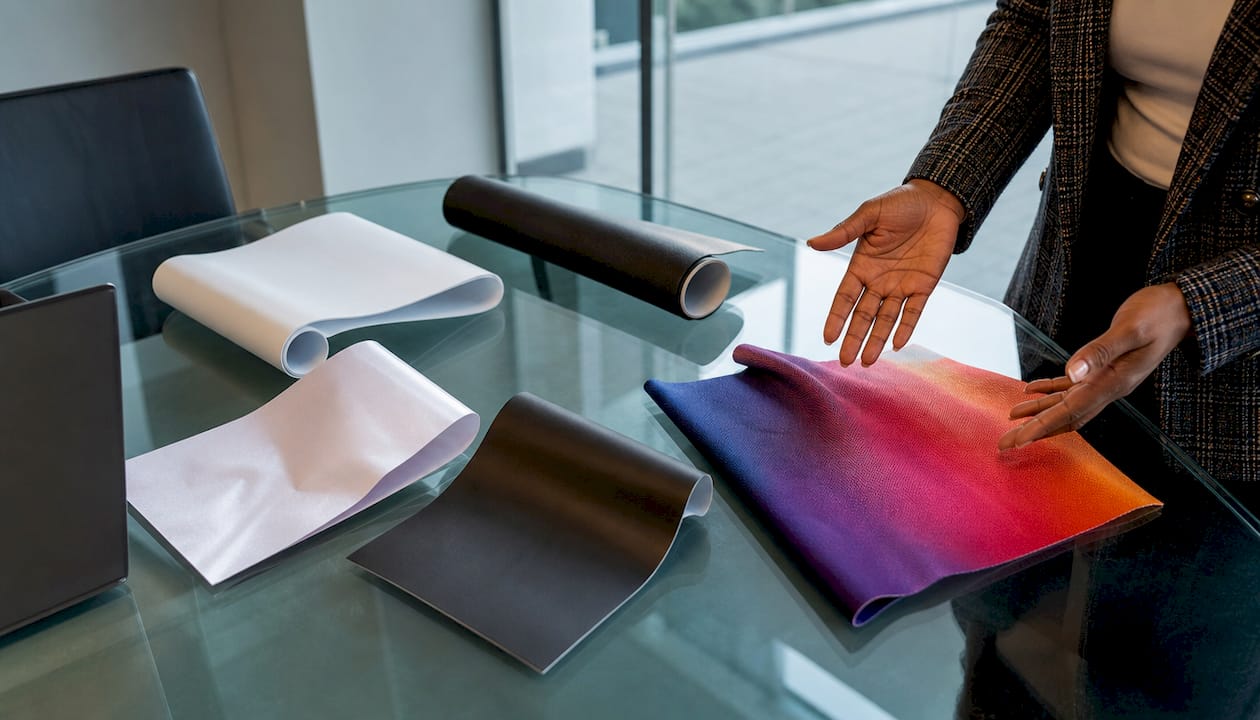
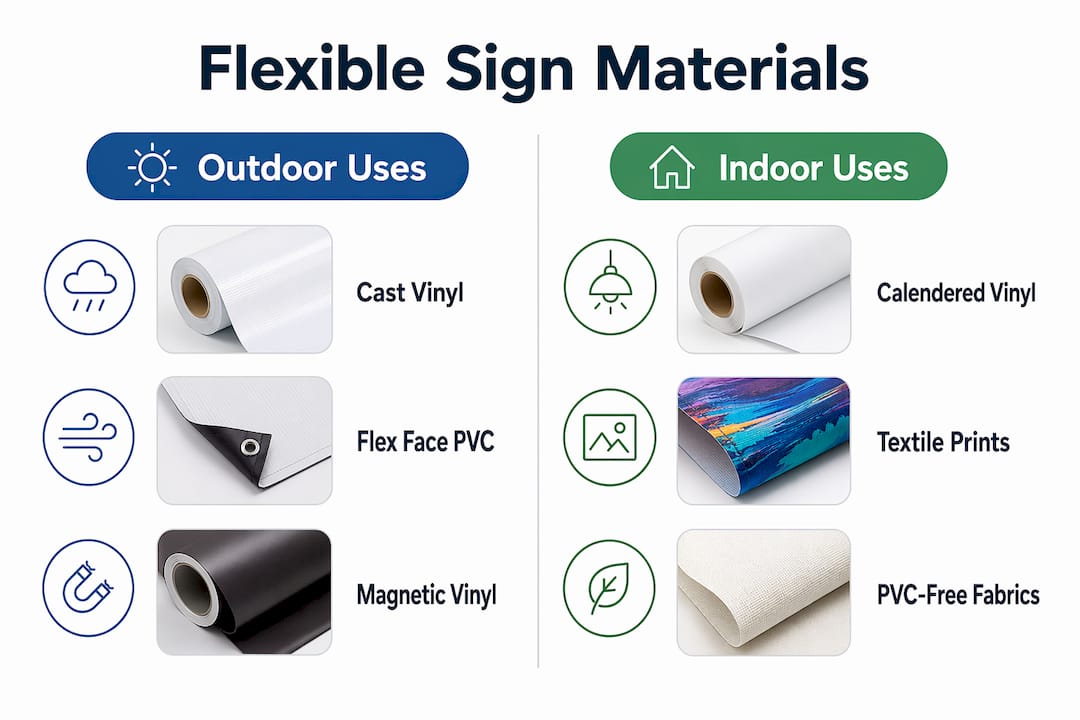
Calendered and cast vinyl are the most widely used flexible sign materials in the UK. Cast vinyl is thinner, conforms to curved surfaces, and resists shrinkage over time, making it the preferred choice for vehicle graphics and window films. Calendered vinyl is thicker and more affordable, suited to flat surfaces and short-to-medium-term displays. Vinyl materials combine strong weather resistance with flexibility, which is why they appear in both safety signage and promotional displays.
Flex face material, made from PVC, is lightweight and built for large-scale transportable signage mounted on aluminium frames. Flex face offers superior flexibility and durability compared to rigid boards under transport and outdoor display conditions. That makes it a strong choice for illuminated fascia signs and large retail banners that need to survive repeated installation and removal.
Magnetic PVC vinyl blends flexibility with reusability. Magnetic flexible materials maintain strong adhesion without surface damage and reposition easily, which suits temporary promotions, vehicle signage, and indoor displays that change frequently.
Textile prints (woven polyester or knitted fabric substrates) are gaining ground as a PVC alternative. They fold flat, weigh less than vinyl equivalents, and produce vivid colour output on dye-sublimation and UV printers.
| Material | Weight | Weather resistance | Print quality | Typical use |
|---|---|---|---|---|
| Cast vinyl | Light | Excellent | Excellent | Vehicle graphics, window films |
| Calendered vinyl | Medium | Good | Good | Flat promotional displays |
| Flex face PVC | Medium | Excellent | Excellent | Large fascia, illuminated signs |
| Magnetic PVC vinyl | Medium | Good | Good | Temporary, repositionable signs |
| Textile / fabric | Very light | Moderate | Very good | Exhibition, indoor banners |
Pro Tip: Request a physical sample of your chosen substrate before committing to a full print run. Colour rendering and surface texture vary significantly between suppliers, and a sample costs far less than a reprint.
How to select the best flexible sign material for your needs
Choosing the right substrate comes down to five practical criteria. Work through them in order and you will narrow the field quickly.
-
Indoor or outdoor placement. Outdoor materials must resist UV degradation, rain, and wind loading. Cast vinyl and flex face PVC are rated for prolonged outdoor exposure. Textile substrates perform well indoors but degrade faster in direct sunlight and rain unless treated.
-
Handling frequency. Signage that goes up and comes down repeatedly needs a material that resists cracking at fold points. Magnetic vinyl and knitted fabric both tolerate repeated handling without surface damage. Calendered vinyl can crack at sharp folds after extended use.
-
Print technology compatibility. Solvent and eco-solvent printers bond well with vinyl substrates. Dye-sublimation printing requires polyester fabric. UV flatbed printers work across most flexible media but need a substrate with sufficient rigidity to feed correctly. Confirm compatibility with your printer before specifying a material.
-
Budget and lifespan balance. Cast vinyl costs more upfront but lasts longer outdoors, reducing replacement frequency. Calendered vinyl costs less but may need replacing within 12–18 months in exposed locations. Textile prints and flexible vinyl reduce logistics costs and improve storage efficiency, which matters when you are managing multiple event locations.
-
Sustainability requirements. PVC-free alternatives are now technically validated for print quality and durability. Physical testing surpasses theoretical specifications when selecting eco-friendly substrates. That means you should test any PVC-free option in real conditions before rolling it out across a campaign. Promosigns can advise on eco-friendly signage options that meet both performance and environmental targets.
Pro Tip: Ask your signage supplier for a lamination recommendation alongside the substrate. A UV-resistant overlaminate can extend the outdoor life of a calendered vinyl print by 12 months or more.
Benefits and limitations of flexible sign materials vs rigid options
Flexible substrates offer clear advantages over rigid alternatives such as aluminium composite, foam PVC board, or acrylic. The trade-offs are equally real, and knowing both sides helps you make the right call for each project.
Key benefits:
- Portability. Flexible materials roll or fold into compact formats. A 3-metre banner that would require a van to transport as a rigid board ships as a rolled tube via courier.
- Storage efficiency. Rolled or folded substrates stack flat and take up a fraction of the warehouse space that rigid panels require.
- Installation ease. Vinyl and fabric banners attach with eyelets, tension systems, or adhesive, removing the need for specialist fixings or heavy lifting equipment.
- Cost savings. Businesses prioritise flexible signage for its ease of transportation and cost advantages over rigid materials. Lower freight and storage costs compound over multiple campaigns.
- Reusability. Magnetic vinyl and fabric substrates can be repositioned and reused across different locations without reprinting.
Limitations to consider:
- Structural strength. Flexible materials cannot self-support. They require frames, tensioning systems, or fixing points to display correctly. A rigid board stands alone; a vinyl banner does not.
- Wear at stress points. Eyelets and hem edges are the first areas to fail on banner materials, particularly in high-wind outdoor settings. Reinforced hems and welded eyelets extend lifespan significantly.
- Perceived quality. In premium retail or corporate environments, a fabric or vinyl display can read as temporary compared to brushed aluminium or acrylic signage. Match the material to the brand positioning of the space.
Flexible materials excel in event settings, construction hoardings, and promotional retail displays. They fall short where permanent, structural, or premium-finish signage is required.
Practical applications across retail, events, and construction
The real value of flexible advertising materials shows up in how they perform across different sectors. Each environment places different demands on the substrate.
Retail
Retail signage changes frequently. Promotional windows, seasonal campaigns, and new product launches all require fast turnaround and cost-effective production. Cast vinyl window graphics apply directly to glass, allow full-colour photographic print quality, and remove cleanly without residue. Roller banners using calendered vinyl or fabric provide portable point-of-sale displays that staff can reposition between departments. For driving retail footfall, window graphics printed on perforated vinyl allow one-way vision, maintaining privacy while displaying full-colour graphics externally.
Events and exhibitions
Portable exhibition displays rely heavily on fabric and flex face substrates. Portable exhibition graphics traditionally use PVC, but technically validated alternatives now match PVC for print quality and durability. Fabric tension displays pack into carry cases, set up without tools, and produce a wrinkle-free finish that photographs well. For large exhibition stands, the benefits of portable display stands include faster setup times and lower freight costs across multiple show dates.
Construction
Construction sites have specific regulatory requirements. The Health and Safety (Safety Signs and Signals) Regulations 1996 require safety signage to use standard colours and symbols conforming to ISO 7010. Flexible vinyl safety signs meet these standards and offer easy installation on hoardings, fencing, and temporary structures. Temporary works on construction sites require signage that complies with site safety standards, and flexible substrates are well suited to hoardings and safety warnings that need repositioning as a site evolves.
| Sector | Recommended material | Primary reason |
|---|---|---|
| Retail windows | Cast vinyl / perforated vinyl | Clean removal, high print quality |
| Retail POS displays | Calendered vinyl / fabric | Cost-effective, portable |
| Exhibition stands | Fabric / flex face PVC | Lightweight, wrinkle-free finish |
| Event banners | Calendered vinyl | Fast turnaround, low cost |
| Construction hoardings | Flex face PVC / vinyl | Weather resistance, ISO 7010 compliance |
| Site safety signs | Flexible vinyl | Regulatory compliance, easy installation |
What I have learned from years of specifying flexible substrates
The most common mistake businesses make is treating material selection as an afterthought. They brief the design, approve the artwork, and then ask what it should be printed on. By that point, the substrate choice is driven by speed rather than suitability, and the result is a sign that underperforms or fails early.
The second thing I have noticed is that sustainability in signage is less a limitation than a real opportunity. PVC-free substrates have improved dramatically. The hesitation most businesses feel comes from uncertainty about print quality, not from any genuine performance gap. The answer is always the same: test before you commit. A physical sample in real conditions tells you more than any specification sheet. For clients who want to align their sustainable signage choices with broader brand values, the options are now genuinely competitive with traditional PVC.
The third lesson is that the best flexible substrate for your project is rarely the cheapest or the most expensive. It is the one that matches your environment, your handling requirements, and your print process. Get those three aligned and the material will perform exactly as expected.
— Promo
How Promosigns can help you choose the right signage material
Promosigns works with businesses and event planners across London, Essex, and Kent to specify, produce, and install bespoke signage using the right substrate for each application.

Whether you need custom shop signs for a retail fascia, vinyl banners for a construction hoarding, or fabric displays for an exhibition stand, Promosigns handles the full process from material selection through to professional installation. The team advises on substrate suitability, print compatibility, and longevity before a single panel goes to print. UK-based production means fast turnaround times and direct quality control at every stage. Contact Promosigns to discuss your next signage project and get a material recommendation tailored to your specific environment and budget.
FAQ
What are the most durable flexible sign materials for outdoor use?
Cast vinyl and flex face PVC are the most durable outdoor flexible substrates. Both offer strong UV and weather resistance, making them suitable for long-term exterior signage on hoardings, fascias, and banners.
Can flexible sign materials comply with construction site safety regulations?
Flexible vinyl safety signs meet the requirements of the Health and Safety (Safety Signs and Signals) Regulations 1996 and conform to ISO 7010 standards. They are widely used on UK construction sites for hoardings and temporary safety warnings.
Are there PVC-free alternatives that match vinyl for print quality?
PVC-free substrates, including polyester fabric and specialist eco-media, now match traditional vinyl for print quality when technically validated in real-world conditions. Physical testing is the recommended method for confirming suitability before a full production run.
How do flexible sign materials compare to rigid boards on cost?
Flexible materials typically cost less to produce, transport, and store than rigid alternatives. The reduction in freight and storage costs makes them particularly cost-effective for businesses managing signage across multiple locations or events.
Which flexible substrate works best for exhibition displays?
Fabric tension systems and flex face PVC are the leading choices for exhibition displays. Fabric packs into carry cases, sets up without tools, and produces a wrinkle-free finish, while flex face PVC suits larger illuminated or framed display formats.
Recommended
- Signage Accessibility Guidelines: A Practical Guide for UK Businesses – PromoSigns.co.uk
- Custom Sign Design Process for London Businesses: 2025 Guide – PromoSigns.co.uk
- Durable sign materials: the complete UK buyer’s guide – PromoSigns.co.uk
- Sign Installations and Fitters Service in UK | Promo Signs
