
Health and safety signage lines the walls of nearly every UK workplace, shaping daily routines and decisions. Yet, despite this constant presence, research shows that clear safety signage can reduce workplace accidents by up to 35 percent. Most businesses think simply hanging a sign ticks the compliance box. The reality is far more complex and surprising, as the real impact depends on subtle rules about placement, maintenance, and employee understanding—changing the way businesses approach safety forever.
Table of Contents
Table of Contents
- Why Health and Safety Signage Matters for Businesses
- Types of Health and Safety Signs Used in the UK
- Legal Requirements and Compliance in 2025
- Best Practices for Placing and Maintaining Signage
Quick Summary
| Takeaway | Explanation |
|---|---|
| Effective signage is legally required | Compliance with Health and Safety Executive regulations protects businesses from penalties and accidents. Clear signage is essential for legal safety obligations. |
| Different signs serve specific purposes | Prohibition, warning, mandatory, safe condition, and emergency signs each convey critical information unique to workplace safety, guiding appropriate actions. |
| Proper sign placement enhances visibility | Signs must be strategically placed at eye level and in clear sight, considering light conditions and potential obstructions to ensure effectiveness. |
| Ongoing maintenance is crucial | Regular inspections and timely replacements of damaged signs ensure clarity and compliance, preventing information loss and enhancing safety. |
| Employee training boosts safety culture | Training workers on the meanings and importance of signage fosters awareness and promotes adherence to safety protocols within the organisation. |
Why Health and Safety Signage Matters for Businesses
Health and safety signage represents a critical component of workplace safety, risk management, and legal compliance for businesses across all sectors. These visual communication tools are far more than simple decorative elements – they are essential lifelines that protect employees, visitors, and organisational integrity.
Legal and Regulatory Compliance
Businesses have a fundamental legal obligation to communicate potential workplace hazards effectively. Occupational Safety and Health Administration (OSHA) guidelines emphasise that clear and standardised safety signage is not just recommended but mandatory. Proper health and safety signage helps organisations meet regulatory requirements, demonstrating a proactive approach to workplace protection. Failure to implement appropriate signage can result in significant financial penalties, legal challenges, and potential workplace accidents.
The UK’s Health and Safety Executive (HSE) mandates specific requirements for safety signage across different work environments. These regulations cover various aspects, including warning signs, prohibition signs, mandatory action signs, and emergency escape signage. By adhering to these standards, businesses create a safer working environment and mitigate potential legal risks.
Preventing Workplace Incidents and Injuries
Effective health and safety signage plays a crucial role in accident prevention. Visual warnings and instructions provide immediate, clear communication about potential risks, helping employees and visitors navigate complex or hazardous environments safely. Well-designed signs can quickly draw attention to dangerous areas, highlight necessary protective equipment, and guide individuals towards safe practices.
Statistics demonstrate the tangible impact of comprehensive safety signage. Research indicates that clear, strategically placed signs can reduce workplace accidents by up to 35%. These signs serve multiple functions: alerting individuals to potential dangers, providing guidance on correct procedures, and reinforcing safety training across the organisation.
Building a Culture of Safety and Awareness
Beyond legal compliance, health and safety signage contributes to developing a robust safety culture within an organisation. When employees consistently encounter clear, professional signage, it reinforces the message that workplace safety is a top priority. This visual communication helps create an environment where safety becomes an ingrained part of daily operations.
Moreover, well-designed health and safety signage can improve overall workplace morale and productivity. When workers feel protected and understand potential risks, they are more likely to engage positively with safety protocols. Learn more about our comprehensive signage solutions for workplace safety.
Investing in high-quality, compliant health and safety signage is not an optional expense but a critical business strategy. These visual communication tools protect human lives, reduce organisational risk, and demonstrate a commitment to employee welfare and professional excellence.
Types of Health and Safety Signs Used in the UK
Health and safety signs in the UK form a critical communication system designed to protect workers, visitors, and the general public from potential hazards. Understanding the various types of signs is essential for businesses to maintain a safe and compliant workplace environment.
Prohibition, Warning, and Mandatory Signs
The UK health and safety signage framework categorises signs into distinct types with specific visual characteristics. According to the Health and Safety Executive (HSE), these signs are strategically designed to provide immediate visual communication about workplace risks and required actions.
Prohibition Signs: Characterised by a red circular design with a diagonal line, these signs indicate actions that are strictly forbidden. Typical examples include “No Smoking” or “Do Not Enter” signs. They use a bold red color to ensure high visibility and convey an immediate stop or restriction message.
Warning Signs: Typically triangular with a yellow background and black border, these signs alert individuals to potential hazards or dangerous conditions. Examples include signs warning about electrical risks, chemical hazards, or falling object zones. The distinctive color and shape draw immediate attention to potential dangers.
Mandatory Signs: Presented as blue circular signs, these indicate specific actions that must be taken to ensure safety. Common examples include “Wear Safety Helmet” or “Use Protective Gloves”. The blue color symbolises a required action, distinguishing them from warning or prohibition signs.
To better understand the visual features and purposes of these three main sign types, refer to the table below:
Here is a summary table comparing the key characteristics of Prohibition, Warning, and Mandatory Signs as described in this section:
| Type of Sign | Colour & Shape | Typical Purpose | Examples |
|---|---|---|---|
| Prohibition | Red circle with diagonal line | Forbidding actions | No Smoking, Do Not Enter |
| Warning | Yellow triangle, black border | Warning about hazards | Electrical Risk, Chemical Hazard |
| Mandatory | Blue circle | Requiring specific actions | Wear Safety Helmet, Use Gloves |
Safe Condition and Emergency Signs

University College London’s safety guidelines highlight the importance of safe condition and emergency signage. These signs play a crucial role in guiding people to safety during critical situations.
Safe condition signs are green and rectangular, providing information about emergency exits, first aid locations, and safe routes. They offer reassuring guidance during potentially stressful situations. Emergency escape signs typically feature a running figure symbol, clearly indicating evacuation paths and assembly points.
Firefighting and Specialized Signs
Firefighting signs represent another critical category of health and safety signage. These red signs with white graphics indicate the location of fire extinguishers, fire alarms, and other firefighting equipment. The Health and Safety (Safety Signs and Signals) Regulations 1996 provide detailed specifications for these signs to ensure clarity and immediate recognition.
Moreover, certain industries require specialized signage beyond standard categories. Construction sites, chemical laboratories, and manufacturing facilities might need additional signs indicating specific technical hazards or required protective equipment. Explore our comprehensive guide to workplace signage solutions to understand the nuanced requirements for different work environments.
Understanding and implementing these diverse sign types is not just a legal requirement but a fundamental aspect of creating a safe, responsible workplace. Each sign type serves a specific communication purpose, transforming visual information into a language of safety that protects lives and prevents accidents.
Legal Requirements and Compliance in 2025
As we approach 2025, health and safety signage compliance has become increasingly sophisticated, with businesses facing more complex regulatory requirements that demand precision, adaptability, and comprehensive understanding of legal standards.
Evolving Regulatory Landscape
The UK’s health and safety legislation continues to develop, placing greater emphasis on proactive risk management and clear communication. The Health and Safety Executive (HSE) guidelines mandate that businesses must not only implement safety signs but ensure they meet stringent design, placement, and maintenance standards.
Key legislative frameworks such as the Health and Safety at Work Act 1974 and the Management of Health and Safety at Work Regulations 1999 remain fundamental. However, recent updates reflect emerging workplace technologies, remote working trends, and more nuanced approaches to hazard communication. Businesses must now demonstrate not just the presence of signage, but its effectiveness in communicating potential risks.
Technical Standards and Design Requirements
The British Standards Institution (BSI) provides detailed specifications for health and safety signage that go beyond basic visual communication. These standards specify precise color codes, symbol designs, and visibility requirements. For instance, signs must now account for different visual abilities, including considerations for color-blind individuals and improved contrast ratios.
The ANSI Z535 standards, although originating in the United States, are increasingly adopted internationally as a benchmark for safety sign design. These guidelines emphasise not just the visual appearance of signs but their cognitive effectiveness in communicating risk quickly and unambiguously.
Sector-Specific Compliance Challenges
Different industries face unique compliance challenges that require tailored signage approaches. Construction, manufacturing, healthcare, and hospitality sectors each have specific regulatory requirements that demand specialised safety signage solutions.
For example, healthcare facilities must now integrate COVID-19 related safety protocols into their existing signage frameworks, while manufacturing environments require increasingly sophisticated hazard communication systems that integrate with digital safety management platforms. Explore our comprehensive guide to navigating these complex compliance requirements.
The financial implications of non-compliance remain significant. Businesses can face substantial penalties for inadequate safety signage, ranging from fixed monetary penalties to potential legal action in cases of serious breaches. Moreover, insurance providers are increasingly scrutinising safety documentation, with comprehensive and compliant signage playing a crucial role in risk assessment.
As we move through 2025, successful businesses will view health and safety signage not as a mere regulatory checkbox, but as a strategic communication tool that protects employees, demonstrates corporate responsibility, and mitigates potential legal and financial risks. The most effective organisations will adopt a proactive, holistic approach to safety signage that goes beyond minimum legal requirements.
Best Practices for Placing and Maintaining Signage
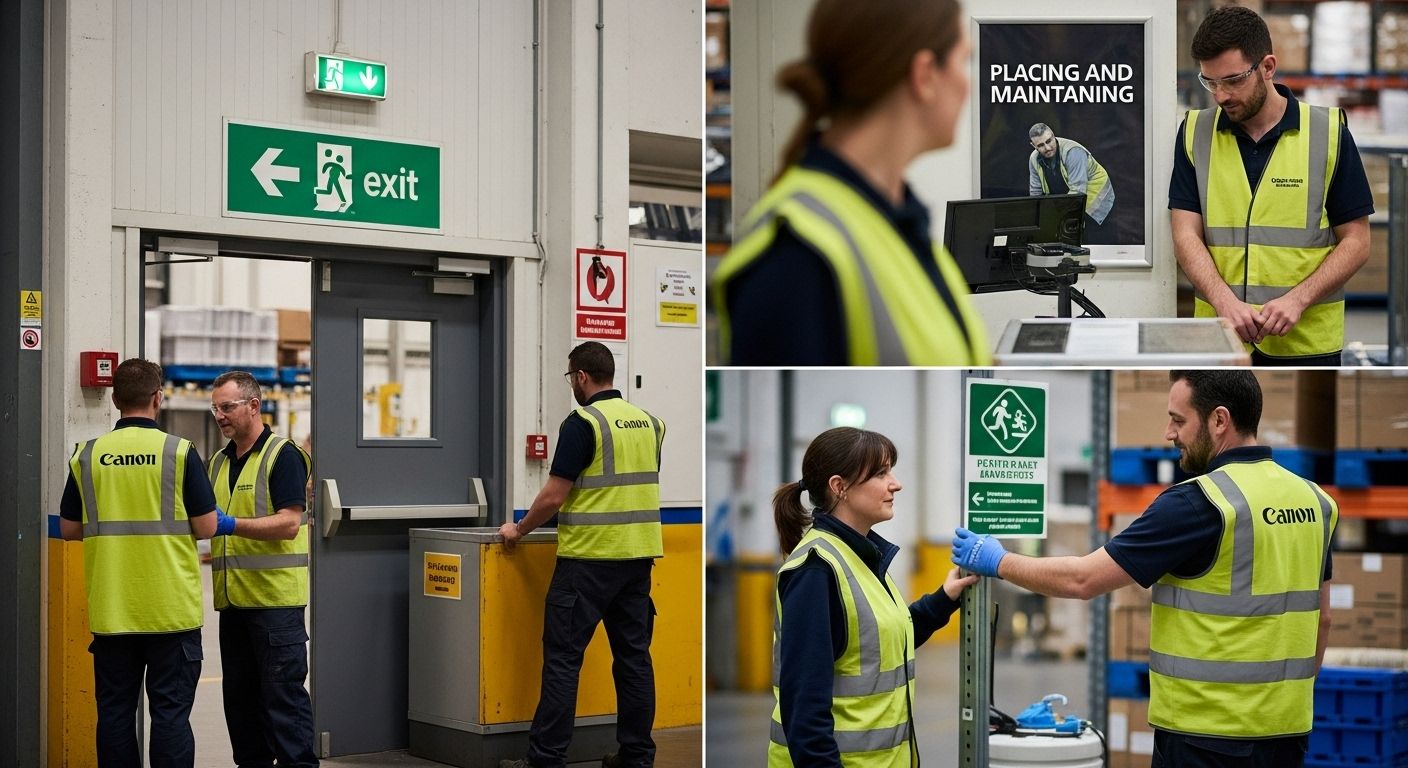
Effective health and safety signage extends far beyond design and creation. The strategic placement, ongoing maintenance, and regular assessment of signs are crucial elements that determine their ultimate effectiveness in protecting workers and communicating critical safety information.
Strategic Placement and Visibility
The Health and Safety Executive (HSE) guidance emphasises the critical importance of sign placement. Signs must be positioned where they can be easily seen and understood before individuals encounter potential hazards. This means considering factors such as lighting, viewing distance, potential obstructions, and the natural movement patterns of people within a workspace.
Key considerations for optimal sign placement include:
- Clear Line of Sight: Ensure signs are unobstructed and visible from multiple angles
- Appropriate Height: Position signs at eye level for maximum readability
- Contextual Positioning: Place signs immediately adjacent to the hazard or area they describe
- Lighting Conditions: Account for both natural and artificial lighting to maintain visibility
Professional sign installers recommend conducting a comprehensive site survey to identify the most effective locations for safety signage, taking into account unique architectural features and workflow patterns.
Maintenance and Ongoing Management
HSE’s workplace transport guidance highlights that signs must be consistently maintained to ensure their continued effectiveness. This involves regular inspections, cleaning, and timely replacement of signs that become damaged, faded, or outdated.
A comprehensive maintenance strategy should include:
- Quarterly visual inspections of all safety signage
- Cleaning protocols to maintain sign clarity and visibility
- Immediate replacement of damaged or illegible signs
- Periodic review of sign relevance against current workplace conditions
Technological advancements now enable digital tracking of sign conditions, allowing businesses to implement more proactive maintenance approaches. Learn more about professional sign installation techniques.
Below is a checklist table outlining the key steps recommended for maintaining effective health and safety signage, as described in this section:
| Maintenance Step | Status/Description |
|---|---|
| Quarterly visual inspections | Ensure all signs are clear and visible |
| Cleaning protocols | Maintain clarity and appearance |
| Immediate replacement of damaged/illegible signs | Prevent information loss |
| Periodic review of sign relevance | Adjust signage for current conditions |
Employee Training and Engagement
The most meticulously placed and maintained signs will only be effective if employees understand their meaning and importance. According to HSE workplace health guidelines, employers must not only provide safety signs but also explain their significance to workers.
Effective employee engagement strategies include:
- Comprehensive safety induction training covering sign meanings
- Regular refresher sessions on workplace safety signage
- Encouraging a culture of safety awareness where employees are empowered to report sign-related issues
- Interactive training methods that help workers understand and internalize safety sign communications
Businesses should view safety signage as a dynamic communication system rather than a static regulatory requirement. By adopting a holistic approach that combines strategic placement, rigorous maintenance, and ongoing employee education, organisations can transform their safety signage from mere compliance tools to genuine life-saving communication mechanisms.
Ultimately, the goal is not just to meet legal requirements but to create an environment where safety is intuitive, visible, and deeply embedded in the workplace culture.
Frequently Asked Questions
What are the key types of health and safety signs in the UK?
The main types of health and safety signs in the UK include prohibition signs (red circular), warning signs (yellow triangular), and mandatory signs (blue circular). Each serves a specific purpose, communicating important safety information clearly to employees and visitors.
Why is health and safety signage important for UK businesses?
Health and safety signage is crucial for legal compliance, preventing workplace incidents, and fostering a culture of safety. Effective signage can reduce workplace accidents by up to 35% and demonstrates a commitment to employee welfare.
What are the legal requirements for health and safety signage in 2025?
In 2025, UK businesses must comply with regulations set by the Health and Safety Executive (HSE), which mandate clear, effective signage designed according to specific standards. These regulations cover various sign types, their placement, and maintenance to ensure workplace safety.
How often should health and safety signs be maintained?
Health and safety signs should be inspected quarterly to ensure clarity and visibility. Any damaged, faded, or outdated signs should be replaced immediately to maintain effective communication of safety information.
Ready to Make Your Workplace Safer and Fully Compliant?
Too many businesses risk fines and workplace accidents by settling for generic or poorly maintained safety signs. As highlighted in our essential guide, proper health and safety signage is not just required by law in 2025. It is vital for building a visible safety culture, reducing incidents, and protecting your reputation. If you are in London, Essex, or Kent and want to guarantee your signage is fully compliant, clearly placed, and easy for everyone to understand, trust the team who knows local regulations inside and out.
Act now to secure expert design, fast production, and professional installation from PromoSigns. Explore our full range of solutions on our homepage. Still unsure which sign fits your space? Browse our walkthrough on professional commercial sign installation to see how straightforward safe signage can be. Get in touch today to protect your staff and your business.
Recommended
- Signage for Compliance: Essential Guide for 2025 UK Businesses – PromoSigns.co.uk
- Retail Signage Compliance Guide 2025 for London Businesses – PromoSigns.co.uk
- Signage for Office Interiors: 2025 Guide for London Businesses – PromoSigns.co.uk
- What Is Office Signage? Guide for London Businesses 2025 – PromoSigns.co.uk
