
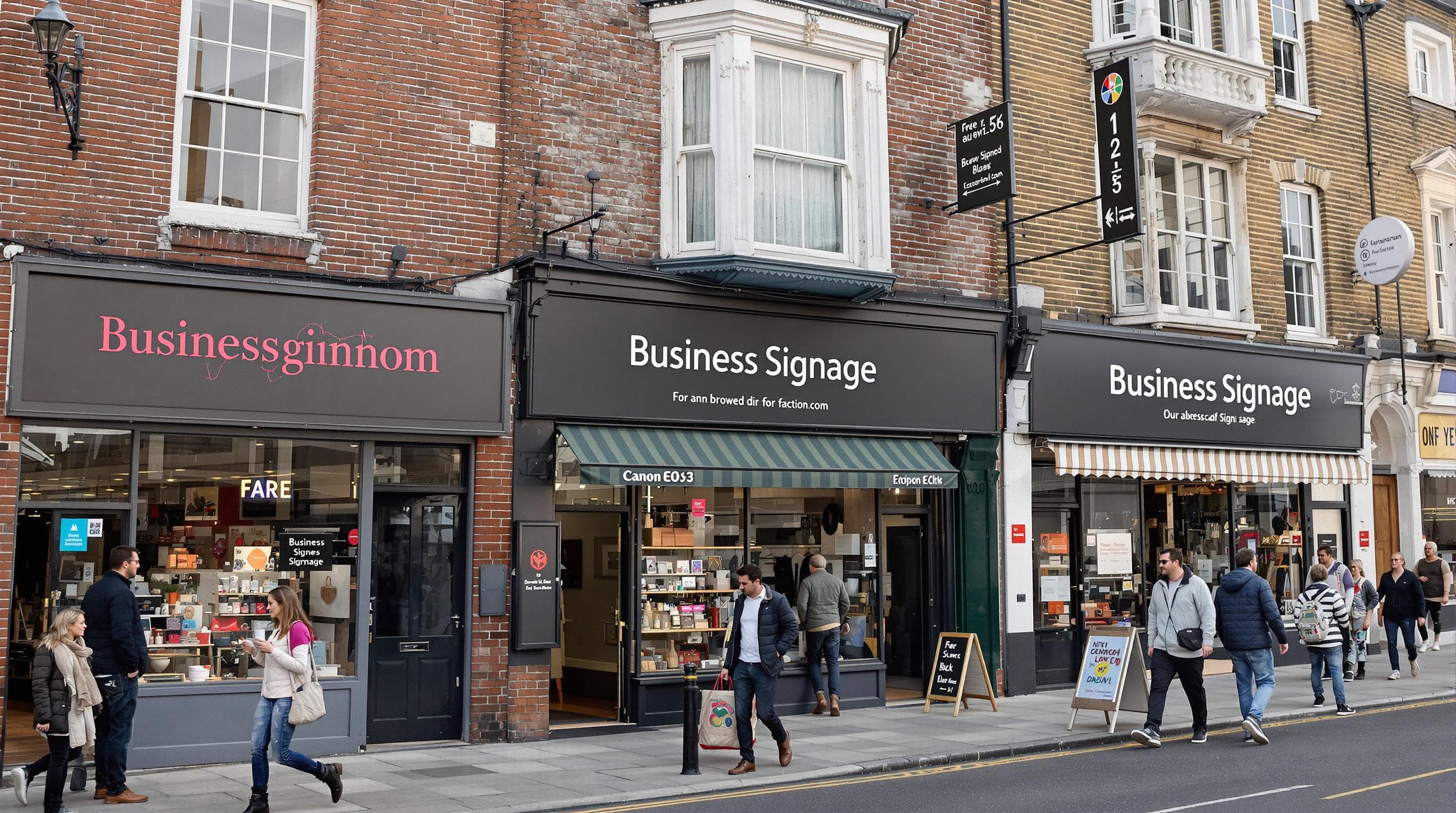
London’s building signage rules are changing and your shop’s sign could be the difference between standing out or disappearing completely. Surprising numbers show that over 60 percent of customers choose a business because of clear signage, yet most shops still overlook half the rules set out by the council. What most business owners never realise is that thoughtful design is only half the battle and the hidden costs and legal hoops trip up even the experts.
Table of Contents
Table of Contents
- Understanding Building Signage Types And Regulations
- Key Design Elements For Effective Building Signage
- Practical Steps For Custom Signage Creation
- Cost Considerations And Working With Local Experts
Quick Summary
| Takeaway | Explanation |
|---|---|
| Understand Signage Types and Regulations | Familiarise yourself with different types of building signage such as fascia, projecting signs, and window graphics, while also recognising local regulatory requirements that govern size, materials, and planning permissions. |
| Focus on Typography and Readability | Select clear, legible fonts and maintain high contrast between text and background to ensure effective communication of your brand message through signage. |
| Engage Local Experts for Optimal Results | Collaborate with local signage professionals to navigate regulatory landscapes and optimise cost-effective design, installation, and maintenance for your signage solutions. |
| Incorporate Effective Wayfinding Principles | Use universal symbols and consistent directional signage to enhance navigation and understanding for diverse customers, creating a seamless experience. |
| Plan for Long-Term Value in Material Selection | Choose durable materials that align with your branding and are weather resistant to reduce future maintenance costs and replacement frequencies. |
Understanding Building Signage Types and Regulations
Designing building signage requires a comprehensive understanding of the various types and strict regulatory frameworks that govern visual communication for businesses. Navigating these complex requirements is crucial for creating effective and compliant signage that not only attracts attention but also meets legal standards.
Types of Building Signage
Building signage encompasses a wide range of visual communication methods, each serving unique purposes for businesses. Exterior signs play a critical role in brand visibility and customer attraction. Learn more about signage options for your business can help you understand the diverse range of options available.
The primary categories of building signage include:
-
Fascia Signs: These are horizontal signs typically mounted directly on the building’s front, displaying the business name and primary branding. According to City of London Planning Guidelines, fascia signs must complement the architectural style of the building and maintain visual harmony with surrounding structures.
-
Projecting Signs: Mounted perpendicular to the building, these signs extend outward and provide visibility from multiple angles. They are particularly effective for businesses located on busy streets or in areas with high pedestrian traffic.
-
Window Graphics: These signs utilize existing window spaces to communicate business information, promotions, or branding elements. They offer a versatile and cost-effective signage solution that can be easily updated.

Regulatory Considerations
Building signage in urban environments is subject to complex regulatory frameworks designed to maintain aesthetic standards and prevent visual clutter. The London Planning Authority provides comprehensive guidelines that businesses must carefully navigate when designing and installing signs.
Key regulatory aspects include:
-
Size Restrictions: Most local councils impose strict limitations on sign dimensions relative to the building’s facade. These regulations aim to prevent oversized signs that might disrupt the visual character of the streetscape.
-
Material Specifications: Regulations often dictate acceptable materials for signage, considering factors such as durability, fire safety, and environmental impact. Businesses must select materials that meet both aesthetic and safety standards.
-
Planning Permissions: Certain types of signs require explicit planning permission, especially for listed buildings or properties in conservation areas. The approval process can be intricate and may involve detailed consultations with local planning authorities.
Business owners must recognize that signage is more than a mere decorative element. It represents a critical interface between the business and its potential customers, requiring a strategic approach that balances creative expression with regulatory compliance. By understanding the nuanced landscape of building signage types and regulations, businesses can create compelling visual communications that effectively represent their brand while respecting urban design principles.
To help you distinguish the main building signage types and their key features, the table below summarises the primary options discussed:
| Signage Type | Placement | Main Purpose | Key Feature |
|---|---|---|---|
| Fascia Sign | Front of building, horizontally | Display business name & branding | Complements façade architecture |
| Projecting Sign | Perpendicular to building exterior | Visibility from multiple angles, busy areas | Extends outward for street view |
| Window Graphics | On windows | Promotion, information, branding | Easy to update, cost-effective |
Key Design Elements for Effective Building Signage
Creating impactful building signage requires a strategic approach that goes beyond mere visual appeal. The design elements must work cohesively to communicate brand identity, provide clear information, and create an immediate visual connection with potential customers.
Typography and Readability
The foundation of effective signage lies in its legibility and clarity. Explore professional design strategies to enhance your visual communication. According to the Centre for Excellence in Universal Design, selecting the right typography is crucial for effective communication.
Key typographic considerations include:
-
Font Selection: Sans-serif fonts like Helvetica, Tahoma, and Futura provide maximum readability. These clean, modern typefaces ensure that text remains clear from various distances and viewing angles.
-
Text Formatting: Using a combination of upper and lower case letters improves comprehension. Left-aligned text with appropriate letter spacing enhances overall legibility, making information easier to absorb quickly.
-
Color Contrast: High contrast between text and background is essential. Dark text on light backgrounds or vice versa ensures that signage remains readable in different lighting conditions and from various perspectives.

Wayfinding and Symbolic Communication
Effective building signage transcends mere text by incorporating intuitive wayfinding principles. The South Australian Department for Education emphasizes that successful wayfinding combines graphic, architectural, and landscape design to create seamless navigation experiences.
Strategic design elements for enhanced wayfinding include:
-
Universal Symbols: Incorporating internationally recognized symbols helps communicate information across language barriers. These visual cues provide immediate understanding for diverse audiences.
-
Directional Consistency: Using consistent arrow designs and placement helps users intuitively understand directional information. Predictable symbolic language reduces cognitive load and improves navigation efficiency.
-
Spatial Awareness: Design signs that provide clear context about location, helping users understand their current position and potential routes.
Brand Integration and Visual Harmony
Signage should not exist in isolation but should seamlessly integrate with the broader architectural and brand aesthetic. The design must reflect the business’s identity while maintaining functional clarity.
Consider these brand integration strategies:
-
Color Palette: Utilize your brand’s color scheme strategically. Ensure that colors are not just decorative but also enhance readability and emotional connection.
-
Material Selection: Choose materials that complement your building’s architecture and reflect your brand’s quality and character. The physical texture and finish of signage communicate subtle brand messages.
-
Proportional Design: Ensure signage size and placement are proportional to the building’s facade. Oversized or undersized signs can disrupt visual harmony and diminish professional appearance.
Building signage is a critical communication tool that bridges visual design, functional information, and brand storytelling. By carefully considering typography, wayfinding principles, and brand integration, businesses can create signage that not only attracts attention but also provides a seamless, intuitive experience for viewers.
Practical Steps for Custom Signage Creation
Creating custom building signage is a strategic process that requires careful planning, collaboration, and attention to detail. Discover our comprehensive sign design approach to transform your visual communication strategy and ensure a successful outcome.
Initial Design Consultation and Assessment
The first phase of custom signage creation involves a thorough understanding of your business objectives and environmental context. According to Design Management Institute, successful design projects begin with comprehensive discovery and alignment of business goals.
Key initial steps include:
-
Brand Analysis: Conduct a detailed review of existing brand guidelines, color schemes, and visual identity. This ensures the signage becomes an authentic extension of your brand narrative.
-
Site Survey: Perform a comprehensive evaluation of the installation location, considering architectural features, lighting conditions, viewing angles, and potential regulatory constraints.
-
Functional Requirements: Determine specific communication objectives, such as visibility distance, readability times, and target audience engagement.
Technical Design and Prototyping
Once the initial consultation is complete, the design process transitions into technical development and visualization. The Royal Institute of British Architects emphasizes the importance of detailed technical planning in architectural graphic applications.
Critical technical design considerations include:
-
Digital Mockups: Create detailed digital representations using advanced design software, allowing businesses to visualize the final product before physical production.
-
Material Selection: Evaluate potential materials based on durability, aesthetic appeal, maintenance requirements, and environmental resistance. Consider factors like UV stability, weather performance, and long-term color retention.
-
Precision Measurements: Develop exact dimensional specifications, ensuring perfect alignment and proportional representation within the designated installation space.
Production and Installation Verification
The final stage transforms design concepts into tangible signage through meticulous production and professional installation. Precision and quality control are paramount during this phase.
Essential production and installation steps involve:
-
Fabrication Quality Control: Implement rigorous quality assurance processes to verify color accuracy, material integrity, and structural soundness before final production.
-
Professional Installation: Engage experienced technicians who understand architectural integration, ensuring signs are mounted securely and precisely aligned.
-
Post-Installation Inspection: Conduct comprehensive visual and structural assessments to confirm the signage meets all original design specifications and performs optimally in its intended environment.
Custom signage creation is not merely a technical process but a collaborative journey that transforms abstract design concepts into powerful visual communication tools. By following a structured approach that balances creative vision with technical precision, businesses can develop signage that not only attracts attention but also effectively represents their brand identity and communicates their core message.
The following table outlines each major step in the custom signage creation process, along with its key activities:
| Stage | Key Activities |
|---|---|
| Design Consultation & Assessment | Brand analysis, site survey, define communication goals |
| Technical Design & Prototyping | Digital mockups, select materials, precise measurements |
| Production & Installation | Fabrication quality checks, professional mounting, post-installation review |
Cost Considerations and Working with Local Experts
Navigating the financial landscape of building signage requires strategic planning and a comprehensive understanding of various cost factors. Explore cost-effective signage solutions to ensure your investment delivers maximum value and impact.
Breaking Down Signage Project Expenses
Understanding the detailed cost structure of signage projects is crucial for effective budgeting. According to Signdealz, signage projects involve multiple expense categories that businesses must carefully consider.
Key cost components include:
-
Design and Engineering Fees: Professional design services typically range from $250 to $5,000, depending on project complexity. Holiday Signs notes that design fees can be charged hourly ($60-$125 per hour) or calculated as a percentage of total construction costs (7%-13%).
-
Permit and Regulatory Expenses: Businesses should budget between $250 and $500 for permit procurement, which varies based on local regulatory requirements and sign complexity.
-
Installation Costs: Technical installation involves mobilization fees ($200-$500) and technician rates ranging from $125 to $250 per hour, reflecting the specialized skills required for professional signage placement.
Material Selection and Long-Term Value
Choosing the right materials is a critical financial decision that impacts both upfront costs and long-term maintenance expenses. Reliable Signs emphasizes the importance of strategic material selection for durability and cost-effectiveness.
Considerations for material investment include:
-
Durability Factors: Materials like aluminum and PVC offer excellent weather resistance and longevity, potentially reducing replacement and maintenance costs over time.
-
Local Manufacturing Benefits: Selecting local manufacturers can significantly reduce transportation expenses and ensure compliance with regional design standards.
-
Performance vs. Cost: While premium materials might have higher initial costs, they often provide better long-term value through reduced maintenance and replacement frequencies.
Collaborating with Local Signage Experts
Working with local experts provides businesses with invaluable insights and region-specific knowledge that can optimize both design and financial outcomes. Local professionals understand unique architectural contexts, regulatory landscapes, and market-specific design trends.
Strategic collaboration advantages include:
-
Regulatory Navigation: Local experts possess in-depth knowledge of municipal signage regulations, helping businesses avoid costly compliance mistakes.
-
Cost Optimization: Professionals can recommend materials and designs that balance aesthetic appeal with budgetary constraints.
-
Technical Expertise: Experienced local teams provide comprehensive services from initial concept to final installation, ensuring a seamless and cost-effective signage solution.
Investing in building signage is more than a financial transaction it is a strategic communication tool that represents your brand’s identity and professionalism. By carefully managing costs, selecting appropriate materials, and collaborating with local experts, businesses can create impactful signage that delivers exceptional value and visual communication.
Frequently Asked Questions
What are the different types of building signage?
Building signage types include fascia signs, projecting signs, and window graphics. Each type serves a unique purpose, from displaying the business name to promoting special offers or aiding wayfinding.
What regulations should I consider for building signage in London?
In London, signage regulations include size restrictions, material specifications, and the need for planning permissions, especially for listed buildings or properties in conservation areas. It’s essential to consult the local planning authority for guidance.
How can I ensure my signage is readable?
To ensure readability, choose clear sans-serif fonts, maintain high contrast between text and background, and use a combination of upper and lower case letters. Proper text formatting and spacing can significantly enhance legibility.
Why should I work with local signage experts?
Collaborating with local signage experts is beneficial as they understand the unique regulatory landscape and architectural context of your area. They can also provide cost-effective design solutions and technical expertise for installation.
Ready to Cut Through the Noise with Compliant and Impactful Signage?
Struggling to navigate London’s strict signage regulations while also making your business stand out? This article highlighted the stress of balancing eye-catching designs with the complex rules on size, materials, and planning permissions. If you are feeling overwhelmed by sign authorisations or anxious about choosing the right materials, you are not alone. Many business owners face these exact challenges when trying to create building signage that is both captivating and fully compliant.
Let PromoSigns take the guesswork out of the process for you. Our expert team specialises in both the design and installation of custom building signage across London, Essex, and Kent. We stay up to date with the latest London council guidelines, so you avoid costly mistakes and keep your business looking sharp all year round. Visit PromoSigns now and see how easy it can be to achieve exceptional and stress-free signage that ticks every box. Book your consultation today to turn insight into impact.
Recommended
- Signage Design Principles for London Businesses in 2025 – PromoSigns.co.uk
- Graphic Design Tips for Signage: 2025 Guide for London Businesses – PromoSigns.co.uk
- Custom Sign Design Process for London Businesses: 2025 Guide – PromoSigns.co.uk
- Signage for Office Interiors: 2025 Guide for London Businesses – PromoSigns.co.uk
- How To Design Effective Commercial Building Signs
