
Over 80 percent of shoppers notice in-store signage before making a purchase. Clear, eye-catching signs do far more than decorate your retail space. They guide customers, shape first impressions, and can drive real business results when done right. This guide breaks down the crucial steps for designing retail signage that gets noticed and supports your business goals from concept to installation.
Table of Contents
Quick Summary
| Key Point | Explanation |
|---|---|
| 1. Define clear signage objectives | Identify specific goals like increasing foot traffic or enhancing brand recognition to guide signage strategy. |
| 2. Tailor signage to location and audience | Conduct an audit of location features and understand audience demographics to create effective signage. |
| 3. Choose appropriate materials and lighting | Select durable materials and strategic illumination to enhance visibility and aesthetics of signage. |
| 4. Design with clear visuals and messaging | Create a visual hierarchy and select legible typography to effectively communicate your brand’s identity. |
| 5. Review and test signage designs | Conduct thorough testing and gather feedback to ensure signage meets performance and regulatory standards. |
Step 1: Define your retail signage objectives
Defining clear objectives for your retail signs signage is the crucial first step in creating impactful visual communication that drives customer engagement and business success. Effective sign design goes beyond mere aesthetics and plays a strategic role in enhancing brand equity and customer experience.
To establish robust signage objectives, start by identifying your primary business goals. Are you aiming to increase foot traffic, highlight specific product promotions, improve wayfinding, or strengthen brand recognition? Each objective will require a distinct visual strategy. Signs should be thoughtfully integrated into your overall retail design to create a cohesive and compelling customer journey.
Consider breaking down your objectives into specific, measurable targets. For instance, if boosting product visibility is your goal, determine which items or sections need prominence. Your signage might focus on creating eye-catching displays for new arrivals, bestsellers, or seasonal collections. Pro tip: create a visual hierarchy that guides customers naturally through your space, using size, colour, and placement to draw attention strategically.
Remember that your signage objectives should align closely with your broader marketing and brand communication strategy. The most effective signs are not standalone elements but integrated components of your overall retail experience.
Step 2: Assess your location and audience needs
Successful shop signs London design starts with a thorough understanding of your physical location and target audience. Effective signage must be precisely tailored to specific demographics and environmental contexts to maximise impact.
Begin by conducting a comprehensive location audit. Examine your storefront characteristics such as window size, architectural style, pedestrian traffic patterns, and surrounding business landscape. The architectural context plays a crucial role in determining signage design that feels cohesive and integrated with your environment. Pay attention to details like building materials, colour schemes, and existing visual elements that can inform your signage strategy.
Understand your audience by creating detailed customer personas. Consider factors like age range, lifestyle, income level, and typical shopping behaviours. These insights will help you craft signage that speaks directly to your potential customers’ visual language and preferences. For instance, a high-end boutique will require a different signage approach compared to a family-friendly store.
For your next step, start sketching initial design concepts that reflect both your location characteristics and audience insights. This preparatory work ensures your signage will be not just visually appealing but strategically effective.
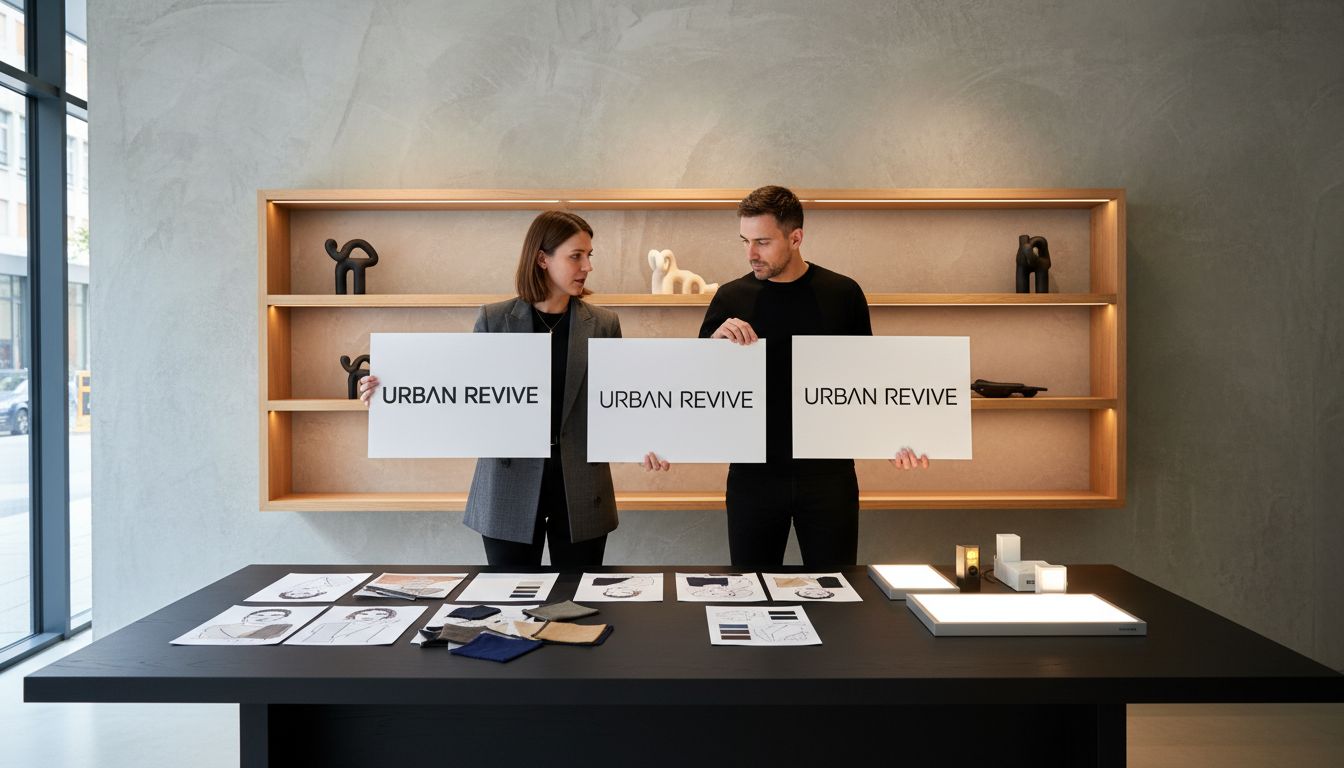 This preparatory work ensures your signage will be not just visually appealing but strategically effective.
Step 3: Choose suitable materials and illumination options
Selecting the right materials and illumination for your retail signage is critical to creating a compelling visual communication strategy. Material and lighting choices dramatically impact visibility, durability, and overall aesthetic appeal.
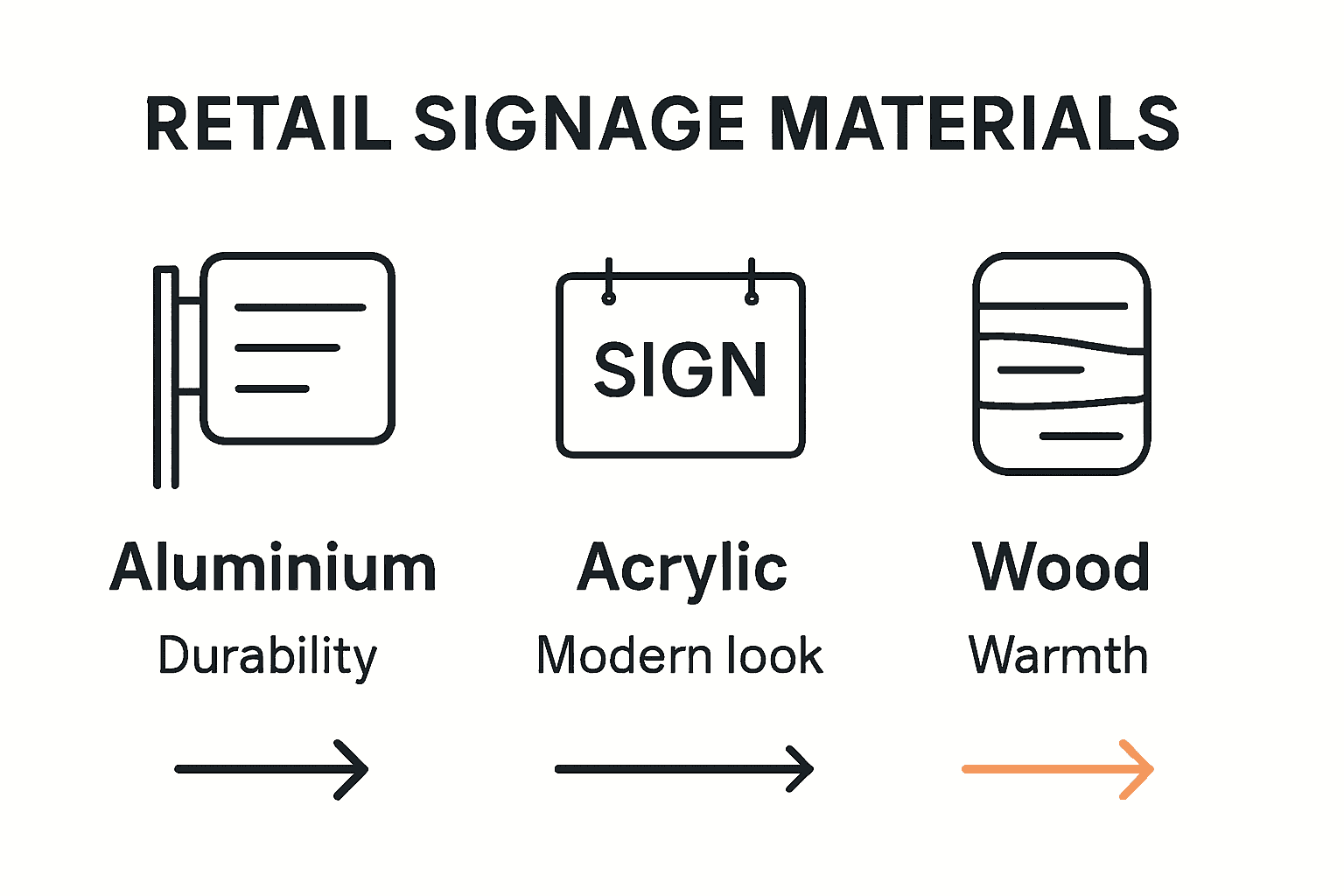
Consider a range of material options based on your specific retail environment. Aluminium offers lightweight durability for exterior signs, while acrylic provides a sleek modern look for interior displays. Foamex signs printing London is recommended for exploring materials that not only complement your brand aesthetic but also withstand environmental conditions. Wood can create a warm traditional feel, whereas metal signs convey contemporary professionalism.
Illumination requires strategic thinking. LED lighting provides energy-efficient brightness that can transform your signage from merely informative to truly eye-catching. Backlit signs create dramatic evening visibility, while front-lit options offer crisp daytime clarity. Pro tip: select illumination that enhances readability without overwhelming your design aesthetic.
Your material and lighting choices should ultimately reflect your brand identity and functional requirements. Think of these elements as an investment in your business visual communication strategy.
Step 4: Design compelling visuals and clear messaging
Compelling visuals and clear messaging are fundamental to enhancing brand equity and driving customer engagement. Your signage is more than just information — it is a critical communication tool that represents your brand’s identity and values.
Start by developing a clear hierarchy of information. Your most important message should be largest and most prominent, with secondary details scaled accordingly. Successful visual communication integrates design elements that guide the viewer’s eye naturally through the information. Use colour psychology strategically — contrasting colours can draw attention while maintaining readability and brand consistency.
Consider typography as a powerful visual element. Select fonts that are legible from a distance and align with your brand personality. A sophisticated boutique might choose elegant serif fonts, while a modern tech store could opt for clean sans-serif typefaces. Pro tip: ensure your text remains readable against different backgrounds and lighting conditions.
Custom signs London design should tell a story at a glance — communicating not just information but the essence of your brand experience. With thoughtful visual design, your signage becomes a silent yet powerful ambassador for your business.
Step 5: Review, test and approve your signage design
Systematic review and testing is critical in ensuring signage effectiveness. This final stage transforms your design from a concept to a precise communication tool that truly represents your brand.
Conduct multiple rounds of testing across different environments and viewing conditions. Successful signage integration requires meticulous assessment of how designs perform under various lighting, distances, and background contexts. Create mockups that simulate real-world placement — view your design from different angles and distances to confirm legibility and visual impact.
Involve stakeholders in your review process. Gather feedback from team members, staff members, customers, and potentially an external design consultant. Look for objective critiques about readability, contrast, and overall visual communication. Pro tip: print your design at actual size and place it in your intended location to get the most authentic preview of its real-world performance.
Before final approval, check your design against technical specifications, ensuring it meets local regulations, colour accuracy, and brand guidelines. Your signage is not just a visual element — it is a strategic communication tool that represents your business identity. Working with large format printing London specialists at the production stage ensures your approved design is reproduced with the colour accuracy and material quality your brand deserves.
Transform Your Retail Space with Expert Signage Solutions
Designing retail signage that truly captures attention and reinforces your brand can feel overwhelming. The guide highlights how critical it is to define clear objectives, select the right materials, and craft compelling visuals that speak directly to your customers. Common challenges include making your message readable from a distance, choosing illumination that enhances rather than detracts, and ensuring your sign fits flawlessly within your store’s physical environment.
At Promo Signs, we understand these pain points and offer tailored solutions to bring your vision to life. Whether you need illuminated signs that maximise visibility after dark or large format prints that make a bold statement, our expert team supports you from design through installation across London, Essex, and Kent. Don’t let your signage blend into the background when it can become the silent ambassador of your brand.
Elevate your retail impact with signs crafted for success. Ready to captivate your customers and boost foot traffic today? Visit Promo Signs to get your custom signage project started and see the difference professional design and quality materials make. Act now to ensure your retail signage delivers maximum impact from day one.
Frequently Asked Questions
How do I define objectives for my retail signage?
Start by identifying your primary business goals, such as increasing foot traffic or highlighting promotions. Create specific, measurable targets to guide your design process and ensure alignment with your overall marketing strategy.
What steps should I take to assess my location and audience needs for signage?
Conduct a thorough location audit to evaluate your storefront and customer demographics. Develop customer personas considering factors like age and shopping behaviour, so you can design signage that resonates with your target audience.
What materials and illumination options are best for retail signage?
Choose materials that complement your brand while ensuring durability and visibility; for example, use aluminium for exterior signs and acrylic for indoors. Opt for LED lighting to enhance visibility, especially after dark, while maintaining a professional aesthetic.
How can I design compelling visuals and clear messaging for my signage?
Establish a clear hierarchy by making your main message the most prominent and ensuring text is legible from a distance. Use contrasting colours and consistent typography that aligns with your brand identity to make key information stand out.
What should I do during the review and testing process of my signage design?
Conduct multiple rounds of testing under different conditions to evaluate legibility and visual effectiveness. Involve team members for feedback, and create mockups to simulate actual placement for the most accurate assessment before final approval.
How can I ensure my retail signage meets local regulations?
Review your design against local signage regulations, including size and material specifications. Make this a checklist step in your approval process to avoid costly modifications after installation.
Recommended
- What Makes A Great Shop Sign – PromoSigns.co.uk
- 9 Key Types of Retail Signage That Can Transform Your Store
- The Modern Age Visual Displays For Branding – PromoSigns.co.uk
- Retail Sign Design Tips 2025: Essential Guide for London Businesses – PromoSigns.co.uk
- Signage Design Principles: Crafting Visual Messages That Connect
