
Future-proof signage investment maximizes longevity, adapts to technological evolution, maintains regulatory compliance, and accommodates business growth through strategic material selection, modular design, technology integration, and regulatory foresight. Systematic future-proofing protects capital investment, reduces replacement frequency, enables cost-effective updates, and ensures sustained marketing effectiveness through informed specification and professional execution.
This comprehensive guide explores signage future-proofing strategies, covering design flexibility, material durability, technology adaptability, regulatory anticipation, maintenance planning, and upgrade pathways that enable businesses to maximize signage lifespan while maintaining contemporary relevance and optimal marketing performance.
Table of Contents
Why Future-Proofing Matters
Capital Investment Protection
Significant Expenditure: Signage represents substantial business investment:
Typical Costs:
- Small retail fascia: £3,000-£8,000
- Medium commercial installation: £8,000-£25,000
- Large-scale system: £25,000-£100,000+
- Multi-location program: £100,000-£500,000+
Lifespan Economics:
- Standard signage: 10-15 years typical
- Future-proof design: 15-25 years achievable
- Replacement cost avoidance: £3,000-£100,000+ per installation
- ROI extension: 50-100% additional service life
Investment Protection: Future-proofing strategies deliver:
- Extended operational life (delayed replacement, capital preservation)
- Reduced total cost of ownership (longer amortization, fewer replacements)
- Update capability (evolutionary change vs. complete replacement)
- Technology integration (adding capability without reconstruction)
Technological Evolution
Rapid Advancement: Signage technology evolves continuously:
Technology Trends:
Illumination:
- LED advancement (efficiency improvement, brightness increase, color capability)
- Smart controls (IoT integration, automated dimming, energy optimization)
- Solar power (grid independence, sustainability, cost reduction)
- Wireless systems (installation simplification, retrofit capability)
Digital Integration:
- Display technology (OLED, transparent LED, flexible screens)
- Interactive capability (touchscreens, gesture control, AR integration)
- Content management (cloud-based, AI-driven, automated)
- Data integration (real-time pricing, inventory, personalization)
Materials:
- Sustainable substrates (recycled content, bio-based, circular economy)
- Self-cleaning surfaces (photocatalytic, hydrophobic, maintenance reduction)
- Adaptive materials (electrochromic, thermochromic, responsive)
Future-Proof Approach:
- Modular construction (component replacement, technology swapping)
- Standard interfaces (compatibility, upgrade pathways, future integration)
- Power/data infrastructure (anticipatory cabling, expansion capacity)
- Technology-agnostic design (style independence from current technology)
Regulatory Evolution
Compliance Landscape: Standards and regulations change:
Recent Changes (2010-2025):
- Equality Act 2010 (accessibility requirements, ongoing interpretation)
- LED efficiency standards (energy performance, minimum specifications)
- Light pollution controls (brightness limits, operational hours, environmental)
- Fire safety updates (material ratings, BS 5867 evolution)
- Conservation area expansion (new designations, enhanced control)
Anticipated Developments:
- Digital display regulations (content control, distraction limits, safety)
- Energy efficiency mandates (minimum performance, renewable integration)
- Circular economy requirements (recyclability, material sourcing, end-of-life)
- Accessibility enhancement (technology standards, inclusive design evolution)
Future-Proof Strategy:
- Exceed current standards (anticipate tightening, safety margin)
- Modular compliance (component replacement vs. complete rebuild)
- Documentation retention (approval records, specification evidence, compliance proof)
- Professional consultation (regulatory monitoring, proactive adaptation)
Business Evolution
Operational Change: Businesses transform over time:
Adaptation Scenarios:
Growth:
- Additional locations (brand consistency, replication capability)
- Service expansion (messaging capacity, offering communication)
- Market repositioning (brand evolution, contemporary relevance)
Technology Adoption:
- Online integration (website, social media, QR codes, contactless)
- Click-and-collect (service communication, operational signaling)
- Delivery services (capability advertising, customer information)
Ownership/Structure:
- Franchise conversion (corporate standards, brand alignment)
- Merger/acquisition (unified identity, market consolidation)
- Rebranding (name change, visual identity evolution, market response)
Flexible Design: Accommodating change without replacement:
- Modular graphics (vinyl replacement, content updates, minimal cost)
- Programmable displays (digital content, instant changes, operational flexibility)
- Adaptable structure (expansion capability, configuration variation)

Pro strategy: Always request material samples and conduct thorough testing before full-scale implementation to ensure optimal performance and longevity.
Here is a concise comparison of common signage materials and their practical applications:
| Material | Key Strength | Ideal Use Case |
|---|---|---|
| Aluminium composite | Weather resistance | Outdoor directional signage |
| High-grade acrylic | Visual clarity | Informational indoor signs |
| Treated glass | Design flexibility | Premium branded displays |
| Reconfigurable adhesives | Flexibility for changes | Temporary or evolving installations |
Design Flexibility Strategies
Modular Construction
Component-Based Systems: Replaceability without complete reconstruction:
Modular Elements:
Graphic Panels:
- Interchangeable faces (vinyl/digital swap, content refresh, cost-effective updates)
- Standard sizing (replacement availability, sourcing simplicity, competitive pricing)
- Accessible mounting (tool-free change, in-house capability, reduced service costs)
Illumination:
- Removable modules (LED replacement, technology upgrade, efficiency improvement)
- Standard electrical interfaces (driver compatibility, component sourcing, future-proofing)
- Accessible service (maintenance simplicity, repair feasibility, downtime minimization)
Structural Framework:
- Adaptable mounting (repositioning capability, expansion accommodation)
- Expandable systems (additional panels, size increase, phased growth)
- Future-ready infrastructure (cable runs, power capacity, data provision)
Example: Sign Makers fascia with:
- Aluminum frame (25-year structural life, permanent investment)
- Replaceable acrylic faces (7-10 year replacement, technology upgrade opportunity)
- Modular LED strips (5-10 year refresh, efficiency improvement, brightness restoration)
- Vinyl graphics (3-5 year update, brand evolution, campaign flexibility)
Cost Comparison:
Modular Refresh (Year 10):
- New vinyl graphics: £400
- LED module replacement: £1,200
- Labor: £400
- Total: £2,000
Complete Replacement:
- New signage system: £8,000
- Installation: £1,500
- Disposal: £300
- Total: £9,800
Saving: £7,800 (80% cost reduction)
Timeless Design Principles
Enduring Aesthetics: Avoiding trend-dependent design:
Classic Approaches:
Typography:
- Traditional fonts (serif classics, established sans-serifs, timeless appeal)
- Clear hierarchy (proven readability, functional clarity, universal understanding)
- Avoid trends (decorative excess, fashion fonts, dated quickly)
Color:
- Brand-core palette (identity consistency, recognition continuity, investment protection)
- Avoid fashion colors (trendy hues, period-specific, rapid obsolescence)
- Classic combinations (black/white, navy/white, timeless sophistication)
Layout:
- Balanced composition (mathematical harmony, visual stability, enduring appeal)
- Generous spacing (breathing room, clarity, sophistication)
- Avoid gimmicks (novelty layouts, style-driven, short-lived appeal)
Material Expression:
- Honest materials (appropriate application, authentic expression, quality signals)
- Avoid faux finishes (imitation, cheapness perception, dated appearance)
- Quality execution (craftsmanship, attention to detail, lasting impression)
5-Year Test: Will this design look current in 5 years? If answer uncertain, reconsider trendy elements.
Technology-Agnostic Styling
Style Independence: Design transcends current technology:
Approach:
- Form follows function (purpose-driven, not technology-dictated)
- Clean lines (minimalism, simplicity, technology-neutral)
- Quality materials (substance over novelty, lasting value, upgrade capability)
- Professional execution (craftsmanship, precision, excellence)
Example:
- Traditional hand-painted sign (timeless craft, heritage appeal, technology-free)
- Contemporary minimalist (clean aesthetic, any technology compatible, enduring style)
- Architectural integration (building harmony, technology-agnostic, permanent quality)
Avoid:
- Technology-specific styling (LED halo = 2010s, dated when superseded)
- Gimmicky features (rotating elements, novelty value, maintenance burden)
- Fashionable treatments (current trend dependence, rapid obsolescence)
To better understand the impact of modern digital signage, see this summary of key digital elements and their benefits:
| Digital Element Type | Primary Function | Business Value |
|---|---|---|
| Modular screen layouts | Flexible content divisions | Supports varied messaging and efficient use of space |
| Remote content management | Update content from any location | Saves staff time and improves responsiveness |
| Real-time data feeds | Live information integration | Enhances relevance and audience engagement |
| Scalable content templates | Adapt designs for multiple displays | Ensures brand consistency and future-proofs updates |
| Interactive touchscreens | User-driven content navigation | Improves visitor experience and accessibility |
Material Selection for Longevity
Durable Substrates
Long-Life Materials: Maximizing structural lifespan:
Premium Options:
Stainless Steel:
- Lifespan: 25+ years (marine-grade, coastal suitable)
- Finish: Brushed, mirror-polished (premium appearance, corrosion resistance)
- Applications: Letters, panels, frames (prestige installations, high-quality)
- Cost premium: 50-100% vs. aluminum (investment justification, lifecycle value)
Aluminum Composite:
- Lifespan: 20-25 years (PVDF coating, weather resistance)
- Finish: Powder-coated, anodized (color stability, protective)
- Applications: Panels, fascias, cladding (versatile, architectural)
- Cost: Standard commercial (value proposition, proven performance)
Bronze/Brass:
- Lifespan: 50+ years (patina development, living finish, heritage quality)
- Finish: Polished, patinated (character evolution, authentic aging)
- Applications: Traditional, heritage, prestige (timeless appeal, investment-grade)
- Cost premium: 100-200% vs. aluminum (heirloom quality, generational lifespan)
Engineered Timber:
- Lifespan: 15-25 years (treatment-dependent, maintenance-critical)
- Finish: Stain, paint, oil (renewable protection, periodic maintenance)
- Applications: Traditional, boutique, eco-conscious (warmth, sustainability, character)
- Maintenance: Higher (5-year refinishing typical, ongoing commitment)
Avoid:
- Untreated mild steel (rapid corrosion, short lifespan, false economy)
- Low-grade plastics (UV degradation, brittleness, cheapness perception)
- Inappropriate timber (decay risk, maintenance burden, premature failure)
Weather-Resistant Finishes
Protective Coatings: Surface longevity maximization:
Premium Finishes:
Powder Coating:
- Durability: 10-15 years (factory-applied, superior adhesion, uniform coverage)
- Weather resistance: Excellent (UV-stable, moisture barrier, chip resistance)
- Color stability: High (fade resistance, appearance retention, brand consistency)
- Cost: Standard (manufacturing efficiency, competitive pricing, proven value)
PVDF Paint:
- Durability: 15-20 years (architectural-grade, premium performance)
- Weather resistance: Superior (coastal suitable, industrial environment, extreme conditions)
- Color stability: Exceptional (minimal fading, color retention, long-term appearance)
- Cost premium: 30-50% vs. standard powder coat (lifecycle justification, reduced maintenance)
Marine-Grade Treatments:
- Corrosion resistance: Maximum (coastal, industrial, harsh environments)
- Lifespan extension: 50-100% (harsh condition performance, investment protection)
- Applications: Coastal locations, industrial areas, extreme weather (environmental extremes)
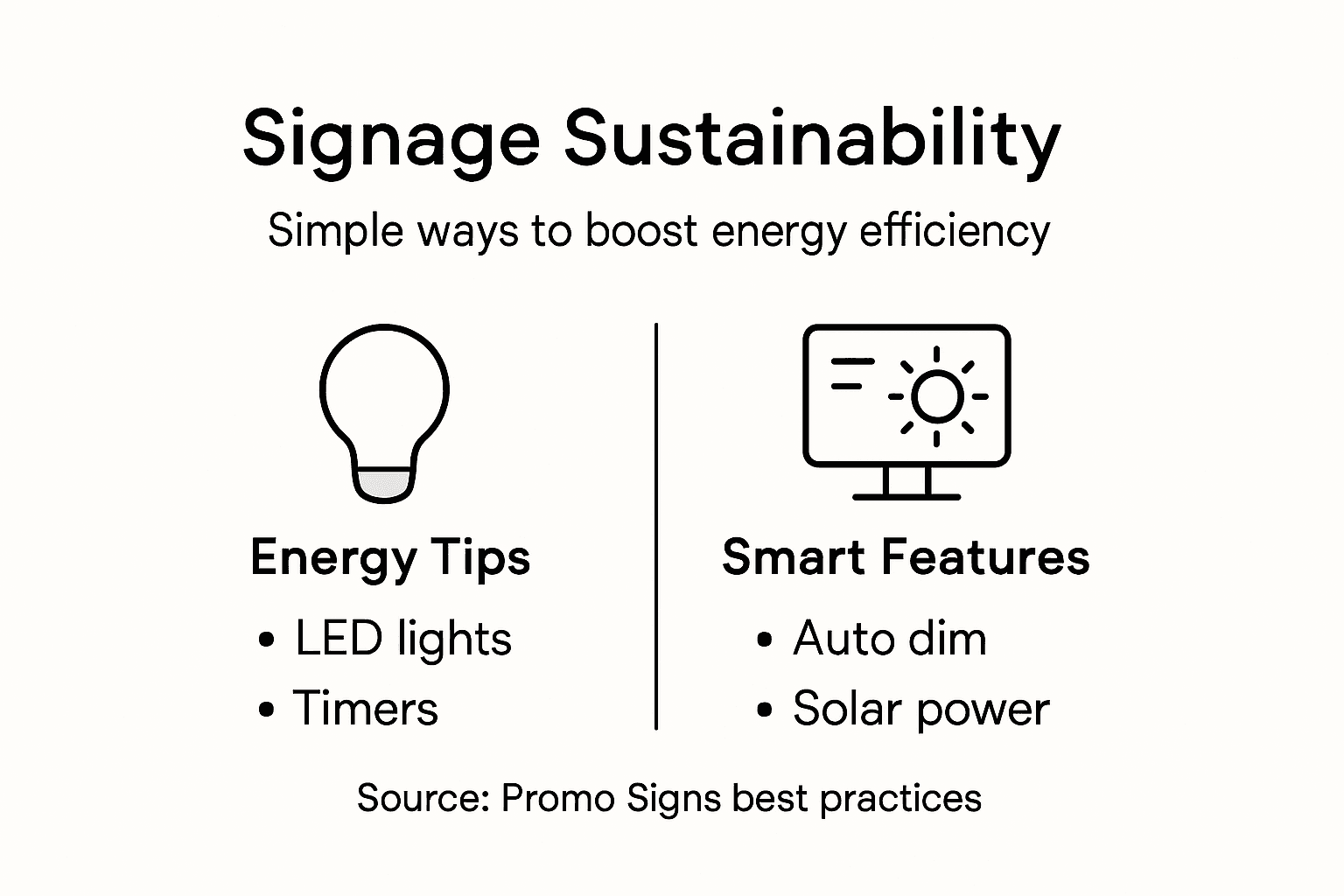
Pro strategy: Conduct a comprehensive energy audit of your existing signage infrastructure to identify potential efficiency improvements and cost-saving opportunities.
Technology Integration Planning
Infrastructure Provision
Future Capability: Anticipatory installation:
Electrical:
- Oversized conduits (upgrade accommodation, additional wiring, expansion capacity)
- Spare circuits (technology addition, component expansion, future integration)
- Accessible junction boxes (service simplicity, modification ease, cost reduction)
- Smart meter ready (energy monitoring, optimization, management capability)
Data/Communication:
- Cat6/Cat7 cabling (high-bandwidth, future-proof, technology advancement)
- Fiber optic provision (maximum capacity, unlimited potential, long-term investment)
- Wireless infrastructure (WiFi, cellular, IoT connectivity, retrofit capability)
Mounting:
- Weight capacity (50% margin, technology addition, component upgrade)
- Attachment points (multiple options, reconfiguration, expansion accommodation)
- Access provision (maintenance panels, service capability, ongoing maintenance)
Investment: Additional 10-20% upfront cost delivers:
- Technology upgrade capability (future integration without reconstruction)
- Service simplification (accessible infrastructure, reduced labor)
- Expansion flexibility (additional components, system growth)
- Avoided reconstruction (future-proofing vs. replacement, lifecycle economy)
Digital-Ready Design
Screen Integration Capability: Anticipating digital adoption:
Design Considerations:
Physical Accommodation:
- Screen-sized panels (standard display dimensions, direct-fit, swap capability)
- Structural support (weight capacity, vibration resistance, secure mounting)
- Environmental protection (weatherproof housing, temperature management, longevity)
- Power/data access (infrastructure provision, connection simplicity, service access)
Hybrid Approach:
- Static + digital combination (permanent brand, dynamic messaging, balanced investment)
- Replaceable panels (technology swap, component upgrade, phased adoption)
- Modular expansion (progressive digitalization, budget spreading, risk mitigation)
Example: Fascia with three panels:
- Panel 1: Permanent logo (brand consistency, timeless identity)
- Panel 2: Digital screen (promotional content, dynamic messaging, contemporary appeal)
- Panel 3: Replaceable vinyl (seasonal campaigns, tactical messaging, cost-effective updates)
Investment Strategy:
- Initial: Traditional construction (proven technology, lower risk, established ROI)
- Year 5: Digital panel addition (proven location, technology maturity, informed decision)
- Year 10: Expansion/upgrade (technology advancement, capability enhancement, competitive response)
Smart Technology Readiness
IoT Integration: Connected signage capability:
Smart Features:
Automated Control:
- Photocell dimming (daylight response, energy saving, neighbor consideration)
- Occupancy sensing (operational hours optimization, security integration, efficiency)
- Weather response (storm shutdown, temperature compensation, safety protection)
- Remote management (cloud control, multi-location, centralized operation)
Data Integration:
- Real-time pricing (dynamic displays, market response, competitive pricing)
- Inventory status (“In Stock”, “Sold Out”, operational efficiency, customer service)
- Queue management (wait time displays, capacity information, customer experience)
- Social media feeds (live content, engagement, contemporary relevance)
Analytics:
- Impression counting (camera-based, traffic analysis, ROI measurement)
- Engagement tracking (dwell time, interaction, performance assessment)
- Performance monitoring (brightness verification, fault detection, proactive maintenance)
Infrastructure Requirements:
- Network connectivity (ethernet, WiFi, cellular, reliable communication)
- Power management (UPS backup, surge protection, operational continuity)
- Security (encrypted communication, access control, data protection)
Regulatory Future-Proofing
Exceeding Current Standards
Safety Margin: Anticipating regulatory tightening:
Conservative Approach:
Accessibility:
- Exceed minimum contrast (LCR 70% minimum, specify 80%, future-proof margin)
- Generous sizing (text heights 20% larger, readability insurance, universal access)
- Comprehensive provision (tactile/Braille standard, inclusive design, best practice)
Energy Efficiency:
- High-efficacy LEDs (150+ lumens/watt, technology advancement, efficiency leadership)
- Smart controls (occupancy, daylight, optimization, regulatory anticipation)
- Renewable integration (solar capability, grid independence, sustainability leadership)
Light Pollution:
- Brightness moderation (conservative output, neighbor consideration, approval certainty)
- Directional control (shields, louvres, spillage prevention, amenity protection)
- Operational limits (automatic shutoff, timer control, responsible operation)
Structural:
- Conservative calculations (wind loading margins, safety factors, engineering excellence)
- Quality fixings (specification exceeding, redundancy provision, security assurance)
- Regular inspection (proactive maintenance, issue identification, safety verification)
Benefit: Regulatory changes less likely to trigger retrofit requirements, compliance confidence, investment protection.
Adaptable Compliance
Component-Based Conformity: Isolated upgrades vs. system replacement:
Strategy:
- Replaceable compliance elements (specific components, targeted updates, cost control)
- Documented specifications (approval evidence, compliance verification, record retention)
- Professional oversight (regulatory monitoring, proactive notification, expert guidance)
Example: New fire safety standard mandates BS 5867 rating:
- Modular design: Replace acrylic face (£800, compliant material, minimal disruption)
- Integrated design: Replace entire sign (£8,000, complete reconstruction, business disruption)
Saving: £7,200 + operational continuity
Maintenance Planning
Preventive Programs
Proactive Care: Maximizing operational lifespan:
Schedule:
Monthly:
- Visual inspection (damage, illumination, cleanliness, functionality)
- Basic cleaning (face wiping, appearance maintenance, professionalism)
- Quick fixes (LED replacement, minor adjustments, responsive action)
Quarterly:
- Detailed cleaning (frame, seals, comprehensive, appearance preservation)
- Electrical check (connections, operation, safety, reliability)
- Structural inspection (fixings, alignment, integrity, security)
Annual:
- Professional service (comprehensive inspection, expert assessment, certification)
- Electrical testing (PAT testing, safety verification, compliance documentation)
- Weatherproofing (seal inspection, protective renewal, longevity assurance)
- Component replacement (wear items, preventive action, failure prevention)
Cost:
- Annual professional service: £200-£500 (size-dependent, complexity-variable)
- Component replacement: £100-£1,000 annually (preventive, lifespan extension)
- Total: £300-£1,500 annually
ROI:
- Lifespan extension: 5-10 years (15-year standard to 20-25-year achieved)
- Replacement deferral: £8,000-£30,000 (capital preservation, budget relief)
- Return: 500-2,000% (maintenance investment vs. replacement cost)
Documentation Retention
Compliance Evidence: Regulatory proof and warranty protection:
Essential Records:
Approvals:
- Planning consent (advertisement consent, listed building, approvals)
- Building regulations (structural, electrical, compliance certification)
- Highway license (projection permits, annual renewals, authorization)
Specifications:
- Design drawings (approved designs, technical details, reference documentation)
- Material specifications (substrate, finishes, components, sourcing reference)
- Electrical schematics (wiring diagrams, component specifications, troubleshooting aid)
Installation:
- Installation certificates (competent person, compliance, warranty activation)
- Structural reports (engineer certification, safety verification, liability protection)
- Warranty documents (manufacturer, installer, coverage terms, claim requirements)
Maintenance:
- Service records (inspection reports, work completed, issue tracking)
- Component replacements (parts changed, dates, specifications, history)
- Testing certificates (electrical, structural, periodic, compliance evidence)
Storage:
- Physical copies (fire-safe storage, accessible location, backup provision)
- Digital backup (cloud storage, searchable, secure, accessible)
- Duration: Signage lifespan + 10 years (regulatory, warranty, historical reference)
Conclusion
Future-proof signage investment maximizes longevity, adapts to technological evolution, maintains regulatory compliance, and accommodates business growth through strategic material selection, modular design, technology integration, and regulatory foresight. From Shop Front Signs through comprehensive Custom Signs systems and Illuminated Signs installations, systematic future-proofing protects capital investment while ensuring sustained marketing effectiveness through informed specification and professional execution.
Success requires understanding design flexibility principles, selecting durable materials, planning technology infrastructure, exceeding regulatory standards, implementing preventive maintenance, and retaining comprehensive documentation that enables cost-effective updates rather than expensive replacement. Strategic future-proofing transforms signage from depreciating asset into enduring marketing infrastructure delivering decades of optimal performance through intelligent initial investment and systematic lifecycle management.
For businesses seeking maximum signage longevity, partnering with experienced specialists ensures access to future-proofing expertise, material knowledge, technology planning capabilities, and maintenance program design that protects investment while delivering sustained competitive advantage through signage systems engineered for evolutionary adaptation rather than obsolescence.
Recommended
- Shop Sign Types Explained for UK Businesses in 2025 – PromoSigns.co.uk
- Exhibition Signage Basics 2025: Essential Guide for Businesses – PromoSigns.co.uk
- LED vs. Traditional Storefront Signage: Which is Right for You? – PromoSigns.co.uk
- Illuminated Shop Sign Benefits for London Businesses 2025 – PromoSigns.co.uk
- 7 Must-Have Business Signage Solutions for Local Success
