
London’s business spaces are no longer just about desks and chairs. Offices filled with vibrant wall graphics and branded visuals are changing how companies express themselves and connect with visitors. Yet, while many believe these graphics are mere decorations, the truth is quite different. The real impact is measurable. Research shows that 37.1 percent of industry professionals see technical skill and expertise as the key to a successful project partnership. This turns every office wall into a live opportunity for boosting morale, building a culture, and setting your brand far ahead of the competition.
Table of Contents
Table of Contents
- What Are Interior Branding Graphics?
- Key Benefits For London Businesses
- Design Trends For 2025 And Beyond
- Choosing The Right Partner For Your Project
Quick Summary
| Takeaway | Explanation |
|---|---|
| Interior Branding Graphics Enhance Brand Identity | These graphics communicate a company’s values and ethos through strategic visual storytelling, creating a strong brand presence. |
| Invest in Psychological and Productivity Benefits | Thoughtfully designed spaces can improve employee morale and productivity, resulting in a motivated workforce. |
| Focus on Sustainability in Design Trends | Future graphics will increasingly utilize eco-friendly materials, supporting sustainability and corporate responsibility goals. |
| Utilise Technology for Immersive Experiences | Innovations like augmented reality will create engaging, interactive environments that enhance brand communication and user interaction. |
| Choose Partners with Aligned Values and Vision | Selecting a design partner whose philosophy matches your brand ensures cohesive and impactful visual narratives in your space. |
What Are Interior Branding Graphics?
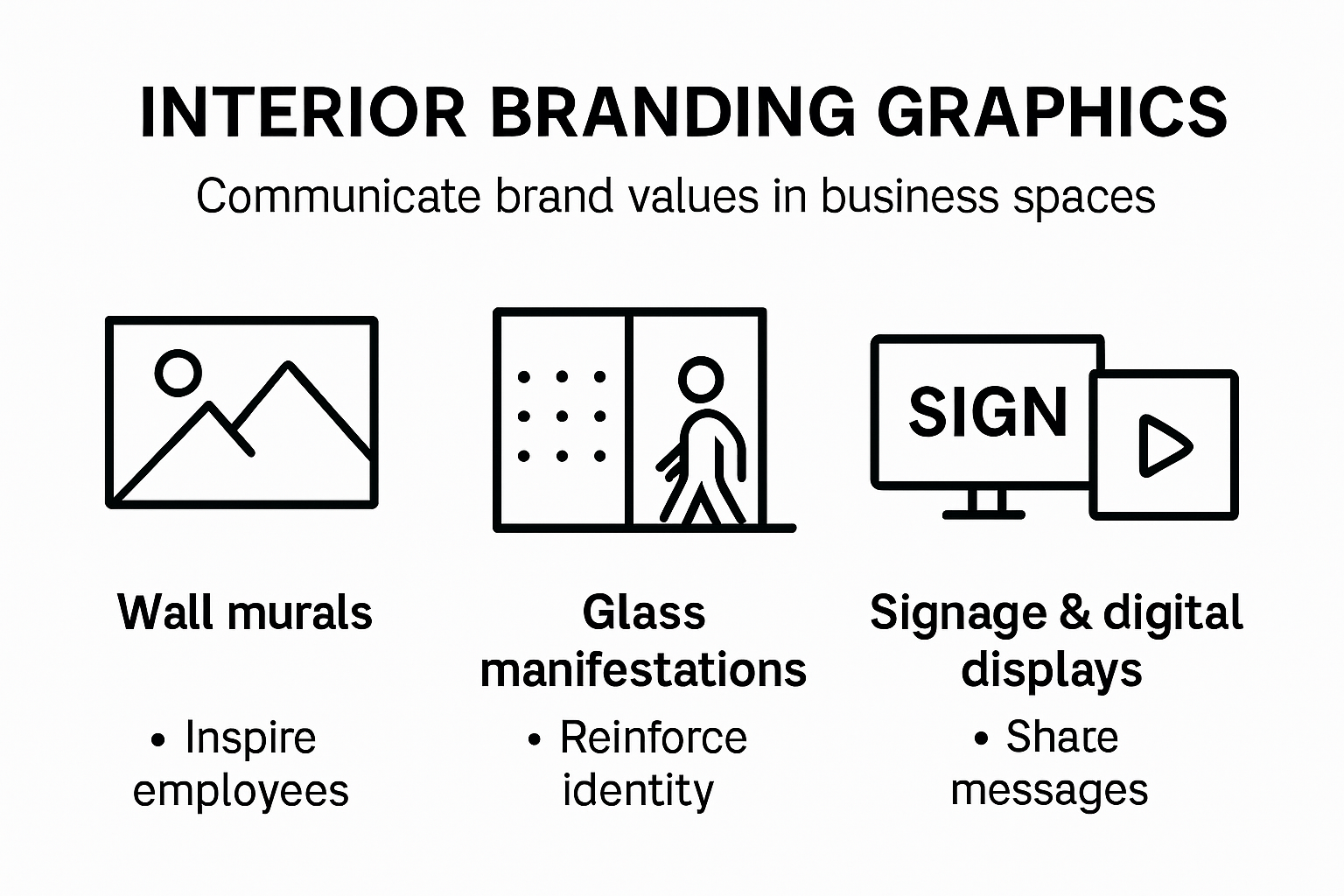
Interior branding graphics represent a strategic visual communication approach that transforms physical spaces into powerful storytelling platforms for businesses. These sophisticated design elements go beyond mere decoration, serving as critical tools that communicate a company’s identity, values, and professional ethos through carefully curated visual experiences.
The Conceptual Framework of Interior Branding Graphics
At its core, interior branding graphics are intentional visual interventions that convert standard environments into immersive brand narratives. According to research from ResearchGate, these graphics are environmental communication tools that shape perception and deliver nuanced messages about an organisation’s culture. Companies leverage wall art, colour schemes, branded signage, and thematic design elements to create spaces that speak directly to their brand’s unique personality.
The strategic implementation of these graphics involves multiple design considerations. Businesses must thoughtfully integrate visual elements that align with their brand’s core messaging, ensuring that every graphic element contributes to a cohesive and compelling narrative. This might include using specific colour palettes that reflect company values, incorporating logos and brand iconography in creative ways, or designing spatial graphics that tell the organisation’s story.
Visual Communication and Brand Experience
Interior branding graphics transcend traditional marketing by creating immersive environments that engage visitors and employees alike. They transform mundane spaces into dynamic communication platforms that communicate complex organisational identities through visual language. For instance, a technology startup might use sleek, minimalist graphics that suggest innovation and forward thinking, while a creative agency could opt for vibrant, abstract designs that signal imagination and dynamism.
The psychological impact of these graphics is profound. Research indicates that environmental design significantly influences human perception, mood, and behaviour. By strategically deploying interior branding graphics, organisations can create spaces that not only look impressive but also emotionally resonate with their target audience. Learn more about how visual design transforms business spaces.
Companies investing in interior branding graphics recognise that their physical environment is a powerful communication medium. These graphics are not merely decorative elements but sophisticated tools that translate brand identity into spatial experiences, creating memorable interactions that extend far beyond traditional marketing approaches.
The future of interior branding graphics lies in their ability to create holistic, immersive environments that tell compelling stories, engage emotions, and reinforce brand positioning through every visual touchpoint.
Key Benefits for London Businesses
Interior branding graphics offer London businesses a strategic advantage in a competitive commercial environment, delivering measurable benefits that extend far beyond aesthetic appeal. These sophisticated visual communication tools provide comprehensive solutions for businesses seeking to differentiate themselves and create meaningful connections with clients and employees.
Enhanced Brand Perception and Customer Engagement
In the dynamic London business ecosystem, first impressions are crucial. According to research published in the International Journal of Environmental Research and Public Health, well-designed interior branding graphics can significantly improve psychological well-being and social cohesion within commercial spaces. By strategically implementing visual narratives, businesses can transform ordinary environments into compelling brand experiences that immediately communicate their unique value proposition.
Companies investing in interior branding graphics create immersive environments that tell a story, engaging customers at a deeper emotional level. These graphics serve as silent ambassadors, communicating brand values, professional ethos, and organisational personality without uttering a single word. For London businesses operating in competitive sectors like finance, technology, and creative industries, this visual storytelling becomes a critical differentiation strategy.
Psychological and Productivity Impact
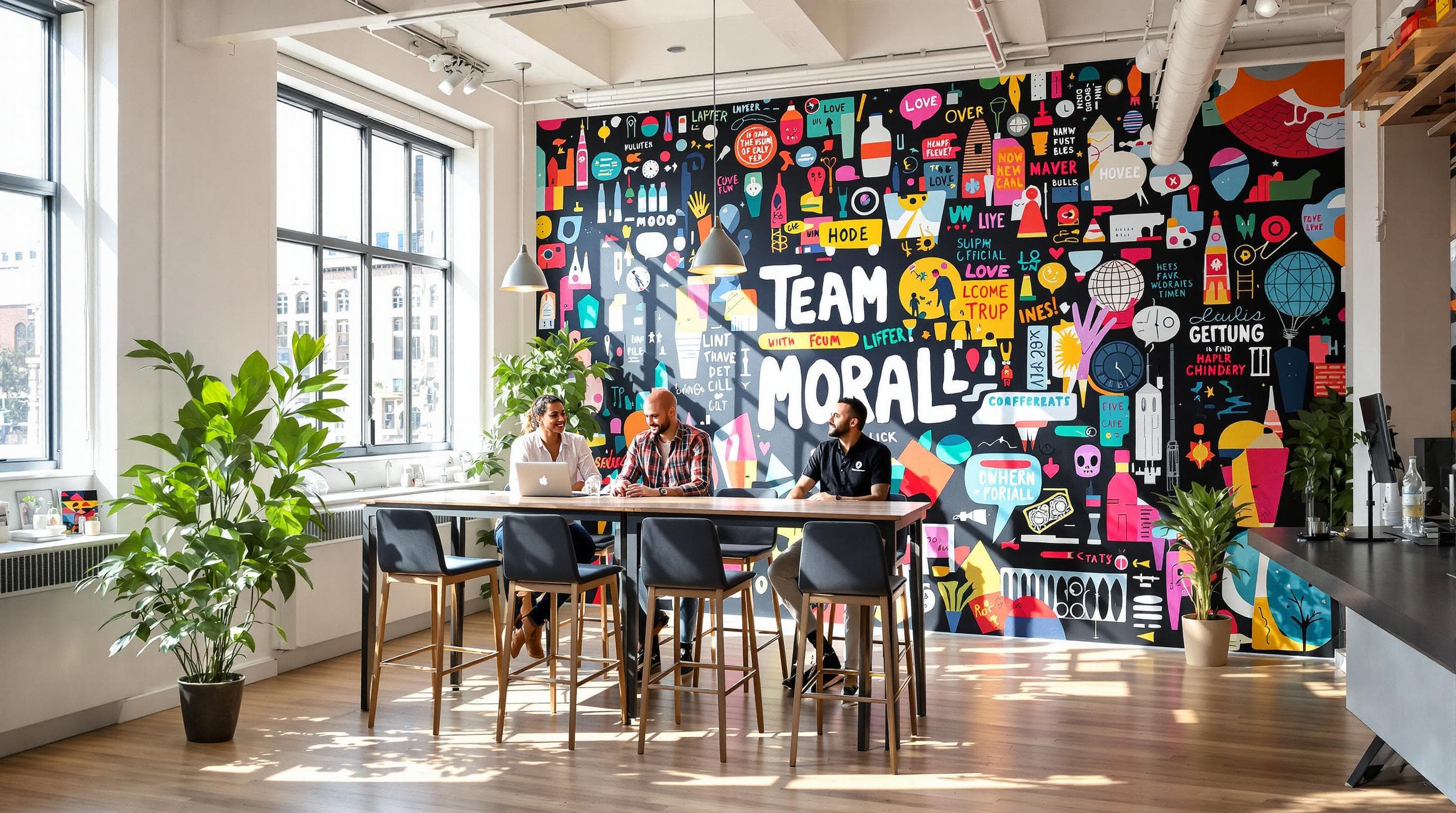
Research from ArchDaily highlights that branded interiors are not merely decorative but powerful tools for narrative reinforcement and identity establishment. In the context of London’s fast-paced business environment, interior branding graphics can create a sense of belonging and motivation for employees, directly influencing workplace productivity and team morale.
By designing spaces that reflect organisational culture and values, businesses can create environments that inspire creativity, encourage collaboration, and reinforce a shared sense of purpose. These graphics can subtly guide behaviour, create distinct functional zones, and provide visual cues that enhance workplace efficiency. Learn more about innovative signage solutions for modern workspaces.
Economic and Marketing Advantages
Interior branding graphics represent a strategic investment with tangible economic benefits. They serve multiple functions simultaneously: marketing tool, spatial organiser, and brand communicator. For London businesses, this multi-dimensional approach translates into increased customer recall, improved spatial experiences, and more effective brand positioning.
The ability to create memorable, immersive environments gives businesses a competitive edge in attracting and retaining clients. In sectors where visual differentiation matters—such as hospitality, retail, and creative industries—these graphics can be the decisive factor that transforms a casual visitor into a loyal customer. Moreover, they provide a cost-effective marketing solution, continuously communicating brand messages without recurring advertising expenses.
As London continues to evolve as a global business hub, interior branding graphics will become increasingly crucial. They represent more than design elements; they are strategic communication tools that help businesses navigate the complex landscape of modern brand engagement, creating spaces that are not just seen but experienced.
To clarify the advantages discussed, the following table summarises the main benefits of interior branding graphics for London businesses:
| Benefit | Description |
|---|---|
| Enhanced Brand Perception | Creates positive first impressions and memorable brand experiences for clients and visitors |
| Improved Psychological Well-Being | Supports employee morale, psychological well-being, and social cohesion in the workplace |
| Increased Productivity | Inspires creativity, guides behaviour, and encourages collaboration among staff |
| Competitive Market Differentiation | Distinguishes brands visually in sectors like finance, technology, hospitality, retail, and creative industries |
| Cost-Effective Marketing | Delivers ongoing brand communication and marketing without recurring advertising costs |
| Flexible Spatial Organisation | Functions as both spatial organiser and visual communicator, supporting dynamic use of commercial spaces |
Design Trends for 2025 and Beyond
The realm of interior branding graphics is undergoing a revolutionary transformation, with emerging design trends reflecting technological innovation, sustainability, and profound shifts in workplace culture. As businesses adapt to rapidly changing environments, these design trends are not merely aesthetic choices but strategic communication tools that reflect organisational values and future vision.
Sustainable and Adaptive Design Approaches
Research from the National Institutes of Health highlights the growing importance of environmental graphics that support sustainability goals and organisational culture. In 2025, interior branding graphics will increasingly incorporate eco-friendly materials, circular design principles, and visual narratives that communicate a commitment to environmental responsibility.
Businesses are moving beyond traditional graphic applications, exploring innovative materials like recycled plastics, biodegradable substrates, and graphics that can be easily repurposed or transformed. This approach reflects a holistic understanding of design as a dynamic, responsive medium that adapts to changing organisational needs while minimising environmental impact. The graphics of 2025 will not just decorate spaces but actively contribute to sustainability narratives.
Technology-Driven Immersive Experiences
Digital integration is revolutionising interior branding graphics, creating multi-sensory, interactive experiences that blur the boundaries between physical and digital environments. Augmented reality (AR) and dynamic digital displays are becoming integral components of interior design, allowing businesses to create flexible, real-time communicative spaces.
Interactive wall displays, motion-responsive graphics, and personalised visual experiences will become standard in forward-thinking businesses. These technologies enable companies to modify their visual messaging instantly, create contextually relevant brand interactions, and provide engaging experiences that resonate with tech-savvy audiences. Explore innovative signage solutions for modern workspaces that are reshaping business communication strategies.
Inclusive and Contextual Design Languages
The most progressive interior branding graphics in 2025 will prioritise inclusivity, cultural sensitivity, and nuanced storytelling. Designers are moving beyond generic visual representations, creating graphics that reflect diverse perspectives, celebrate cultural heritage, and create spaces that feel welcoming to all individuals.
This trend involves developing visual languages that transcend traditional corporate aesthetics. Graphics will incorporate elements that represent multicultural narratives, use universal design principles, and create environments that feel both professional and deeply human. Typography, colour palettes, and imagery will be carefully curated to communicate openness, respect, and collective identity.
As London continues to be a global business hub, interior branding graphics will play a crucial role in defining organisational identity. These emerging trends demonstrate that graphics are no longer passive decorative elements but active, strategic tools for communication, engagement, and transformation. They represent a sophisticated approach to spatial design that considers technological innovation, environmental responsibility, and human experience as interconnected elements of a compelling brand narrative.
To provide a clear overview, the following table summarises the major design trends for interior branding graphics in 2025 and beyond:
| Trend | Main Features |
|---|---|
| Sustainable & Adaptive Design | Use of eco-friendly/recycled materials, circular design, reusability, commitment to environmental goals |
| Technology-Driven Immersive Experiences | Integration of AR, dynamic digital displays, interactive and motion-responsive graphics |
| Inclusive & Contextual Design Languages | Multicultural visual storytelling, universal design, welcoming and sensitive use of colour and imagery |
Choosing the Right Partner for Your Project
Selecting the ideal partner for interior branding graphics is a critical decision that can significantly impact a business’s visual communication strategy. The right collaboration can transform an ordinary space into a compelling brand narrative, while the wrong choice might result in missed opportunities and ineffective design solutions.
Evaluating Technical Expertise and Industry Experience
Research from ArchDaily reveals that 37.1% of industry professionals prioritize skills and expertise when selecting project partners. For interior branding graphics, this means looking beyond surface-level design capabilities and assessing a partner’s deep understanding of visual communication, brand storytelling, and spatial design principles.
Businesses should examine potential partners’ portfolios critically, looking for evidence of innovative design solutions, adaptability across different industries, and a proven track record of creating impactful visual experiences. Technical proficiency in emerging design technologies, understanding of sustainable design practices, and ability to integrate complex branding strategies are crucial evaluation criteria.
Communication and Collaborative Approach
According to industry research, effective communication is the cornerstone of successful design partnerships. The right partner should demonstrate an exceptional ability to listen, understand your unique business requirements, and translate abstract brand concepts into tangible visual narratives.
Key communication indicators include:
- Responsive interaction: Prompt and clear communication
- Strategic understanding: Ability to grasp your brand’s core message
- Collaborative mindset: Willingness to iterate and refine designs
Learn more about our collaborative design approach that ensures your vision becomes a remarkable visual reality.
Alignment of Design Philosophy and Brand Vision
Research from design experts emphasizes the importance of selecting a partner whose aesthetic style and design philosophy align seamlessly with your brand identity. This alignment goes beyond superficial visual matching and delves into a deeper understanding of your organisational culture, values, and long-term strategic objectives.
Consider partners who demonstrate:
- Adaptability: Capability to work across various design styles
- Industry insight: Understanding of sector-specific design nuances
- Innovation: Proven ability to push creative boundaries
The ideal partner will not just execute a design brief but will challenge and elevate your initial concept, bringing fresh perspectives that enhance your brand’s visual communication strategy.
Choosing the right partner for interior branding graphics is a nuanced process that requires careful consideration of technical skills, communication capabilities, and philosophical alignment. By approaching this selection with a strategic mindset, businesses can transform their physical spaces into powerful brand narratives that resonate deeply with their target audience.
Frequently Asked Questions
What are interior branding graphics?
Interior branding graphics are strategic visual elements used in physical spaces to communicate a company’s identity, values, and ethos. They transform standard environments into immersive brand narratives that resonate with employees and visitors.
How do interior branding graphics benefit London businesses?
Interior branding graphics enhance brand perception, improve employee morale, and increase productivity. They create memorable experiences for clients, serving as a cost-effective marketing tool while providing a competitive edge in various sectors.
What design trends are emerging for interior branding graphics in 2025?
Key design trends for 2025 include sustainable and adaptive design approaches using eco-friendly materials, technology-driven immersive experiences like augmented reality, and inclusive design that reflects cultural diversity and sensitivity.
How can businesses choose the right partner for interior branding graphics?
Businesses should evaluate potential partners based on their technical expertise, industry experience, effective communication skills, and alignment with the organisation’s design philosophy and brand vision. A collaborative approach is essential for successful outcomes.
Transform Your Workspace and Inspire Lasting Impressions
Are you struggling to capture the true spirit of your brand in your physical space? Many London businesses today face the challenge of making their interior graphics work harder, not just as decor but as powerful tools for brand engagement and team motivation. If your aim is to build a memorable culture, drive productivity, and set yourself apart, generic wall visuals simply are not enough. The latest trends in interior branding graphics require a blend of compelling storytelling, cutting-edge design, and technical know-how. This is where strategic, expertly crafted signage changes everything.
Let the experts at PromoSigns help you turn every wall into a story that energises staff and wows clients. We design, produce, and install bespoke shop signs, illuminated features, and large format branding for London, Essex, and Kent. If you are ready to boost team morale and give your visitors a true sense of who you are, start your journey today at PromoSigns. For tailored workspace solutions and ideas, visit our signage for interior designers page to see what is possible for your business. Your transformation begins with a single click.
Recommended
- Office Signage Ideas for London Businesses and Events: 2025 Trends – PromoSigns.co.uk
- Signage and Brand Recognition: Boost Your London Business in 2025 – PromoSigns.co.uk
- Signage for Interior Designers: Trends and Solutions 2025 – PromoSigns.co.uk
- Signage for Office Interiors: 2025 Guide for London Businesses – PromoSigns.co.uk
