

Choosing the right signage can make or break a business’s visibility in London. Many assume flashy graphics or sheer size are what truly matter. The surprise is, digital signage can raise profits by up to 124 percent and still go unseen if you pick the wrong type or place it badly. The clever move is knowing how interior and exterior signs play vastly different roles, often in ways you’d never expect. This could be the single detail that decides if customers walk through your door or walk straight on by.
Table of Contents
Table of Contents
- Defining Interior Vs Exterior Signage For Your Space
- Key Factors To Consider When Selecting Signage
- Benefits And Challenges For London Businesses
- Tips To Maximise Impact For Events And Offices
Quick Summary
| Takeaway | Explanation |
|---|---|
| Understand the Differences | Distinguish between interior and exterior signage functions; exterior signs attract attention and must withstand environmental elements, while interior signs focus on navigation and branding within the space. |
| Prioritise Compliance and Durability | Ensure signage meets legal regulations regarding visibility and placement, while selecting appropriate materials that are durable for exterior signs and aesthetically pleasing for interiors. |
| Leverage Technology and Design | Utilise advanced technologies, such as LED and interactive displays, to enhance visibility and engagement; design signage that aligns with brand identity to create a cohesive customer experience. |
 |
Defining Interior vs Exterior Signage for Your Space
Signage serves as the silent communicator for businesses, bridging the gap between visual communication and brand identity. Understanding the fundamental differences between interior and exterior signage is crucial for creating a comprehensive visual strategy that captures attention and guides customers effectively.
The Core Distinctions in Signage Design
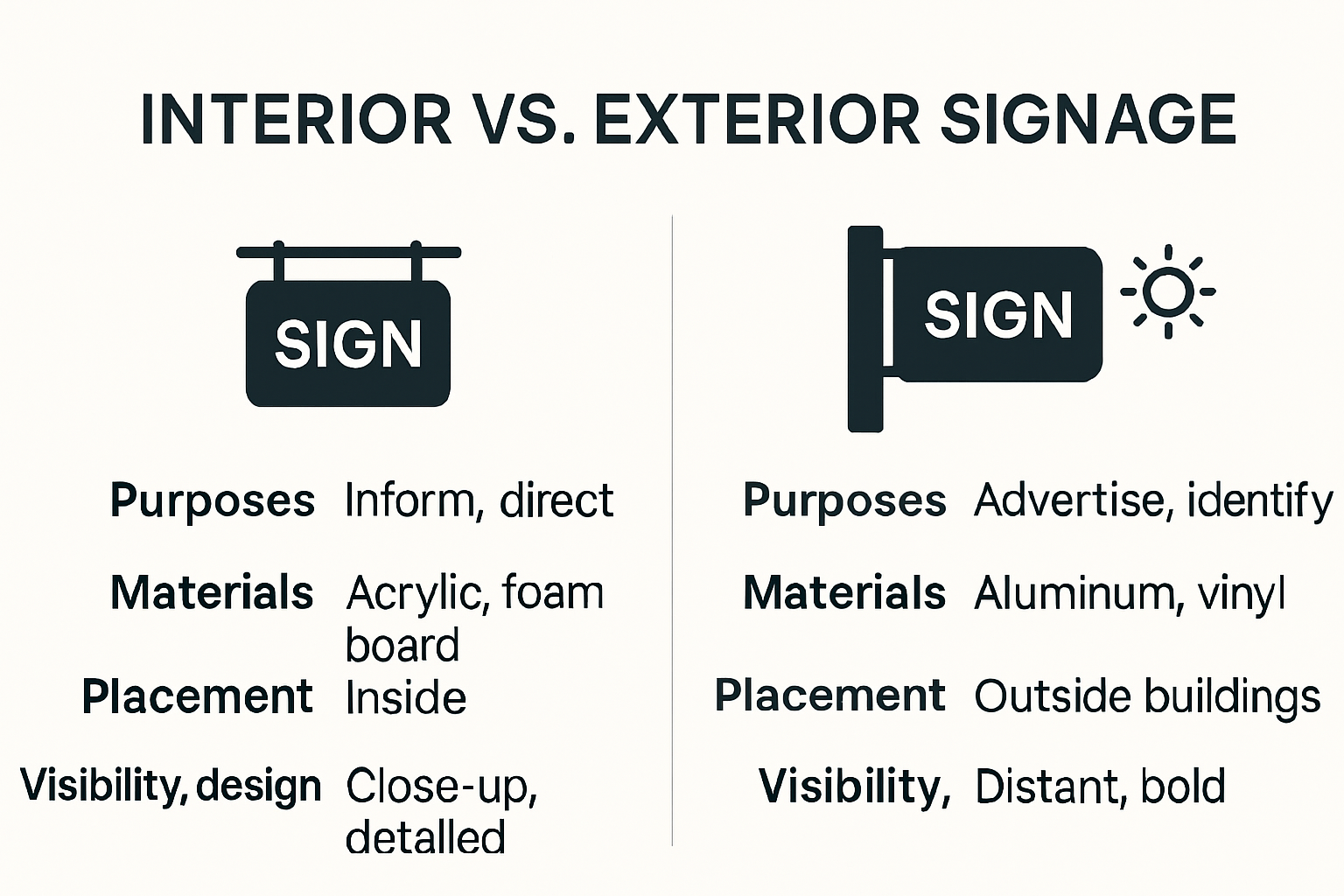
Interior and exterior signage might appear similar at first glance, but they operate with distinctly different purposes and technical requirements. According to research from Blink Signs, the primary difference lies in their core functional objectives. Exterior signage acts as a beacon, designed to attract attention from a distance and create an immediate visual impact that draws potential customers into a business. These signs must withstand environmental challenges, requiring robust materials that can resist sun, rain, temperature fluctuations, and other external elements.
Interior signage, by contrast, focuses on creating a navigational and experiential environment within the business space. These signs are typically more detailed, with refined aesthetics that complement the interior design while providing critical information about wayfinding, services, and brand messaging. Gemini Made highlights that interior signs prioritize readability and aesthetic integration, using materials and finishes that enhance the indoor experience.
Strategic Considerations for Business Signage
Choosing between interior and exterior signage is not a binary decision but a strategic approach to visual communication. Businesses must consider multiple factors when developing their signage strategy. Material durability becomes paramount for exterior signs, which must endure harsh weather conditions while maintaining visual clarity. Illumination, size, and visibility angles play critical roles in exterior signage design, ensuring maximum impact from various viewing distances.
For interior signage, the focus shifts to creating a cohesive brand experience. Check out our guide on office interior signage for more insights into creating effective indoor visual communication. The signs must harmonise with the interior design, use appropriate typography, and provide clear, concise information that enhances rather than disrupts the space.
The technical specifications differ significantly between these two sign types. Exterior signs require UV-resistant materials, weatherproof coatings, and structural reinforcements to maintain integrity. Interior signs can utilize more delicate materials like acrylic, vinyl, and precision-cut graphics that would quickly deteriorate in outdoor environments.
Businesses must approach signage as a holistic communication strategy. The exterior sign creates the first impression, drawing customers in, while interior signs guide, inform, and reinforce brand identity once they enter the space. It is a delicate balance of visual communication that requires careful planning, design expertise, and an understanding of both functional and aesthetic requirements.
The future of business signage lies in adaptability and intelligent design. As technology and design techniques evolve, the lines between interior and exterior signage continue to blur, offering businesses increasingly sophisticated ways to communicate their brand message.
Key Factors to Consider When Selecting Signage
Selecting the right signage is a critical decision for businesses that extends far beyond mere visual aesthetics. It involves a strategic approach that considers multiple dimensions of brand communication, legal compliance, and functional effectiveness.
Legal and Regulatory Compliance
Businesses must navigate a complex landscape of regulatory requirements when installing signage. According to UK planning guidelines, signage must meet specific legal standards. These regulations dictate everything from placement and size to maintenance and visibility. Some signage types may be exempt from formal planning permissions, but they still must adhere to safety and maintenance standards.
UK businesses must ensure their signage meets enhanced visibility requirements, including specific contrast ratios and dimensions. This is particularly crucial for businesses in London, where urban spaces demand precise visual communication. Our comprehensive guide on commercial signage provides deeper insights into navigating these complex requirements.
Design and Functional Considerations
Beyond legal compliance, businesses must evaluate signage through multiple strategic lenses. Material selection becomes paramount, with durability, weather resistance, and aesthetic quality playing crucial roles. Exterior signs require robust materials that can withstand environmental challenges, while interior signs prioritize design integration and readability.
Illumination represents another critical factor. LED technology offers significant advantages over traditional signage, providing enhanced visibility, energy efficiency, and design flexibility. Modern businesses can leverage these technologies to create dynamic, attention-grabbing visual communications that adapt to different lighting conditions and times of day.
Brand Identity and Strategic Positioning
Signage is more than a functional necessity—it is a powerful branding tool. Each sign represents an opportunity to communicate brand personality, values, and professional identity. Businesses must consider how their signage integrates with their overall visual branding strategy, ensuring consistency across different mediums and locations.
The strategic positioning of signage can significantly impact customer perception and business performance. Exterior signs must create immediate visual impact, drawing potential customers, while interior signs guide, inform, and reinforce brand messaging. This requires a nuanced understanding of visual communication principles and user experience design.
Technological advancements continue to transform signage capabilities. From interactive digital displays to smart, adaptive signage systems, businesses have unprecedented opportunities to create engaging, informative visual communications. The key lies in selecting solutions that balance technological innovation with practical functionality and brand authenticity.
Ultimately, successful signage selection is a holistic process that demands careful consideration of legal, design, technological, and branding factors. Businesses that approach signage as a strategic communication tool rather than a mere functional requirement will create more impactful, memorable visual experiences for their customers.
Benefits and Challenges for London Businesses
The landscape of business signage in London presents a complex ecosystem of opportunities and challenges that demand strategic navigation. As businesses seek to establish their visual identity in one of the world’s most competitive commercial environments, understanding the nuanced benefits and potential obstacles becomes crucial.
Economic and Marketing Advantages
Signage represents more than a mere visual marker—it is a powerful economic tool with substantial potential impact. According to market research, digital signage can dramatically boost business performance, with potential profit increases of up to 124% and sales improvements of 7%. These statistics underscore the transformative potential of strategic signage investments.
Discover the advantages of illuminated signage for businesses looking to maximize their visual communication strategies. Modern signage technologies offer unprecedented opportunities for engagement, allowing businesses to create dynamic, responsive visual experiences that capture customer attention and communicate brand values effectively.
Sustainability and Technological Challenges
The emerging signage landscape in London is increasingly defined by sustainability imperatives and technological complexity. Research from Future Market Insights indicates that Western European markets, including London, are rapidly transitioning towards eco-friendly signage solutions. Businesses now face the challenge of investing in energy-efficient LED technologies and recycled materials, balancing environmental responsibilities with economic considerations.
The UK digital signage market is projected to experience a compound annual growth rate of 7.6% from 2025 to 2030, driven by demand for sophisticated, data-driven displays. However, this technological evolution introduces significant challenges. Businesses must navigate complex regulatory landscapes, ensure privacy-compliant audience analytics, and manage the substantial upfront investment required for cutting-edge signage technologies.
Strategic Positioning and Brand Communication
London’s competitive business environment demands that signage be viewed as a strategic communication asset rather than a mere functional requirement. Each sign represents an opportunity to differentiate, communicate brand personality, and create memorable customer experiences. The most successful businesses will be those that approach signage as an integrated component of their broader marketing and communication strategies.
The intricate balance between aesthetic appeal, technological innovation, regulatory compliance, and brand messaging requires a sophisticated approach. Businesses must consider multiple dimensions: visual design, technological capabilities, environmental sustainability, and alignment with broader brand narratives.
Navigating these complex considerations requires a forward-thinking perspective. The most successful London businesses will view signage not as an expense, but as a strategic investment in brand communication, customer engagement, and market differentiation.
As technological capabilities continue to evolve and sustainability becomes increasingly critical, businesses that remain adaptable, innovative, and strategically minded will be best positioned to leverage the transformative potential of modern signage solutions. The future of business signage in London is not just about visibility—it is about creating meaningful, engaging visual experiences that resonate with customers and reflect a brand’s unique identity.
Tips to Maximise Impact for Events and Offices
Maximising signage impact in events and office environments demands a strategic approach that goes beyond traditional visual communication methods. The evolving landscape of professional spaces requires innovative solutions that capture attention, communicate effectively, and create memorable brand experiences.
Strategic Design and Placement
Effective signage in events and offices begins with meticulous design and intelligent placement. Key exhibition stand design principles emphasise the importance of creating visual narratives that immediately engage viewers. This involves understanding spatial dynamics, audience flow, and the psychological impact of visual communication.
Professional environments require signage that seamlessly integrates with architectural aesthetics while delivering clear, impactful messaging. The strategic positioning of signs can guide visitor movement, highlight key information, and reinforce brand identity. Businesses must consider factors such as viewing angles, lighting conditions, and the overall spatial context when designing their signage solutions.
Technology and Interactive Solutions
Digital technologies are transforming signage capabilities in events and offices. Research from Future Market Insights highlights the growing trend of data-driven, dynamic displays that offer unprecedented engagement opportunities. Modern signage solutions can now provide programmatic content, allowing businesses to adapt their visual communications in real-time based on audience demographics, time of day, and specific event requirements.
Cloud-managed LED displays and interactive video walls represent the cutting edge of signage technology. These solutions enable businesses to create immersive experiences that go far beyond traditional static signage. For events, this might mean live social media integrations, real-time event information, or interactive brand storytelling. In office environments, such technologies can transform communication channels, making information sharing more dynamic and engaging.
Maximising Engagement and Brand Communication
The ultimate goal of signage in events and offices is to create meaningful connections with viewers. According to digital signage research, well-implemented signage solutions can increase sales and engagement by up to 7%, with potential profit increases of 124%. This underscores the critical role of signage as a strategic communication tool.
Businesses must approach signage as a holistic communication strategy. This involves considering multiple dimensions: visual design, technological capabilities, brand messaging, and audience experience. The most effective signage solutions tell a story, create emotional connections, and provide valuable information simultaneously.
For events, this might mean creating immersive brand experiences that extend beyond traditional marketing approaches. In office environments, signage can serve multiple purposes—from wayfinding and information sharing to reinforcing company culture and values.
The future of signage in professional spaces lies in adaptability, technology integration, and strategic storytelling. Businesses that view signage as a dynamic communication tool rather than a static information display will be best positioned to create impactful, memorable experiences.
As technological capabilities continue to evolve, the boundaries between physical and digital communication will become increasingly blurred. The most successful organisations will be those that embrace this complexity, using signage as a powerful medium for engagement, information sharing, and brand expression.
Frequently Asked Questions
What is the difference between interior and exterior signage?
Interior signage focuses on navigation and brand messaging within a space, while exterior signage is designed to attract attention and withstand outdoor elements.
Why is signage important for London businesses?
Signage enhances visibility and can significantly impact customer engagement, potentially increasing profits by up to 124%. It serves as a critical communication tool for brand identity and customer experience.
What materials are best for outdoor signage?
Outdoor signage should be made from durable, weather-resistant materials such as metal, acrylic, or high-quality vinyl to withstand environmental conditions like rain, sun, and wind.
How can businesses ensure compliance with signage regulations in London?
Businesses should familiarise themselves with UK planning guidelines regarding signage, including size, placement, and maintenance requirements, ensuring that their signage meets legal visibility standards.
Ready to Elevate Your Signage? See the Difference Professional Solutions Make
It is common to feel uncertain about which signage approach truly matches your brand’s needs. The article highlights the crucial difference between grabbing attention outside and guiding your customers inside. Many London businesses struggle with compliance, durability, and branding when trying to choose between interior and exterior signage. The wrong sign or a poorly placed one can lose you valuable foot traffic and affect your reputation. That is where a trusted specialist comes in.

Experience the confidence of working with signage experts who understand the unique challenges your business faces. Our team at PromoSigns crafts bespoke shop signs and illuminated signage solutions tailored for London, Essex, and Kent businesses. Take the next step towards high-impact signage by getting in touch today. See how we can design, produce, and install signage that makes your brand memorable and your location irresistible. Explore what our team can do for you on our website—request your free consultation now and make sure your business always stands out.
Recommended Articles
- Signage for Office Interiors: 2025 Guide for London Businesses – PromoSigns.co.uk
- Exterior Signs London | Trusted Sign Experts – Promo Signs
- Outdoor Signs London | Bespoke Signage Solutions | Promo Signs
