
Every London and Essex business owner knows how hard it can be to stand out on a crowded high street or within a busy hospitality district. With so much competition for attention, relying on outdated signs can leave your shop overlooked just when you need foot traffic most. LED signage uses bright, clear displays to enhance shop visibility, with dynamic content and eye-catching lighting that draws customers in at all hours. Understanding how this technology works gives you the edge in creating a memorable, engaging storefront that works as hard as you do.
Table of Contents
What Is LED Signage and How It Works
LED signage uses light-emitting diodes to create bright, visible displays that are perfect for retail and hospitality environments across London and Essex. Unlike traditional neon or incandescent signs, LED technology operates by passing electrical current through semiconductor diodes, which emit light as a result. This process generates displays that are significantly more energy-efficient than older signage methods. The brightness, colour, and intensity of LED signs can be controlled electronically, making them incredibly flexible for different applications and environments. Whether you’re looking to attract customers from across the street or create an eye-catching window display, LED signage delivers the visibility you need with far lower running costs than conventional alternatives.
The core strength of LED technology lies in its versatility and longevity. Modern LED signs can display static images, animated content, or changing text, allowing you to update your shop’s message without replacing the physical signage structure. Brightness dimmers can automatically reduce light output during evening hours, which saves energy and prevents light pollution whilst maintaining visibility when customers need it most. Each individual light-emitting diode has a lifespan of 50,000 to 100,000 hours depending on usage and quality, meaning your investment typically lasts 5 to 10 years before requiring maintenance. The modular nature of LED technology also means that if individual diodes fail, they can be replaced without dismantling the entire sign. For retail shops and hospitality venues, this translates to minimal downtime and consistent visibility throughout the year.

Color and design flexibility set LED signage apart from traditional alternatives. RGB LED systems allow you to change colours instantly, creating dynamic displays that shift throughout the day or for special promotions. You might display warm amber tones in the morning to create a welcoming atmosphere, switch to vibrant colours during peak trading hours, and then return to subtle branding overnight. LED signage creates bright, clear displays that are suitable for visibility in various settings, whether your shop is located on a busy high street in Central London or a quieter parade in Essex. The directional nature of LED light also means less wasted illumination and better viewing angles from street level. Unlike fluorescent tubes that emit light in all directions, LEDs focus their output, resulting in sharper, more defined signage that’s readable from greater distances.
The installation and maintenance of LED signage requires professional expertise to ensure safety and optimal performance. Proper electrical connections, weatherproofing, and structural support are essential for outdoor applications where signs face rain, wind, and temperature fluctuations. Our team handles the complete process from design through to final installation, ensuring your LED sign meets all local regulations and planning requirements. The modular construction of most LED systems makes future updates straightforward, whether you need to adjust brightness settings, change displayed content, or replace worn components. When considering LED signage for your business, understanding how the technology delivers superior visibility, lower operational costs, and design flexibility helps you make an informed decision about transforming your shop’s presence.
Pro tip: When commissioning LED signage, ask your installer about automated brightness scheduling so your sign operates at full intensity during trading hours and reduced brightness after hours, cutting your annual energy costs whilst maintaining customer-facing visibility.
Types of LED Signs for UK Businesses
LED signage comes in several distinct varieties, each designed to meet different business needs and visibility objectives. The most common type you’ll encounter is the static illuminated LED sign, which displays a fixed image or text that remains constant throughout the day. These are ideal for shopfronts, restaurant fascias, and professional offices where your branding needs to be instantly recognisable. Another popular option is the LED message board or scrolling display, which allows you to change text content without replacing the physical sign structure. Retailers often use these to advertise special offers, announce opening hours, or display promotional messages that shift throughout the day. Digital LED displays represent the more advanced end of the spectrum, offering full-colour animation and video capabilities. These modular systems can display complex graphics, product images, or even live content feeds. Matrix LED displays function as a grid of individual LED units that work together to create images and text, offering flexibility in both content and brightness levels. LED signage systems vary in size, brightness, and control capabilities depending on your visibility requirements and installation environment, so selecting the right type depends entirely on your specific business goals.
For retail and hospitality businesses in London and Essex, the choice between these options often comes down to budget, space, and the message you want to convey. Channel letter LED signs feature individual letters or symbols that are illuminated from within or behind, creating a three-dimensional effect that draws attention from greater distances. These work exceptionally well for shopfront identification and are particularly popular with restaurants, bars, and boutique retailers. Halo-lit signs achieve a similar effect by illuminating the wall behind the letters, creating a subtle glow that enhances visibility at night whilst maintaining a professional appearance during daylight hours. For businesses with high-traffic locations, programmable LED displays offer the most flexibility. You can schedule content changes throughout the day, display different messages for different customer segments, or run time-sensitive promotions. Some businesses even use variable message systems to communicate real-time information, though these are typically found in larger retail environments or outdoor advertising contexts. Window-mounted edge-lit LED panels provide a sleek, modern aesthetic and work well in contemporary shop designs, particularly for fashion retailers and tech companies.
Choosing the right LED sign type requires considering several practical factors beyond just appearance. Your available space dictates whether you can accommodate a large digital display or need a compact channel letter solution. Local planning regulations in your borough may restrict certain sign types or sizes, particularly in heritage areas or conservation zones. The viewing distance from the street determines the character size and brightness you’ll need to ensure readability. A small café tucked in a quiet Essex village needs different specifications than a high-street flagship store in Central London. Energy consumption varies significantly between static illuminated signs and full-colour digital displays, so your operating costs will differ accordingly. Weather exposure is another consideration. Signs facing harsh weather benefit from robust construction and appropriate weatherproofing, particularly for coastal locations or exposed positions. Finally, your maintenance budget matters. Static LED signs require minimal upkeep, whilst programmable systems may need occasional software updates or hardware adjustments.
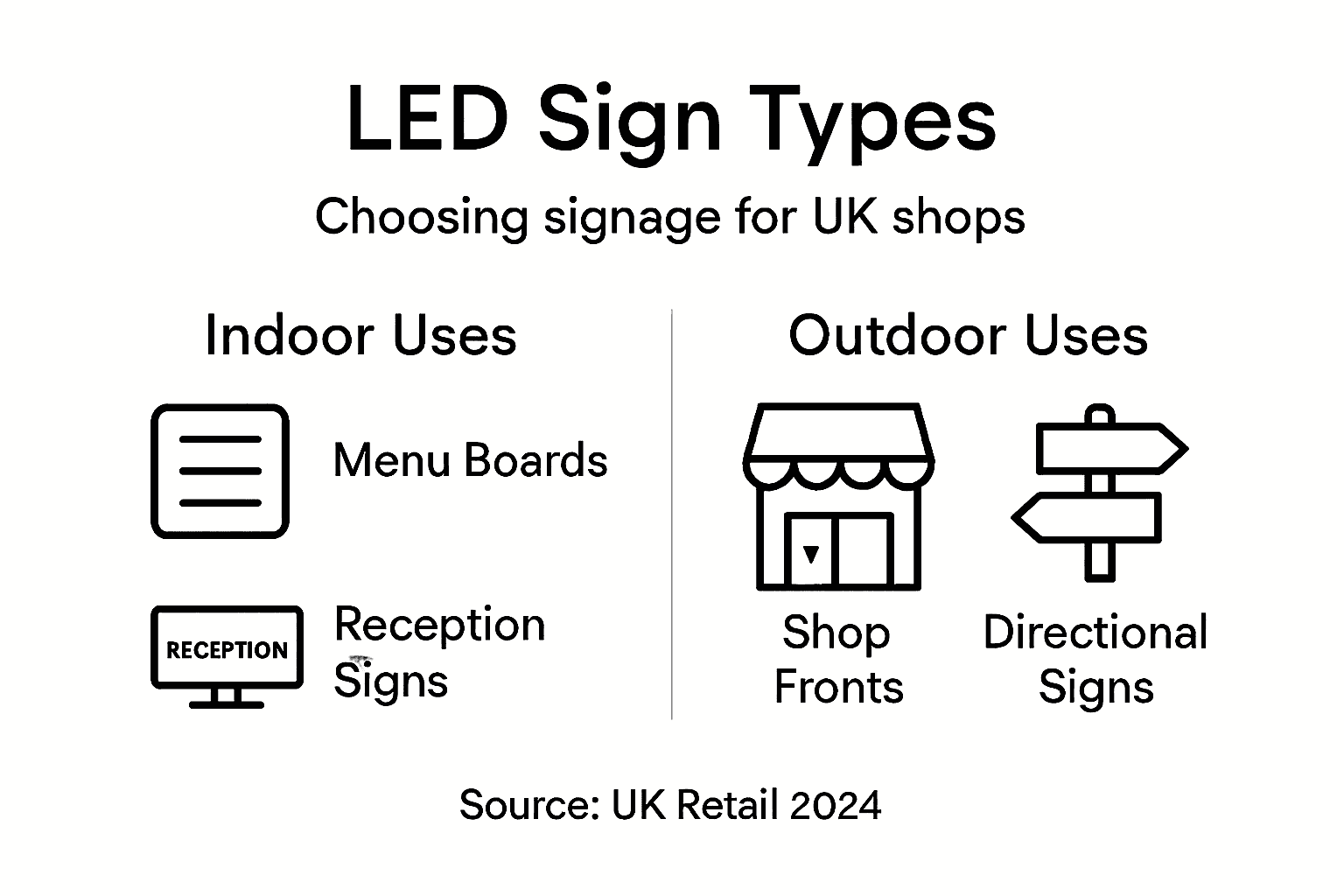
The most successful LED installations match the sign type to your business identity and customer expectations. A luxury hotel benefits from understated elegance, perhaps through halo-lit channel letters in brushed metal. A fast-food chain benefits from bold, bright signage that catches attention quickly. A boutique florist might choose a sophisticated scrolling message board that announces seasonal flowers and special occasions. Rather than viewing LED sign types in isolation, consider how your choice integrates with your overall branding strategy and shopfront design. The investment in proper signage installation is significant, so taking time to evaluate which type aligns with your visibility goals, budget constraints, and long-term business plans ensures you make a decision you’ll be satisfied with for years to come.
Here’s how different types of LED signs suit common UK business needs:
| LED Sign Type | Ideal Business Use | Visual Impact | Flexibility of Content |
|---|---|---|---|
| Static Illuminated | Shopfront, office branding | Highly visible branding | Fixed text or logo display |
| Message Board | Retail deals, café promotions | Scrolling, dynamic text | Easily updated messages |
| Digital LED Display | Flagship stores, entertainment venues | Full-colour, animated | Supports video and graphics |
| Channel Letter | Restaurants, boutiques | 3D lit letters, standout | Customised for brand identity |
| Halo-lit | Hotels, luxury businesses | Subtle night-time glow | Elegant, understated appearance |
| Edge-lit Panel | Contemporary retail, tech shops | Modern, sleek profile | Suitable for windows or interiors |
Pro tip: Before committing to any LED sign type, visit comparable businesses in your area to see which signage solutions perform well in your specific street environment, then discuss those observations with your installer to determine which option offers the best visibility-to-cost ratio for your location.
Key Benefits for Retail and Hospitality
LED signage transforms how retail and hospitality businesses operate by delivering tangible advantages that affect your bottom line and customer experience. The most immediate benefit is energy efficiency. LED signs consume significantly less electricity than traditional neon or fluorescent alternatives, which means lower monthly utility bills and reduced operational costs over time. A typical LED sign might use 80 per cent less energy than an equivalent neon installation, creating savings that accumulate substantially across multiple years. For hospitality venues running signs continuously throughout the day and evening, these reductions translate into hundreds of pounds annually. Beyond the financial aspect, LED technology supports your environmental credentials. As more customers prioritise sustainability when choosing where to shop and dine, demonstrating your commitment to energy-efficient LED lighting differentiates your business from competitors and appeals to environmentally conscious consumers. This sustainability angle matters particularly in London and Essex, where many local authorities actively encourage businesses to reduce their carbon footprint.
The second major benefit centres on customer attraction and brand visibility. LED signage is simply brighter and more noticeable than traditional alternatives, particularly at night when foot traffic peaks in many retail and hospitality settings. The enhanced visibility means your shop draws attention from greater distances, capturing customers who might otherwise walk past without noticing. Programmable LED signs allow you to change your messaging throughout the day, keeping your storefront fresh and engaging. You might display breakfast offers in the morning, lunch specials at midday, and evening entertainment promotions after five o’clock. This dynamic approach maintains customer interest and encourages repeat visits because people see something new each time they pass. For restaurants and bars, scrolling message boards announcing special events, live music, or themed nights create immediate visual impact. Retail shops benefit from LED displays showcasing seasonal collections or new arrivals without requiring physical sign replacement. The flexibility of LED technology means your marketing message evolves with your business needs rather than remaining static for months at a time.
Longevity and maintenance represent another substantial benefit that business owners appreciate. LED diodes typically last between 50,000 and 100,000 operating hours, meaning your signage investment functions reliably for five to ten years with minimal intervention. Compare this to neon tubes, which often require replacement within two to three years, or fluorescent systems that degrade visibly over time. The modular construction of most LED systems means that if individual components fail, technicians can replace just those elements rather than dismantling your entire sign. This translates to minimal downtime and continued visibility for your business. Maintenance costs drop dramatically because LEDs produce far less heat than traditional lighting, reducing stress on electrical systems and components. Additionally, hospitality businesses achieve significant operational cost savings through reduced energy consumption and lower maintenance requirements, allowing you to reinvest those savings into other business priorities such as staff training, product quality, or customer experience enhancements.
LED signage also enhances the customer environment and shopping experience. The quality of light from modern LEDs has improved dramatically, allowing you to create warm, inviting atmospheres that traditional harsh fluorescent lighting cannot match. Restaurants and bars can adjust colour temperature throughout the day, creating energetic breakfast settings and intimate evening environments using the same sign system. Retail shops benefit from brighter displays that showcase products more accurately, helping customers make informed purchasing decisions. The visual appeal of well-designed LED signage reflects positively on your brand, suggesting professionalism, innovation, and attention to detail. First-time customers often perceive businesses with modern, well-lit signage as more trustworthy and contemporary than those with dated or poorly maintained alternatives. This perception advantage is particularly valuable in competitive high street environments where first impressions determine whether someone enters your shop or continues walking.
Pro tip: When installing LED signage, programme it to adjust brightness automatically based on daylight levels, reducing energy consumption during bright daylight hours whilst maintaining full visibility during evening peaks when customers are most likely to browse.
Typical Costs and Maintenance Considerations
Understanding the financial investment required for LED signage helps you make an informed decision and budget appropriately for your business. Initial installation costs vary considerably depending on the type and complexity of your LED sign. A simple static illuminated LED sign with basic channel letters might cost between £2,000 and £5,000 installed, whilst more sophisticated programmable LED message boards typically range from £5,000 to £15,000. Large-scale digital LED displays for flagship retail locations can exceed £20,000. These figures include design, manufacture, installation, and initial electrical work. Your specific costs depend on several factors including the physical size of your sign, the complexity of the design, whether you need structural modifications to your shopfront, the distance from your existing electrical supply, and local installation difficulties. A sign installed on a straightforward flat shopfront wall costs considerably less than one requiring structural reinforcement or rooftop mounting. Location matters too. Installation in Central London typically involves higher labour costs and potential logistical challenges compared to quieter Essex locations. When budgeting for your project, factor in planning permission fees if required, which typically range from £100 to £500 depending on your local authority and sign specifications.
Ongoing operational costs are where LED signage truly demonstrates its financial advantage. Monthly electricity costs for LED signage are minimal compared to traditional alternatives. A typical LED sign consumes between 500 and 2,000 watts depending on size and brightness, resulting in monthly energy bills of just £20 to £60 depending on your local electricity rates. By contrast, neon or fluorescent signage of equivalent visibility might cost £80 to £200 monthly. Over a five-year period, these energy savings accumulate to between £3,600 and £8,400. Maintenance costs remain low because LED modules rarely fail during normal operation. Routine maintenance involves occasional cleaning to remove dirt and dust that accumulates on the sign face, which takes perhaps two hours quarterly. Professional cleaning services cost around £50 to £150 per visit. Maintaining LED signage requires attention to durability and ensuring technical components function optimally, which you can largely manage through simple visual inspections and scheduled cleaning. Component failures are uncommon with quality LED systems, but if they do occur, replacing a single LED module costs substantially less than traditional sign repairs. Most businesses experience minimal unplanned maintenance over five years, making LED signage one of the most cost-predictable signage solutions available.
Electrical safety and compliance represent important maintenance considerations specific to LED systems. UK electrical standards require proper installation of circuit protection and earthing systems to prevent electrical faults and fires. Proper circuit breaker selection and protective equipment ensure your sign operates safely and compliantly. Annual electrical inspections by a qualified electrician cost around £100 to £200 and verify that your sign’s electrical components meet current safety standards. This is particularly important if your sign is exposed to weather or located in harsh environments. Battery backup systems for signs that display safety or wayfinding information may be required in some commercial properties, adding £500 to £2,000 to initial costs. Many business owners bundle LED sign installation with a broader electrical upgrade, spreading costs across multiple improvements. Beyond electrical considerations, weather-related maintenance in the UK climate is straightforward. LED signs handle rain, wind, and temperature fluctuations well when properly installed. Seasonal checks before winter ensure that weatherproofing seals remain intact, preventing water ingress. These inspections take perhaps 30 minutes and cost nothing if you perform them yourself or around £50 if you hire a technician.
The financial reality of LED signage investment becomes clear when you calculate your return on investment across typical sign lifespans. A £6,000 LED sign installation might cost £40 monthly in electricity and maintenance combined. Over five years, total ownership cost reaches approximately £8,400. A comparable traditional sign might cost £3,000 initially but £120 monthly in electricity and maintenance, totalling £10,200 over five years. Beyond cost savings, remember that LED signage typically increases customer foot traffic and sales impact, delivering returns beyond simple operational savings. Your enhanced visibility attracts customers you might otherwise miss, often paying back the investment within the first year or two through increased patronage. Business owners frequently report that superior LED signage visibility contributed to measurable increases in enquiries and sales, making the financial case for LED signage stronger than raw cost comparisons alone suggest.
Compare key cost and maintenance aspects of LED signage versus traditional alternatives:
| Aspect | LED Signage | Neon/Fluorescent Signs |
|---|---|---|
| Initial Cost Range | £2,000–£15,000+ | £1,500–£8,000 |
| Monthly Energy Cost | £20–£60 | £80–£200 |
| Typical Lifespan | 5–10 years (50,000+ hours) | 2–3 years (neon); 4–5 (fluorescent) |
| Maintenance Needs | Simple cleaning, rare repairs | Tube replacements, frequent issues |
| Compliance Concern | Electrical, weatherproofing | Older wiring, fire safety |
Pro tip: Request a detailed maintenance schedule and warranty from your installer before committing to purchase, ensuring you understand exactly which components are covered, for how long, and what routine maintenance remains your responsibility.
Common Mistakes When Choosing LED Signs
Business owners often make predictable errors when selecting LED signage, many of which could be avoided with better planning and professional guidance. The first major mistake is choosing brightness levels without considering your specific environment. Many retailers assume that the brightest possible sign will deliver the best results, but excessive brightness actually creates problems. Overly bright signs can cause glare that irritates customers, making your shopfront uncomfortable to look at, particularly at night. Conversely, insufficient brightness wastes your investment because customers simply cannot see your sign from street level, defeating the entire purpose. The correct brightness depends on several factors including your street lighting conditions, the viewing distance from which customers will see your sign, and the colours used in your design. A busy Central London high street requires different brightness levels than a quieter Essex location. Assessing the environment and choosing correct brightness levels ensures your sign delivers maximum impact without creating visual problems. Professional installers understand these nuances and can recommend appropriate brightness specifications based on your actual location and design requirements.
Another common mistake involves neglecting electrical and safety compliance requirements. Some business owners try to cut costs by using unqualified installers or purchasing signs without proper electrical certification. This creates serious risks including fire hazards, electrical faults, and non-compliance with UK building regulations. Your LED sign requires proper circuit protection, earthing, and installation by qualified electricians to meet current safety standards. Selecting appropriate electrical components such as circuit breakers and ensuring compatibility with your existing electrical supply prevents costly failures and safety issues. Many business owners are shocked to discover, mid-project, that their building’s electrical infrastructure requires expensive upgrades to support new signage. Addressing this before purchase prevents budget overruns and installation delays. Additionally, overlooking planning permission requirements causes problems in many London boroughs and Essex districts. Some sign types require consent before installation, and proceeding without permission risks enforcement action requiring sign removal and replacement costs.
Design and content mistakes also plague many LED sign projects. Choosing fonts that are too small or intricate makes text illegible from street level, rendering your message invisible to potential customers. Overly complex designs with too many colours or animations create visual confusion rather than attraction. The most effective LED signage uses clean typography, generous character sizing, and simple colour schemes that remain readable in all lighting conditions. Many business owners also make the mistake of trying to display too much information simultaneously. Your sign should communicate one primary message clearly, not attempt to pack multiple promotional messages into limited space. Scrolling message boards work best when they display three to five short messages in rotation, not dozens of changing promotions. Another frequent error involves poor placement planning. A sign positioned too high becomes difficult to read at street level. Conversely, signs positioned too low can obstruct sightlines or look awkward proportionally against your shopfront.
The final category of mistakes centres on underestimating long-term maintenance and upgrade costs. Some business owners select cheap LED systems with poor build quality, only to discover that component failures occur within two years. Investing slightly more in quality systems from reputable manufacturers saves substantially on maintenance costs over the sign’s lifespan. Similarly, choosing a static sign when your business model requires flexibility to display changing promotions proves frustrating. What initially seems like cost savings becomes a limitation within months. Finally, failing to plan for future upgrades means your sign cannot adapt to business changes. A programmable system costs more initially but allows message updates without physical replacement. Business owners who select inflexible signage solutions often regret those choices within a few years and face complete replacement expenses.
Pro tip: Before finalising your LED sign purchase, request written specifications covering brightness levels, electrical requirements, planning approval status, warranty coverage, and maintenance responsibilities, then have an independent qualified electrician review these specifications to confirm compliance with UK safety standards.
Elevate Your Shop Visibility with Expert LED Signage Solutions
Many UK retailers and hospitality venues struggle with choosing the right LED signage that balances brightness, energy efficiency, and design flexibility. This often leads to signage that either overwhelms customers with glare or fails to attract attention effectively. At Promo Signs, we understand these challenges and the critical role of bespoke LED illuminated signs, channel letter solutions, and programmable displays in transforming your shopfront presence across London, Essex, and Kent.

Take advantage of our tailored approach where we design, manufacture, and install LED signage that meets your exact specifications while complying with UK electrical and planning regulations. Whether you need a subtle halo-lit sign for a luxury boutique or a vibrant digital LED display for a high-traffic restaurant, our professional team ensures your investment delivers lasting impact and reduces operational costs. Visit Promo Signs now to explore how our customised signage solutions can help you captivate customers and grow your business with clarity and style. Don’t miss the opportunity to upgrade your shop visibility today.
Frequently Asked Questions
What is LED signage, and how does it work?
LED signage uses light-emitting diodes to create bright, visible displays. It operates by passing electrical current through semiconductor diodes, emitting light. This technology is energy-efficient and allows for flexible control over brightness, colour, and content.
What are the benefits of using LED signage for businesses?
LED signage offers several benefits, including lower energy costs, long lifespan, durability, and customizable content. It can attract more customers by providing clear visibility and engaging displays that can be easily updated.
How long do LED signs typically last?
LED signs can last between 50,000 and 100,000 hours depending on usage and quality. This translates to an expected lifespan of approximately 5 to 10 years before maintenance is required.
What are the different types of LED signs available for businesses?
Common types of LED signs include static illuminated signs, LED message boards, digital LED displays, channel letter signs, halo-lit signs, and edge-lit panels. Each type serves different visibility needs and marketing objectives.
Recommended
- Shop Sign Types Explained for UK Businesses in 2025 – PromoSigns.co.uk
- Illuminated Shop Sign Benefits for London Businesses 2025 – PromoSigns.co.uk
- What Is Illuminated Signage? 2025 Guide for London Businesses – PromoSigns.co.uk
- 5 Benefits of Custom LED Signs for Your Business
- Smart Garden Offices: Transforming UK Home Working
- 7 Essentials for Banquet Hall Luxury in Corporate Events | Jigsaw Conferences
