
Table of Contents
Luxury Retail Signage Trends: Premium Brand Communication Strategies
Luxury retail signage elevates brand perception through sophisticated design, premium materials, artisan craftsmanship, and subtle elegance that communicates exclusivity, heritage, and quality without overt commercialism. Strategic luxury signage implementation reinforces brand positioning, enhances customer experience, justifies premium pricing, and creates distinctive retail environments that resonate with affluent audiences seeking exceptional quality and refined aesthetic sensibility.
This comprehensive guide explores luxury retail signage trends, covering minimalist design principles, premium material selection, artisan craftsmanship, illumination sophistication, digital integration, sustainability considerations, and heritage storytelling that enable premium brands to create signage systems reflecting brand values while delivering sophisticated visual communication.
Why Luxury Signage Matters
Brand Positioning Signal
Premium Perception: Signage quality influences brand value perception:
Psychology of Luxury:
- Material richness (precious metals, natural materials, quality finishes)
- Craftsmanship evidence (hand-made, artisan techniques, attention to detail)
- Restrained communication (subtle, confident, never shouting)
- Exclusivity cues (limited information, insider knowledge)
- Heritage connection (traditional methods, timeless design)
Statistics:
- 73% assess brand quality by signage appearance (luxury consumers particularly)
- 68% luxury shoppers won’t enter stores with inferior signage
- Premium signage investment correlates with 15-30% higher perceived value
- Craftsmanship visibility increases willingness-to-pay by 12-25%
Competitive Differentiation
Market Distinction: Stand out in premium retail environments:
Differentiation Strategies:
- Unique materials (exclusive finishes, rare substrates)
- Bespoke design (custom typography, signature elements)
- Artisan execution (hand-crafted, limited edition approach)
- Innovation adoption (cutting-edge technology, pioneering techniques)
- Heritage emphasis (traditional methods, authentic materials)
High Street Competition: Luxury brands compete for attention with Shop Signs London presence requiring exceptional quality to command premium positioning.
Customer Experience Enhancement
Sensory Engagement: Multi-dimensional brand interaction:
Experience Elements:
- Visual sophistication (refined aesthetics, harmonious composition)
- Tactile quality (surface texture, material warmth)
- Lighting ambiance (atmospheric illumination, mood creation)
- Spatial integration (architectural harmony, environmental design)
- Discovery moments (subtle details, rewarding observation)
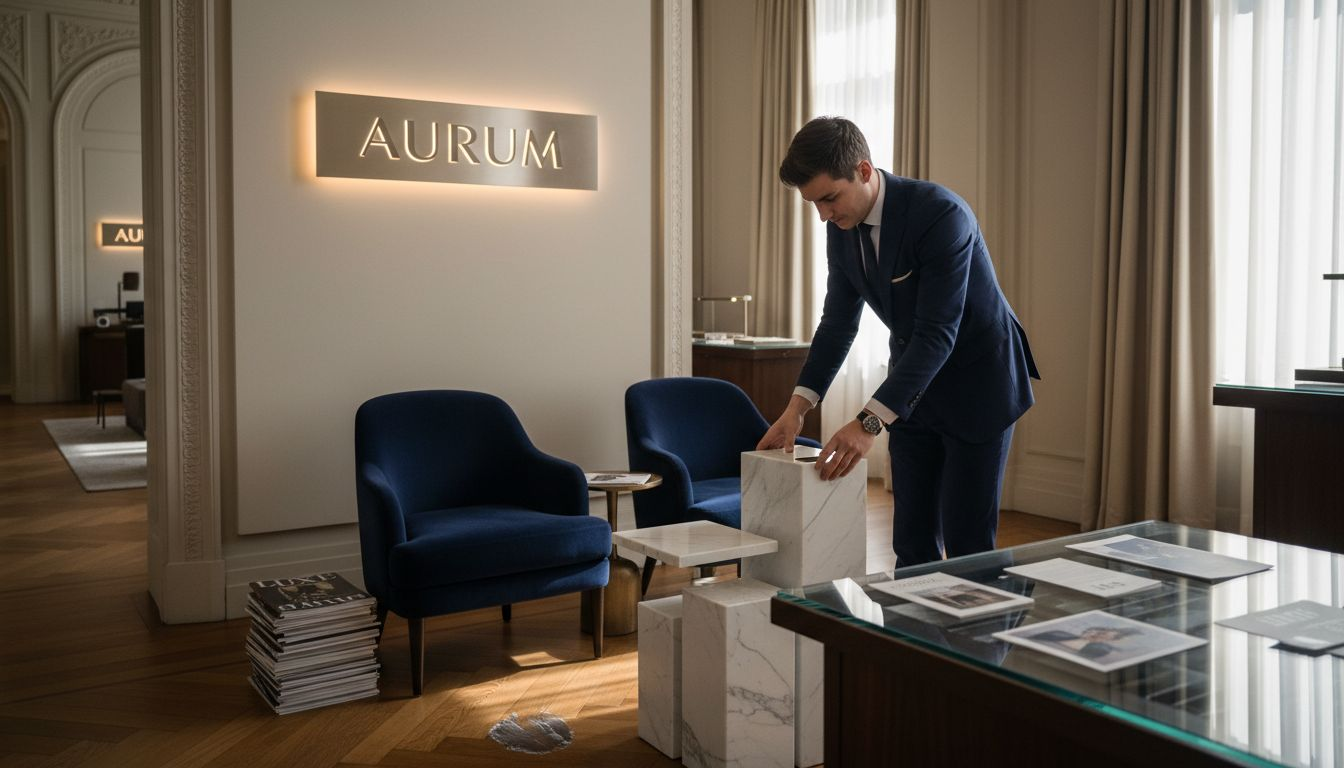
Pro tip: Test any digital or interactive elements within your actual storefront lighting conditions before installation, as screen brightness and colour accuracy can shift dramatically under different ambient light, potentially undermining your premium aesthetic.
Current Luxury Signage Trends
1. Minimalist Sophistication
Less Is More Philosophy: Restraint communicates confidence:
Design Principles:
Typography:
- Refined fonts (elegant serifs, sophisticated sans-serifs)
- Generous spacing (breathing room, visual calm)
- Hierarchy restraint (subtle size variation)
- Limited words (essential information only)
- Lowercase preference (accessible, contemporary, confident)
Color Palette:
- Monochromatic schemes (black, white, grays, neutrals)
- Metallic accents (gold, rose gold, bronze, silver, champagne)
- Natural tones (stone, timber, leather hues)
- Brand color sparingly (signature moments, strategic placement)
Layout:
- Asymmetric balance (dynamic equilibrium, modern sophistication)
- Generous negative space (luxury breathing room)
- Grid systems (precise alignment, mathematical harmony)
- Golden ratio application (natural proportion, classical beauty)
Examples:
- Single word business name (no descriptor, confident identity)
- Logo alone (brand recognition sufficient)
- Monogram (refined reduction, heritage connection)
2. Premium Material Palette
Substance Communicates Value: Material choice signals quality investment:
Favored Materials:
Metals:
Brass:
- Warm, rich, prestigious
- Patina development (living finish, character accumulation)
- Traditional luxury association (heritage connection)
- Hand-polished finish (artisan touch)
- Applications: Letters, frames, accents, fixtures
- Cost: £200-£500+ per sqm
Bronze:
- Substantial, timeless, distinguished
- Oxidation creates character (authentic aging)
- Architectural gravitas (monument quality)
- Casting capability (dimensional forms, relief details)
- Applications: Plaques, dimensional letters, sculptural elements
- Cost: £250-£600+ per sqm
Stainless Steel:
- Modern, refined, permanent
- Mirror polish (reflective elegance)
- Brushed finish (contemporary sophistication)
- PVD coating (gold, rose gold, bronze, black coloring)
- Applications: Contemporary brands, letters, panels
- Cost: £150-£400+ per sqm
Natural Materials:
Marble:
- Timeless, prestigious, luxurious
- Veining uniqueness (individual character)
- Cool tactility (sensory luxury)
- Heritage association (classical architecture)
- Applications: Reception desks, wall features, directory panels
- Cost: £300-£1,000+ per sqm (material + fabrication)
Timber:
- Warm, organic, authentic
- Grain character (natural beauty, variation)
- Craftsmanship showcase (joinery, carving, finishing)
- Sustainability story (responsible sourcing, FSC certification)
- Species: Walnut, oak, teak, mahogany (premium choices)
- Applications: Fascias, panels, dimensional letters, frames
- Cost: £200-£800+ per sqm (species, craftsmanship dependent)
Glass:
- Transparent, refined, architectural
- Etched effects (subtle communication, privacy)
- Back-painted (color depth, sophistication)
- Laminated (safety, acoustic properties)
- Low-iron (crystal clarity, colorless)
- Applications: Entrance doors, partitions, features
- Cost: £300-£1,200+ per sqm (specification dependent)
Leather:
- Tactile, exclusive, sophisticated
- Hand-stitched (craftsmanship visibility)
- Tooled effects (artisan decoration)
- Patina development (character evolution)
- Applications: Wall panels, directory covers, feature details
- Cost: £400-£1,500+ per sqm
3. Artisan Craftsmanship
Hand-Made Excellence: Human touch communicates care and quality:
Techniques:
Hand-Painted Signage:
- Traditional signwriting (heritage craft, authentic)
- Gold leaf gilding (precious material, labor-intensive)
- Decorative flourishes (artistic expression, unique)
- Imperfection beauty (human touch, authenticity)
- Applications: Heritage brands, traditional luxury, boutiques
- Artisan cost: £500-£3,000+ (size, complexity, artist reputation)
Metal Fabrication:
- Hand-forged elements (blacksmith craft, sculptural)
- Welded construction (visible joins, honest assembly)
- Hand-polished finish (labor-intensive, mirror quality)
- Patina application (chemical aging, controlled oxidation)
Carved Elements:
- Stone carving (monument quality, permanence)
- Wood carving (organic warmth, traditional craft)
- Relief sculpture (dimensional depth, artistic)
- CNC + hand-finishing (precision + humanity)
Cast Metal:
- Bronze casting (traditional foundry, sculptural forms)
- Limited edition (exclusivity, collectability)
- Artist signature (provenance, authenticity)
4. Sophisticated Illumination
Lighting as Design Element: Illumination enhances without dominating:
Approaches:
Halo Illumination:
- Backlit letters (floating appearance, refined glow)
- Subtle presence (sophisticated, never aggressive)
- Warm white (2700-3000K: inviting, luxurious)
- Dimmable (atmospheric control, time-of-day adaptation)
- Applications: Premium fascias, reception features
- Additional cost: £200-£800 per linear meter
Edge Lighting:
- Acrylic edge-lit (crisp, contemporary, magical)
- Ultra-thin profile (architectural integration, discrete)
- Even glow (technical precision, quality engineering)
- Applications: Glass features, modern luxury brands
Museum-Quality Spotlighting:
- Gallery lighting (art installation approach, drama)
- Accent highlighting (focal points, dimensional emphasis)
- Color rendering (CRI 90+: accurate material appearance)
- Adjustable (beam angle, intensity, direction control)
- Applications: Window displays, feature signage, product showcases
Ambient Integration:
- Architectural lighting (building illumination, environmental)
- Indirect uplighting (subtle enhancement, mood creation)
- Cove lighting (concealed source, atmospheric wash)
Technology:
- LED (energy efficiency, lifespan, control capability)
- Warm dimming (color temperature reduction with dimming: candle effect)
- DALI control (sophisticated programming, scene setting)
- Human-centric (circadian rhythm consideration, wellbeing)
5. Digital Elegance
Technology with Restraint: Digital integration maintaining luxury aesthetic:
Applications:
Ultra-High Resolution Displays:
- 4K/8K screens (photographic quality, detail clarity)
- OLED technology (perfect blacks, infinite contrast, thin profile)
- Minimal bezels (seamless integration, discrete presence)
- Art mode (gallery images when idle, ambient beauty)
- Applications: Window displays, boutique interiors, brand storytelling
Interactive Touchscreens:
- Capacitive glass (responsive, smooth, smartphone-familiar)
- Premium finish (gorilla glass, anti-fingerprint coating)
- Intuitive interface (sophisticated UX, minimal friction)
- Product customization (personalization, configurators)
- Heritage storytelling (brand narrative, craft videos)
Projection Mapping:
- Architectural projection (building transformation, event drama)
- Product launches (theatrical unveiling, memorable experiences)
- Window animation (dynamic displays, seasonal campaigns)
- Temporary installation (flexibility, special occasions)
Design Integration:
- Discrete when inactive (blends with architecture, invisible technology)
- Premium housing (metal frames, integrated mounting)
- Content quality (cinematic production, art direction)
- Restraint in usage (selective deployment, impact maximization)
6. Sustainability and Ethics
Conscious Luxury: Environmental responsibility enhances premium positioning:
Sustainable Approaches:
Material Sourcing:
- Reclaimed materials (salvaged timber, recycled metals, heritage materials)
- FSC certification (responsible forestry, traceable timber)
- Local sourcing (reduced transport, regional craft support)
- Longevity focus (durability over trends, timeless design)
Production Methods:
- Low-VOC finishes (healthy materials, reduced emissions)
- Water-based paints (environmental consideration)
- Energy-efficient fabrication (responsible manufacturing)
- Minimal waste (precise cutting, material optimization)
Longevity Design:
- Timeless aesthetics (avoiding trends, enduring appeal)
- Repairable construction (maintenance not replacement)
- Modular systems (adaptable, updatable, future-proof)
- Quality materials (aging beautifully, patina development)
Storytelling:
- Transparency (material provenance, craft process)
- Certification display (B-Corp, FSC, carbon neutral)
- Artisan profiles (maker stories, human connection)
- Environmental commitment (brand values visible)
7. Heritage and Storytelling
Brand Narrative: Signage communicates history and authenticity:
Approaches:
Timeline Integration:
- Founding date (heritage claim, establishment longevity)
- Historical milestones (anniversary recognition, legacy)
- Original location (geographical roots, provenance)
- Family crest (lineage, tradition, aristocratic association)
Archival References:
- Historic logo revival (vintage authenticity, brand evolution)
- Traditional typography (period-appropriate fonts, era connection)
- Original color palette (heritage accuracy, archival research)
- Restored signage (preservation, authenticity, museum quality)
Craft Documentation:
- Process photography (artisan work, transparency)
- Material journey (from raw to finished, provenance)
- Maker signature (craftsperson identification, pride)
- Limited edition numbering (exclusivity, collectability)
Regional Identity:
- Made in [Location] (geographical authenticity, local pride)
- Traditional techniques (regional craft, cultural heritage)
- Local materials (terroir concept, sense of place)
Shop Front Signs for Luxury Retail
Entrance Excellence
First Impression Priority: Door and immediate entrance deserve exceptional attention:
Elements:
Door Hardware:
- Bespoke handles (sculptural design, tactile luxury)
- Brass/bronze finishes (warm metals, heritage connection)
- Push plates (branded, etched, crafted)
- Custom hinges (visible quality, considered detail)
Threshold Details:
- Inlaid logo (floor-level branding, arrival moment)
- Welcome mat (luxury fiber, monogrammed)
- Lighting (entrance illumination, inviting glow)
Window Communication:
- Minimal vinyl (discrete hours, essential info only)
- Etched glass (permanent, sophisticated, privacy)
- Gilded lettering (traditional luxury, precious material)
The table below summarises how advanced materials and technology impact luxury retail signage.
| Aspect | Impact on Brand Image | Customer Experience | Sustainability Consideration |
|---|---|---|---|
| Brushed Metals | Signifies exclusivity | High tactile appeal | Can be responsibly sourced |
| Sustainable Acrylics | Showcases eco-consciousness | Modern aesthetic | Biodegradable options available |
| Augmented Reality | Modern, innovative perception | Enhanced interaction | Minimal physical waste |
| 3D Printing | Custom craftsmanship | Unique displays | Reduces material wastage |
Pro tip: When incorporating interactive elements or augmented reality, test the user experience with actual customers from your target demographic, as their comfort level with technology adoption varies significantly from your own assumptions, and poor usability can undermine your premium positioning.
Implementation Considerations
Budget Investment
Luxury Signage Costs: Premium positioning requires substantial investment:
Investment Ranges:
Small Boutique (20-50 sqm retail):
- Fascia signage: £8,000-£25,000
- Entrance details: £3,000-£8,000
- Interior features: £5,000-£15,000
- Total: £16,000-£48,000
Medium Luxury Retail (100-200 sqm):
- Exterior identification: £15,000-£50,000
- Wayfinding Signs interior: £8,000-£25,000
- Feature elements: £10,000-£35,000
- Digital integration: £5,000-£20,000
- Total: £38,000-£130,000
Flagship Store (500+ sqm):
- Comprehensive exterior: £50,000-£200,000+
- Interior system: £30,000-£150,000
- Architectural features: £25,000-£100,000
- Technology integration: £15,000-£75,000
- Total: £120,000-£525,000+
Cost Drivers:
- Materials (precious metals, natural stone, rare timber)
- Craftsmanship (hand-made, artisan labor, limited edition)
- Technology (high-resolution displays, sophisticated control)
- Installation complexity (architectural integration, precision)
- Design development (bespoke creation, iterations)
ROI Justification
Value Return: Premium signage investment delivers measurable benefits:
Quantifiable Returns:
- 15-30% higher perceived brand value (pricing power)
- 25-40% increase in customer dwell time (engagement)
- 12-20% uplift in conversion (quality perception)
- 30-50% reduction in price sensitivity (value justification)
- Enhanced customer lifetime value (loyalty, repeat)
Intangible Benefits:
- Brand prestige (market positioning elevation)
- Media coverage (architectural interest, design awards)
- Social media amplification (Instagram-worthy, shareable)
- Staff pride (quality association, recruitment advantage)
Case Study Examples
Heritage Luxury Brand
Traditional Jeweler:
- Gilded hand-painted fascia (traditional signwriting, gold leaf)
- Brass entrance hardware (hand-polished, bespoke design)
- Marble reception counter (Carrara, hand-carved details)
- Museum lighting (adjustable spots, artwork quality)
- Investment: £45,000
- Result: 35% increase in high-value clientele, press coverage
Contemporary Fashion
Designer Boutique:
- Brushed bronze letters (dimensional, backlit halo)
- Concrete reception feature (exposed aggregate, tactile)
- LED edge-lit glass (ultra-thin, floating appearance)
- Digital look book screen (OLED, art-mode capable)
- Investment: £62,000
- Result: Instagram location tags +200%, premium pricing sustained
Sustainable Luxury
Eco-Conscious Brand:
- Reclaimed timber fascia (FSC salvaged oak, hand-finished)
- Living wall integration (biophilic design, air quality)
- Low-energy LED (warm dimming, daylight sensors)
- B-Corp certification display (values communication)
- Investment: £38,000
- Result: Brand alignment demonstrated, conscious consumer attraction
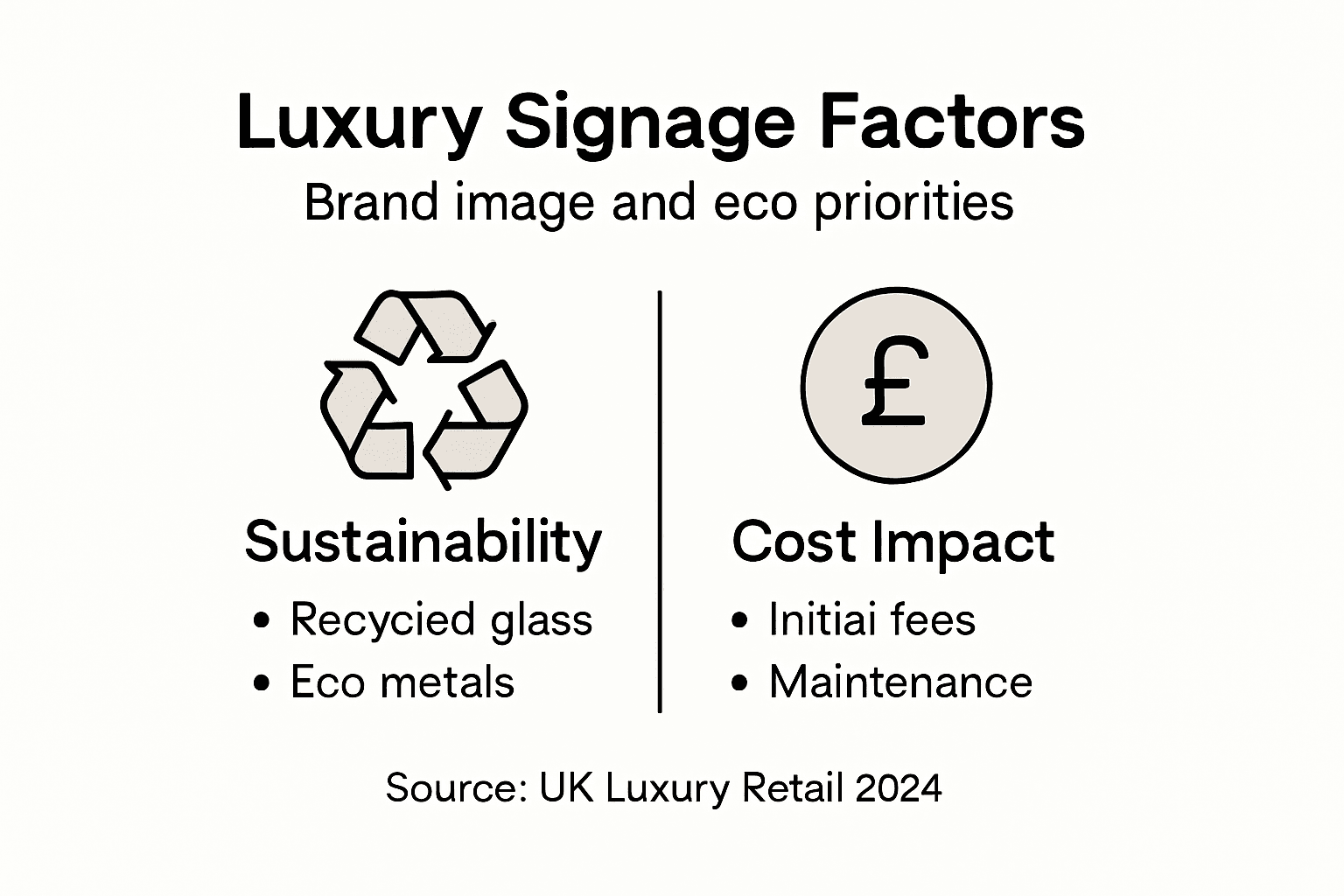
Below is a quick comparison of cost factors affecting luxury signage investment decisions.
| Cost Factor | Direct Business Impact | Long-Term Benefit |
|---|---|---|
| Premium Materials | Higher initial spend | Superior durability, visual longevity |
| Precision Manufacturing | Extended production time | Distinctive craftsmanship, brand value increase |
| Professional Installation | Compliance with regulations | Avoids fines, ensures operational safety |
| Sustainable Choices | Attracts eco-minded customers | Reduced replacements, improved reputation |
Pro tip: Request a detailed lifecycle cost analysis from your signage provider, comparing initial investment, annual maintenance costs, expected lifespan, and energy consumption across options, as the lowest upfront price rarely represents the best financial value over the medium to long term.
Conclusion
Luxury retail signage trends emphasize minimalist sophistication, premium materials, artisan craftsmanship, and restrained elegance that elevate brand perception while creating distinctive retail environments. From sophisticated Custom Signs through comprehensive interior Office Signs systems, strategic luxury signage investment delivers measurable returns through enhanced brand positioning, increased customer engagement, and sustained competitive differentiation in premium retail markets.
Success requires understanding luxury consumer psychology, selecting appropriate materials reflecting brand values, engaging skilled artisans capable of exceptional execution, and maintaining unwavering commitment to quality throughout design, production, and installation processes. Whether creating heritage-focused traditional luxury or contemporary minimalist sophistication, excellence in every detail transforms signage into powerful brand communication that justifies premium positioning while resonating with discerning audiences.
For luxury brands seeking exceptional signage solutions, partnering with experienced specialists ensures access to premium materials, artisan craftsmanship, sophisticated design capabilities, and meticulous execution that creates signage reflecting brand values while delivering sustained competitive advantage in luxury retail environments.
Recommended
- Office Signage Ideas for London Businesses and Events: 2025 Trends – PromoSigns.co.uk
- Shop Sign Types Explained for UK Businesses in 2025 – PromoSigns.co.uk
- Retail Sign Design Tips 2025: Essential Guide for London Businesses – PromoSigns.co.uk
- Signage for Interior Designers: Trends and Solutions 2025 – PromoSigns.co.uk
