
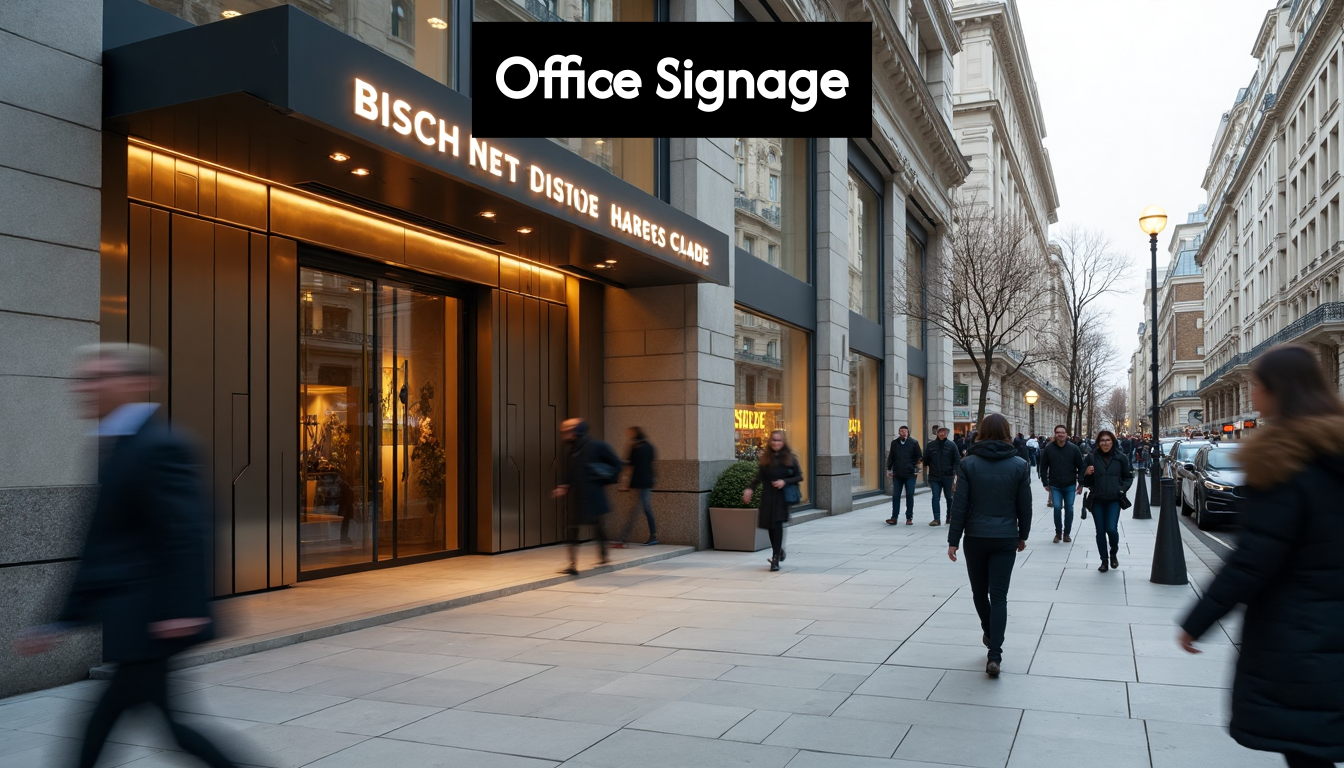
Office signage across London is changing faster than ever, with companies now demanding solutions that do more than just direct visitors. Here is a surprise. Over 60 percent of London businesses are adopting smart signage with real-time digital updates by 2025. Yet, the biggest shift is not only in technology. It is how signage is becoming a true storytelling tool, where even minimalist acrylic letters or recycled bamboo panels can speak volumes about a brand’s identity and values. The boldest offices, shops, and event spaces are quietly transforming their walls into silent communicators, challenging everything you might expect from traditional signs.
Table of Contents
Table of Contents
- Modern Office Signage Ideas For London Workspaces
- Branding And Wayfinding For Shops And Restaurants
- Creative Signage Solutions For Events And Exhibitions
- Custom Signage Tips For Designers, Architects, And Construction
Quick Summary
| Takeaway | Explanation |
|---|---|
| Smart Technology Integration | Embrace intelligent signage solutions, such as QR codes and touch-enabled displays, to create engaging environments that provide real-time information and enhance visitor interaction. |
| Bold Minimalism in Design | Adopt high-contrast colour schemes and oversized typography in signage to effectively reflect brand identity while maintaining a clean and modern aesthetic. |
| Sustainability in Signage | Use eco-friendly materials and production methods to create signage that demonstrates a commitment to responsible practices and reduces environmental impact. |
| Interactive Wayfinding Systems | Implement digital signage that offers real-time information and personalised recommendations, enhancing customer navigation and experience in retail and hospitality spaces. |
| Custom Signage as Brand Narrative | Design bespoke signage that tells a story about brand identity, using unique shapes and consistent colour schemes to provide a cohesive customer experience. |
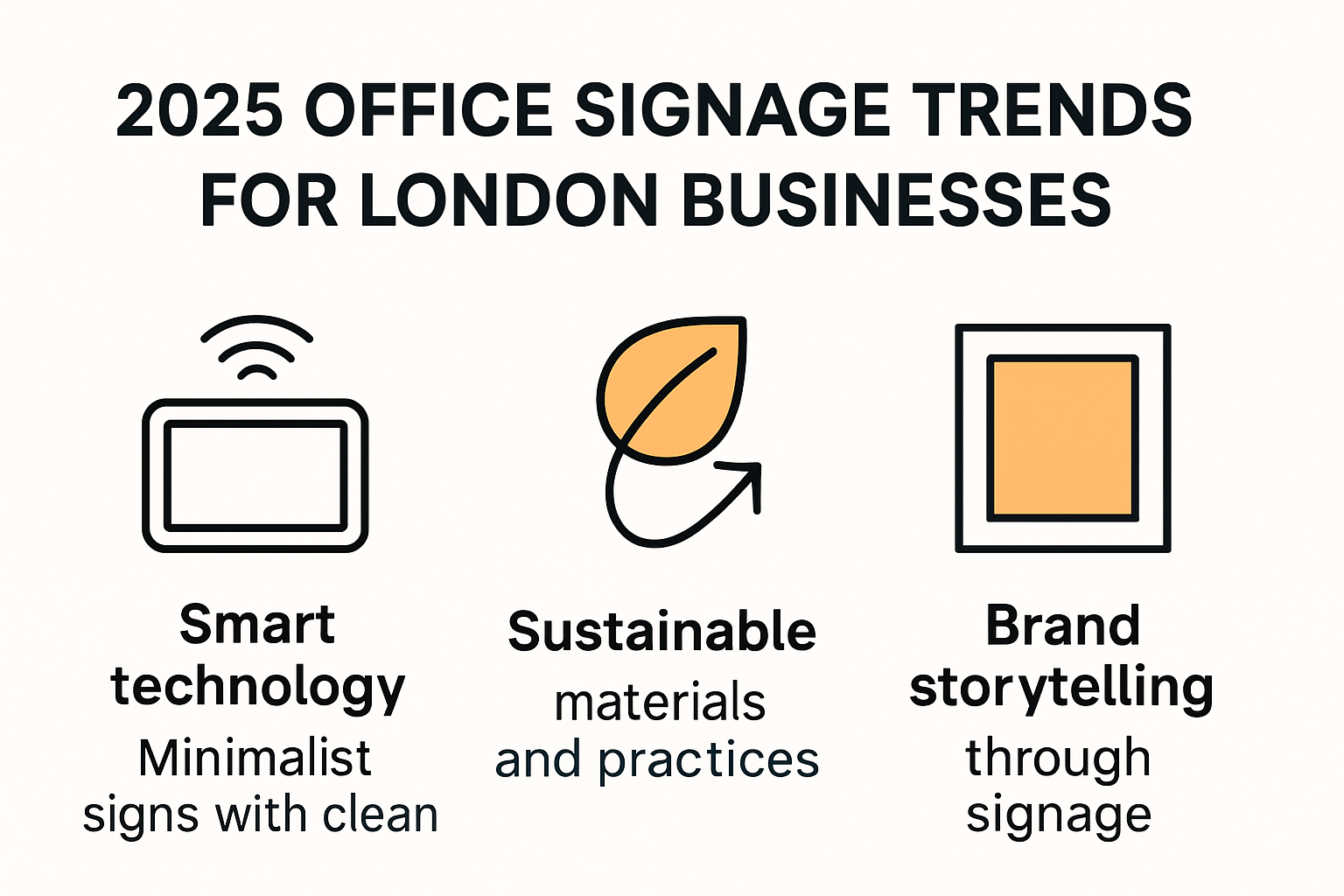
Modern Office Signage Ideas for London Workspaces
The landscape of office signage is rapidly transforming, with London businesses seeking innovative solutions that blend functionality, brand identity, and cutting-edge design. Workplace branding solutions are no longer just about information transmission but about creating immersive, engaging workspace environments.
Smart Technology Integration in Office Signage
Modern London workspaces are embracing intelligent signage solutions that go beyond traditional static displays. According to design trend research, interactive technologies are revolutionizing how businesses communicate. QR-enabled signs now provide instant access to digital content, allowing employees and visitors to retrieve real-time information through smartphone interactions. Touch-enabled displays transform reception areas and meeting spaces, offering dynamic wayfinding and company information that can be instantly updated.
These smart signage systems do more than provide information. They create an engaging, tech-forward environment that reflects a company’s commitment to innovation. Imagine walking into an office where digital signs automatically adjust content based on time of day, display meeting room availability, or provide personalized welcome messages for visitors.
Minimalist Design and Brand Expression
The 2025 office signage trend emphasizes bold minimalism. High-contrast color schemes and oversized typography are replacing cluttered, information-heavy designs. Businesses are recognizing that signage is a critical brand touchpoint. Materials like sleek acrylic, brushed stainless steel, and sustainable wood are being used to craft signs that are not just informative but also aesthetic statements.
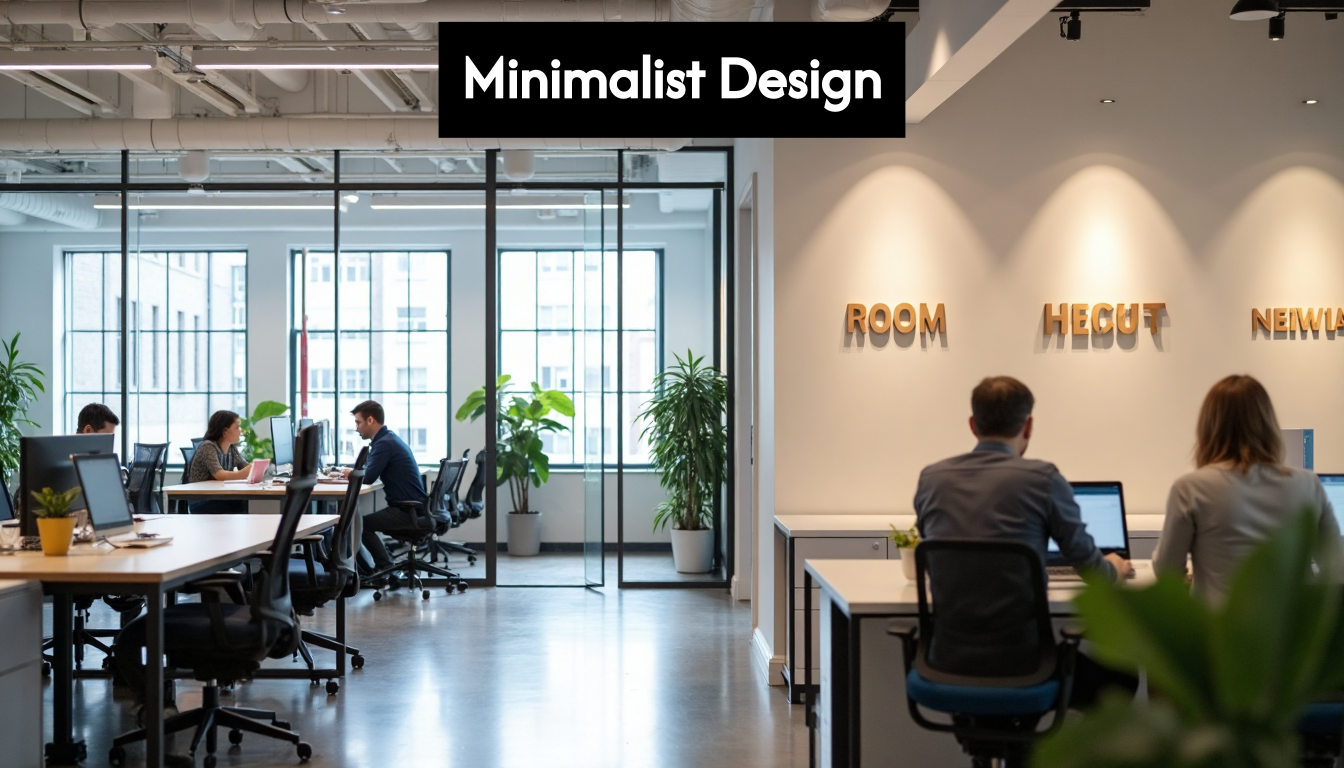
Companies in London are using office signage as an extension of their brand narrative. A technology startup might opt for crisp, geometric signage with clean lines, while a creative agency could choose more fluid, artistic sign designs. The key is creating a visual language that communicates corporate identity at a glance.
Moreover, custom wayfinding solutions are being designed to enhance both functionality and emotional perception. Signs are no longer mere directional tools but carefully crafted elements that contribute to workspace atmosphere, employee experience, and visitor impressions. From laser-cut metal letters to illuminated acrylic panels, each sign becomes a deliberate statement about the organization’s values and approach.
As London continues to be a global business hub, office signage will play an increasingly strategic role in how companies communicate, brand themselves, and create meaningful workplace environments. The most successful businesses will be those that view signage not as an afterthought, but as a critical component of their overall design and communication strategy.
Branding and Wayfinding for Shops and Restaurants
In the competitive landscape of London’s retail and hospitality sectors, effective signage has become a critical component of brand communication and customer experience. Visual branding strategies are no longer just about attracting attention but creating a comprehensive narrative that guides and engages customers from the moment they approach a business.
Strategic Signage Design for Retail Spaces
Modern shops are reimagining wayfinding as an art form that extends beyond mere directional guidance. According to design trend research, businesses are now prioritizing bespoke signage that reflects their unique brand identity. Custom shapes, creative layouts, and consistent corporate color schemes are becoming essential tools for creating a cohesive customer experience.
Restaurants and shops are investing in signage that tells a story. A coffee shop might use rustic wooden signs that reflect its artisanal approach, while a modern tech-focused retail space could opt for sleek, minimalist digital displays. The key is creating a visual language that immediately communicates the brand’s personality and values.
Illumination and Visibility Strategies
Nighttime visibility has become a crucial consideration for London businesses. Innovative lighting solutions are transforming how shops and restaurants present themselves after dark. Energy-efficient LED and modern neon-effect lighting are not just functional but serve as powerful branding tools. These illuminated signs ensure that businesses remain visible and attractive 24/7, creating a constant marketing presence.
Interactive wayfinding solutions are revolutionizing customer navigation. Digital signs now offer more than simple directions. They can provide real-time information, showcase menu items, highlight promotions, and even offer personalized recommendations. According to digital signage experts, these intelligent systems are becoming increasingly sophisticated, blending technology with intuitive design to enhance customer engagement.
The most successful businesses understand that signage is more than just a practical necessity. It is a powerful communication tool that can transform a simple storefront into an immersive brand experience. From the moment a potential customer approaches, every sign tells a story – about the business’s identity, its values, and its commitment to creating memorable customer interactions.
As London continues to be a global hub of innovative design and commerce, businesses that invest in thoughtful, strategic signage will stand out in an increasingly competitive marketplace. The future of retail and hospitality signage is not just about being seen, but about creating meaningful connections with customers through intelligent, design-forward visual communication.
Creative Signage Solutions for Events and Exhibitions
The world of events and exhibitions is undergoing a transformative shift in signage design, where communication transcends traditional print and becomes an immersive, interactive experience. Exhibition graphic solutions are now about creating memorable narratives that engage attendees on multiple sensory levels.
Experiential Print and Interactive Displays
Modern event signage is moving far beyond static information panels. According to innovative print trend research, experiential print is revolutionizing how organizations communicate at events. Interactive walls, augmented reality (AR) displays, and peel-away reveal techniques are transforming signage into dynamic storytelling platforms that encourage social sharing and deeper audience engagement.
Immagine walking into an exhibition where signs are not just informative but become interactive experiences. A technology conference might feature touchscreen panels that allow attendees to explore complex data visualizations, while an art exhibition could use motion-sensing displays that change content based on viewer proximity. These innovative approaches turn passive information consumption into active participant experiences.
Sustainability and Design Innovation
Environmental consciousness is now a fundamental expectation in event signage. Sustainability trends indicate that organizations are demanding eco-friendly signage solutions. This means using recycled materials, water-based inks, and creating reusable event assets that minimize environmental impact. Carbon-neutral production is no longer a luxury but a standard requirement for forward-thinking event designers.
Designers are getting creative with sustainable materials. Bamboo panels, recycled acrylic, and biodegradable substrates are replacing traditional print materials. These eco-friendly options not only reduce environmental footprint but also tell a story about the event’s commitment to responsible practices. A tech conference might use modular, reusable signage systems that can be reconfigured for multiple events, while a cultural exhibition could incorporate locally sourced, sustainable materials that reflect regional craftsmanship.
The most successful events understand that signage is more than information delivery. It is an opportunity to create immersive environments that reflect brand values, spark conversations, and leave lasting impressions. Whether it is through cutting-edge technology, sustainable design, or creative storytelling, modern event signage is about crafting experiences that resonate long after the event concludes.
As London continues to be a global hub for innovative events and exhibitions, organizations that invest in thoughtful, creative signage solutions will distinguish themselves. The future of event communication is not just about being seen, but about creating meaningful, memorable interactions that transform how people understand and engage with information.
Custom Signage Tips for Designers, Architects, and Construction
In the dynamic world of design and construction, signage has evolved from a mere functional element to a critical component of spatial communication and brand storytelling. Architectural signage solutions now represent a sophisticated intersection of aesthetics, technology, and strategic communication.
Design Philosophy and Material Innovation
Modern designers and architects are reimagining signage as an integral part of architectural narrative. According to design trend research, 2025 is witnessing a significant shift towards clean, minimalist typography and carefully curated color palettes that enhance readability and visual impact. The focus is on creating signs that are not just informative but serve as design elements that complement and elevate architectural spaces.
Material selection has become a critical aspect of custom signage design. Architects are exploring innovative substrates that offer durability, sustainability, and aesthetic versatility. Recycled metals, sustainable wood composites, and advanced acrylic materials are replacing traditional signage solutions. These materials not only provide superior performance but also tell a story about environmental consciousness and design innovation.
Technology and Sustainability Integration
The intersection of technology and signage is creating unprecedented opportunities for designers and construction professionals. Innovative signage trends are demonstrating how interactive features like QR codes and touch-sensitive displays can transform static signs into dynamic communication platforms. Imagine wayfinding systems that adapt in real-time, providing personalized information and creating immersive environmental experiences.
Energy efficiency has become a paramount consideration. Designers are increasingly incorporating LED lighting and solar-powered signage solutions that reduce operational costs and environmental impact. These technologies are not just functional additions but statements of a project’s commitment to sustainable design. A building’s signage can now actively contribute to its overall energy performance, showcasing how even the smallest design elements can support broader environmental goals.
The most successful custom signage strategies recognize that signs are more than information carriers. They are opportunities to create emotional connections, reinforce brand identity, and enhance spatial experiences. Whether it is a corporate headquarters, a cultural institution, or a public space, thoughtful signage design can transform how people perceive and interact with their environment.
As London continues to be a global hub of design innovation, professionals who approach signage as a holistic design element will distinguish themselves. The future of architectural and custom signage lies in creating solutions that are intelligent, sustainable, and deeply integrated with the broader architectural vision. It is about crafting communication tools that are as much about emotion and experience as they are about conveying information.
Frequently Asked Questions
What are the latest trends in office signage for London businesses in 2025?
The latest trends in office signage for 2025 include smart technology integration, bold minimalist designs, sustainability in materials, and interactive wayfinding systems that enhance the user experience.
How can smart signage improve visitor interaction in London offices?
Smart signage, such as QR codes and touch-enabled displays, can enhance visitor interaction by providing real-time information and dynamic updates, making the environment more engaging and informative.
What materials are recommended for sustainable office signage?
Recommended materials for sustainable office signage include recycled metals, bamboo panels, and water-based inks, as they reduce environmental impact while also conveying a commitment to sustainability.
How can branding be incorporated into wayfinding signage for shops and restaurants?
Branding can be incorporated into wayfinding signage through the use of bespoke designs, consistent colour schemes, and unique shapes that reflect the brand’s identity and values, creating a cohesive customer experience.
Transform Your London Office and Event Spaces With Next-Level Signage
Are you struggling to make your workspace truly stand out or feeling like your event signage lacks the wow factor? This article uncovered the newest challenges for London businesses, from needing smarter interactive displays to embedding brand storytelling with minimalist, sustainable designs. You want signage that boosts your brand, guides visitors seamlessly, and supports your commitment to innovation and eco responsibility. Yet finding a partner who delivers all these trends can feel overwhelming.
Take your next step with confidence. At Promo Signs, we specialise in custom shop signs, large format display solutions, and illuminated office features that bring modern trends to life across London, Essex, and Kent. Make every sign a talking point that helps your business shine, just as this article described. Visit Promo Signs now to arrange a free consultation, and discover just how easy it is to create signage that communicates your story and keeps you ahead for 2025. Book now to ensure your space is ready for the next wave of change.
Recommended Articles
- Welcome to Our Blog Page | Latest Signs News | Promo Signs LTD
- Blog Archives – Page 3 of 7 – PromoSigns.co.uk
- Blog Archives – PromoSigns.co.uk
- Poster Printing London | Large Poster Printing | PromoSigns.co.uk
- Blog Archives – Page 2 of 7 – PromoSigns.co.uk
