
Table of Contents
Professional signage represents a significant investment in business visibility, brand identity, and customer attraction. Yet without strategic maintenance, even premium-quality signs deteriorate, undermining the professional image they were designed to project. Understanding and implementing effective signage maintenance ensures your visual marketing assets continue delivering returns for years.
This comprehensive guide explores the importance of regular signage upkeep, practical maintenance strategies, cost considerations, and how professional maintenance programs protect both your investment and brand reputation.
Key Takeaways
| Point | Details |
|---|---|
| Signage as an Investment | Retail businesses should view signage as a strategic investment, considering long-term brand communication and customer attraction rather than a one-time expense. |
| Material and Design Choices | Selecting cost-effective materials and signage designs can lead to significant savings and improved visual impact over time. |
| Regulatory Compliance | Understanding local regulations can help businesses avoid unexpected compliance costs, which can greatly inflate the overall signage budget. |
| Maintenance and Upgrading | Effective maintenance and strategic technology upgrades can reduce long-term signage costs and enhance customer engagement. |
Why Signage Maintenance Matters
First Impressions and Brand Perception
The 7-Second Judgment: Research consistently demonstrates that customers form opinions about businesses within seven seconds of first exposure. Your signage often provides that critical first impression.
Deterioration Impact: Poorly maintained signs communicate negative messages:
- Faded graphics suggest business decline
- Broken illumination implies neglect
- Dirty surfaces indicate low standards
- Damaged components reflect poor quality
- Peeling vinyl undermines professionalism
Brand Association: Customers unconsciously link signage condition to:
- Product/service quality expectations
- Business stability and longevity
- Attention to detail
- Customer care standards
- Professional competence
Protecting Financial Investment
Asset Value Preservation: Quality business signage requires substantial investment:
- Design and production costs
- Installation expenses
- Planning permissions
- Material investments
- Professional services
Maintenance vs. Replacement Economics:
- Regular maintenance: £200-£500 annually
- Premature replacement: £2,000-£20,000+
- Maintenance extends lifespan by 40-60%
- Deferred maintenance accelerates deterioration
- Prevention costs significantly less than cure
Legal and Safety Compliance
Regulatory Requirements: Signage must maintain compliance with:
- Building regulations
- Health and safety standards
- Electrical safety requirements
- Structural integrity specifications
- Planning permission conditions
Liability Considerations: Neglected signage creates risks:
- Falling components hazard
- Electrical fault dangers
- Structural failure potential
- Public injury liability
- Insurance claim complications
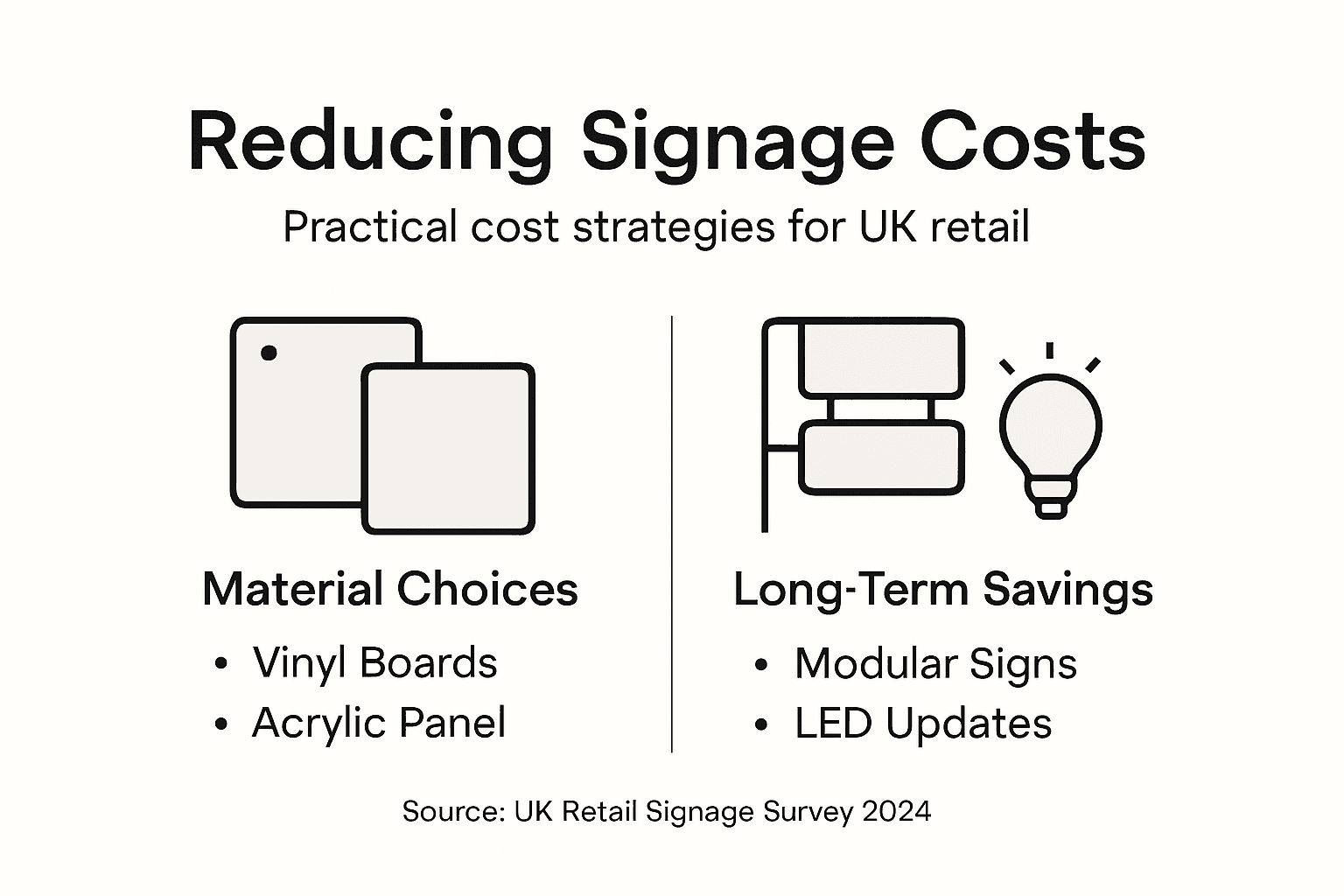
Here’s a comparison of common retail signage types and their cost-saving features:
| Signage Type | Upfront Cost Range | Cost-Saving Feature | Typical Durability |
|---|---|---|---|
| Painted Boards | £150–£500 | Low initial investment | Moderate |
| Vinyl Graphics | £200–£800 | Easy to update messaging | Good |
| Modular Systems | £500–£1,200 | Expandable, incremental costs | Long-lasting |
| LED Illuminated Signs | £1,800–£3,000 | Reduced energy use, rare replacements | Excellent |
| Digital Displays | £2,000–£5,000 | Flexible content, minimal printing | Variable |
Pro tip: Consider purchasing signage during off-peak seasons or requesting comprehensive quotes that include installation and potential future modifications to maximise your budget.
Understanding Signage Deterioration
Environmental Factors
Weather and Climate: UK conditions accelerate degradation through:
UV Radiation:
- Color fading (particularly reds and yellows)
- Material brittleness
- Adhesive breakdown
- Plastic degradation
- Surface chalking
Moisture and Rain:
- Water ingress to cabinets
- Corrosion of metal components
- Delamination of materials
- Mold and algae growth
- Electrical system damage
Temperature Fluctuation:
- Expansion and contraction stress
- Seal failure
- Joint separation
- Material warping
- Fixing loosening
Pollution and Atmospheric Contaminants:
- Surface soiling and staining
- Acid rain etching
- Industrial fallout damage
- Traffic emission deposits
- Biological growth
Material-Specific Degradation
Vinyl Graphics: Expected outdoor lifespan: 5-7 years
- UV fade progression
- Edge lifting and peeling
- Surface cracking
- Adhesive failure
- Color shift
Acrylic Panels: Expected lifespan: 10-15 years
- Surface scratching
- Crazing and cracking
- UV yellowing
- Impact damage
- Edge chipping
Illuminated Signs: LED components: 50,000+ hours
- Individual LED failure
- Color temperature shift
- Power supply deterioration
- Wiring degradation
- Waterproofing failure
Metal Components: Expected lifespan: 20-30 years
- Surface corrosion
- Paint/powder coat breakdown
- Joint corrosion
- Fastener deterioration
- Structural fatigue

The following table highlights how material and technology choices impact retail signage outcomes:
| Material/Technology | Sustainability Benefit | Longevity | Design Flexibility |
|---|---|---|---|
| Aluminium Composite | Recyclable, low waste | High | Professional finish |
| Acrylic/Polycarbonate | Lightweight, durable | Very good | High clarity |
| Recycled Materials | Reduced footprint | Variable | Eco branding |
| Digital Printing | Less waste, eco inks | High | Complex graphics |
| LED Lighting | Energy-efficient | Very high | Dynamic effects |
Pro tip: Invest in versatile, modular signage designs that can be easily updated or reconfigured, maximising your long-term return on investment and maintaining design flexibility.
Comprehensive Maintenance Schedule
Monthly Visual Inspections
Quick Assessment Checklist: Regular observation identifies emerging issues:
Structural Integrity:
- Secure mounting verification
- Bracket and fixing inspection
- Frame stability check
- Support condition assessment
- Obvious damage identification
Graphics and Appearance:
- Cleaning requirements
- Fading evaluation
- Vinyl condition check
- Scratches and damage
- Professional appearance maintenance
Illumination Functionality:
- Complete lighting operation
- Color consistency
- Brightness uniformity
- Timer/control function
- Emergency operation (if applicable)
Quarterly Detailed Cleaning
Professional Cleaning Protocol:
External Signage:
- Soft brush or cloth application
- Mild detergent solution
- Low-pressure water rinse
- Avoid abrasive materials
- Dry with clean cloths
Illuminated Signs:
- Power-off during cleaning
- Gentle face cleaning
- Vent clearing
- Moisture removal
- Component inspection
Cleaning Product Guidance:
- pH-neutral cleaners preferred
- Avoid ammonia-based products
- No abrasive compounds
- Isopropyl alcohol for stubborn marks
- Microfiber cloths recommended
Annual Professional Service
Comprehensive Maintenance: Professional technicians should perform:
Electrical Systems (Illuminated Signs):
- Complete electrical testing
- Power supply verification
- Wiring condition inspection
- Earthing/grounding check
- Lamp/LED replacement as needed
- Timer and control testing
- PAT testing compliance
Structural Assessment:
- Detailed fixing inspection
- Bolt torque verification
- Frame integrity check
- Corrosion treatment
- Sealant condition
- Repainting/refinishing needs
Graphics Evaluation:
- Fade assessment
- Vinyl condition
- Replacement planning
- Cleaning and protection
- Touch-up requirements
Documentation:
- Maintenance record update
- Photographic evidence
- Issue identification
- Recommendation report
- Compliance certification
Specific Signage Type Maintenance
Illuminated Signs
LED System Care:
Preventive Maintenance:
- Regular cleaning (quarterly minimum)
- Ventilation verification
- Moisture ingress prevention
- Power supply testing
- Control system checks
Common Issues:
- Individual LED failure (spot replacement)
- Power supply degradation (5-10 year replacement)
- Wiring deterioration (inspection and repair)
- Timer malfunction (testing and replacement)
- Water ingress (seal renewal)
Professional Service Requirements:
- Annual electrical testing
- PAT certification
- Qualified electrician access
- Compliance documentation
- Emergency response availability
External Building Signs
Fascia and Projecting Signs:
Maintenance Priorities:
- Structural fixing security
- Weather seal integrity
- Surface protection
- Illumination functionality
- Professional appearance
Seasonal Considerations:
- Pre-winter inspection (seal checking)
- Post-winter assessment (weather damage)
- Spring cleaning (remove winter deposits)
- Autumn preparation (secure against storms)
Freestanding Signs
Pole Signs and Monuments:
Foundation and Structure:
- Base stability verification
- Pole corrosion inspection
- Ground-level protection
- Drainage assessment
- Landscape management
Accessibility:
- Surrounding vegetation control
- Visibility maintenance
- Cleaning access preservation
- Safety zone maintenance
Window Graphics and Vinyl
Adhesive Graphics:
Maintenance Approach:
- Gentle cleaning only
- Avoid high-pressure washing
- Edge inspection
- Bubble and lifting monitoring
- Replacement planning (5-7 years)
Longevity Extension:
- UV protective treatments
- Regular cleaning
- Edge sealing
- Prompt repair of damage
- Professional removal/replacement
Interior Signage
Reduced Environmental Exposure:
Maintenance Simplification:
- Less frequent cleaning required
- Minimal weather damage
- Extended graphics lifespan
- Dust and fingerprint management
- Periodic refresh for brand consistency
Developing a Maintenance Program
Creating Your Schedule
Customized Maintenance Plan: Develop frequency based on:
Environmental Exposure:
- High-traffic urban areas: More frequent
- Coastal locations: Increased corrosion risk
- Industrial environments: Heavy soiling
- Protected locations: Reduced frequency
Signage Type:
- Illuminated signs: More complex, frequent service
- Non-illuminated: Simpler, less frequent
- Vinyl graphics: Regular inspection, planned replacement
- Permanent materials: Less frequent but thorough
Business Criticality:
- Primary brand signage: Priority maintenance
- Secondary directional: Standard schedule
- Temporary promotional: Minimal investment
Internal vs. Professional Maintenance
DIY Capabilities: Business staff can handle:
- Regular visual inspections
- Basic cleaning (non-electrical)
- Minor repairs (vinyl patching)
- Documentation
- Issue identification
Professional Requirements: Qualified technicians needed for:
- Electrical testing and repair
- Structural assessment
- High-access cleaning/repair
- Component replacement
- Compliance certification
Documentation and Record-Keeping
Maintenance Log Essentials:
- Inspection dates and findings
- Cleaning schedules and methods
- Repairs and replacements
- Professional service records
- Photographic documentation
- Cost tracking
- Warranty information
Benefits:
- Trend identification
- Budget planning
- Warranty claims support
- Compliance evidence
- Asset management
- Sale/valuation documentation
Cost Considerations
Maintenance Investment
Typical Annual Costs (UK):
Basic Package:
- Single non-illuminated sign: £150-£300
- Quarterly cleaning
- Annual inspection
- Minor repairs included
Standard Package:
- Illuminated fascia sign: £300-£600
- Quarterly cleaning
- Bi-annual electrical testing
- Annual comprehensive service
- Parts (minor) included
Comprehensive Package:
- Multiple signs/complex systems: £600-£2,000+
- Monthly inspection
- Quarterly professional cleaning
- Full electrical testing
- Priority emergency response
- All parts and labor
Factors Affecting Cost:
- Sign quantity and complexity
- Access difficulty (height, location)
- Illumination systems
- Geographic location
- Service frequency
- Emergency response inclusion
Maintenance Contracts vs. Ad-Hoc Service
Contract Advantages:
- Scheduled service (no forgotten maintenance)
- Priority response times
- Discounted rates
- Budget predictability
- Comprehensive coverage
- Relationship continuity
Ad-Hoc Approach:
- Pay-as-needed flexibility
- Lower immediate commitment
- Suitable for simple signage
- Risk of deferred maintenance
- Higher emergency rates
- Inconsistent service quality
Professional Maintenance Providers
Selection Criteria
Essential Qualifications:
- Electrical certification (for illuminated signs)
- Public liability insurance
- Height safety certification
- Signage industry experience
- Emergency response capability
- Local availability
Service Scope:
- Cleaning services
- Electrical testing
- Structural inspection
- Repair capabilities
- Replacement services
- Emergency callout
Portfolio and References:
- Similar business experience
- Long-term client relationships
- Quality standards demonstration
- Compliance documentation
- Responsive communication
Maintenance Contract Components
Comprehensive Agreements Include:
- Service frequency specification
- Scope of work details
- Emergency response terms
- Parts and labor coverage
- Cost structure clarity
- Performance standards
- Contract duration
- Termination conditions
Emergency Response and Repairs
Common Emergency Situations
Urgent Issues Requiring Immediate Attention:
- Complete illumination failure
- Hanging or loose components
- Electrical hazards
- Storm damage
- Vandalism
- Structural compromise
Emergency Service Expectations:
- 24-hour response availability
- Temporary safety measures
- Permanent repair scheduling
- Insurance documentation
- Compliance notification
Insurance Considerations
Coverage Verification: Review policies for:
- Sign damage coverage
- Public liability
- Weather damage inclusion
- Vandalism protection
- Business interruption
- Excess/deductible amounts
Maintenance Impact: Regular maintenance may:
- Reduce insurance premiums
- Support damage claims
- Demonstrate due diligence
- Fulfill policy requirements
- Document asset value
Extending Signage Lifespan
Proactive Protection Strategies
Material-Specific Treatments:
UV Protection:
- Anti-fade coatings
- UV-resistant laminates
- Quality material selection
- Strategic positioning (where possible)
Weather Sealing:
- Silicone seal maintenance
- Gasket replacement
- Drainage optimization
- Protective coatings
Corrosion Prevention:
- Protective paint systems
- Galvanized/stainless fixings
- Regular inspection
- Prompt treatment
Planned Replacement Programs
Lifecycle Management: Anticipate component replacement:
Graphics Refresh:
- Vinyl: 5-7 years
- Digital prints: 7-10 years
- Painted finishes: 10-15 years
- Plan and budget proactively
Component Replacement:
- LED arrays: 10-15 years
- Power supplies: 7-10 years
- Gaskets and seals: 5-8 years
- Fixings and brackets: Inspect annually, replace as needed
Measuring Maintenance ROI
Quantifiable Benefits
Cost Avoidance:
- Extended sign lifespan (40-60% increase)
- Avoided premature replacement
- Reduced emergency repair costs
- Lower energy consumption (clean, efficient systems)
- Insurance premium benefits
Brand Value Protection:
- Consistent professional image
- Positive customer perception
- Competitive advantage maintenance
- Property value contribution
Tracking Effectiveness
Performance Indicators:
- Sign condition ratings
- Unexpected repair frequency
- Complaint/feedback monitoring
- Energy consumption tracking
- Photographic documentation timeline
Conclusion
Strategic signage maintenance represents essential investment protection and brand image preservation. While initial signage installation costs are significant, ongoing maintenance ensures those assets continue delivering value throughout their intended lifespan—and often well beyond.
Regular inspection, cleaning, and professional servicing prevent minor issues from becoming major problems, extend equipment life dramatically, maintain safety compliance, and ensure your business presents the professional image that attracts and retains customers.
Whether managing single storefront signs or complex multi-location signage systems, implementing comprehensive maintenance programs delivers exceptional return on investment through preserved appearance, extended lifespan, avoided replacement costs, and sustained brand impact.
For businesses seeking to optimize their signage investment through professional maintenance programs, partnering with experienced signage maintenance specialists ensures access to technical expertise, responsive service, and proactive care that keeps your visual marketing assets performing at their best.
Recommended
- Cost of Shop Signage in London: 2025 Guide for Businesses – PromoSigns.co.uk
- Retail Sign Design Tips 2025: Essential Guide for London Businesses – PromoSigns.co.uk
- Retail POP Display Signage Solutions for London Businesses in 2025 – PromoSigns.co.uk
- Shop Sign Types Explained for UK Businesses in 2025 – PromoSigns.co.uk
- Optimize Google Shopping Ads Through a Unified Dashboard
