
Shop graphics across London are stepping into the future and designers are reshaping how businesses tell their stories. You might expect the standout trend to be flashy digital screens or wild patterns everywhere. Yet the real surprise is in the subtle power of personalised design where technology now adapts graphics to each customer and even changes visuals by time of day. What happens when a shop window can literally sense and speak to its audience? The possibilities for brand connection are limitless.
Table of Contents
Table of Contents
- Top Shop Graphics Trends In 2025
- Creative Design Ideas For London Businesses
- How To Choose The Right Graphics For Your Space
- Expert Tips For Effective Shop Graphics Installation
Quick Summary
| Takeaway | Explanation |
|---|---|
| Embrace minimalist designs with interactive features | Incorporate engaging elements like smooth scrolling and responsive typography to captivate customers effectively. |
| Leverage bold maximalism for cultural representation | Use vibrant colours and intricate patterns to create dynamic visuals that reflect diverse experiences and brand values. |
| Utilise technology for personalised graphics | Implement adaptive graphics that change based on customer demographics or time, enhancing engagement and relevance. |
| Focus on contextual design principles | Ensure graphics align with the architectural environment for a cohesive and impactful visual narrative. |
| Prioritise professional installation and maintenance | Invest in expert installation to ensure longevity and effectiveness, regularly checking for wear and updating designs as needed. |
Top Shop Graphics Trends in 2025
The graphic design landscape for shop visuals is undergoing a dramatic transformation in 2025, presenting businesses with unprecedented opportunities to communicate their brand identity through innovative visual strategies. Design is no longer just about aesthetics but about creating immersive experiences that connect with customers on a deeper level.
Minimalism with Sophisticated Interactive Elements
In 2025, minimalist design has evolved beyond simple clean lines. Designers are integrating sophisticated interactive elements that transform static graphics into dynamic experiences. Smooth scrolling, subtle hover effects, and intelligent typography create visual narratives that engage customers instantly. The key is creating designs that feel simultaneously uncluttered and deeply engaging.
These interactive graphics aren’t just decorative. They serve functional purposes like guiding customer attention, highlighting product features, and creating memorable brand interactions. Businesses are using sophisticated design techniques to make their shop graphics work harder and smarter.
Bold Maximalism and Cultural Representation
Contrary to previous years of minimalism, 2025 is witnessing a remarkable resurgence of maximalism in shop graphics. According to design trend analyses, this trend embraces bold colours, intricate patterns, and layered visual elements that capture immediate attention. Graphic designers are creating visual experiences that feel energetic, creative, and unapologetically vibrant.
Moreover, there’s a significant emphasis on diversity and inclusive representation. Graphic design in 2025 prioritizes visuals that represent varied human experiences. Shop graphics now showcase diversity not as a token gesture but as an authentic representation of our multicultural society. This approach goes beyond aesthetic choices – it’s a powerful statement about brand values and social consciousness.
Technology-Driven Personalisation
Technology is revolutionising shop graphics, enabling unprecedented levels of personalisation. Advanced design tools and AI-driven platforms allow businesses to create graphics that can dynamically adapt to different customer segments. Imagine shop signage that subtly changes its visual language based on time of day, customer demographics, or even current local events.
These technology-enabled graphics are not just visually striking but strategically intelligent. They represent a new frontier where design meets data, creating visual experiences that are both beautiful and brilliantly targeted. For more insights into transforming your business graphics, check out our comprehensive guide on interior branding.
As we move through 2025, shop graphics are no longer mere decorative elements. They are sophisticated communication tools that tell stories, evoke emotions, and create meaningful connections with customers. The most successful businesses will be those who view their graphics not just as visual design, but as a strategic asset for brand communication.
Creative Design Ideas for London Businesses
Creative design has become a critical strategy for London businesses seeking to differentiate themselves in a competitive marketplace. By leveraging innovative visual communication techniques, companies can transform their brand presence and create memorable customer experiences that extend far beyond traditional marketing approaches.
Urban Visual Storytelling and Placemaking
Research from the National Bureau of Economic Research highlights the economic significance of creative placemaking in metropolitan environments. For London businesses, this means developing graphics that not only represent their brand but also contribute to the urban visual narrative. Successful design strategies now integrate local cultural contexts, architectural elements, and community aesthetics into their visual communication.
Graphic designers are approaching shop visuals as storytelling canvases. Each design element becomes a narrative component that speaks to the business’s identity, values, and connection to the local environment. This approach transforms static graphics into dynamic visual experiences that engage passersby and potential customers.
Strategic Brand Expression Through Design
According to AIGA design professionals, effective graphic design for businesses goes beyond aesthetic appeal. It’s about creating a comprehensive visual language that communicates brand personality, values, and unique selling propositions. For London businesses, this means developing design strategies that are both locally relevant and globally competitive.
Key considerations include colour psychology, typography that reflects brand character, and imagery that resonates with target audiences. Businesses are moving away from generic designs towards highly customised visual identities that tell a distinctive story. This approach helps companies stand out in densely populated commercial districts where visual differentiation is crucial.
Technology-Enhanced Design Experiences
Technology is revolutionising how London businesses approach graphic design. Advanced digital tools enable more interactive, responsive, and personalised visual experiences. Augmented reality (AR) overlays, dynamic digital signage, and adaptive graphic interfaces are becoming standard tools for creating engaging brand communications.
For comprehensive insights into transforming business graphics, explore our detailed guide on interior branding. These technological innovations allow businesses to create graphics that are not just visually striking but also functionally intelligent, adapting to different customer segments and contextual environments.
The most successful London businesses in 2025 will be those that view graphic design as a strategic asset. By combining creative vision, technological innovation, and a deep understanding of local and global design trends, companies can create visual experiences that are not just seen, but truly remembered and appreciated.
Here’s a table to help compare the three leading shop graphics trends of 2025:
| Trend | Key Features | Purpose/Impact |
|---|---|---|
| Minimalism with Interactive Elements | Clean lines, subtle hover/scroll, intelligent typography | Deep engagement, guides attention, uncluttered look |
| Bold Maximalism & Cultural Representation | Vibrant colours, intricate patterns, diverse/inclusive imagery | Captures attention, social statement, energy |
| Technology-Driven Personalisation | Adaptive graphics, AI/AR tools, responsive to demographics/time/events | Personal connection, high relevance, innovation |
How to Choose the Right Graphics for Your Space
Selecting the right graphics for your business space is a nuanced process that goes far beyond aesthetic preferences. It involves strategic decision-making that integrates brand identity, spatial dynamics, and user experience into a cohesive visual communication strategy.
Understanding Contextual Design Principles
Research from ArchDaily emphasizes the critical importance of context-driven graphics. Successful graphic selection means creating a visual language that seamlessly integrates with the architectural environment. This approach requires careful consideration of existing design elements, colour schemes, material textures, and spatial flow.
Businesses must view graphics not as standalone decorative elements, but as integral components of the overall spatial narrative. The most effective graphics enhance navigation, communicate brand values, and create intuitive visual experiences that guide customer interactions. This means analysing the physical space, understanding traffic patterns, and identifying key visual touchpoints where graphics can provide maximum impact.
Strategic Visual Communication
According to graduate research from the University of Tennessee, environmental graphic design profoundly influences user behavior and perception. The selection process involves multiple strategic considerations beyond mere visual appeal. Businesses need to evaluate graphics based on their ability to:
- Reinforce Brand Identity: Ensure graphics authentically represent the brand’s core values and personality
- Enhance User Experience: Create intuitive visual cues that facilitate smooth navigation
- Support Spatial Functionality: Design graphics that complement and elevate the existing architectural language
This holistic approach transforms graphics from passive decorative elements into active communication tools that engage and guide customers through the space.

The following table provides a concise checklist of key considerations when choosing graphics for your space:
| Consideration | Description | Importance |
|---|---|---|
| Brand Alignment | Reflects core values and personality | Ensures authenticity |
| Contextual Integration | Matches architectural environment and existing design elements | Cohesive visual narrative |
| Functional Support | Enhances navigation and complements space usage | User experience |
| Technical Durability | Suitable materials, resistance to wear, and ease of maintenance | Longevity |
| Adaptability/Modularity | Supports easy updates and future refreshes | Scalability |
| Technological Innovation | Incorporates AR/digital features if needed | Forward-thinking approach |
Technical Considerations and Adaptability
Modern graphic design demands technical sophistication and flexibility. Materials, lighting, placement, and scalability become crucial factors in creating effective visual communications. Businesses must consider durability, maintenance requirements, and the potential for future adaptations.
For comprehensive insights into creating impactful interior graphics, explore our guide on transforming business spaces. Contemporary graphic solutions should offer modularity, allowing businesses to refresh their visual language without complete overhauls.
Emergent technologies like augmented reality (AR) overlays and dynamic digital signage are expanding the possibilities of graphic design. These innovations enable businesses to create more interactive, responsive visual experiences that can be quickly updated to reflect changing brand narratives or seasonal campaigns.
Ultimately, choosing the right graphics is an art form that balances aesthetic elegance, strategic communication, and technical precision. The most successful businesses will approach graphic design as a dynamic, strategic asset that evolves with their brand identity and customer expectations.
Expert Tips for Effective Shop Graphics Installation
Installing shop graphics is a sophisticated process that requires precision, strategic planning, and technical expertise. Beyond simply mounting a design, effective installation transforms visual communication into a powerful brand experience that captivates and guides customers.
Preparation and Site Assessment
Successful graphics installation begins long before the first graphic touches the wall. Comprehensive site assessment is crucial. This involves meticulously measuring the space, understanding architectural constraints, evaluating lighting conditions, and analyzing traffic flow patterns. Professionals recommend creating detailed digital mockups that simulate how graphics will interact with the existing environment.
Key preparatory steps include:
- Surface Evaluation: Examining wall surfaces for structural integrity, smoothness, and potential mounting challenges
- Lighting Analysis: Understanding how natural and artificial light will interact with graphic materials
- Spatial Mapping: Determining optimal placement for maximum visual impact and customer engagement
Technical Precision and Material Selection
Professional signage experts recommend meticulous attention to installation techniques. Material selection plays a critical role in graphics durability and performance. Different surfaces require specific mounting approaches some graphics might need special adhesives, while others require professional mounting brackets or specialized hanging systems.
Considerations include:
- Material Compatibility: Matching graphic materials to surface types
- Environmental Resilience: Selecting graphics that can withstand temperature variations, humidity, and potential wear
- Precision Alignment: Using professional tools like laser levels and digital measurement devices to ensure perfect placement
Professional Implementation and Maintenance
Professional installation goes beyond initial mounting. It involves understanding long-term maintenance requirements and potential future adaptations. Businesses should consider graphics as dynamic assets that might require periodic updates or adjustments.
For comprehensive guidance on professional shop sign installation, explore our expert installation guide. Advanced installation techniques now incorporate technologies like augmented reality previews, allowing businesses to visualize graphic placements before physical installation.
Maintenance strategies should include:
- Regular Inspection: Checking for wear, colour fading, or potential damage
- Cleaning Protocols: Using appropriate cleaning techniques for different graphic materials
- Periodic Reassessment: Evaluating graphics’ effectiveness and alignment with evolving brand strategies
Effective shop graphics installation is a sophisticated blend of artistic vision, technical precision, and strategic implementation. By approaching graphics as dynamic brand communication tools rather than static decorative elements, businesses can create immersive visual experiences that genuinely connect with their audience.
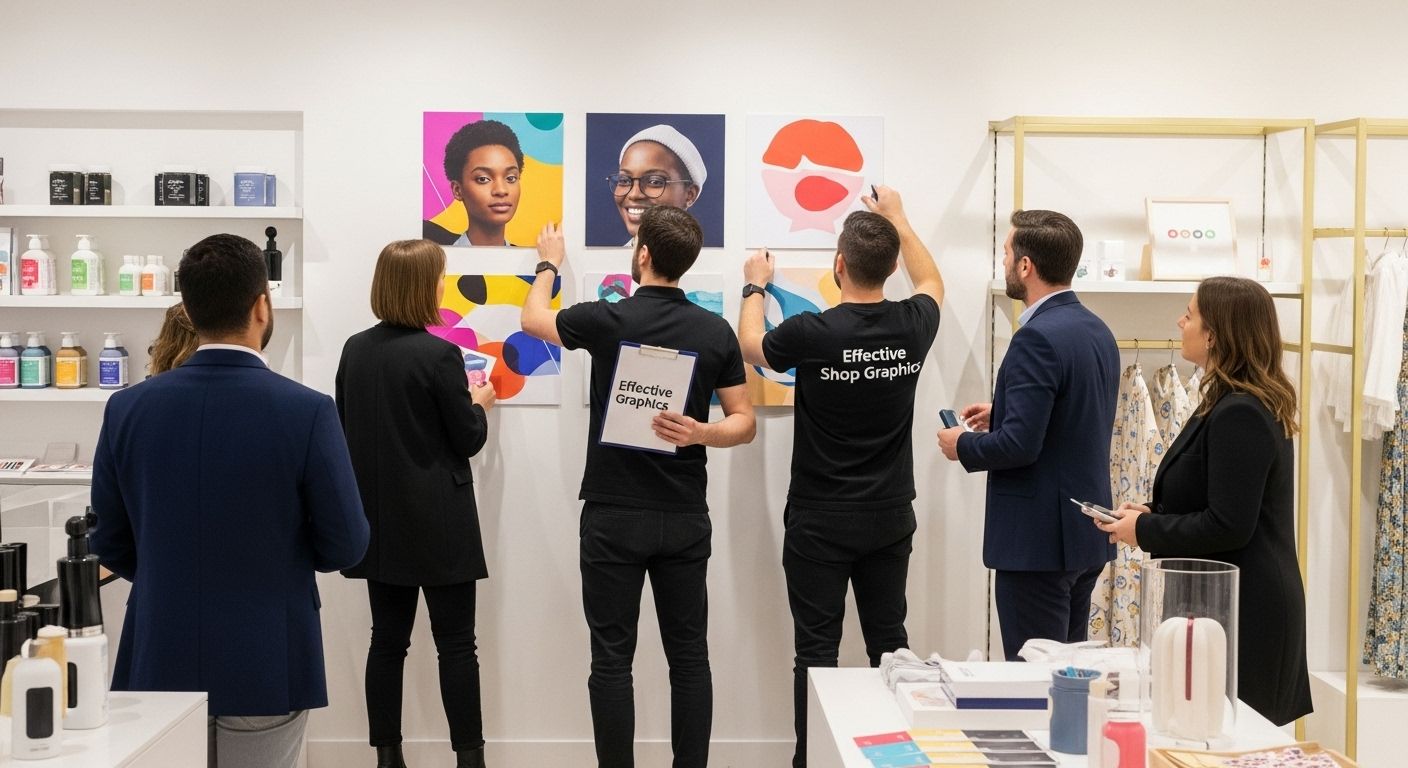
The following table summarises essential steps for effective shop graphics installation at a glance:
| Stage | Key Actions | Objective |
|---|---|---|
| Preparation/Site Assessment | Measure space, check lighting, evaluate surfaces | Prevent issues, optimise placement |
| Technical Precision | Choose appropriate materials, ensure precise mounting | Enhance durability and appearance |
| Professional Implementation | Install professionally, use AR previews, plan maintenance | Longevity and continued impact |
| Maintenance | Inspect, clean, update as needed | Sustain performance and relevance |
The most successful installations seamlessly integrate design, technology, and brand storytelling, transforming ordinary spaces into extraordinary brand narratives.
Frequently Asked Questions
What are the main trends in shop graphics for 2025?
The main trends in shop graphics for 2025 include minimalism with sophisticated interactive elements, bold maximalism with cultural representation, and technology-driven personalisation to enhance customer engagement and brand connection.
How can personalised shop graphics impact customer engagement?
Personalised shop graphics can adapt to customer demographics and time of day, creating a more relevant shopping experience. This tailored approach fosters a stronger connection between the brand and its audience, ultimately increasing engagement and sales.
What considerations should be taken when choosing graphics for a retail space?
When choosing graphics, consider brand alignment, contextual integration with the architectural environment, functional support for navigation, and the technical durability of materials. These factors help ensure the graphics effectively communicate your brand identity.
What steps are essential for effective shop graphics installation?
Essential steps for effective shop graphics installation include thorough preparation and site assessment, precise material selection for durability, and professional implementation to ensure quality visual communication and longevity.
Transform Your Shopfront with 2025’s Most Striking Graphic Innovations
Is your business ready for the rapid shift in shop graphics detailed in the London Guide? Many owners struggle with outdated visuals, static branding, and missing the mark on new customer expectations. The article highlighted challenges such as integrating sophisticated interactive elements, showcasing authentic brand values through bold, diverse designs, and harnessing the power of technology-driven personalisation. Each area is crucial in building genuine brand connections, enhancing customer engagement, and keeping your shop relevant on the high street.
Imagine your own space brought to life with custom-made signage or large format graphics that are future-focused and expertly installed. Our team specialises in shop signs, illuminated signs, and full-service solutions that maximise every key trend discussed. Whether you want to stand out with minimalist sophistication, vibrant cultural storytelling, or embrace adaptable graphic technology, we are ready to help your vision take shape. Find out how you can create powerful transformations for your business right now by visiting PromoSigns. Start your upgrade today and be the brand that leads the change.
Recommended
- Office Signage Ideas for London Businesses and Events: 2025 Trends – PromoSigns.co.uk
- Signage for Office Interiors: 2025 Guide for London Businesses – PromoSigns.co.uk
- Signage Design Principles for London Businesses in 2025 – PromoSigns.co.uk
- Graphic Design Tips for Signage: 2025 Guide for London Businesses – PromoSigns.co.uk
