
Table of Contents
Over eighty percent of restaurant customers notice in-store signage before making a purchase decision. With competition in food delivery growing faster than ever, the right visual message can mean the difference between an order placed and a missed opportunity. Effective food delivery promotion signage does more than grab attention. It guides choices, builds trust, and inspires people to take action instantly. Discover how smart design and strategic placement transform simple signs into powerful drivers of growth for your business.
Key Takeaways
| Point | Details |
|---|---|
| Purpose of Signage | Food delivery promotion signage serves as a strategic tool to attract customers, communicate menu offerings, and enhance brand visibility. |
| Design Principles | Effective signage should incorporate clear typography, high-contrast colors, and concise messaging to capture customer attention. |
| Legal Compliance | Signage must adhere to legal and safety requirements, including accessibility standards and accurate marketing practices. |
| Common Mistakes | Avoid overcrowded layouts and poor typography, and ensure signage is easily updateable to maintain relevance and effectiveness. |
Signage for Food Delivery Promotion Defined
Signage represents a strategic communication method involving design and visual messaging to promote products, services, and brand experiences. Signage fundamentally involves the design and use of signs and symbols to communicate messages, often utilised to convey information or promote products and services.
Food delivery promotion signage represents a specialised subset of marketing communication designed specifically to attract customers, enhance visibility, and drive sales for restaurants and food delivery services. These signs are not merely decorative elements but powerful strategic tools that communicate critical information about menu offerings, promotions, and brand identity.
Effective food delivery promotion signage typically incorporates several key characteristics:
- Clear, legible typography
- High-contrast colour schemes
- Strategic placement for maximum visibility
- Concise messaging that captures customer attention
- Integration of brand logos and visual identity
Whether positioned inside a restaurant, on storefront windows, or as standalone promotional displays, these signs serve multiple purposes. They inform potential customers about menu items, highlight special deals, provide quick ordering instructions, and create an inviting visual experience that encourages immediate action. Shop window graphics play a crucial role in transforming passive foot traffic into active customer engagement for food delivery businesses.
Understanding the nuanced art of food delivery promotion signage requires recognising its multifaceted role in modern marketing strategies. These signs are not just informational tools but strategic brand ambassadors that communicate a restaurant’s personality, quality, and unique value proposition in a split second of customer interaction.
Popular Sign Types and Display Options
Food delivery businesses have a diverse range of signage options to capture customer attention and drive sales. Food service establishments can effectively utilise various menu sign types including chalkboards, magnetic boards, dry-erase boards, printed menu boards, and digital menu signs to attract customers and enhance sales potential.
Point-of-purchase displays play a crucial role in promoting food delivery services. Several strategic display types can be adapted for food delivery promotions, such as:
- End caps: Prominent displays positioned at aisle ends
- Centre aisle displays: Centrally located promotional spaces
- Shelf talkers: Small signs attached to shelving to highlight specific offerings
- Dump bins: Large containers showcasing promotional or discounted items
- Sidekick displays: Supplementary displays adjacent to primary product areas
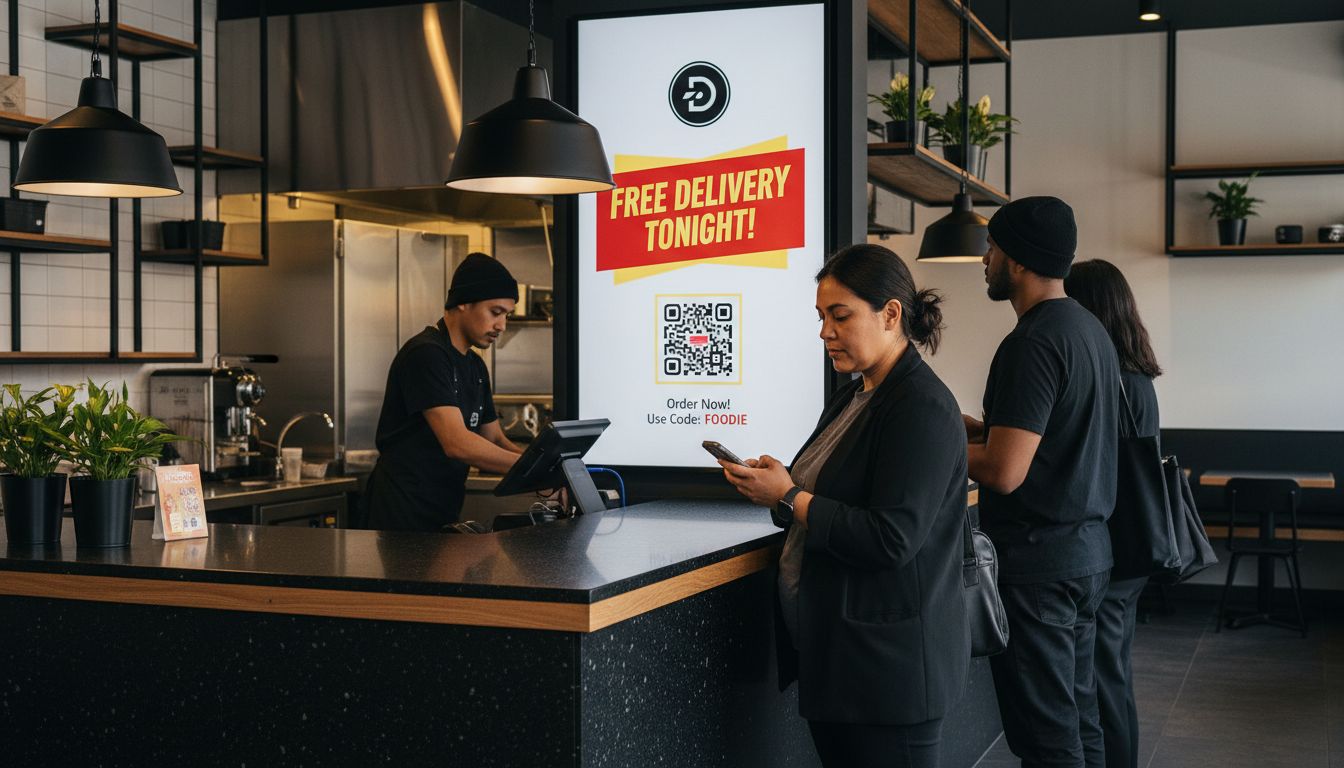
Digital signage has emerged as a particularly powerful tool for food delivery promotion. These dynamic displays offer real-time menu updates, interactive ordering interfaces, and the flexibility to quickly change promotional content. Modern restaurants can leverage digital screens to showcase high-resolution food images, current specials, and integrated ordering QR codes.
Retail signs signage physical solutions remain equally important. Window signs, exterior banners, illuminated menu boards, and standalone promotional displays each contribute to creating a comprehensive visual communication strategy that attracts and engages potential customers.
Design Strategies for Maximum Impact
Creating impactful food delivery signage requires a strategic approach that combines visual appeal with clear communication. Utilising large, brightly coloured signs can significantly influence customer choices and enhance the dining experience.
Colour psychology plays a crucial role in designing effective food delivery promotion signage. Different colours evoke specific emotional responses and can dramatically impact customer perception:
- Red: Stimulates appetite and creates a sense of urgency
- Yellow: Attracts attention and suggests cheerfulness
- Green: Implies freshness and health-consciousness
- Orange: Conveys excitement and enthusiasm
- Blue: Suggests reliability and trust
Shop signs London design principles highlight the importance of typography and visual hierarchy in creating memorable signage. The most effective designs use clear, legible fonts with strategic size variations to guide the viewer’s eye and emphasise key information such as special offers, menu highlights, or ordering instructions.
Technical considerations are equally important in maximising signage impact. This includes selecting appropriate materials that withstand environmental conditions, ensuring high-contrast designs for readability, and incorporating sufficient white space to prevent visual clutter. Digital signage offers additional flexibility, allowing real-time updates, animated elements, and interactive features that can dynamically engage potential customers and communicate menu changes or promotional offers instantaneously.
Legal and Safety Requirements for Signage
Food delivery businesses must navigate a complex landscape of legal and safety requirements when designing promotional signage. Food retailers must ensure their marketing strategies, including in-store signage, comply with regulations to prevent misleading consumers, particularly vulnerable groups.
Accessibility compliance is a critical consideration for signage design. Ensuring interior signs meet accessibility standards guarantees that all customers can easily navigate and understand signage information. Key accessibility requirements include:
- High-contrast colour schemes
- Large, legible typography
- Clear, simple language
- Placement at appropriate heights
- Consideration for visual and hearing impairments
The retail signage compliance guide highlights several critical legal considerations for food delivery signage. Businesses must ensure their signs do not create potential safety hazards, such as obstructing emergency exits, blocking visibility, or using materials that could pose fire risks. Additionally, outdoor signage must comply with local zoning regulations, which often dictate sign size, placement, and illumination.
Vinyl sticker printing London solutions for window and door promotions must also comply with transparency requirements and not obstruct visibility in ways that contravene local authority guidelines. Beyond physical safety, legal requirements extend to content and marketing practices. Signage must avoid false advertising, clearly display pricing, include necessary nutritional information, and adhere to food labelling standards.
Common Mistakes and How to Avoid Them
Food delivery businesses often encounter several critical pitfalls when designing promotional signage that can significantly impact their marketing effectiveness. One of the most common mistakes is using inflexible menu boards that make it challenging to update menu items and prices quickly.
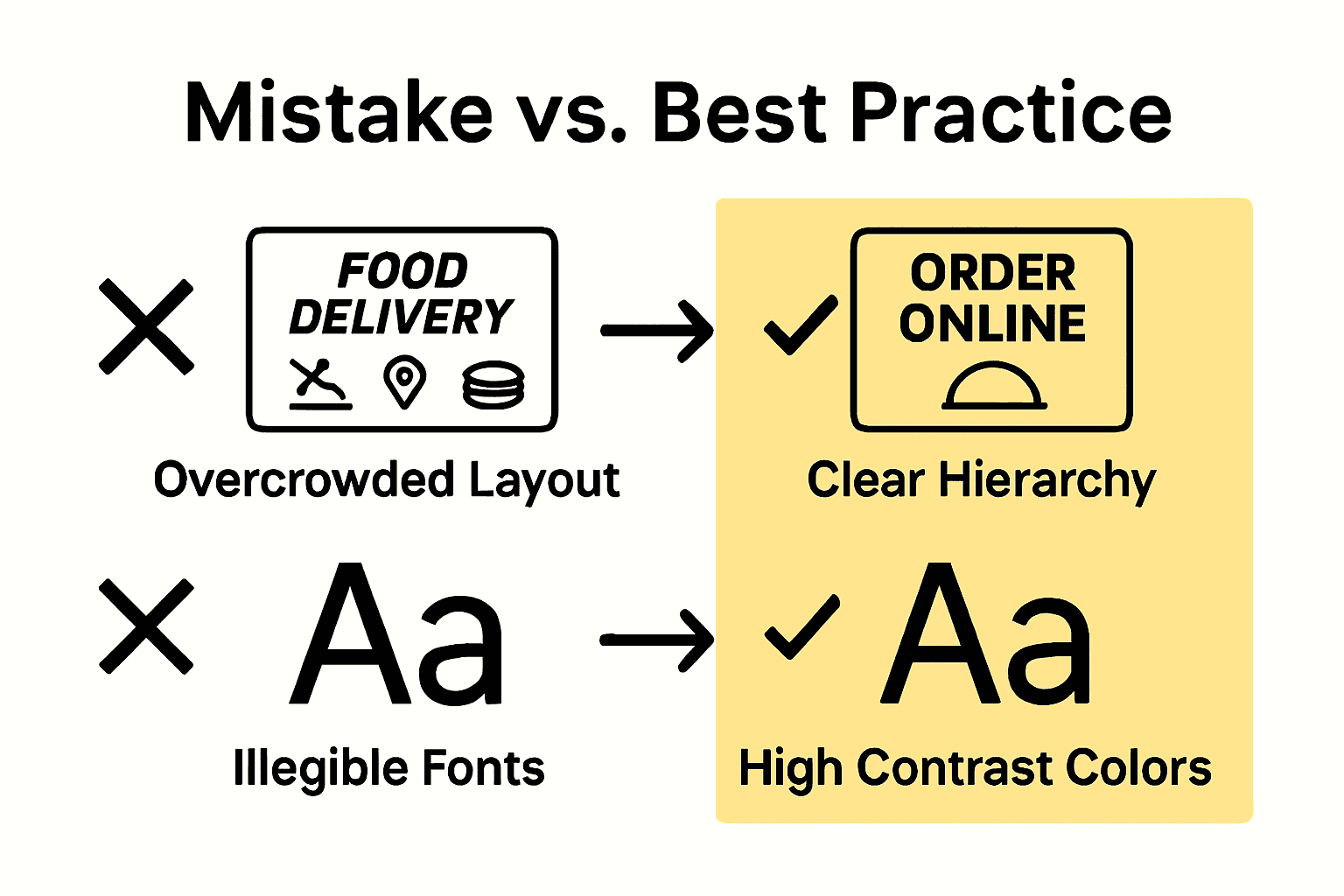
Signage design mistakes can be categorised into several key areas of concern:
- Overcrowded visual layouts
- Inconsistent branding elements
- Poor colour and contrast choices
- Illegible or complicated typography
- Lack of clear hierarchy in information presentation
Typography and readability represent a critical area where businesses frequently stumble. Font selection can make or break the effectiveness of promotional signage. Many food delivery services use fonts that are too small, too decorative, or lack sufficient contrast, making their signs difficult to read from a distance or in varying lighting conditions.
Technical execution is another realm where mistakes proliferate. Businesses often underestimate the importance of strategic sign placement, material durability, and adaptability. Large format printing London menu boards and promotional displays offer a durable, high-impact alternative that combines visual quality with practical longevity. Digital signage offers a flexible alternative to traditional static signs, allowing real-time updates and dynamic content management. The key is to balance creative design with practical functionality, ensuring that every sign serves its primary purpose: clear, compelling communication.
Elevate Your Food Delivery Promotion with Expert Signage Solutions
Struggling to create signage that truly captures attention and drives orders for your food delivery service? We understand the challenge of designing clear, eye-catching, and compliant signs that convey your unique offerings instantly. Our solutions focus on key elements highlighted in the guide such as legible typography, bold colour choices that stimulate appetite and brand-consistent visual identity to turn passing interest into loyal customers.
Discover how our bespoke shop signs, illuminated displays, and durable menu boards can transform your restaurant or takeaway presence across London, Essex, and Kent. Don’t let poor signage dilute your promotions or lead to confusion — act now to achieve maximum impact with expertly crafted visuals. Visit Promo Signs today and take the first step towards signage that makes your food delivery service stand out from the competition.
Frequently Asked Questions
What are the key characteristics of effective food delivery promotion signage?
Effective food delivery promotion signage should feature clear, legible typography, high-contrast colour schemes, strategic placement for maximum visibility, concise messaging, and integration of brand logos to communicate important information effectively.
How can colour psychology influence food delivery signage design?
Colour psychology in signage design plays a vital role as different colours evoke emotional responses. For instance, red stimulates appetite, yellow attracts attention, and green implies freshness, all of which can impact customer perceptions and choices.
What types of signage options are best for food delivery promotions?
Food delivery promotions can benefit from a variety of signage options, including chalkboards, digital menu signs, point-of-purchase displays, and window signs, each serving different purposes to attract and engage customers effectively.
What common mistakes should businesses avoid when creating promotional signage?
Businesses should avoid overcrowded layouts, inconsistent branding, poor colour choices, illegible typography, and lack of clear information hierarchy. These mistakes can hinder the effectiveness of promotional signage and reduce customer engagement.
Recommended
- Restaurant Branding with Signage: 2025 Guide for London Businesses – PromoSigns.co.uk
- What Makes A Great Shop Sign – PromoSigns.co.uk
- How to Choose the Perfect Restaurant Sign for Your Brand
- Blog Archives – Page 3 of 7 – PromoSigns.co.uk
