
Did you know that over 75 percent of consumers say a sign’s quality reflects the reputation of the business behind it? Great signage can draw customers in while poor or out-of-date signs send them elsewhere. Strong visual branding starts with a careful process from assessment to installation. Understanding each step helps your business make a memorable first impression and guides visitors with confidence every time they walk through your doors.
Table of Contents
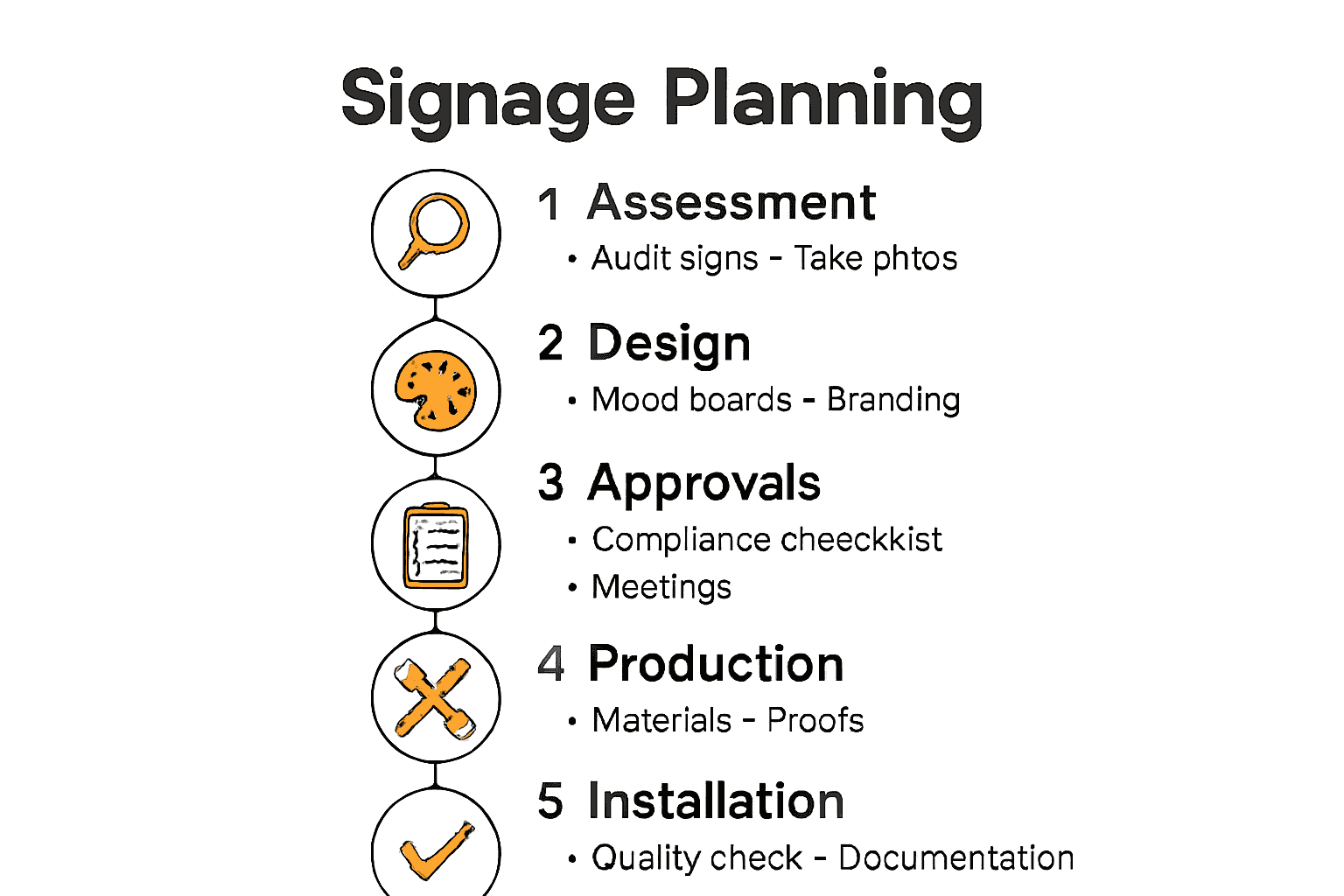
- Step 1: Assess Business Signage Needs
- Step 2: Develop Branding and Design Concepts
- Step 3: Secure Approvals and Compliance
- Step 4: Produce and Fabricate Signage
- Step 5: Install and Verify Signage Quality
Table of Contents
Quick Summary
| Key Point | Explanation |
|—————————|——————————-|
Step 1: Assess business signage needs
Assessing your business signage needs is the crucial first step in creating an impactful visual brand identity. This process involves carefully evaluating your current communication strategy and identifying how signage can effectively represent your business.
Evaluating existing branding materials is fundamental to ensuring alignment with organisational standards. Begin by conducting a comprehensive audit of your current signage situation. Look at every sign your business currently uses both internally and externally. Consider factors like visibility, readability, location, and how well they represent your brand’s personality.
Key areas to evaluate during your signage assessment include:
- Storefront signage
- Directional signs
- Interior branding elements
- Vehicle graphics
- Temporary promotional signs
Maintaining consistent communication goals is paramount throughout this process. Document your current signage strengths and weaknesses. Take photographs, measure dimensions, and note the materials used. This detailed inventory will serve as your baseline for future improvements.
Pro Tip: When assessing signage needs, put yourself in your customers’ shoes. Walk into your business and critically observe how easily someone could understand and navigate your space.
The next step will involve translating these insights into a strategic signage plan that elevates your brand’s visual communication. Working with experienced signage companies London at the assessment stage means you benefit from professional expertise in identifying gaps and opportunities that an internal audit alone might miss.
Step 2: Develop branding and design concepts
Developing your branding and design concepts transforms your initial signage assessment into a strategic visual communication plan.
This step focuses on creating a cohesive design strategy that authentically represents your business identity and communicates your unique value proposition. Creating and redesigning visual symbols requires careful consideration of how these elements represent an organisation’s mission and values. Start by defining your core brand attributes. What emotions do you want your signage to evoke? What story are you telling about your business?
Key elements to develop during your design concept phase include:
- Colour palette that reflects your brand personality
- Typography that communicates your brand tone
- Logo placement and sizing guidelines
- Consistent visual language across different sign types
Maintaining cohesive design through official colours and branding elements is crucial. Develop a comprehensive mood board that captures your brand essence. Collect visual references, experiment with different design iterations, and ensure your signage design feels authentic to your business identity.
Custom signs London design specialists can take your mood board and brand guidelines and translate them into fully worked signage concepts that maintain consistency across every format, from fascias to interior wayfinding.
Pro Tip: Always test your design concepts with a small focus group to gather objective feedback before full implementation.
For more detailed insights into creating impactful signage designs, our guide on indoor sign design tips can provide additional valuable perspectives as you refine your visual branding strategy.

Step 3: Secure approvals and compliance
Securing approvals and ensuring regulatory compliance is a critical stage in your signage planning process. This step transforms your design concepts into legally and organisationally approved visual communication materials.
Obtaining approval for new visual symbols requires detailed documentation and thorough clearance procedures. Begin by creating a comprehensive compliance checklist that covers all potential regulatory requirements. This should include local planning permissions, building regulations, accessibility standards, and any industry-specific signage guidelines.
Key compliance areas to address include:
- Local council signage regulations
- Building safety requirements
- Disability access guidelines
- Trade association standards
- Intellectual property considerations
Establishing a structured review process for marketing materials is essential. Prepare a presentation package that includes your design concepts, rationale, and compliance research. Schedule meetings with relevant stakeholders such as business partners, local authorities, and internal decision makers to walk through your proposed signage strategy.
Pro Tip: Document every stage of your approval process. Keeping detailed records can help streamline future signage projects and provide a clear audit trail.
Shop signs London projects in conservation areas or on listed buildings require additional advertisement consent steps, so understanding your specific planning constraints before design is finalised will save significant time and cost later in the process.
To support your compliance journey, our guide on understanding brand consistency offers additional insights into navigating complex branding and regulatory landscapes.
Step 4: Produce and fabricate signage
Producing and fabricating your signage transforms your design concepts into tangible visual communication materials. This crucial stage requires meticulous attention to detail and precise execution of your carefully developed branding strategy.
Effective signage production demands strict adherence to specific design specifications. Begin by selecting high-quality materials that align with your brand aesthetic and durability requirements. Consider factors such as weather resistance, visibility, and long-term performance when choosing sign materials like aluminium, acrylic, wood, or digital displays.
Key considerations during signage fabrication include:
- Material selection matching brand quality standards
- Precise colour matching to approved brand palette
- Accurate dimensional specifications
- Manufacturing technique selection
- Quality control checkpoints
Maintaining consistent design elements throughout production is paramount. Work closely with your chosen fabrication partner to ensure every detail matches your approved design concepts. Request material samples, colour proofs, and prototype mock-ups to validate the final product before full production.
Foamex signs printing London is one of the most widely used substrates for interior identification and promotional signs, offering clean print results, lightweight handling, and excellent value — making it a practical choice for businesses producing multiple sign types simultaneously.
Pro Tip: Always request a comprehensive production proof that includes exact colour specifications, material samples, and dimensional drawings before final fabrication.
Step 5: Install and verify signage quality
Installing and verifying your signage quality represents the critical final stage of your branding journey. This step transforms your carefully designed visual communication materials from concept to reality while ensuring they meet the highest standards of excellence.
Effective signage installation requires a comprehensive approval process prior to implementation. Begin by conducting a detailed site survey to confirm exact mounting locations, structural compatibility, and potential environmental challenges. Assess factors such as wall surface materials, lighting conditions, viewing angles, and potential obstructions that might impact sign visibility and performance.
Key quality verification checkpoints include:
- Precise alignment and levelling
- Correct colour representation
- Material durability assessment
- Lighting and visibility testing
- Structural integrity verification
Thorough review by professional teams ensures marketing materials maintain brand integrity. Meticulously inspect each sign for manufacturing precision, colour accuracy, and adherence to original design specifications. Document your verification process with comprehensive photographic evidence and written assessments.
Large format printing London graphics should be installed under consistent lighting conditions to allow accurate evaluation of colour fidelity against approved proofs — a step that is frequently overlooked but critical for brand-sensitive applications.
Pro Tip: Conduct installation during optimal lighting conditions to accurately evaluate sign performance and visual impact.
To support your final installation stage, our tutorial on installing wall signs provides professional insights into executing a flawless signage implementation.
Transform Your Business Identity with Expert Signage Solutions
The guide highlights how crucial it is to carefully assess, design, and install effective signage to create a memorable brand experience. If you feel overwhelmed by navigating approvals or struggle with ensuring brand consistency through your signs, you are not alone. Many businesses face challenges like choosing the right materials, maintaining colour accuracy, or positioning signs for maximum impact. Addressing these pain points with professional support can turn signage from a simple display into a powerful branding tool.
At Promo Signs, we specialise in custom shop signs, illuminated signs, and large format printing tailored to your unique business needs across London, Essex, and Kent. Our expert team helps you every step of the way from conceptual design to flawless installation, ensuring your signage meets compliance and truly reflects your brand quality.
Does your business signage strategy need a refresh or a trusted partner to handle the complexities of production and installation? Visit our website now to see how we bring branding to life. Start your journey with Promo Signs and make an impactful first impression with confidence.
Frequently Asked Questions
What steps should I take to assess my business signage needs?
Start by conducting a comprehensive audit of all current signage. Evaluate visibility, readability, and location while taking photographs and measurements to document strengths and weaknesses.
How do I develop branding and design concepts for my signage?
Begin by defining your core brand attributes and the emotions you want your signage to evoke. Create a mood board that includes a colour palette, typography, and logo placement guidelines to ensure a cohesive visual identity.
What compliance requirements should I consider when planning signage?
Prepare a compliance checklist that addresses local regulations, building safety requirements, and accessibility standards. Ensuring these factors are met can prevent costly delays and fines during the installation process.
What key considerations should I keep in mind when producing and fabricating signage?
Focus on material selection, precise colour matching, and accurate dimensional specifications. Collaborate closely with your fabrication partner to maintain quality and consistency in the final product.
How can I verify the quality of my installed signage?
Conduct a thorough inspection post-installation to check for alignment, colour accuracy, and material durability. Document your findings with photographs and written notes, noting any discrepancies to address promptly.
What actions can I take to ensure effective visibility of my signage?
Evaluate installation locations considering factors like lighting conditions and viewing angles. Aim to position signage where it can be seen easily from key approaches, improving overall visibility significantly.
Recommended
- Planning a Signage Project: Elevate Your Business Identity – PromoSigns.co.uk
- Choosing Outdoor Signage: A Step-by-Step Guide for 2025 – PromoSigns.co.uk
- Signage and Brand Recognition: Boost Your London Business in 2025 – PromoSigns.co.uk
- Custom Sign Design Process for London Businesses: 2025 Guide – PromoSigns.co.uk
