
Brand consistency in signage might sound like a simple tick-box exercise, just picking the right logo or colour. But studies show brands sticking to strict visual guidelines are 3.5 times more likely to stand out in customers’ minds. Most people think it’s only about looking polished, but that statistic proves it shapes how customers think, feel, and remember a business every single time they see a sign.
Table of Contents
- Defining Brand Consistency In Signage
- The Fundamental Elements Of Brand Consistency
- Why Brand Consistency Matters
- The Importance Of Brand Consistency
- Psychological Impact Of Consistent Branding
- Economic And Strategic Implications
- Elements That Contribute To Brand Consistency
- Core Visual Identity Components
- Strategic Communication Alignment
- How Brand Consistency Enhances Customer Experience
- Cognitive Processing And Emotional Engagement
- Experiential Impact And Customer Loyalty
- Real-World Examples Of Effective Brand Consistency In Signage
- Corporate Branding Masterclasses
- Strategic Implementation Techniques
Table of Contents
Quick Summary
| Takeaway | Explanation |
|---|---|
| Consistency builds strong brand recognition | Visual consistency makes a brand 3.5 times more recognizable, enhancing customer recall. |
| Cohesive visual elements foster trust | Consistent signage reinforces brand identity, creating a sense of reliability among customers. |
| Effective communication improves customer experience | Aligning visual language across platforms creates intuitive interactions, enhancing overall customer satisfaction. |
| Strategic design can boost revenue | Companies with rigorous brand consistency saw revenue increases of up to 23% due to better customer recognition. |
| Holistic branding creates emotional connections | Consistent visual messaging strengthens emotional ties, fostering deeper customer loyalty and engagement. |
Defining Brand Consistency in Signage
Brand consistency in signage represents a strategic approach to visual communication that ensures every graphic element reflects a company’s core identity, values, and professional image. This principle goes far beyond merely displaying a logo; it encompasses creating a unified visual language that resonates across all customer interaction points.
| Visual Identity Element | Description |
|---|---|
| Colour Palette | Consistently applying precise colour specifications drawn from established brand guidelines |
| Typography | Using the same font styles and weights across all signage formats |
| Logo Placement | Adhering to strict rules for logo positioning and sizing on all signage |
| Design Language | Developing a unified visual style that expresses the brand’s unique personality |
| Graphic Elements | Repeating motifs or visual devices that reinforce recognition across communication points |
The Fundamental Elements of Brand Consistency
Brand consistency in signage involves carefully orchestrating multiple visual components to create a seamless and recognisable brand experience. These elements include:
- Colour Palette: Maintaining exact colour specifications that match brand guidelines
- Typography: Using consistent font styles and weights across different signage formats
- Logo Placement: Ensuring logo representation follows precise sizing and positioning rules
- Design Language: Developing a cohesive visual grammar that communicates brand personality
Consistent signage acts as a powerful communication tool that transforms visual elements into memorable brand experiences. Read more about signage design principles to understand how strategic visual communication can elevate your brand perception.
Why Brand Consistency Matters
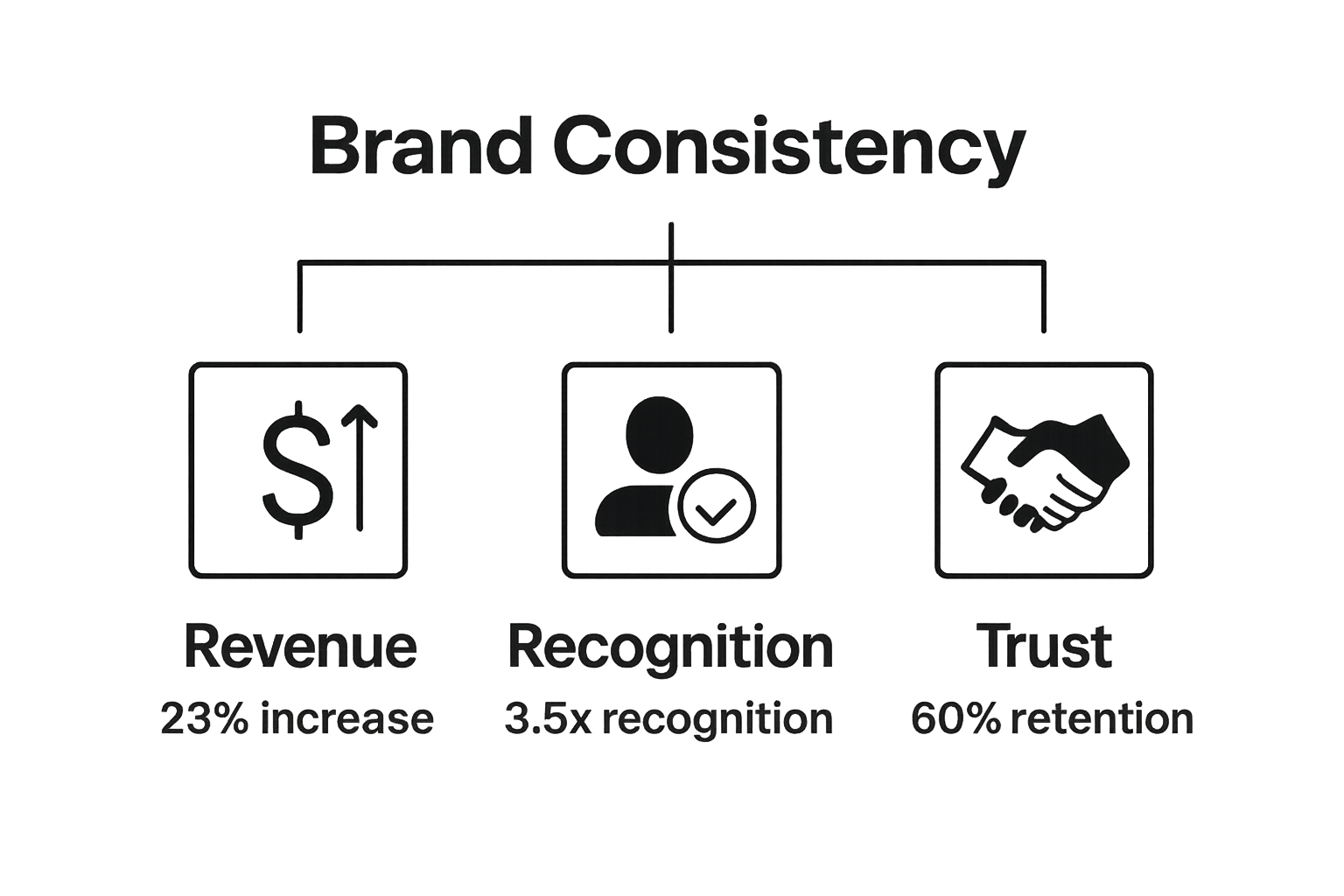
Brands maintaining visual consistency are 3.5 times more likely to achieve strong brand recognition. This statistic underscores the critical importance of developing a disciplined approach to signage design. For businesses looking to apply this discipline from the shopfront inward, investing in professionally produced shop signs London that precisely match brand colour specifications and typography is the most visible first step.
Consistent signage does more than create visual harmony. It builds trust, reinforces brand identity, and helps businesses create a professional image that resonates with their target audience. When customers encounter consistent visual messaging across different platforms, they subconsciously develop a sense of reliability and professionalism associated with the brand.
Through meticulous attention to visual details, businesses can transform their signage from mere functional communication into a strategic branding instrument that speaks volumes about their commitment to quality and professionalism.
The Importance of Brand Consistency
Brand consistency transcends mere aesthetic repetition and emerges as a critical strategic framework that fundamentally shapes how customers perceive and interact with a business. It represents a comprehensive approach to visual and communicative alignment that builds substantial competitive advantage.
Psychological Impact of Consistent Branding
Customers develop psychological connections with brands through repeated, predictable interactions. When signage maintains consistent visual language, it triggers subconscious recognition mechanisms that foster trust and reliability. Discover more about shopfront branding guidelines to understand these nuanced psychological dynamics.
The neurological processes behind brand recognition involve several key cognitive mechanisms:
- Pattern Recognition: Human brains rapidly process familiar visual patterns
- Memory Encoding: Consistent visual elements create stronger memory traces
- Emotional Association: Repeated exposure builds emotional connections with brand imagery
Economic and Strategic Implications
Businesses maintaining rigorous brand consistency can increase revenue by up to 23% through enhanced customer recognition and perceived professionalism.
Consistent branding serves multiple strategic objectives:
- Establishes immediate visual credibility
- Reduces cognitive effort for customer recognition
- Creates a unified brand narrative across diverse communication channels
- Differentiates the business from competitors with fragmented visual identities
Beyond aesthetic considerations, brand consistency functions as a sophisticated communication strategy that transforms visual elements into powerful storytelling instruments. By meticulously aligning every graphic touchpoint, businesses communicate professionalism, reliability, and commitment to their core brand values. Retail businesses that extend this consistency from their exterior signage through to interior displays — using matched retail signs signage throughout the customer journey — benefit most from the recognition and trust effects that consistent branding delivers.
Elements That Contribute to Brand Consistency
Brand consistency relies on a sophisticated interplay of strategic visual and communicative elements that transform graphic design into a powerful narrative instrument. Understanding these foundational components enables businesses to craft a cohesive and compelling brand identity that resonates across multiple platforms.
Core Visual Identity Components
The architectural framework of brand consistency comprises several critical elements that work synergistically to create a unified brand experience. Explore our essential indoor sign design tips to understand how these elements manifest in practical signage applications.
These fundamental visual identity components include:
- Colour Palette: Precise colour specifications that reflect brand personality
- Typography: Consistent font selection and application
- Logo Design: Strategic placement and scaling of brand logos
- Graphic Elements: Repeatable visual motifs and design language
Strategic Communication Alignment
Design-driven companies outperform their competitors by as much as 228% in financial performance, underscoring the critical role of consistent visual communication.
Effective brand consistency requires harmonising multiple communication channels:
- Ensuring visual coherence across digital and physical platforms
- Maintaining uniform messaging tone and style
- Developing a recognisable visual grammar
- Creating seamless brand experiences across diverse touchpoints
By meticulously integrating these elements, businesses transform visual communication from a mere aesthetic exercise into a strategic tool that builds recognition, trust, and emotional connection with their target audience. For businesses that need to reproduce brand graphics precisely at scale — across hoardings, banners, or large interior wall graphics — large format printing London ensures colour accuracy and print resolution that upholds brand standards at every size.
How Brand Consistency Enhances Customer Experience
Brand consistency transcends aesthetic design and emerges as a powerful psychological mechanism that fundamentally transforms customer interaction and perception. By creating predictable and reassuring visual experiences, businesses can strategically shape emotional responses and build deeper connections with their audience.
Cognitive Processing and Emotional Engagement
Customers inherently seek familiarity and predictability in their brand interactions. Learn more about interior branding graphics to understand how visual consistency triggers positive psychological responses.
The cognitive mechanisms underlying brand consistency involve several sophisticated psychological processes:
- Mental Shortcutting: Consistent branding reduces cognitive load during recognition
- Emotional Anchoring: Repeated visual experiences create positive emotional associations
- Trust Building: Predictable design signals reliability and professionalism
Experiential Impact and Customer Loyalty
Brands maintaining visual coherence experience 60% higher customer retention rates compared to inconsistent brand representations.
Customer experience enhancement through brand consistency manifests through multiple strategic dimensions:
- Creating seamless interaction across physical and digital touchpoints
- Generating intuitive navigation through consistent visual language
- Reinforcing brand narrative through strategic design elements
- Establishing emotional connection beyond transactional interactions
Ultimately, brand consistency transforms customer experience from a series of disconnected interactions into a holistic, meaningful journey that resonates deeply with individual psychological and emotional needs. One of the most cost-effective ways to extend brand consistency to every surface — glass partitions, door panels, shopfront windows — is through precisely matched vinyl sticker printing London that reproduces brand colours and graphics with exceptional accuracy.

Real-World Examples of Effective Brand Consistency in Signage
Brand consistency in signage represents a nuanced art form where visual communication transcends mere graphic design and becomes a strategic narrative tool. Successful implementations demonstrate how meticulous attention to visual details can transform customer perception and organisational identity.
Corporate Branding Masterclasses
Explore our guide to modern visual displays for branding to understand how leading organisations craft compelling visual narratives. Global brands offer exceptional case studies in seamless visual communication strategies.
Outstanding examples of brand consistency showcase several pivotal characteristics:
- Precise Colour Matching: Maintaining exact colour specifications across diverse platforms
- Uniform Typography: Consistent font selection reflecting brand personality
- Strategic Logo Placement: Intelligent scaling and positioning of brand identifiers
- Holistic Design Language: Creating a recognisable visual grammar
Strategic Implementation Techniques
Companies implementing rigorous brand consistency protocols experience up to 33% improvement in brand recognition and customer recall.
Successful brand consistency strategies demonstrate several key implementation approaches:
- Developing comprehensive brand guidelines
- Creating modular design systems
- Establishing centralised visual asset management
- Implementing cross-platform design validation processes
These real-world examples illustrate how thoughtful, strategic signage design transforms visual communication from a passive graphic exercise into a powerful organisational storytelling mechanism that resonates deeply with target audiences. For businesses commissioning a full suite of consistent signage across multiple formats, custom signs London specialists can build every element — from reception signs to exterior fascias — from a single set of approved brand guidelines, guaranteeing consistency at every touchpoint.
Take Control of Your Brand Image with Expert Signage Solutions
Are you worried your signage is sending mixed messages about your business? The article above highlights how losses in brand trust and customer loyalty often stem from inconsistent signage. Maintaining a disciplined approach to colour, typography, and logo placement is key, but bringing all these visual identity elements together can be overwhelming for any business owner. Poor signage consistency not only confuses customers but may also weaken your brand’s credibility across London, Essex, and Kent.
Ensure every visual touchpoint reinforces your reputation and sets you apart. Let our experienced team at PromoSigns guide and support you through design, production, and expert installation. Feel the confidence that comes from powerful, unified signage. Visit our site and request your tailored consultation. Make a lasting impression with signage that works as hard as you do.
Frequently Asked Questions
What is brand consistency in signage?
Brand consistency in signage refers to the strategic alignment of visual elements, such as colour, typography, logo placement, and design language, to create a unified representation of a brand across all signage.
Why is brand consistency important in signage?
Brand consistency is important because it enhances brand recognition, builds trust among consumers, and creates a professional image that resonates with the target audience. Studies have shown that consistent branding can significantly improve customer retention rates.
How can I ensure brand consistency in my signage design?
To ensure brand consistency, you should develop comprehensive brand guidelines that specify colour palettes, typography, and logo usage. Additionally, maintaining uniform messaging and visual coherence across both digital and physical platforms is crucial.
What are the psychological benefits of having consistent branding in signage?
Consistent branding triggers emotional connections with customers by providing familiarity and reliability, which enhances their overall experience and fosters trust in the brand.
Recommended
- Signage and Brand Recognition
- Signage Design Principles for London Businesses in 2025
- What Makes A Great Shop Sign
- Restaurant Branding with Signage
