
Signage for new shops is not just about hanging a flashy name above the door and hoping customers stroll in. Most owners fixate on bold colours or clever slogans, thinking that’s all it takes. Yet, research reveals that well-designed signage can increase business visibility by up to 50% and even lift revenue by 7.7%. The real advantage comes from using signage as a powerful and subtle tool that shapes customer decisions before anyone even steps inside
Table of Contents
Quick Summary
| Takeaway | Explanation |
|---|---|
| Invest in High-Quality Signage | Quality signage enhances brand visibility and attracts customers effectively. |
| Strategically Place Signs for Impact | Position signage where it maximises visibility to draw in foot traffic. |
| Create Visual Appeal to Reflect Brand | Aesthetically pleasing designs align with brand identity, attracting interest. |
| Use Signage to Communicate Business Value | Signage gives vital information, influencing customer perceptions and decisions. |
| Leverage Psychological Triggers | Well-designed signage can influence customer behaviour and purchasing decisions. |
What is Signage for New Shops?
Signage represents the visual communication and graphic displays that businesses use to convey their brand identity, provide essential information, and attract potential customers. For new shops, signage is more than just a decorative element – it serves as a critical marketing tool that communicates the essence of a business at first glance.
Understanding Shop Signage Fundamentals
Shop signage encompasses a wide range of visual displays, including storefront signs, window graphics, directional indicators, and promotional displays. Our comprehensive guide on shop signage basics highlights that effective signage goes beyond mere identification, functioning as a powerful communication medium that can significantly influence customer perceptions and business success.
Key components of effective shop signage include:
- Visual Appeal: Creating an aesthetically pleasing design that reflects the shop’s brand personality
- Clarity: Ensuring information is readable and easily understood
- Strategic Placement: Positioning signs where they can maximise visibility and impact
The Strategic Importance of Signage for New Businesses
For new shops, signage plays a multifaceted role in business establishment and growth.
VIDEO:video_content] According to [market research from the Retail Signage Institute, well-designed signage can increase business visibility by up to 50% and potentially boost customer foot traffic.
New businesses must view signage as an investment in their brand communication strategy. It serves multiple critical functions: attracting potential customers, providing essential business information, creating a professional first impression, and differentiating the shop from competitors in a crowded marketplace.
Understanding the nuanced role of signage helps new shop owners make informed decisions about their visual communication strategy, turning their storefront into a powerful marketing asset that speaks directly to their target audience.
Why Signage Matters for New Retail Businesses
Signage serves as a powerful communication tool that goes far beyond basic identification, playing a crucial role in the success of new retail businesses. Effective signage can significantly impact customer perception, brand recognition, and overall business performance.
The Economic Impact of Strategic Signage
Our guide on modern visual displays for branding reveals that strategic signage is not just an aesthetic choice but a critical business investment. According to research from the Sign Research Foundation, businesses with high-quality, well-designed signage can experience up to 7.7% increase in annual revenue.
Key economic benefits of strategic signage include:
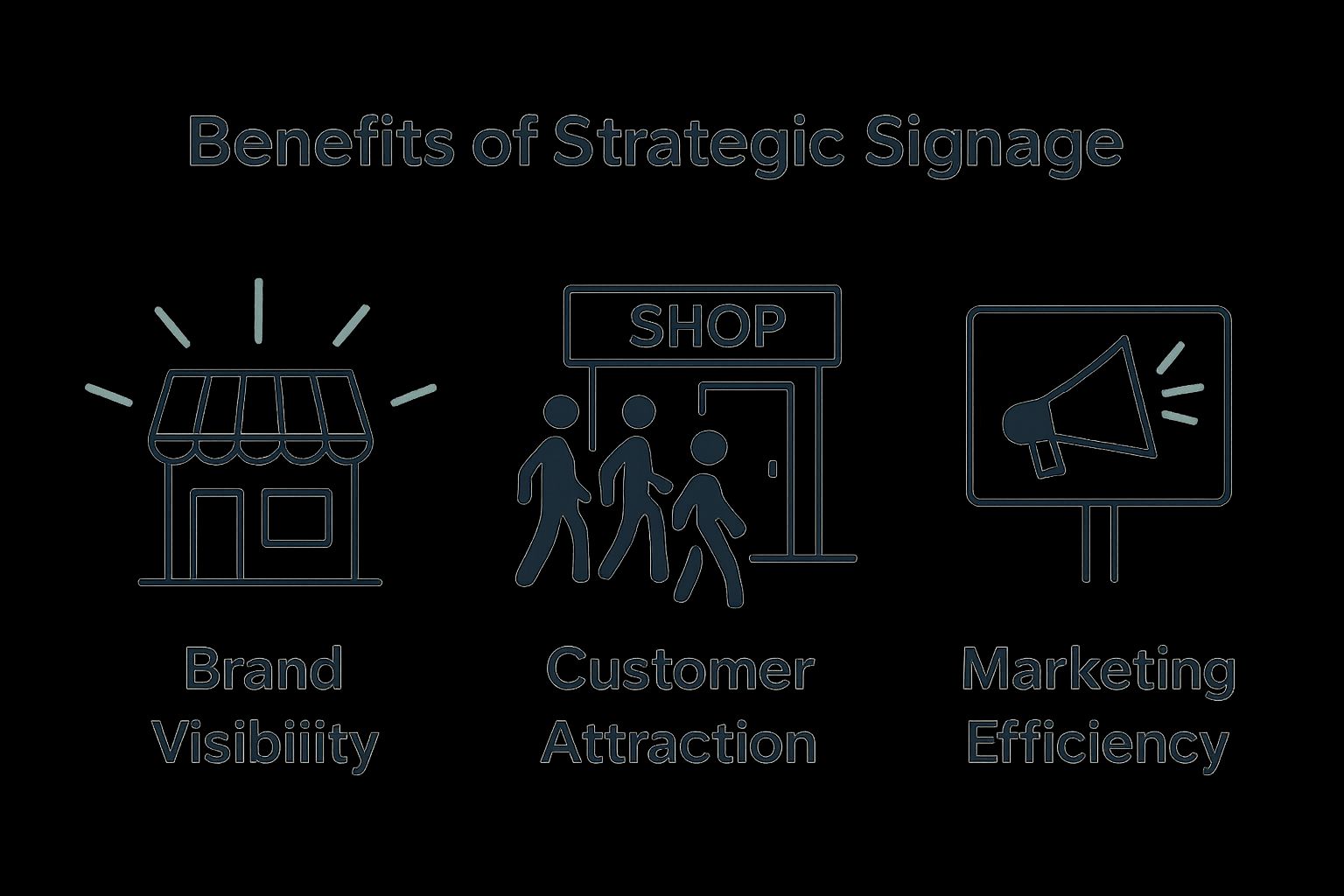
- Brand Visibility: Increasing immediate recognition in competitive marketplaces
- Customer Attraction: Drawing potential customers into the retail space
- Marketing Efficiency: Providing continuous, low-cost advertising
Psychological Influences of Signage on Consumer Behaviour
Signage operates on multiple psychological levels, subtly influencing customer decisions and perceptions. It communicates not just information, but the personality, professionalism, and value proposition of a business. New retail businesses can leverage signage to create immediate trust and credibility.
Consumers often make split-second judgments about a business based on its visual presentation. A professionally designed sign signals quality, attention to detail, and commitment to customer experience. This initial impression can be the difference between a potential customer walking past or stepping inside.
Moreover, signage acts as a silent salesperson, working continuously to attract attention, communicate brand values, and guide customer interactions without additional operational costs. For new retail businesses operating with limited marketing budgets, this makes signage an exceptionally cost-effective marketing strategy.
This table organises the main economic and psychological impacts of effective signage on new retail businesses, summarising how strategic signage choices translate into tangible business outcomes and influence customer perceptions.
| Impact Type | Description | Key Outcomes |
|---|---|---|
| Economic | Increases brand visibility and draws in customers | Up to 7.7% revenue boost; increased footfall |
| Marketing Efficiency | Acts as low-cost advertisement operating 24/7 | Greater reach with minimal ongoing costs |
| Psychological | Establishes credibility, trust, and professionalism | Quicker positive judgements, more walk-ins |
| Brand Recognition | Ensures visual consistency and repeated exposure | Up to 80% increase in brand recognition |
| Behavioural Influence | Uses visual cues and emotional triggers | Influences up to 60% of purchasing decisions |
The Role of Signage in Brand Identity
Brand identity is more than a logo or colour scheme – it is a comprehensive visual language that communicates a business’s core values, personality, and unique market positioning. Signage plays a pivotal role in translating these abstract brand elements into tangible, visible experiences for customers.
Visual Storytelling Through Signage
Our guide on signage and brand recognition demonstrates how strategic signage transforms abstract brand concepts into compelling visual narratives. According to research on corporate visual communication, consistent visual representation can increase brand recognition by up to 80%.
Key elements of brand identity expressed through signage include:
- Typography: Font choices that reflect brand personality
- Colour Palette: Consistent use of brand colours
- Design Language: Graphic styles that communicate brand essence
Psychological Impact of Consistent Brand Representation
Signage serves as a critical touchpoint in creating emotional connections with potential customers. It goes beyond mere information delivery, functioning as a sophisticated communication tool that builds trust, evokes feelings, and establishes immediate credibility.
Every design choice – from material selection to sign placement – contributes to the overall perception of a brand. A meticulously crafted sign communicates professionalism, attention to detail, and commitment to quality. For new businesses, this initial visual interaction can significantly influence customer perceptions and willingness to engage.
By treating signage as an integral component of brand strategy, businesses transform these visual elements from simple identification markers into powerful instruments of brand storytelling and customer engagement.
Types of Signage and Their Practical Uses
Signage is not a one-size-fits-all solution – different types of signs serve specific purposes, helping businesses communicate effectively with their target audience. Understanding these variations allows new shops to strategically deploy signage that maximises visibility and engagement.
Categorising Business Signage
Our comprehensive guide to types of shop signage outlines the diverse range of signage options available. According to research from the International Sign Association, targeted signage can increase business recognition by up to 47%.
Key categories of business signage include:
- Exterior Signage: Storefront signs, window displays, awning signs
- Interior Signage: Wayfinding indicators, product information displays
- Regulatory Signage: Safety instructions, accessibility information
Functional Applications of Different Sign Types
Each sign type serves a distinct strategic purpose beyond basic identification. Exterior signage acts as a beacon, attracting potential customers and creating initial brand impressions. Interior signs guide customer journeys, highlight product offerings, and enhance overall shopping experiences.
For new businesses, selecting the right sign type is crucial. Regulatory signs ensure compliance and safety, while promotional displays can drive sales by highlighting special offers or unique product features. The versatility of modern signage means businesses can create multi-functional visual communication tools that simultaneously inform, attract, and guide customers.
By understanding and implementing a thoughtful signage strategy, new shops can transform these visual elements from simple markers into powerful marketing and communication instruments.
To clarify the different forms and practical uses of retail signage, the following table summarises key categories mentioned in the guide and highlights their typical functions in a new shop environment.
Table of Contents
- What Is Signage For New Shops?
- Understanding Shop Signage Fundamentals
- The Strategic Importance Of Signage For New Businesses
- Why Signage Matters For New Retail Businesses
- The Economic Impact Of Strategic Signage
- Psychological Influences Of Signage On Consumer Behaviour
- The Role Of Signage In Brand Identity
- Visual Storytelling Through Signage
- Psychological Impact Of Consistent Brand Representation
- Types Of Signage And Their Practical Uses
- Categorising Business Signage
- Functional Applications Of Different Sign Types
- How Effective Signage Can Influence Customer Behaviour
- Psychological Triggers In Signage Design
- Navigating Consumer Decision Making

What is Signage for New Shops?
Signage represents the visual communication and graphic displays that businesses use to convey their brand identity, provide essential information, and attract potential customers. For new shops, signage is more than just a decorative element — it serves as a critical marketing tool that communicates the essence of a business at first glance.
Understanding Shop Signage Fundamentals
Shop signage encompasses a wide range of visual displays, including storefront signs, window graphics, directional indicators, and promotional displays. Our comprehensive guide on shop signage basics highlights that effective signage goes beyond mere identification, functioning as a powerful communication medium that can significantly influence customer perceptions and business success.
Key components of effective shop signage include:
- Visual Appeal: Creating an aesthetically pleasing design that reflects the shop’s brand personality
- Clarity: Ensuring information is readable and easily understood
- Strategic Placement: Positioning signs where they can maximise visibility and impact
The Strategic Importance of Signage for New Businesses
For new shops, signage plays a multifaceted role in business establishment and growth. Well-designed shop signs London can increase business visibility by up to 50% and potentially boost customer foot traffic — making them one of the most cost-effective investments a new retailer can make.
New businesses must view signage as an investment in their brand communication strategy. It serves multiple critical functions: attracting potential customers, providing essential business information, creating a professional first impression, and differentiating the shop from competitors in a crowded marketplace.
Understanding the nuanced role of signage helps new shop owners make informed decisions about their visual communication strategy, turning their storefront into a powerful marketing asset that speaks directly to their target audience.
Why Signage Matters for New Retail Businesses
Signage serves as a powerful communication tool that goes far beyond basic identification, playing a crucial role in the success of new retail businesses. Effective signage can significantly impact customer perception, brand recognition, and overall business performance.
The Economic Impact of Strategic Signage
Our guide on modern visual displays for branding demonstrates that strategic signage is not just an aesthetic choice but a critical business investment. Businesses with high-quality, well-designed signage can experience up to 7.7% increase in annual revenue.
Key economic benefits of strategic signage include:
- Brand Visibility: Increasing immediate recognition in competitive marketplaces
- Customer Attraction: Drawing potential customers into the retail space
- Marketing Efficiency: Providing continuous, low-cost advertising
Psychological Influences of Signage on Consumer Behaviour
Signage operates on multiple psychological levels, subtly influencing customer decisions and perceptions. It communicates not just information, but the personality, professionalism, and value proposition of a business. New retail businesses can leverage signage to create immediate trust and credibility.
Consumers often make split-second judgments about a business based on its visual presentation. A professionally designed sign signals quality, attention to detail, and commitment to customer experience. This initial impression can be the difference between a potential customer walking past or stepping inside.
Moreover, signage acts as a silent salesperson, working continuously to attract attention, communicate brand values, and guide customer interactions without additional operational costs. For new retail signs signage projects operating with limited marketing budgets, this makes signage an exceptionally cost-effective marketing strategy.
| Impact Type | Description | Key Outcomes |
|---|---|---|
| Economic | Increases brand visibility and draws in customers | Up to 7.7% revenue boost; increased footfall |
| Marketing Efficiency | Acts as low-cost advertisement operating 24/7 | Greater reach with minimal ongoing costs |
| Psychological | Establishes credibility, trust, and professionalism | Quicker positive judgements, more walk-ins |
| Brand Recognition | Ensures visual consistency and repeated exposure | Up to 80% increase in brand recognition |
| Behavioural Influence | Uses visual cues and emotional triggers | Influences up to 60% of purchasing decisions |
The Role of Signage in Brand Identity
Brand identity is more than a logo or colour scheme — it is a comprehensive visual language that communicates a business’s core values, personality, and unique market positioning. Signage plays a pivotal role in translating these abstract brand elements into tangible, visible experiences for customers.
Visual Storytelling Through Signage
Our guide on signage and brand recognition demonstrates how strategic signage transforms abstract brand concepts into compelling visual narratives. Consistent visual representation can increase brand recognition by up to 80%.
Key elements of brand identity expressed through signage include:
- Typography: Font choices that reflect brand personality
- Colour Palette: Consistent use of brand colours
- Design Language: Graphic styles that communicate brand essence
Psychological Impact of Consistent Brand Representation
Signage serves as a critical touchpoint in creating emotional connections with potential customers. It goes beyond mere information delivery, functioning as a sophisticated communication tool that builds trust, evokes feelings, and establishes immediate credibility.
Every design choice — from material selection to sign placement — contributes to the overall perception of a brand. For new businesses, investing in custom signs London ensures that every element, from font to finish, is tailored to reinforce the brand identity you want customers to associate with your shop from day one.
By treating signage as an integral component of brand strategy, businesses transform these visual elements from simple identification markers into powerful instruments of brand storytelling and customer engagement.
Types of Signage and Their Practical Uses
Signage is not a one-size-fits-all solution — different types of signs serve specific purposes, helping businesses communicate effectively with their target audience. Understanding these variations allows new shops to strategically deploy signage that maximises visibility and engagement.
Categorising Business Signage
Our comprehensive guide to types of shop signage outlines the diverse range of signage options available. Targeted signage can increase business recognition by up to 47%.
Key categories of business signage include:
- Exterior Signage: Storefront signs, window displays, awning signs
- Interior Signage: Wayfinding indicators, product information displays
- Regulatory Signage: Safety instructions, accessibility information
Functional Applications of Different Sign Types
Each sign type serves a distinct strategic purpose beyond basic identification. Exterior signage acts as a beacon, attracting potential customers and creating initial brand impressions. Interior signs guide customer journeys, highlight product offerings, and enhance overall shopping experiences.
Shop window graphics are one of the most versatile tools available to new retailers — they transform otherwise blank glass into branded promotional space, communicate seasonal offers, and create visual intrigue that draws pedestrians towards the entrance.
| Signage Category | Typical Examples | Primary Purpose |
|---|---|---|
| Exterior Signage | Storefront signs, window displays, awnings | Attract customers, create first impression |
| Interior Signage | Wayfinding indicators, product displays | Guide navigation, highlight products |
| Regulatory Signage | Safety instructions, accessibility info | Ensure compliance, communicate rules |
| Promotional Signage | Offer boards, seasonal highlights | Drive sales, spotlight special offers |
| Brand Identity Signage | Custom graphics, logo panels | Reinforce brand identity, build trust |
By understanding and implementing a thoughtful signage strategy, new shops can transform these visual elements from simple markers into powerful marketing and communication instruments.
How Effective Signage Can Influence Customer Behaviour
Customer behaviour is not random — it is significantly influenced by visual cues and strategic communication. Signage acts as a powerful psychological trigger that can subtly guide customer decisions, perceptions, and interactions within a retail environment.
Psychological Triggers in Signage Design
Our comprehensive guide on shop sign design explores the intricate relationship between visual communication and consumer psychology. Well-designed signs can influence purchasing decisions by up to 60%.
Key psychological mechanisms triggered by effective signage include:
- Visual Attraction: Drawing customer attention through strategic placement
- Information Processing: Simplifying complex information quickly
- Emotional Connection: Creating immediate brand resonance
Navigating Consumer Decision Making
Effective signage operates on multiple cognitive levels, transforming passive visual information into active consumer engagement. Signs do more than provide directions or display prices — they create narrative experiences that shape customer perceptions and behaviours.
For instance, promotional signage can create a sense of urgency, encouraging impulse purchases by highlighting limited-time offers. Wayfinding signs reduce customer anxiety by providing clear navigation, while product information displays can educate and persuade simultaneously.
For new shops on busy high streets, adding shop canopies London extends the branded zone beyond the shopfront, creates a sheltered browsing area that encourages customers to pause, and provides additional signage surface — all of which combine to amplify the psychological draw of a well-presented retail entrance.
By understanding these nuanced psychological mechanisms, businesses can design signage that does not merely communicate information but actively guides and influences customer journeys through carefully crafted visual storytelling.
Ready to Turn Your New Shopfront Into a Customer Magnet?
Struggling to make your new shop stand out on a crowded high street is a common challenge for business owners. This article highlighted how vital professionally designed signage is for attracting attention, building credibility, and shaping lasting first impressions. If you want your shop to look inviting and make a strong brand statement, you need more than a generic sign — you need a solution tailored to both your vision and the behavioural triggers that draw people in.
Let our experienced team take care of every detail of your signage journey. We offer custom shop signage design and installation that captures everything your brand stands for. Make the most of your opening phase by choosing a provider trusted by businesses across London, Essex, and Kent. Visit PromoSigns now for a free consultation and discover how expert signage can be your most powerful marketing asset from day one.
Frequently Asked Questions
What types of signage are essential for new shops?
Effective signage for new shops includes exterior signage like storefront signs and window displays, as well as interior signage such as wayfinding indicators and product information displays. Identify which types meet your business goals and ensure they reflect your brand identity.
How can I ensure my shop signage attracts customers?
To attract customers, focus on creating visually appealing designs that communicate your brand personality clearly. Try incorporating bold colours and clear typography, and place signs strategically where they are easily visible to passersby.
What factors should I consider when designing shop signage?
Consider clarity, visual appeal, and strategic placement when designing your shop signage. Develop a cohesive design that reflects your brand values and aids in customer navigation, ensuring that important information is prominently displayed.
How does signage impact customer behaviour in retail?
Signage influences customer behaviour by providing visual cues that guide decision-making and enhance the shopping experience. Use promotional signage to create urgency or highlight special offers, as these tactics can lead to increased sales.
Why is consistent brand representation through signage important?
Consistent brand representation through signage helps build trust and recognition among customers. Ensure that your signage reflects your brand’s colour palette, typography, and overall design language to create a cohesive customer experience at every touchpoint.
How can I measure the effectiveness of my shop signage?
You can measure the effectiveness of your shop signage by tracking foot traffic and sales before and after installation. Aim for a noticeable increase of around 20% in customer engagement or interactions within the first few months of displaying your signs.
Recommended
- Shop Signage Basics 2025: Essential Tips for London Businesses – PromoSigns.co.uk
- Types of Shop Signage for Business Success in 2025 – PromoSigns.co.uk
- How to Design Shop Signs: Expert Tips for 2025 – PromoSigns.co.uk
- Types of Shop Signs for London Businesses: The 2025 Guide – PromoSigns.co.uk
