
Office signage might sound simple, just a few signs on the wall to show the way or give a reminder. Except the real power of these signs goes much deeper. Did you know that well-designed signage can reduce workplace confusion by as much as 30 percent and even help meet strict legal safety standards? Most people think of signs as an afterthought, yet the latest trends turn them into smart tools for branding, efficiency and sustainability that could change the whole feel of your workspace.
Table of Contents
Table of Contents
- Understanding Office Signage Types And Purposes
- Key Benefits Of Office Signage For Your Business
- How To Choose The Right Office Signs In London
- Office Signage Trends And Design Ideas For 2025
Quick Summary
| Takeaway | Explanation |
|---|---|
| Choose signage for functional needs | Assess your office layout and communication goals to select appropriate signage types. |
| Prioritise safety with regulatory signs | Implement clear safety and compliance signage to protect employees and ensure legal adherence. |
| Consider digital signage innovations | Explore digital and interactive signage for dynamic information and improved engagement in workplaces. |
| Use cohesive brand design | Ensure office signage reflects your brand identity through consistent use of colours and styles. |
| Focus on sustainable materials | Select eco-friendly materials and designs to align with modern environmental standards and values. |
Understanding Office Signage Types and Purposes
Office signage plays a critical role in creating functional, communicative, and professional work environments. Far beyond mere decorative elements, these visual communication tools serve multiple strategic purposes that enhance workplace efficiency, safety, and brand representation.
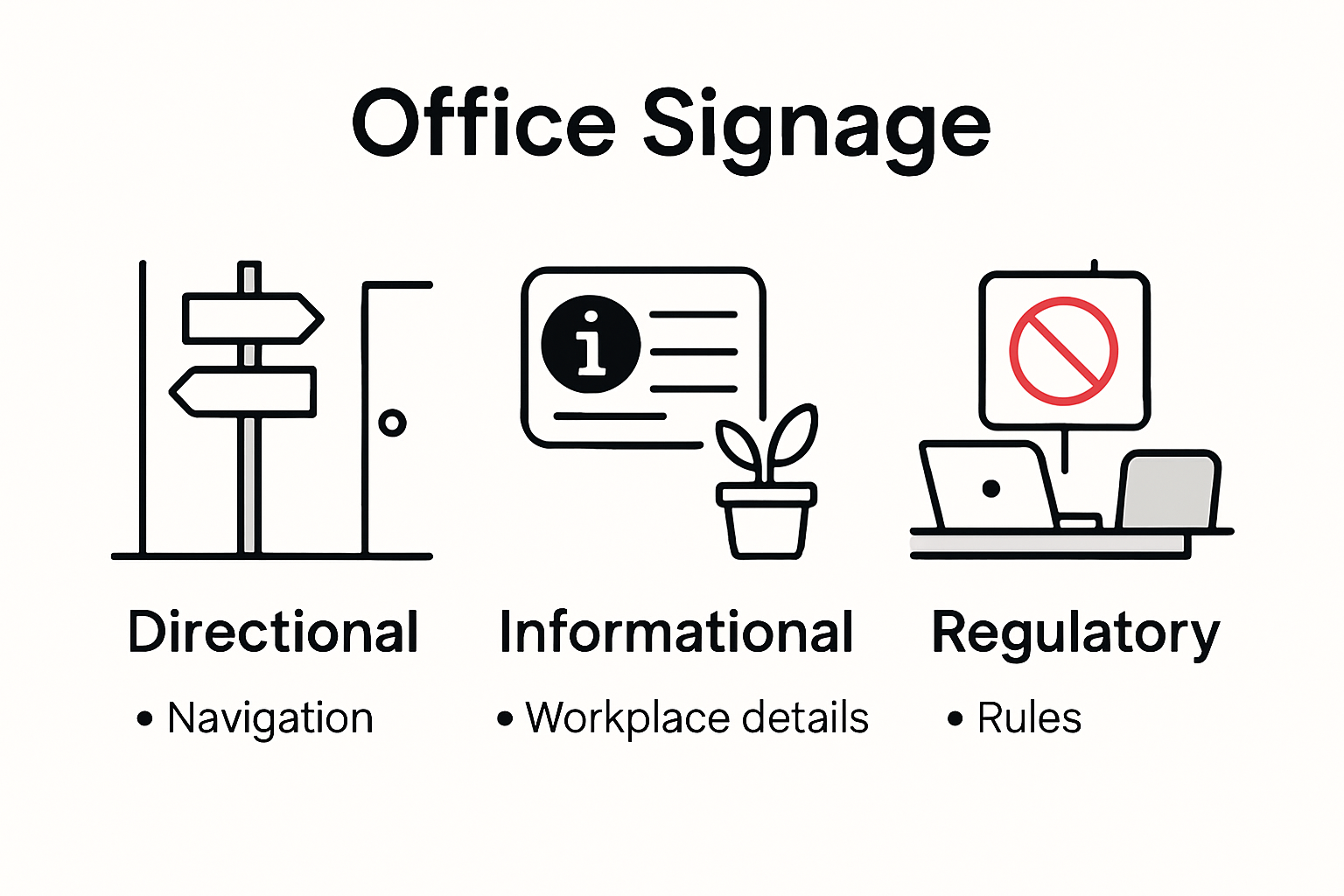
Categories of Office Signage
Workplace wayfinding signage encompasses several essential categories designed to meet diverse organizational needs. According to identity management experts, businesses typically require five fundamental signage types to ensure comprehensive communication and compliance.
Directional Signage
Directional signs provide crucial navigation assistance within office spaces. These signs guide employees and visitors through complex building layouts, helping them locate specific departments, meeting rooms, amenities, and emergency exits efficiently. Well-designed directional signage reduces confusion, minimizes time wasted searching for locations, and creates a more user-friendly environment.
Informational and Regulatory Signage
Safety and compliance signage serves multiple critical functions beyond simple direction. These signs communicate important workplace regulations, health and safety guidelines, and essential procedural information. Examples include fire exit instructions, occupancy limits, prohibited areas, and specific workplace conduct guidelines. Regulatory signs ensure legal compliance, protect employee well-being, and establish clear organizational expectations.
Strategic Signage Implementation
Effective office signage goes beyond basic functionality. It represents a strategic communication tool that reflects organizational culture, professionalism, and brand identity. Thoughtful signage design considers factors such as visual consistency, accessibility, readability, and alignment with overall interior design aesthetics.
By integrating comprehensive signage strategies, businesses can create more intuitive, welcoming, and efficient work environments. Whether guiding visitors, ensuring safety, or reinforcing brand messaging, office signage serves as a silent yet powerful communication mechanism that supports organizational objectives and enhances workplace experience.
Key considerations for successful office signage implementation include:
- Clarity: Use simple, easy-to-understand language and clear typography
- Visibility: Position signs strategically for maximum readability
- Consistency: Maintain uniform design language across all signage
- Accessibility: Ensure signs are readable for individuals with diverse abilities
Choosing the right signage approach transforms physical spaces from mere functional areas into dynamic, communicative environments that support organizational goals and user experiences.
To help visualise the different types and purposes of office signage, the table below summarises common categories and their main functions.
| Signage Type | Primary Purpose | Typical Examples |
|---|---|---|
| Directional | Navigation, wayfinding | Location guides, arrows, lift signs |
| Informational | Communicate instructions, guidelines | Policy signs, meeting room labels |
| Regulatory/Safety | Ensure compliance, highlight hazards | Fire exits, occupancy limits |
| Branding/Identity | Convey brand image, reinforce company values | Logo signs, mission statements |
| Accessibility | Support inclusivity for all users | Braille signs, high-contrast signs |
Key Benefits of Office Signage for Your Business
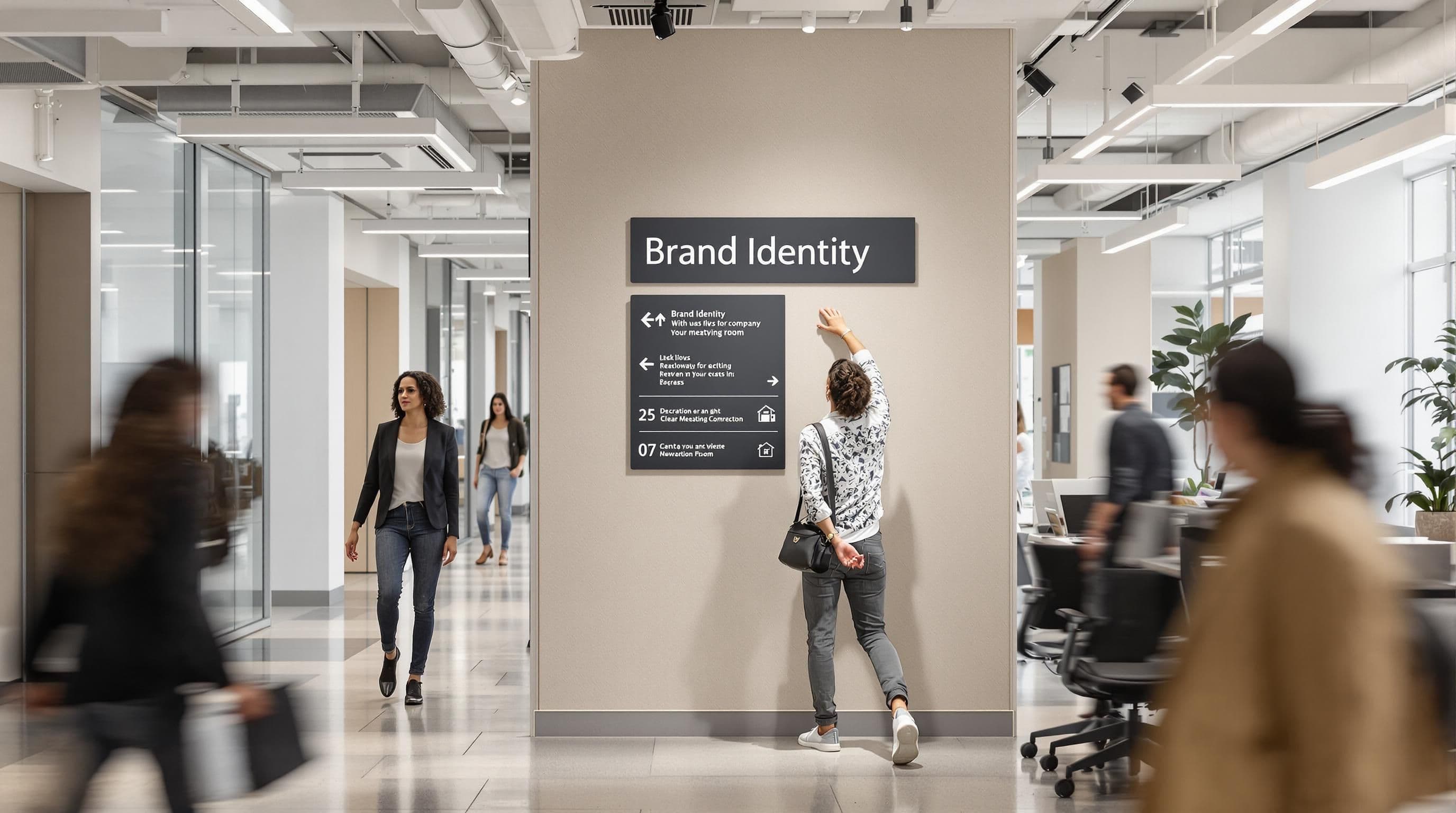
Office signage represents a powerful strategic asset that delivers multiple advantages beyond simple visual communication. By implementing thoughtful and professional signage solutions, businesses can transform their physical environments into more efficient, engaging, and productive workspaces.
Enhanced Professional Image and Brand Communication
Signage serves as a critical visual representation of your company’s professional identity and brand narrative. According to workplace design research, effective visual communication systems contribute significantly to organizational perception and employee engagement. Well-designed signs communicate organizational values, culture, and professionalism, creating immediate visual impressions for employees, clients, and visitors.
Companies can leverage signage to reinforce brand identity through consistent color schemes, typography, and design elements that align with their corporate visual guidelines. This strategic approach transforms mundane office spaces into dynamic brand environments that tell a compelling organizational story.
Workplace Safety and Compliance
Occupational safety guidelines emphasize the critical role of clear, comprehensive signage in maintaining workplace safety standards. Effective signage provides essential information about potential hazards, emergency protocols, and regulatory requirements. These signs protect employees by:
- Preventing Accidents: Highlighting potential workplace risks
- Guiding Emergency Responses: Clearly marking evacuation routes
- Ensuring Legal Compliance: Displaying mandatory health and safety information
- Reducing Workplace Liability: Demonstrating proactive safety management
Operational Efficiency and Communication
Beyond aesthetic and safety considerations, office signage plays a crucial role in optimizing workplace operations. Strategic signage helps streamline internal communications, reduce confusion, and improve overall workplace navigation. By providing clear, intuitive guidance, businesses can:
- Minimize time wasted searching for locations
- Improve visitor and employee orientation
- Create more intuitive workplace environments
- Support seamless interdepartmental interactions
The investment in comprehensive office signage goes far beyond simple visual markers. It represents a sophisticated communication strategy that enhances workplace functionality, reinforces brand identity, and demonstrates organizational commitment to professionalism, safety, and employee experience.
Carefully designed and strategically implemented signage transforms physical office spaces from mere functional areas into dynamic, communicative environments that support organizational objectives and create positive workplace experiences.
To make the benefits of office signage easy to scan, the following table outlines each key benefit area and its impact on your business.
| Benefit Area | Impact on Business |
|---|---|
| Professional Image & Branding | Enhances brand reputation and visual identity |
| Workplace Safety & Compliance | Reduces risk, ensures legal adherence, protects employees |
| Operational Efficiency | Streamlines wayfinding, saves time, improves internal communication |
| Employee/Visitor Experience | Creates a welcoming, intuitive, and positive environment |
| Legal Protection | Demonstrates compliance and reduces liability risks |
How to Choose the Right Office Signs in London
Selecting the appropriate office signage requires careful consideration of multiple factors that go beyond simple aesthetic preferences. For London businesses, the right signage can significantly impact workplace functionality, brand perception, and overall professional image.
Assessing Your Specific Business Needs
Before investing in office signs, businesses must conduct a comprehensive evaluation of their unique requirements. Design experts recommend analyzing several critical aspects including workspace layout, communication objectives, brand identity, and functional requirements. This strategic approach ensures that signage solutions are not just visually appealing but also pragmatically effective.
Key considerations include:
- The physical layout and architectural characteristics of your office space
- Specific communication and navigation challenges
- Branding guidelines and visual identity standards
- Budget constraints and long-term investment potential
Material and Design Selection
Workplace design research highlights the importance of selecting materials and designs that align with both functional requirements and aesthetic standards. London businesses must consider factors such as durability, readability, and environmental adaptability when choosing signage materials.
Recommended material considerations include:
- Durability: Select materials resistant to wear, environmental conditions, and frequent use
- Visibility: Choose high-contrast colours and legible typography
- Sustainability: Consider eco-friendly materials that reflect modern business values
- Maintenance: Opt for signs that are easy to clean and require minimal upkeep
Compliance and Professional Standards
London businesses must navigate complex regulatory requirements when implementing office signage. This involves ensuring compliance with local building regulations, accessibility standards, and health and safety guidelines. Professional signage solutions must address:
- Accessibility requirements for individuals with disabilities
- Fire safety and emergency navigation regulations
- Building code specifications for sign placement and design
- Corporate branding guidelines and professional presentation standards
Successful office signage goes beyond mere functional communication. It represents a sophisticated integration of design, functionality, and organizational identity. By carefully considering these multifaceted aspects, London businesses can create signage solutions that not only guide and inform but also enhance the overall workplace experience.
The investment in thoughtful, well-designed office signage reflects a commitment to professionalism, employee experience, and organizational excellence. Each sign becomes more than a simple directional tool – it is a strategic communication instrument that speaks volumes about your business’s values, attention to detail, and commitment to creating an exceptional working environment.
Office Signage Trends and Design Ideas for 2025
The evolving workplace environment demands innovative and adaptive signage solutions that go beyond traditional communication methods. As we move into 2025, office signage is transforming from mere functional displays to sophisticated, intelligent communication systems that reflect technological advancements and changing workplace dynamics.
Digital and Interactive Signage Technologies
Workplace technology experts predict a significant shift towards digital and interactive signage solutions. These advanced systems offer dynamic, real-time information updates, creating more engaging and responsive office environments. Digital displays can now integrate multiple functions, including:
- Room booking and scheduling displays
- Live company performance dashboards
- Interactive wayfinding systems
- Emergency communication platforms
These intelligent signage solutions leverage technologies like touchscreen interfaces, artificial intelligence, and cloud-based management systems to provide unprecedented levels of workplace communication and efficiency.
Sustainable and Eco-Friendly Design Approaches
Sustainable design research emphasizes the growing importance of environmentally conscious signage solutions. Businesses are increasingly prioritizing materials and design approaches that minimize environmental impact while maintaining high aesthetic and functional standards. Key sustainable signage trends include:
- Using recycled and biodegradable materials
- Implementing energy-efficient digital displays
- Choosing low-emission production techniques
- Designing signs with long-term durability to reduce waste
Modern office signage now represents a holistic approach that balances visual communication, technological innovation, and environmental responsibility.
Personalization and Brand-Centric Design
The future of office signage lies in creating deeply personalized and brand-aligned visual communication systems. Innovative design approaches are moving beyond generic solutions to develop signage that reflects unique organizational cultures and identities. This trend involves:
- Custom color palettes matching corporate branding
- Integrated design elements that tell the company’s story
- Modular signage systems allowing flexible configurations
- Incorporating local architectural and cultural elements
Signage is no longer just about providing information but about creating immersive experiences that communicate organizational values and enhance workplace engagement.
As we progress into 2025, office signage will continue to evolve from static communication tools to dynamic, intelligent systems that support workplace productivity, sustainability, and brand identity. Businesses that embrace these innovative approaches will create more adaptive, engaging, and forward-thinking work environments that respond to the complex needs of modern organizational communication.
Frequently Asked Questions
What is office signage?
Office signage refers to visual communication tools used in workplace environments to provide direction, information, branding, and ensure safety compliance. It plays a critical role in creating functional and professional workspaces.
Why is office signage important for businesses in London?
Office signage is essential for businesses in London as it enhances professional image, ensures safety compliance, improves operational efficiency, and reinforces brand identity, contributing to a better overall workplace experience.
What types of office signage are available?
There are several types of office signage, including directional signage, informational signs, regulatory signs, branding elements, and accessibility signage, each serving specific purposes to enhance communication and navigation within the workspace.
How can businesses choose the right office signage?
To choose the right office signage, businesses should assess their specific needs by considering office layout, communication objectives, branding requirements, and relevant compliance regulations. Selecting durable, visible materials aligned with the brand’s aesthetic is also crucial.
Ready to Transform Your London Office with Expert Signage Solutions?
Struggling to create a professional image or worried about compliance in your workplace? The guide above uncovers how office signage is far more than labels on walls. It highlights real challenges, from confusing layouts to meeting strict safety standards and missing opportunities for brand impact. Building trust with clients and ensuring staff wellbeing starts with the right visual communication. If these issues sound familiar, your business can benefit from custom, expertly installed signage.

Experience the difference a tailored approach can make. Our team at PromoSigns specialises in designing, producing and installing impactful office signs across London, Essex and Kent. We use only high-quality materials, innovative processes and work closely with you to ensure your workspace stands out for all the right reasons. Visit PromoSigns now to request your free design consultation and let us help you gain an edge in 2025. Your office deserves to be clear, compliant and truly memorable.
