
Signage is everywhere in London, painting stories across shopfronts and guiding countless commuters through busy streets. Think you know its impact? Across retail, hospitality, and events, effective signage leads to up to a 30 percent increase in foot traffic and sales. While many treat it as little more than decorative backdrop, it’s now one of the most influential investments a business can make—reshaping brand identity and transforming everyday customer experiences in ways you would not expect.
Table of Contents
Table of Contents
- Building Brand Identity Through Signage
- Driving Customer Engagement and Sales
- Signage Solutions for Modern London Spaces
- Maximising Value at Events and Exhibitions
Quick Summary
| Takeaway | Explanation |
|---|---|
| Signage builds brand identity. | Effective signage communicates a business’s core values and identity, serving as a crucial touchpoint for customer perception. |
| Consistent design enhances recognition. | Uniform design elements across all signage improve brand recognition and credibility, making it essential for businesses to maintain a cohesive visual strategy. |
| Signage drives customer engagement. | Well-designed signage influences first impressions and transforms viewer interest into sales, acting as a powerful marketing tool. |
| Integration of technology is vital. | Modern signage can include interactive features, enhancing customer engagement and providing real-time updates, bridging physical and digital experiences. |
| Events demand strategic signage solutions. | At exhibitions, effective signage enhances the attendee experience, guiding movement and reinforcing brand narratives, leading to measurable business impact. |
Building Brand Identity Through Signage
Signage represents far more than a simple directional tool in 2025. It has transformed into a powerful visual communication strategy that communicates a business’s core identity, values, and professional ethos. Modern businesses understand that every visual element contributes to their brand narrative, with signage serving as a critical touchpoint for customer perception and engagement.
Visual Storytelling Through Design
Effective signage acts as a silent brand ambassador, communicating complex messages without uttering a single word. According to University of the Arts London, a cohesive visual identity plays a crucial role in communicating an organisation’s personality and values through bold, simple, and direct design elements. This means businesses must carefully consider every aspect of their signage design.
Typography, colour palette, imagery, and overall aesthetic must align seamlessly with the brand’s core messaging. For instance, a tech startup might opt for sleek, minimalist signage with clean lines and contemporary fonts, while a traditional artisan bakery could choose warm, rustic typography that reflects their handcrafted approach. Check out our guide on professional signage design.
Strategic Brand Consistency
Below is a table summarising the key elements businesses should consider when aiming for consistent signage that enhances brand identity and recognition.
| Element | Description | Example |
|---|---|---|
| Colour Harmony | Using identical colour schemes across all signage | Red & white across shopfronts & flyers |
| Typography Uniformity | Maintaining consistent font styles and weights | Sans-serif for modern tech brands |
| Logo Placement | Ensuring logo positioning follows established guidelines | Top-left on exterior and interior signs |
| Material Selection | Choosing materials that reflect brand quality & ethos | Wood for rustic, glass for premium |
Businesses must develop a comprehensive signage strategy that maintains consistent visual language across different platforms. This might involve:
- Colour Harmony: Using identical colour schemes across all signage
- Typography Uniformity: Maintaining consistent font styles and weights
- Logo Placement: Ensuring logo positioning follows established guidelines
- Material Selection: Choosing materials that reflect brand quality and ethos
These strategic decisions transform signage from mere functional elements into powerful brand communication tools. By investing in thoughtful, professionally designed signage, businesses create memorable visual experiences that resonate with their target audience.
Beyond Aesthetics: Functional Brand Communication
Signage in 2025 transcends pure aesthetic appeal. It serves as an interactive brand touchpoint that communicates values, professionalism, and attention to detail. According to University of Cambridge’s brand resources, maintaining clear and consistent signage is essential for preserving brand integrity.
For London businesses, this means signage must not only look impressive but also function seamlessly within the urban environment. Whether it’s a restaurant, retail outlet, or professional service provider, the signage must reflect the brand’s unique personality while providing clear, accessible information.
In an increasingly competitive marketplace, businesses cannot afford to treat signage as an afterthought. It is a strategic investment in brand perception, customer engagement, and long-term market positioning. Thoughtful, professionally designed signage becomes a silent yet powerful communicator of a business’s quality, values, and commitment to excellence.
Driving Customer Engagement and Sales
In the competitive business environment of 2025, signage has emerged as a powerful strategic tool for driving customer engagement and directly influencing sales performance. Modern businesses recognise that well-designed signage is not merely a passive communication medium but an active marketing instrument that can transform potential customer interactions.
Visual Attraction and First Impressions
The first moments of customer interaction are critically important, and signage plays a pivotal role in creating compelling first impressions. Research from the Federal Highway Administration demonstrates that effective signage significantly enhances wayfinding, reduces customer confusion, and encourages entrance into businesses. This initial visual engagement can be the difference between a potential customer walking past or stepping inside.
Businesses must strategically design signs that not only communicate information but also create an emotional connection. Colour psychology, typography, and visual hierarchy become crucial elements in crafting signage that attracts and retains customer attention. Learn more about strategic customer attraction techniques.
Converting Visual Interest into Sales
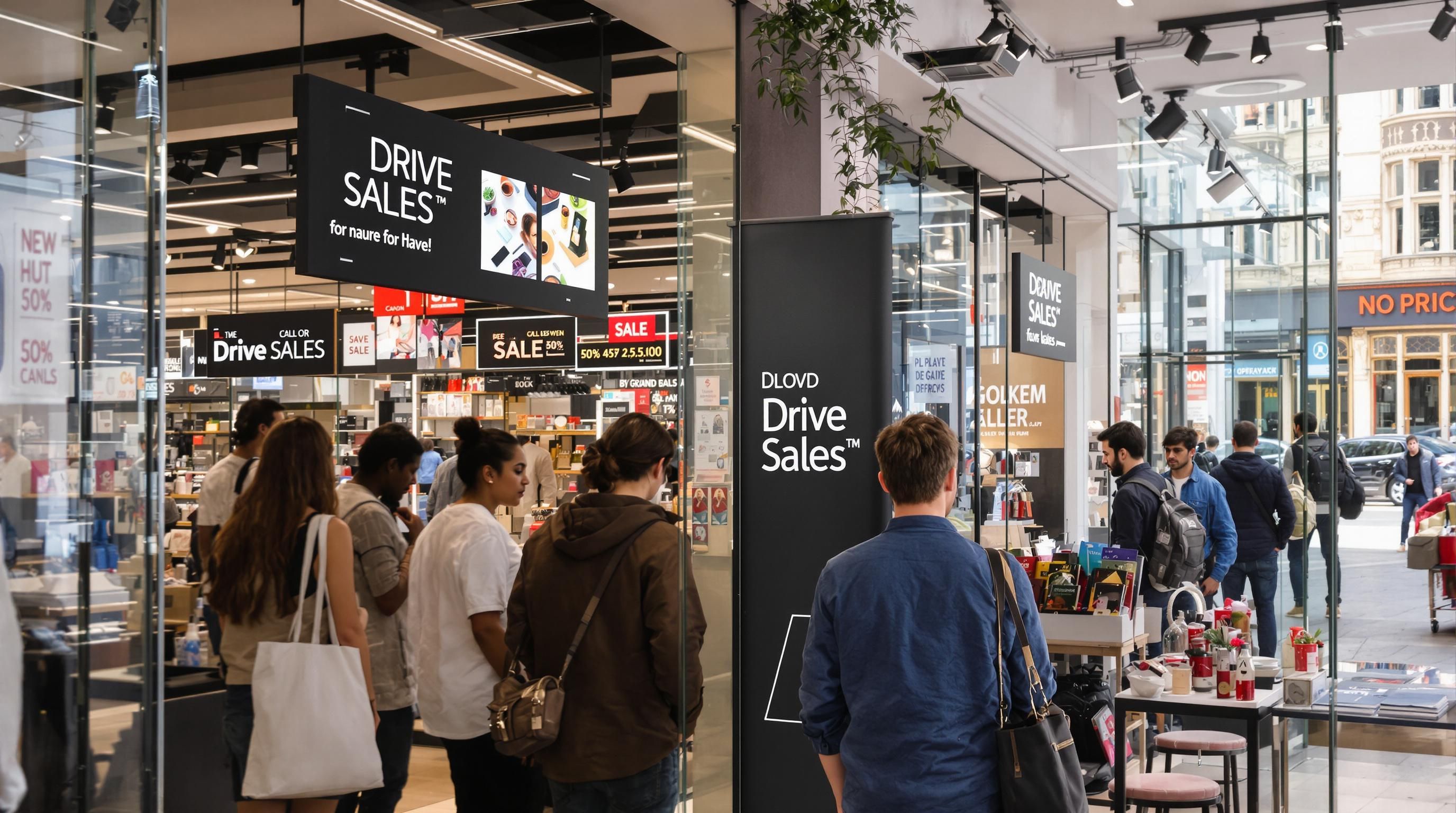
To give a quick reference, the following table summarises key strategies for using signage to convert customer interest into actual sales.
| Strategy | Key Focus | Example Application |
|---|---|---|
| Clear Messaging | Simple, readable text with immediate value | “Sale Today! 20% Off All Footwear” |
| Strategic Placement | Positioning at highest foot traffic points | Pavement signs near store entrance |
| Dynamic Content | Updating content to reflect current promos | Digital menus updating lunch specials |
| Visual Hierarchy | Guiding attention to crucial purchase information | Larger font for price, smaller for descriptions |
Signage serves as a silent salesperson, communicating value propositions, promotions, and brand messages without verbal interaction. Strategic placement and design can directly influence purchasing decisions. For instance, clear pricing information, promotional details, and product highlights displayed through professional signage can trigger impulse purchases and increase average transaction values.
Key strategies for sales-driven signage include:
- Clear Messaging: Concise, readable text that communicates immediate value
- Strategic Placement: Positioning signs where customer traffic is highest
- Dynamic Content: Using changeable elements to highlight current offers
- Visual Hierarchy: Designing signs that guide customer attention to key information
Technological Integration and Interactive Experiences
In 2025, signage is no longer static but an interactive platform for customer engagement. Digital signage with QR codes, augmented reality features, and real-time updates transforms traditional signage into a dynamic communication channel. These technologies enable businesses to provide instant information, personalised recommendations, and seamless digital interactions.
For London businesses, this means creating multi-dimensional signage experiences that go beyond traditional marketing approaches. Interactive window displays, touch-enabled information boards, and signage that integrates with mobile technologies represent the cutting edge of customer engagement strategies.
The power of modern signage lies in its ability to communicate not just information, but experience. It bridges the gap between physical and digital marketing, creating immersive brand interactions that resonate with customers on multiple levels. By investing in sophisticated, strategically designed signage, businesses can transform casual observers into engaged customers and drive sustainable sales growth.
Signage Solutions for Modern London Spaces
The urban landscape of London in 2025 demands innovative signage solutions that seamlessly blend functionality, design, and technological sophistication. Modern businesses require adaptable signage strategies that respond to the dynamic and competitive metropolitan environment, addressing unique spatial challenges while maintaining aesthetic excellence.
Adaptive Design for Diverse Urban Environments
London’s architectural diversity presents unique signage challenges, requiring solutions that can harmonise with varied building styles and urban contexts. Explore our comprehensive guide to office signage design to understand how businesses can create impactful visual communication across different spaces.
Signage must now accommodate multiple functional requirements: wayfinding, branding, information delivery, and aesthetic integration. This means developing flexible design approaches that can work across different settings from historic buildings to contemporary glass structures. Materials selection becomes crucial, with options like lightweight aluminium, tempered glass, and sustainable composites offering versatility and durability.
Technological Integration and Smart Signage
Modern London spaces increasingly demand intelligent signage solutions that go beyond traditional static displays. Digital signage technologies enable real-time updates, interactive experiences, and dynamic content management. Businesses can now implement touchscreen interfaces, augmented reality elements, and networked display systems that provide instantaneous information and engage viewers more comprehensively.
Key technological features include:
- Climate Adaptive Displays: Signs that adjust brightness and visibility based on ambient light conditions
- Network Connected Systems: Centrally managed digital signage networks
- Multilingual Information Displays: Automatic language switching capabilities
- Accessibility Features: High contrast options and screen reader compatibility
Sustainable and Regulatory Compliant Solutions
In 2025, signage solutions must address growing environmental concerns and strict urban planning regulations. Businesses need signage that not only communicates effectively but also demonstrates environmental responsibility. This means selecting eco-friendly materials, implementing energy-efficient digital displays, and ensuring compliance with local planning guidelines.
The most advanced signage solutions now incorporate:
- Recycled and recyclable materials
- Low energy consumption technologies
- Modular designs that facilitate easy updates and minimal waste
- Compliance with accessibility and planning regulations
For London businesses, signage represents more than a simple communication tool. It is a sophisticated intersection of design, technology, and urban functionality. By investing in intelligent, adaptable signage solutions, companies can create powerful visual narratives that resonate within the complex urban ecosystem of modern London.
Maximising Value at Events and Exhibitions
Events and exhibitions represent critical opportunities for businesses to showcase their brand, engage with potential clients, and create lasting impressions. In 2025, signage has become a strategic tool that transforms these professional gatherings from mere networking spaces into immersive brand experiences.
Strategic Visual Communication
Research from academic studies demonstrates that effective environmental signage significantly enhances wayfinding and visitor engagement, reducing cognitive load and increasing attendee satisfaction. For businesses participating in events, this means developing signage that goes beyond basic information delivery to create compelling narrative experiences.
Successful event signage must accomplish multiple objectives simultaneously: attracting attention, communicating key messages, guiding visitor movement, and reinforcing brand identity. Explore our comprehensive exhibition signage guide to understand how professional design can transform your event presence.
Innovative Design and Technology Integration
Below is a table highlighting innovative event signage technologies and their primary benefits described in this section.
| Technology | Feature | Benefit |
|---|---|---|
| Interactive Touchscreens | Detailed, explorable product info | Increases visitor engagement |
| QR Code Integration | Instant access to digital content | Streamlines information delivery |
| Adaptive Display Technologies | Content adapts to audience demographics | Personalised attendee experiences |
| Holographic Presentation | Immersive brand storytelling | Creates standout exhibitions and memories |
Modern event signage leverages cutting-edge technologies to create interactive and memorable experiences. Digital displays, augmented reality interfaces, and real-time content management systems enable businesses to deliver dynamic, personalised information that adapts to audience interactions.
Key technological innovations include:
- Interactive Touchscreens: Allowing visitors to explore detailed product information
- QR Code Integration: Enabling instant digital content access
- Adaptive Display Technologies: Changing content based on audience demographics
- Holographic Presentation Systems: Creating immersive brand storytelling experiences
Measuring Event Impact and Engagement
In 2025, event signage is not just about visual appeal but also about generating measurable business outcomes. Advanced signage solutions now incorporate analytics capabilities, tracking visitor interactions, measuring engagement levels, and providing real-time insights into audience interests.
Businesses can leverage these technologies to:
- Collect quantitative data on visitor interactions
- Generate immediate lead capture opportunities
- Create personalised follow-up communication strategies
- Understand audience behavior and preferences
Successful event signage transforms professional gatherings from passive experiences into active engagement platforms. By investing in sophisticated, technology-driven signage solutions, businesses can create memorable brand interactions that extend far beyond the physical event space.
For London businesses, this means recognising that event signage represents a critical strategic asset. It is no longer a passive communication tool but an active marketing instrument that can generate tangible business value, drive meaningful connections, and differentiate brands in increasingly competitive professional environments.
Frequently Asked Questions
What is the importance of signage for businesses in London in 2025?
Effective signage is crucial for businesses in London as it significantly enhances brand identity, drives customer engagement, and can lead to increased foot traffic and sales, resulting in up to a 30 percent boost in performance.
How can signage impact customer engagement?
Well-designed signage influences first impressions and helps convert visual interest into sales by effectively communicating value propositions and promotions, making it a powerful marketing tool.
What are the key components of effective signage design?
Effective signage design includes a cohesive visual identity that aligns typography, colour palette, imagery, and material selection with the brand’s core messaging to ensure consistent brand recognition and credibility.
How do modern technological integrations enhance signage?
Modern signage incorporates digital features such as QR codes and interactive displays, which provide real-time information and personalised experiences, bridging the gap between physical and digital environments.
Transform Your London Business With the Right Signage Partner
Are you struggling to stand out on the high street or in busy urban areas? The article highlights how many businesses in London miss out on the real impact of signage, treating it as decorative rather than a powerful tool for attracting customers and building a memorable identity. If you share these frustrations or want to make the most of advances in technology and design, you need signage that is both visually compelling and functionally smart.

Give your business an unmissable advantage for 2025. Trust the specialists at PromoSigns who provide custom shop signs, illuminated displays, and large format printing tailored to London’s vibrant landscape. Explore how our professional signage design services can help you build brand identity and convert interest into sales. Contact us now to make your brand the one people remember.
Recommended
- Signage and Brand Recognition: Boost Your London Business in 2025 – PromoSigns.co.uk
- Event Signage Importance in 2025: Boosting Business in London – PromoSigns.co.uk
- Signage Design Principles for London Businesses in 2025 – PromoSigns.co.uk
- Signage for Office Interiors: 2025 Guide for London Businesses – PromoSigns.co.uk
