
Event signage often gets treated like an afterthought with most planners focusing mainly on decorations or branding. Yet over 70 percent of event attendees rely on clear signage to navigate the venue and enjoy their experience. Most surprising of all, the best signage is not just about good looks or logos. It silently steers crowd flow, shapes first impressions, and can be the difference between a smooth event and total confusion.
Table of Contents
- Step 1: Define Your Event Signage Goals
- Step 2: Choose Appropriate Signage Materials
- Step 3: Design Engaging Signage Graphics
- Step 4: Install Signage Securely at Event Location
- Step 5: Evaluate Signage Effectiveness Post-Event
Table of Contents
Quick Summary
| Key Point | Explanation |
|---|---|
| 1. Define clear signage goals | Establish specific objectives for your signage, such as wayfinding or brand visibility, to guide design and effectiveness. |
| 2. Choose suitable materials | Select materials based on environmental conditions and budget to enhance durability and communication appeal. |
| 3. Design for clarity and engagement | Use readable fonts, effective colour contrasts, and a clear hierarchy to ensure signage conveys key messages effectively. |
| 4. Ensure proper installation | Position signs thoughtfully at eye level and secure them well to maximize visibility and prevent accidents. |
| 5. Evaluate signage post-event | Gather feedback and analyse data to assess effectiveness and identify areas for improvement in future events. |
Step 1: Define Your Event Signage Goals
Defining your event signage goals is the critical foundation that transforms basic signage into a strategic communication tool. Before purchasing or designing any temporary event signage, you must develop a crystal clear understanding of what you want to achieve. This initial planning stage determines the effectiveness, impact, and return on investment for your entire signage strategy.
Successful temporary event signage begins with precise objective setting. Consider the primary purpose of your signage: Are you aiming to direct attendees through a complex venue, create brand awareness, provide essential event information, or generate excitement and engagement? Each goal requires a different visual and strategic approach. For instance, wayfinding signage demands clarity and simplicity, while promotional signage needs to be visually striking and memorable.
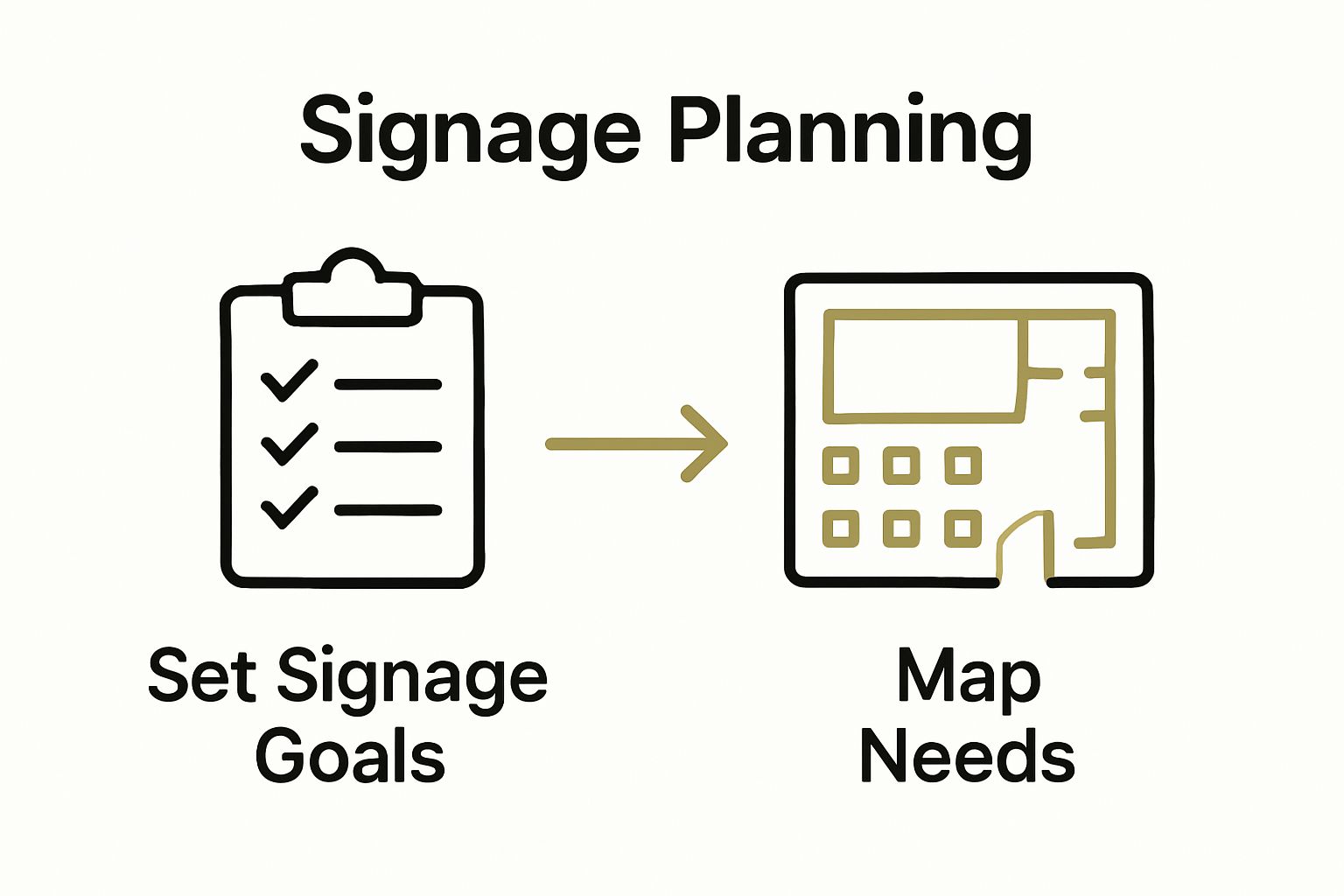
To effectively define your event signage goals, start by conducting a comprehensive assessment of your event’s unique requirements. Map out the specific communication challenges you need to solve. Will you need signs to manage crowd flow, highlight sponsor information, indicate restricted areas, or showcase event schedules? Understanding these nuanced needs helps you design signage that goes beyond mere decoration and becomes an integral part of your event’s communication infrastructure.
Carefully document your goals using specific, measurable criteria. Instead of vague objectives like “make signs look nice,” develop concrete targets such as “ensure 90% of attendees can navigate the venue within 5 minutes” or “increase brand visibility by featuring company logo in at least 3 high-traffic areas.” This precision allows you to later evaluate the signage’s performance and effectiveness. Read more about planning a comprehensive signage strategy to refine your approach and maximize impact.
Key verification indicators that you have successfully completed this step include:
- A clear, written document outlining specific signage objectives
- Identified target audience and their potential information needs
- Preliminary sketch or conceptual design reflecting your communication goals
- Budget allocation for signage production and placement
- List of potential design and messaging requirements
Remember, temporary event signage is more than a visual accessory—it’s a strategic communication tool that can significantly enhance attendee experience, manage logistics, and reinforce your event’s professional image.
Step 2: Choose Appropriate Signage Materials
Selecting the right materials for your temporary event signage is a critical decision that directly impacts durability, visual appeal, and overall event communication effectiveness. Your material choices will determine how well your signage performs under various environmental conditions and how effectively it communicates your message.
The material selection process requires careful consideration of multiple factors beyond simple aesthetics. Environmental conditions play a significant role in determining the most suitable signage materials. Indoor events with controlled temperatures and minimal moisture demand different materials compared to outdoor events exposed to wind, rain, sunlight, and temperature fluctuations. Lightweight materials like coroplast and foam board work excellently for short indoor events, while weatherproof options like aluminium composite panels or high-density PVC provide superior durability for outdoor installations.
Budget considerations also significantly influence material selection. While premium materials offer enhanced durability and professional appearance, they come with higher production costs. Vinyl banners represent an economical choice for temporary signage, offering reasonable weather resistance and affordable printing options. For events requiring high-impact visuals across large spaces, working with specialists in large format printing London ensures colour vibrancy and structural integrity. Fabric materials provide another versatile alternative, especially for events requiring elegant, wrinkle-resistant displays that can be easily transported and quickly installed. Explore our comprehensive guide on choosing outdoor signage to understand the nuanced considerations for material selection.
When evaluating material options, consider these critical performance characteristics:
- Durability and resistance to environmental stress
- Print quality and colour vibrancy
- Weight and ease of transportation
- Installation complexity
- Potential for reuse or recycling
- Cost-effectiveness
The verification process for successful material selection involves conducting a comprehensive assessment that matches your specific event requirements. Create a detailed comparison chart evaluating potential materials against your event’s unique needs. Test sample materials under conditions similar to your event environment, checking for colour stability, structural integrity, and overall performance.
Remember that material selection is not just a technical decision but a strategic communication choice. The right material will enhance your event’s professional image, ensure clear message delivery, and create a lasting impression on your audience.
| Material | Ideal Use | Durability | Install Complexity | Cost Effectiveness |
|---|---|---|---|---|
| Coroplast | Indoor, short-term | Low-Moderate | Easy | High |
| Foam Board | Indoor, short-term | Low | Easy | High |
| Aluminium Composite Panel | Outdoor, long-term | High | Moderate | Moderate |
| High-Density PVC | Outdoor, long-term | High | Moderate | Moderate |
| Vinyl Banner | Indoor/Outdoor, temp. | Moderate | Easy | High |
| Fabric | Indoor, transportable | Moderate | Easy | Moderate |
Step 3: Design Engaging Signage Graphics
Creating compelling graphic designs for temporary event signage requires a strategic approach that balances visual appeal with clear communication. Your graphics must instantly capture attention, convey essential information, and reflect your event’s professional identity within seconds of viewer interaction.
Graphic design for event signage is more than aesthetic decoration—it is a powerful communication tool that guides, informs, and engages your audience. Typography plays a crucial role in this process. Select fonts that are both readable from a distance and aligned with your event’s tone. Bold, sans-serif typefaces work exceptionally well for wayfinding and informational signs, while more sophisticated serif or script fonts might suit formal or creative events. Ensure your text size is proportional to the sign’s dimensions, maintaining legibility across different viewing distances.
Colour selection is another fundamental element that can dramatically impact your signage’s effectiveness. Choose a colour palette that not only aligns with your brand identity but also provides sufficient contrast for readability. Dark text on light backgrounds or vice versa ensures maximum visibility. Consider the psychological impact of colours—blues communicate professionalism, yellows suggest energy, while greens imply calm and sustainability. Explore our comprehensive guide on graphic design tips for business signage to refine your visual strategy.
When designing graphics, prioritise information hierarchy. Your most critical messages should be prominently displayed, using size, colour, and placement to guide viewers’ attention. Incorporate white space strategically to prevent visual clutter and help key information stand out. Include only essential details to avoid overwhelming viewers, remembering that temporary event signage operates on limited viewer engagement time. For trade shows, product launches, and exhibitions, partnering with a team experienced in event graphics London ensures your visuals hit the mark every time.
Key verification criteria for successful graphic design include:
- Clear and legible text at multiple viewing distances
- Consistent use of brand colours and typography
- Visual hierarchy that guides viewer attention effectively
- Graphics that remain comprehensible from various angles
- Design elements that complement the chosen signage materials
Remember that graphic design is an iterative process. Create multiple design drafts, seek feedback from colleagues or target audience representatives, and be prepared to refine your approach. Your goal is to create signage graphics that are not just seen, but understood and remembered.

Straipsnis apie: Temporary event signage — 5 žingsniai (tikslai, medžiagos, dizainas, montavimas, vertinimas).
Išorinių nuorodų nėra — visi esami linkai jau yra į promosigns.co.uk (blog postai). Reikia tik pridėti 5 vidines nuorodas iš pagrindinio URL sąrašo.
5 tinkamiausios pagal temą:
- event graphics London → /event-graphics-london/
- exhibition stands London → /exhibition-stands-london/
- banner printing London → /banner-printing-london/
- large format printing London → /large-format-printing-london/
- shop signs London → /shop-signs-london/
TL;DR nėra — straipsnis prasideda tiesiogiai.
Event signage often gets treated like an afterthought with most planners focusing mainly on decorations or branding. Yet over 70 percent of event attendees rely on clear signage to navigate the venue and enjoy their experience. Most surprising of all, the best signage is not just about good looks or logos. It silently steers crowd flow, shapes first impressions, and can be the difference between a smooth event and total confusion.
Table of Contents
- Step 1: Define Your Event Signage Goals
- Step 2: Choose Appropriate Signage Materials
- Step 3: Design Engaging Signage Graphics
- Step 4: Install Signage Securely at Event Location
- Step 5: Evaluate Signage Effectiveness Post-Event
Quick Summary
| Key Point | Explanation |
|---|---|
| 1. Define clear signage goals | Establish specific objectives for your signage, such as wayfinding or brand visibility, to guide design and effectiveness. |
| 2. Choose suitable materials | Select materials based on environmental conditions and budget to enhance durability and communication appeal. |
| 3. Design for clarity and engagement | Use readable fonts, effective colour contrasts, and a clear hierarchy to ensure signage conveys key messages effectively. |
| 4. Ensure proper installation | Position signs thoughtfully at eye level and secure them well to maximize visibility and prevent accidents. |
| 5. Evaluate signage post-event | Gather feedback and analyse data to assess effectiveness and identify areas for improvement in future events. |
Step 1: Define Your Event Signage Goals
Defining your event signage goals is the critical foundation that transforms basic signage into a strategic communication tool. Before purchasing or designing any temporary event signage, you must develop a crystal clear understanding of what you want to achieve. This initial planning stage determines the effectiveness, impact, and return on investment for your entire signage strategy.
Successful temporary event signage begins with precise objective setting. Consider the primary purpose of your signage: Are you aiming to direct attendees through a complex venue, create brand awareness, provide essential event information, or generate excitement and engagement? Each goal requires a different visual and strategic approach. For instance, wayfinding signage demands clarity and simplicity, while promotional signage needs to be visually striking and memorable.
To effectively define your event signage goals, start by conducting a comprehensive assessment of your event’s unique requirements. Map out the specific communication challenges you need to solve. Will you need signs to manage crowd flow, highlight sponsor information, indicate restricted areas, or showcase event schedules? Understanding these nuanced needs helps you design signage that goes beyond mere decoration and becomes an integral part of your event’s communication infrastructure.
Carefully document your goals using specific, measurable criteria. Instead of vague objectives like “make signs look nice,” develop concrete targets such as “ensure 90% of attendees can navigate the venue within 5 minutes” or “increase brand visibility by featuring company logo in at least 3 high-traffic areas.” This precision allows you to later evaluate the signage’s performance and effectiveness. Read more about planning a comprehensive signage strategy to refine your approach and maximize impact.
Key verification indicators that you have successfully completed this step include:
- A clear, written document outlining specific signage objectives
- Identified target audience and their potential information needs
- Preliminary sketch or conceptual design reflecting your communication goals
- Budget allocation for signage production and placement
- List of potential design and messaging requirements
Remember, temporary event signage is more than a visual accessory—it’s a strategic communication tool that can significantly enhance attendee experience, manage logistics, and reinforce your event’s professional image.
Step 2: Choose Appropriate Signage Materials
Selecting the right materials for your temporary event signage is a critical decision that directly impacts durability, visual appeal, and overall event communication effectiveness. Your material choices will determine how well your signage performs under various environmental conditions and how effectively it communicates your message.
The material selection process requires careful consideration of multiple factors beyond simple aesthetics. Environmental conditions play a significant role in determining the most suitable signage materials. Indoor events with controlled temperatures and minimal moisture demand different materials compared to outdoor events exposed to wind, rain, sunlight, and temperature fluctuations. Lightweight materials like coroplast and foam board work excellently for short indoor events, while weatherproof options like aluminium composite panels or high-density PVC provide superior durability for outdoor installations.
Budget considerations also significantly influence material selection. While premium materials offer enhanced durability and professional appearance, they come with higher production costs. Vinyl banners represent an economical choice for temporary signage, offering reasonable weather resistance and affordable printing options. For events requiring high-impact visuals across large spaces, working with specialists in large format printing London ensures colour vibrancy and structural integrity. Fabric materials provide another versatile alternative, especially for events requiring elegant, wrinkle-resistant displays that can be easily transported and quickly installed. Explore our comprehensive guide on choosing outdoor signage to understand the nuanced considerations for material selection.
When evaluating material options, consider these critical performance characteristics:
- Durability and resistance to environmental stress
- Print quality and colour vibrancy
- Weight and ease of transportation
- Installation complexity
- Potential for reuse or recycling
- Cost-effectiveness
The verification process for successful material selection involves conducting a comprehensive assessment that matches your specific event requirements. Create a detailed comparison chart evaluating potential materials against your event’s unique needs. Test sample materials under conditions similar to your event environment, checking for colour stability, structural integrity, and overall performance.
Remember that material selection is not just a technical decision but a strategic communication choice. The right material will enhance your event’s professional image, ensure clear message delivery, and create a lasting impression on your audience.
| Material | Ideal Use | Durability | Install Complexity | Cost Effectiveness |
|---|---|---|---|---|
| Coroplast | Indoor, short-term | Low-Moderate | Easy | High |
| Foam Board | Indoor, short-term | Low | Easy | High |
| Aluminium Composite Panel | Outdoor, long-term | High | Moderate | Moderate |
| High-Density PVC | Outdoor, long-term | High | Moderate | Moderate |
| Vinyl Banner | Indoor/Outdoor, temp. | Moderate | Easy | High |
| Fabric | Indoor, transportable | Moderate | Easy | Moderate |
Step 3: Design Engaging Signage Graphics
Creating compelling graphic designs for temporary event signage requires a strategic approach that balances visual appeal with clear communication. Your graphics must instantly capture attention, convey essential information, and reflect your event’s professional identity within seconds of viewer interaction.
Graphic design for event signage is more than aesthetic decoration—it is a powerful communication tool that guides, informs, and engages your audience. Typography plays a crucial role in this process. Select fonts that are both readable from a distance and aligned with your event’s tone. Bold, sans-serif typefaces work exceptionally well for wayfinding and informational signs, while more sophisticated serif or script fonts might suit formal or creative events. Ensure your text size is proportional to the sign’s dimensions, maintaining legibility across different viewing distances.
Colour selection is another fundamental element that can dramatically impact your signage’s effectiveness. Choose a colour palette that not only aligns with your brand identity but also provides sufficient contrast for readability. Dark text on light backgrounds or vice versa ensures maximum visibility. Consider the psychological impact of colours—blues communicate professionalism, yellows suggest energy, while greens imply calm and sustainability. Explore our comprehensive guide on graphic design tips for business signage to refine your visual strategy.
When designing graphics, prioritise information hierarchy. Your most critical messages should be prominently displayed, using size, colour, and placement to guide viewers’ attention. Incorporate white space strategically to prevent visual clutter and help key information stand out. Include only essential details to avoid overwhelming viewers, remembering that temporary event signage operates on limited viewer engagement time. For trade shows, product launches, and exhibitions, partnering with a team experienced in event graphics London ensures your visuals hit the mark every time.
Key verification criteria for successful graphic design include:
- Clear and legible text at multiple viewing distances
- Consistent use of brand colours and typography
- Visual hierarchy that guides viewer attention effectively
- Graphics that remain comprehensible from various angles
- Design elements that complement the chosen signage materials
Remember that graphic design is an iterative process. Create multiple design drafts, seek feedback from colleagues or target audience representatives, and be prepared to refine your approach. Your goal is to create signage graphics that are not just seen, but understood and remembered.
Step 4: Install Signage Securely at Event Location
Installing temporary event signage requires meticulous planning, precision, and a strategic approach to ensure maximum visibility, safety, and effectiveness. Your installation process will directly impact how attendees interact with and perceive your signage, making this step crucial to overall event communication success.
Site assessment is the foundational step of secure signage installation. Before placing any signs, thoroughly examine the event location, identifying optimal positioning that maximises visibility while avoiding potential obstructions. Consider factors like foot traffic patterns, lighting conditions, and potential environmental challenges. Indoor venues might require different mounting techniques compared to outdoor spaces, with considerations for wall surfaces, floor layouts, and structural limitations. Professional installers recommend creating a detailed site map marking precise sign locations, ensuring a systematic and efficient installation process.
Choosing appropriate mounting hardware is equally critical. Different signage materials and locations demand specific attachment methods. Lightweight materials like foam board might require simple adhesive mounting, while heavier aluminium or acrylic signs need more robust solutions such as brackets, stands, or professional mounting systems. Always prioritise safety by ensuring signs are securely fastened to prevent accidents. Use weight-appropriate mounting hardware that can withstand potential environmental stresses like wind, accidental bumps, or temperature variations. For large-scale events and exhibitions, purpose-built exhibition stands London offer a professional and structurally sound installation solution. Learn more about professional sign installation techniques to refine your approach and prevent potential installation errors.
Ergonomics and viewer perspective are often overlooked aspects of signage installation. Signs should be positioned at eye level for maximum readability, with consideration for diverse audience heights and potential accessibility requirements. For wayfinding signage, ensure clear sightlines from multiple approach angles. Outdoor event signs might require additional stabilisation using weighted bases or ground anchoring to prevent movement.
Key verification criteria for successful signage installation include:
- All signs are level and properly aligned
- Mounting hardware is secure and appropriate for material weight
- Signage is visible from intended viewing distances
- No obstructions block sign visibility
- Signs can withstand anticipated environmental conditions
Remember that installation is the final transformation of your carefully planned signage strategy. A meticulously installed sign communicates professionalism and attention to detail, enhancing your event’s overall perceived quality and attendee experience.
Step 5: Evaluate Signage Effectiveness Post-Event
Evaluating the effectiveness of your temporary event signage is a critical final step that transforms your visual communication efforts from a static display into a strategic learning opportunity. This assessment provides valuable insights that can dramatically improve future signage design, placement, and overall event communication strategies.
Comprehensive feedback collection forms the cornerstone of effective signage evaluation. Engage with event attendees, staff, and organisers to gather both quantitative and qualitative perspectives on your signage performance. Develop a structured survey or feedback mechanism that explores specific aspects such as sign readability, directional clarity, visual appeal, and overall information utility. Consider implementing both digital and physical feedback channels to capture a broader range of perspectives. Digital methods might include short online surveys, while physical methods could involve strategically placed feedback stations or comment cards near key signage locations.
Data analysis requires a systematic approach that goes beyond surface level observations. Examine metrics like the number of interactions with directional signs, time spent reading informational displays, and attendee navigation patterns. Photographic documentation can provide visual evidence of sign placement effectiveness, helping you understand how people actually interacted with your signage in real world conditions. Explore our comprehensive guide on event signage importance for businesses to gain deeper insights into strategic evaluation techniques.
Technological tools can significantly enhance your evaluation process. Consider using heat mapping technologies or tracking software that can provide precise data about attendee movement and interaction with your signage. These advanced analytical methods offer objective, quantifiable insights that complement subjective feedback. Pay special attention to any challenges or confusion points identified during the event, as these represent critical opportunities for future improvement. Businesses that regularly invest in quality banner printing London and track its performance gain a measurable advantage at every subsequent event.
Key verification criteria for a comprehensive signage effectiveness evaluation include:
- Detailed written feedback from multiple stakeholder groups
- Quantitative metrics measuring signage interaction
- Photographic and video documentation of sign placement
- Comparative analysis with initial event communication objectives
- Identification of specific improvement opportunities
Remember that signage evaluation is not about criticising past performance but creating a continuous improvement framework.
| Step | Key Verification Criteria |
|---|---|
| Define Event Signage Goals | Written objectives, audience needs identified, budget set |
| Choose Suitable Signage Materials | Materials assessed/tested, comparison chart created |
| Design Engaging Signage Graphics | Legible text, brand alignment, visual hierarchy, feedback used |
| Install Signage Securely | Signs level/aligned, secure mounting, visibility, no obstructions |
| Evaluate Signage Effectiveness | Feedback gathered, metrics recorded, photographic evidence, analysis completed |
Transform Your Event with Professional Signage Solutions
Are you worried your event signage will miss the mark, leaving attendees confused or your brand overlooked? With all the crucial steps outlined in our guide, from setting clear signage goals to evaluating effectiveness, it’s clear that successful event signage requires expertise, thoughtful design, and precise installation. Many organisers struggle with unclear objectives, poor material choices, or unengaging graphics—results that can easily undercut your event’s reputation and waste valuable budget.
Let your business stand out and provide a seamless experience for every guest. At PromoSigns, we specialise in custom event signage across London, Essex, and Kent, offering full-service solutions from clear planning to expert installation. Whether you need impactful shop signs London for a product launch or full event graphics packages, we handle every detail for you, ensuring your temporary signage turns heads and drives results. Visit our main site today and start your journey towards event signage that delivers real impact. Don’t settle for ordinary signs—secure your professional edge and see the difference at your next event.
Frequently Asked Questions
What are the key goals I should define for my temporary event signage?
Before designing or purchasing temporary event signage, consider objectives like directing attendees, increasing brand awareness, providing essential information, or enhancing engagement. Each goal influences the design and placement of your signage.
How do I choose the right materials for temporary event signage?
Selecting suitable materials involves evaluating factors such as environmental conditions (indoor vs outdoor), budget constraints, and durability. Common choices include lightweight materials for indoor events and weatherproof options for outdoor use.
What design elements should I prioritise for engaging signage graphics?
Focus on clear typography, effective colour contrast, information hierarchy, and ensuring legibility from various distances. Your graphics should reflect the event’s identity while capturing attention and conveying essential information efficiently.
How can I evaluate the effectiveness of my temporary event signage after the event?
Gather feedback from attendees and staff, analyse interaction metrics, and use visual documentation to assess the signage’s impact. Consider both qualitative insights and quantitative data to identify areas for future improvement.
Recommended
- Top Temporary Signage Uses for London Businesses in 2025 – PromoSigns.co.uk
- Event Signs London | Exhibition & Conferences Signage in UK
- Event Signs London | Exhibition & Conferences Signage in UK
- Event Signage Checklist 2025: Essential Guide for London Businesses – PromoSigns.co.uk
