
Did you know that poor signage is one of the top complaints at festivals, with nearly 60 percent of attendees reporting confusion or missed experiences because of unclear signs? Festival signage shapes first impressions, steers crowds safely, and strengthens the event’s identity all at once. With the right approach, signage becomes more than a simple pointer and transforms into a key tool for both smooth event flow and memorable guest experiences.
Table of Contents
Key Takeaways
| Point | Details |
|---|---|
| Holistic Approach to Signage | Effective festival signage integrates direction, information, and promotion to enhance attendee experiences and manage event flow. |
| Importance of Design and Placement | Strategic design and proper placement of signage are crucial for visibility, clarity, and navigating attendee stress. |
| Legal and Regulatory Compliance | Understanding and securing necessary permits and safety regulations are vital for ensuring a safe and legally compliant festival environment. |
| Best Practices in Execution | Avoid common signage mistakes by prioritizing clarity, consistency, and accessibility to improve attendee engagement and satisfaction. |
Table of Contents
- Festival Signage Defined And Common Misconceptions
- Types Of Festival Signage And Key Uses
- Design, Production, And Installation Process
- Legal, Licensing, And Safety Requirements
- Best Practices And Common Festival Signage Mistakes
Festival Signage Defined and Common Misconceptions
Festival signage is far more than just decorative panels or temporary directional markers. Festival signage represents a comprehensive communication strategy designed to guide, inform, and enhance the overall experience of event attendees. These visual communication tools serve multiple critical functions beyond simple wayfinding.
Common misconceptions about festival signage often prevent event organisers from maximising their potential impact. Many believe that signage is merely functional, when in reality, it plays a sophisticated role in event management. Signage can:
- Create first impressions about event professionalism
- Manage crowd flow and safety
- Provide crucial event information
- Reinforce event branding and aesthetic
- Enhance attendee engagement
Understanding the nuanced role of signage requires moving beyond basic directional thinking. Professional festival signage integrates visual design, strategic placement, and clear messaging to transform a simple sign into a powerful communication tool. Read our comprehensive guide on event signage to understand how strategic signage can elevate your festival experience.
Professional event graphics London production ensures your festival signage is consistent in colour, scale and finish across every panel — from entrance arches to stage backdrops — creating the cohesive visual identity that attendees associate with a well-run event.
Critical to effective festival signage is recognising its psychological impact. Poorly designed signs create confusion and frustration, while well-crafted signage provides comfort, clarity, and a sense of seamless navigation. The right sign, positioned at the right moment, can significantly reduce attendee stress and enhance overall event satisfaction.
Types of Festival Signage and Key Uses
Festival signage encompasses a diverse range of visual communication tools designed to serve specific functions throughout an event space. Understanding these different types helps event organisers create a cohesive and effective wayfinding strategy that enhances attendee experience and event management.
Primary Categories of Festival Signage:
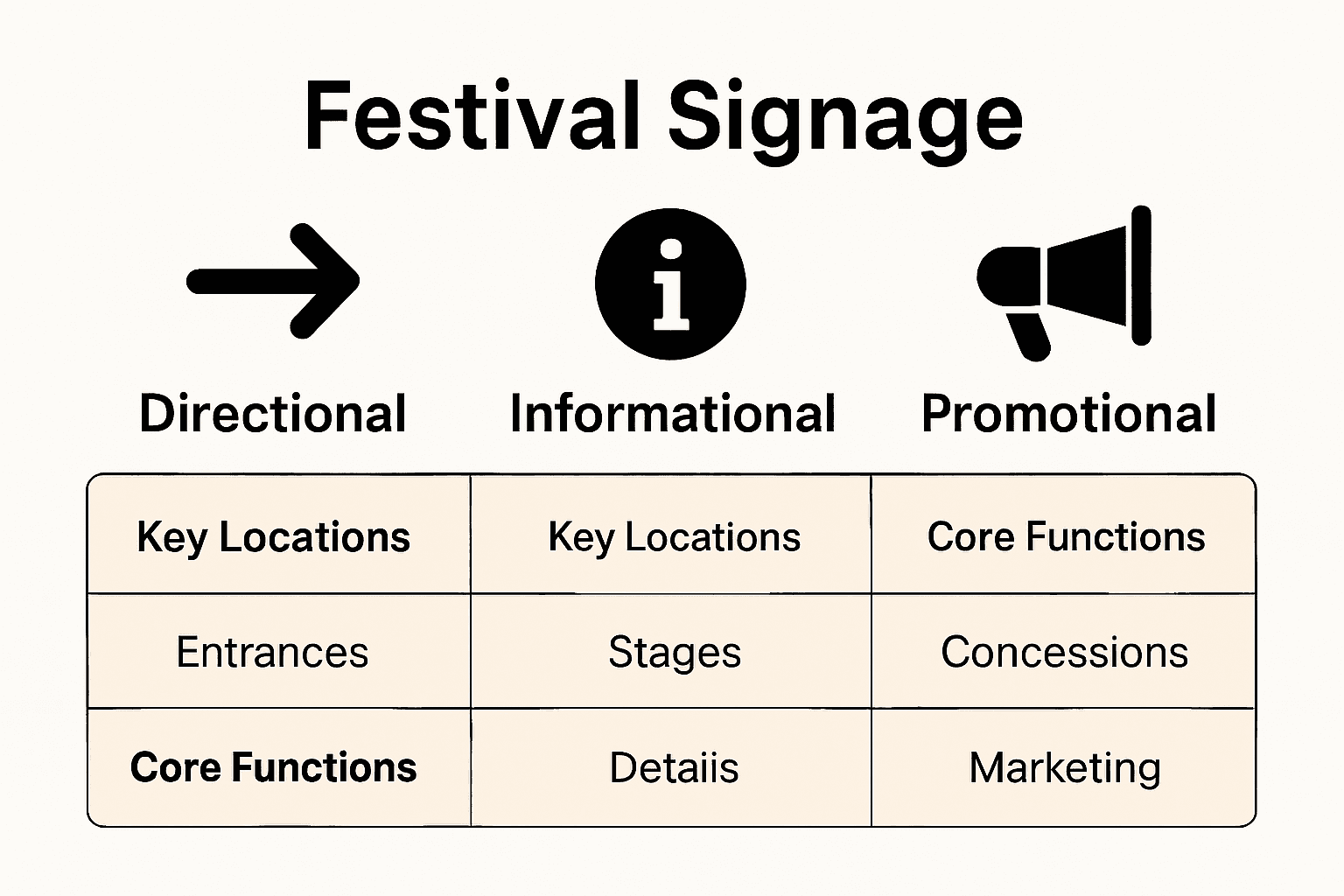
1. Directional Signage
- Guide attendees between different event zones
- Indicate location of stages, food areas, restrooms
- Help manage crowd movement efficiently
- Reduce confusion and navigation stress
2. Informational Signage
- Display event schedules and timelines
- Provide emergency contact information
- Communicate festival rules and guidelines
- Share accessibility and safety instructions
3. Promotional Signage
- Highlight sponsor logos and partnerships
- Create visual branding opportunities
- Generate excitement about performers or attractions
- Enhance overall event aesthetic
Learn more about temporary signage strategies
| Signage Type | Key Functions | Typical Locations |
|---|---|---|
| Directional Signage | Guide crowd flow, Reduce confusion, Indicate zones | Entrances, Crossroads, Near facilities |
| Informational Signage | Display schedules, Safety instructions, Event rules | Entry points, Info booths, Rest areas |
| Promotional Signage | Branding, Showcase sponsors, Build excitement | Main stages, Sponsor zones, Food courts |
For large outdoor stages and sponsor zones, large format printing London delivers the scale and print quality needed to make backdrops, banners and branded panels look sharp from every corner of a crowded field.
Strategic signage requires careful planning and implementation. The right combination of sign types can transform a potentially chaotic event environment into a smooth, enjoyable experience. Size, placement, visibility, and design complexity all play crucial roles in determining signage effectiveness.
Design, Production, and Installation Process
Festival signage design is a meticulous process that requires strategic planning and creative expertise. The journey from conceptualisation to final installation involves multiple critical stages that demand precision, creativity, and technical understanding.
Design Phase
The initial design phase focuses on translating event requirements into visual communication. Key considerations include:
- Understanding event theme and brand identity
- Creating visually coherent and legible designs
- Ensuring scalability and readability from multiple distances
- Selecting appropriate materials and colour schemes
Production Considerations
Production transforms design concepts into physical signage. This stage involves:
- Selecting durable materials suitable for outdoor festival environments
- Choosing printing techniques that ensure longevity and visual impact
- Preparing signs for potential variable weather conditions
- Quality control and prototype testing
For outdoor festival environments, mesh banner printing London is a particularly strong choice — the perforated material allows wind to pass through, preventing banners from acting as sails in exposed field conditions while maintaining full visual impact. Learn more about our custom sign design process
Installation Strategy
Professional installation is crucial for maximising signage effectiveness. Proper placement considers:
- Visibility from multiple angles
- Crowd movement patterns
- Potential obstructions
- Safety regulations and structural integrity
Successful festival signage requires a holistic approach that seamlessly integrates design creativity, technical production expertise, and strategic installation. Each stage represents a critical component in creating an informative and engaging visual communication system that enhances the overall event experience.
| Signage Type | Key Functions | Typical Locations |
|---|---|---|
| Directional Signage | Guide crowd flow Reduce confusion Indicate zones |
Entrances Crossroads Near facilities |
| Informational Signage | Display schedules Safety instructions Event rules |
Entry points Info booths Rest areas |
| Promotional Signage | Branding Showcase sponsors Build excitement |
Main stages Sponsor zones Food courts |
Legal, Licensing, and Safety Requirements
Festival signage legal requirements represent a complex landscape of regulations that event organisers must carefully navigate. Understanding these legal frameworks is not just about compliance, but about ensuring public safety, protecting intellectual property, and maintaining professional event standards.
Licensing Considerations
Event organisers must secure appropriate permissions for festival signage, which typically involves:
- Obtaining local council permits
- Confirming land use agreements
- Verifying advertising and display regulations
- Ensuring compliance with public space usage guidelines
Safety Regulations
Safety compliance is paramount in festival signage design and installation. Critical safety requirements include:
- Ensuring sign structural integrity
- Using fire-resistant materials
- Maintaining clear emergency exit pathways
- Preventing potential hazards from sign placement
Learn more about health and safety signage requirements
Intellectual Property and Branding
Festival signage must also respect intellectual property rights, which means:
- Obtaining proper permissions for logo usage
- Avoiding trademark infringements
- Respecting sponsor branding guidelines
- Ensuring transparent attribution of design elements
Navigation of these legal landscapes requires meticulous attention to detail. Professional event organisers understand that comprehensive legal compliance is not just a bureaucratic requirement, but a critical component of creating a safe, professional, and successful festival experience.
Best Practices and Common Festival Signage Mistakes
Festival signage strategy requires precision and thoughtful implementation. Many event organisers unknowingly commit critical errors that can significantly impact attendee experience and overall event perception.
Common Signage Mistakes:
- Overcrowded design layouts
- Insufficient contrast between text and background
- Inconsistent branding across different sign types
- Poor placement that reduces visibility
- Using complex fonts that compromise readability
Best Practices for Effective Signage:
- Maintain consistent visual language
- Prioritise clarity over decorative complexity
- Use high-contrast colour schemes
- Test sign visibility from multiple angles and distances
Explore our comprehensive event signage guide
Implementation Strategies
Successful festival signage goes beyond aesthetic appeal. It requires:
- Anticipating attendee navigation patterns
- Creating intuitive informational hierarchies
- Designing for diverse audience accessibility
- Regular testing and iterative improvements
For festivals requiring branded entrance structures, pop-up information points and sponsor displays, exhibition stands London solutions provide modular, portable frameworks that can be assembled quickly on site and dismantled at the end of the event.
Professional event organisers recognise that signage is a critical communication tool. By avoiding common mistakes and implementing best practices, festivals can transform simple directional markers into powerful engagement mechanisms that enhance overall.
 Each stage represents a critical component in creating an informative and engaging visual communication system that enhances the overall event experience.
Legal, Licensing, and Safety Requirements
Festival signage legal requirements represent a complex landscape of regulations that event organisers must carefully navigate. Understanding these legal frameworks is not just about compliance, but about ensuring public safety, protecting intellectual property, and maintaining professional event standards.
Licensing Considerations
Event organisers must secure appropriate permissions for festival signage, which typically involves:
- Obtaining local council permits
- Confirming land use agreements
- Verifying advertising and display regulations
- Ensuring compliance with public space usage guidelines
Safety Regulations
Safety compliance is paramount in festival signage design and installation. Critical safety requirements include:
- Ensuring sign structural integrity
- Using fire-resistant materials
- Maintaining clear emergency exit pathways
- Preventing potential hazards from sign placement Learn more about health and safety signage requirements
Intellectual Property and Branding
Festival signage must also respect intellectual property rights, which means:
- Obtaining proper permissions for logo usage
- Avoiding trademark infringements
- Respecting sponsor branding guidelines
- Ensuring transparent attribution of design elements
Navigation of these legal landscapes requires meticulous attention to detail. Professional event organisers understand that comprehensive legal compliance is not just a bureaucratic requirement, but a critical component of creating a safe, professional, and successful festival experience.
Best Practices and Common Festival Signage Mistakes
Festival signage strategy requires precision and thoughtful implementation. Many event organisers unknowingly commit critical errors that can significantly impact attendee experience and overall event perception. Understanding these potential pitfalls is crucial for creating an effective visual communication system.
Common Signage Mistakes
Event organisers frequently encounter several recurring signage challenges:
- Overcrowded design layouts
- Insufficient contrast between text and background
- Inconsistent branding across different sign types
- Poor placement that reduces visibility
- Using complex fonts that compromise readability
Best Practices for Effective Signage
Strategic signage design involves multiple key considerations:
- Maintain consistent visual language
- Prioritise clarity over decorative complexity
- Use high-contrast colour schemes
- Test sign visibility from multiple angles and distances
Explore our comprehensive event signage guide
Implementation Strategies
Successful festival signage goes beyond aesthetic appeal. It requires:
- Anticipating attendee navigation patterns
- Creating intuitive informational hierarchies
- Designing for diverse audience accessibility
- Regular testing and iterative improvements
Professional event organisers recognise that signage is a critical communication tool. By avoiding common mistakes and implementing best practices, festivals can transform simple directional markers into powerful engagement mechanisms that enhance overall attendee experience.
Make Your Festival Stand Out with Professional Signage Solutions
Are you planning a festival and worried about confusing layouts, unclear signs, or lost attendees? This guide highlights how poor signage and overlooked legal or safety requirements can drastically affect attendee satisfaction. At PromoSigns, we understand the pressure organisers feel to ensure seamless navigation, consistent branding, and stress-free experiences for guests. With our expertise in festival signage design, production, and installation across London, Essex, and Kent, we transform these challenges into standout festival features.
Take your event to the next level with custom, legally compliant signage that is as visually impressive as it is practical. Visit PromoSigns to explore how our tailored signage solutions handle everything from wayfinding to critical safety messaging. For high-impact outdoor promotion, our banner printing London service delivers fast turnaround on weatherproof banners in any size — ideal for last-minute additions or replacement panels during a multi-day event. Book a no-obligation consultation today and ensure your next festival is memorable for all the right reasons.
Frequently Asked Questions
What are the main types of signage used at festivals?
Festival signage primarily includes directional signage, informational signage, and promotional signage. Directional signage helps guide attendees, informational signage provides essential event details, and promotional signage enhances branding and excitement around the event.
How can effective festival signage improve attendee experience?
Effective festival signage enhances attendee experience by providing clear navigation, crucial information, and reinforcing the event’s branding. Well-placed and designed signage reduces confusion, improves crowd management, and creates a professional atmosphere.
What are some common mistakes to avoid when designing festival signage?
Common mistakes include overcrowded design layouts, insufficient contrast between text and background, inconsistent branding, poor placement reducing visibility, and using complex fonts that compromise readability. Avoiding these pitfalls will enhance the effectiveness of your signage.
What factors should be considered for the installation of festival signage?
When installing festival signage, consider visibility from multiple angles, crowd movement patterns, potential obstructions, and adherence to safety regulations. Proper installation strategies ensure that the signage serves its purpose effectively and enhances attendee safety.
Recommended
- Event Signage Checklist 2025: Essential Guide for London Businesses – PromoSigns.co.uk
- Event Signage Best Practices 2025: Essential Tips for London Businesses – PromoSigns.co.uk
- Exhibition Signage Basics 2025: Essential Guide for Businesses – PromoSigns.co.uk
- Blog Archives – Page 2 of 7 – PromoSigns.co.uk
