
Did you know that outdoor signage can increase foot traffic to retail shops by up to 24 percent? A clear and attractive outdoor sign is often the first thing a new customer notices, making it essential for any business competing on the high street. The right sign can communicate your brand, highlight offers, and guide visitors, instantly shaping their first impression and helping your shop stand out in a crowded market.
Table of Contents
Key Takeaways
| Point | Details |
|---|---|
| Purpose of Outdoor Signs | Outdoor signs act as strategic communication tools that attract customers and convey essential business information like hours and promotions. |
| Types of Outdoor Signage | Various formats exist, including storefront signs, large-scale advertisements, and temporary signs, each serving different marketing purposes. |
| Design Influence | Effective design elements such as color, typography, and logo placement can significantly enhance customer engagement and brand representation. |
| Regulatory Compliance | Businesses must navigate UK regulations regarding sign size, illumination, and placement, ensuring they obtain necessary permissions to avoid legal issues. |
Table of Contents
- Defining Outdoor Signs For Retail Shops
- Major Types Of Outdoor Shop Signs Explained
- Key Design Elements And Branding Impact
- Uk Regulations And Planning Permission Requirements
- Installation, Maintenance, And Cost Factors
Defining Outdoor Signs for Retail Shops
An outdoor sign for a retail shop is a strategic communication tool designed to attract attention, convey information, and guide potential customers towards a business. According to advertisement legal definitions, these signs encompass a broad range of visual representations, including words, letters, placards, boards, notices, and devices used for announcement, direction, or advertisement.
Retail shop outdoor signs serve multiple critical functions beyond mere decoration. They act as silent salespeople, communicating key business details at a glance. These signs can include:
- Business name and logo
- Operating hours
- Current promotions or sales
- Contact information
- Directional guidance
Interestingly, some signs have unique legal and commercial classifications. Privilege signs, for instance, are specific signage types often provided by manufacturers and displaying their branding, commonly seen in small shops and newsagents. Our comprehensive guide on creative shop sign ideas explores how these visual elements can dramatically transform a shop’s street presence.
The effectiveness of an outdoor sign depends on its visibility, design clarity, and ability to communicate essential information quickly. Whether illuminated or non-illuminated, these signs are crucial first touchpoints that can significantly influence a potential customer’s perception and decision to enter a retail establishment.

Major Types of Outdoor Shop Signs Explained
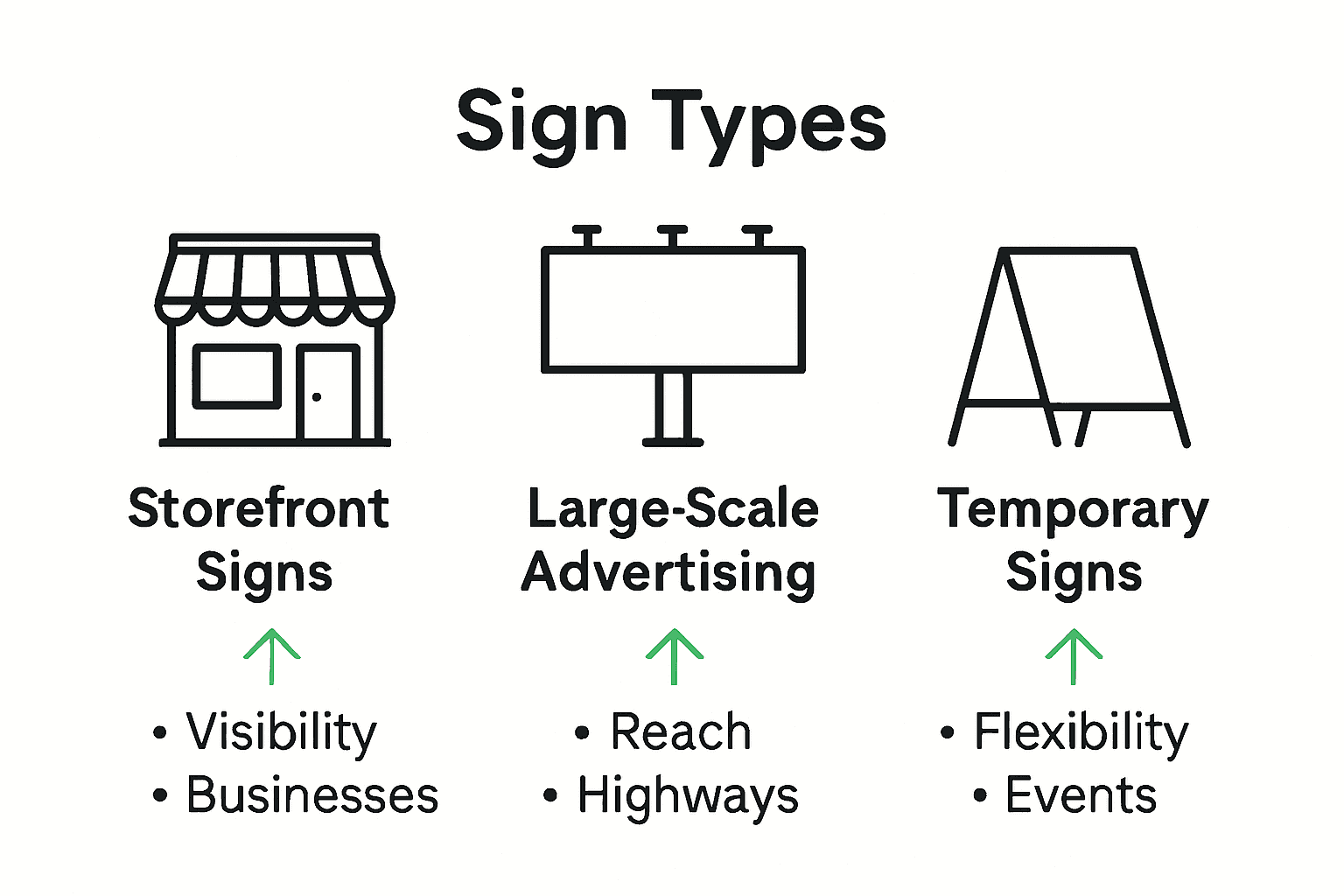
Outdoor shop signs come in diverse formats, each serving unique marketing and communication purposes. From small storefront displays to large-scale advertising structures, businesses have multiple options to capture potential customers’ attention.
Storefront Signs
These are the primary signs directly attached to or positioned near a shop’s entrance. They typically include:
- Fascia signs (mounted flat against the building)
- Projecting signs (extending perpendicular to the building)
- Window graphics and decals
- Awning signs integrated with architectural elements
Large-Scale Advertising Structures
According to research on billboards, these are massive outdoor advertising structures positioned in high-traffic areas. Billboards, or hoardings in the UK, are designed for maximum visibility to passing pedestrians and drivers. Our comprehensive guide to shop signage explores how these massive signs can dramatically increase brand awareness.
Temporary and Movable Signs
These flexible signage options include:
- Pavement/A-frame signs
- Portable banners
- Mobile advertising boards
- Pop-up displays
Each sign type offers unique advantages, allowing businesses to choose the most effective visual communication strategy for their specific location, budget, and marketing objectives. The right outdoor sign can transform a shop’s street presence, attracting customers and communicating brand identity in seconds.
Here’s a comparison of major outdoor shop sign types:
| Sign Type | Typical Placement | Key Benefits | Common Examples |
|---|---|---|---|
| Storefront Signs | Shop entrance/front | Brand visibility Immediate info |
Fascia sign Awning sign Window decal |
| Large-Scale Advertising | High-traffic areas | Mass reach Brand awareness |
Billboard Hoarding |
| Temporary & Movable Signs | Pavement/exterior | Flexibility Seasonal promotion |
A-frame sign Portable banner Pop-up display |
Key Design Elements and Branding Impact
Design elements play a crucial role in transforming outdoor shop signs from mere informational tools to powerful branding instruments. According to fascinating research on color psychology, the visual components of a sign can profoundly influence consumer emotional responses and perceptions.
Color Psychology in Signage
Color choices are more than aesthetic decisions. Research reveals specific emotional triggers:
- Yellow: Evokes happiness and optimism
- Blue: Communicates trust and professionalism
- Bright colors: Generate surprise and excitement
- Neutral tones: Suggest sophistication and reliability
Brand Representation Strategies
Outdoor signs serve as visual ambassadors for a business. Some signs, known as privilege signs, even feature manufacturer logos to reinforce co-branding and extend visual brand presence. These strategic design choices transform signs from simple communication tools into comprehensive brand experiences.
Critical Design Components
Effective outdoor signs combine multiple elements to create impact:
- Clear, legible typography
- Consistent brand color palette
- Strategic logo placement
- Appropriate sizing and scale
- Material selection that reflects brand quality
By carefully orchestrating these design elements, businesses can create outdoor signs that not only provide information but also tell a compelling brand story, attracting and engaging potential customers within seconds of visual contact.
UK Regulations and Planning Permission Requirements
Shop signage regulations in the UK involve complex planning laws that businesses must carefully navigate. According to the Planning Portal, specific requirements govern outdoor advertisement installations, with key considerations around size, illumination, and location.
Size and Illumination Requirements
The Town and Country Planning regulations establish clear guidelines for external signage:
- Signs larger than 0.3 square metres typically require formal advertisement consent
- Illuminated signs almost always need explicit planning permission
- Non-illuminated signs under 0.3 m² might qualify for ‘deemed consent’
Special Consideration Zones
Signage regulations become more stringent in specific areas. Conservation districts and buildings with historical listings demand extra scrutiny:
- Listed building areas require comprehensive approval
- Conservation zones have stricter visual design requirements
- Heritage locations may limit sign size, materials, and placement
Compliance Strategies
Businesses should proactively manage their signage compliance by:
- Consulting local planning authorities before installation
- Measuring sign dimensions precisely
- Understanding location-specific restrictions
- Preparing detailed documentation for potential reviews
Failing to obtain proper permissions can result in enforcement actions, potential fines, and mandatory sign removal. Thorough research and professional guidance are essential for smooth signage implementation.
Installation, Maintenance, and Cost Factors
Outdoor shop signage involves more than just design and creativity—it requires careful financial planning and ongoing maintenance considerations. According to research from sign makers in the UK, the financial investment and regulatory compliance can be complex.
Cost Breakdown
The financial aspects of installing a shop sign include multiple components:
- Pre-application advice: £50–£150
- Advertisement consent application: £100–£250
- Online service fees: Approximately £70.83
- Total initial investment: £220–£470
- Additional potential costs for design, materials, and installation
Maintenance and Compliance Requirements
Regulatory guidelines emphasize that all advertisements must meet standard conditions, which implies ongoing responsibilities:
- Ensuring structural safety
- Preventing visibility obstruction
- Maintaining aesthetic standards
- Regular cleaning and repair
- Periodic reassessment of sign condition
Timeline and Planning Considerations
Typical sign installation involves a multi-stage process:
- Initial design and consultation
- Obtaining necessary permissions (6–8 weeks)
- Manufacturing
- Professional installation
- Ongoing maintenance and compliance checks
Businesses must view outdoor signage as a long-term investment, balancing initial costs with potential marketing benefits and regulatory compliance.
Transform Your Shopfront With Professional Outdoor Signs
Are you worried your retail signage just is not cutting through the noise on the high street? Many shop owners face the same challenge. As explored in our complete guide, unclear branding, poor design, or regulatory hiccups can mean your business blends into the background or even risks costly compliance errors. The right outdoor sign makes a dramatic difference in attracting footfall and building trust

Why wait any longer to stand out? Partner with a trusted UK signage specialist. At PromoSigns, we design, produce, and install custom shop signs that match your unique needs. We handle regulatory headaches and deliver visually stunning results. See how our shop signage solutions turn branding confidence into real customer traffic. Get in touch today for your free consultation and start making your business impossible to ignore
Frequently Asked Questions
What are the main types of outdoor signs for retail shops?
The main types of outdoor signs include storefront signs (like fascia and projecting signs), large-scale advertising structures (such as billboards and hoardings), and temporary or movable signs (like A-frame signs and portable banners).
What factors should be considered when designing an outdoor sign?
Key factors to consider when designing an outdoor sign include color psychology, clear typography, consistent branding, strategic logo placement, appropriate sizing, and material selection that reflects brand quality.
Do outdoor shop signs require planning permission?
Yes, outdoor shop signs may require planning permission depending on their size and illumination. Signs larger than 0.3 square meters typically need formal consent, and illuminated signs often require explicit approval.
What are the maintenance requirements for outdoor signs?
Outdoor signs require regular maintenance to ensure structural safety, prevent visibility obstruction, maintain aesthetic standards, and require periodic cleaning and repair. Ongoing compliance with regulatory guidelines is also essential.
Recommended
- 10 Creative Outdoor Shop Sign Ideas to Attract More Customers – PromoSigns.co.uk
- Shop Signage Basics 2025: Essential Tips for London Businesses – PromoSigns.co.uk
- Types of Shop Signs for London Businesses: The 2025 Guide – PromoSigns.co.uk
- What Makes A Great Shop Sign – PromoSigns.co.uk
