
Table of Contents
Office signage does much more than decorate walls. Nearly 80 percent of businesses report that clear, well-placed signs improve workplace safety and brand recognition. For any organisation, thoughtful signage can direct visitors, foster company culture, and reduce everyday confusion. Choosing the right solutions means transforming your space into a welcoming environment that works smarter for staff and clients alike.
| Point | Details |
|---|---|
| Strategic Communication Tool | Office signage enhances brand identity, ensures safety, and fosters a welcoming environment in workplaces. |
| Diverse Signage Categories | Types of signage include wayfinding, identification, regulatory, and branding signs, each serving specific functions. |
| Cost Influencers | Key factors like material selection, size, design complexity, and compliance requirements significantly impact signage costs. |
| Modern Alternatives | Digital directories, mobile apps, and augmented reality guidance offer adaptable communication solutions compared to traditional signage. |
Defining Office Signage and Its Business Role
Office signs London represent far more than mere decorative elements — they are a strategic communication tool that transforms workplace environments and drives organisational objectives. These visual communication systems serve multiple critical functions, from enhancing brand identity to ensuring workplace safety and creating welcoming professional spaces.
Office signage encompasses a comprehensive range of visual communication elements designed to inform, guide, and inspire within professional settings. These can include:
- Directional signs helping staff and visitors navigate complex workspaces
- Branded wall graphics reinforcing company culture and identity
- Safety and compliance signage indicating critical workplace protocols
- Motivational messaging promoting team alignment and corporate values
Office signage acts as a “silent guide” in workplace environments, serving multiple strategic purposes beyond simple wayfinding. Effective signage promotes inclusivity, reinforces organisational branding, and creates a cohesive visual narrative that communicates professionalism and attention to detail.
Beyond aesthetic considerations, well-designed office signage plays a pivotal role in workplace functionality. It supports employee orientation, reduces confusion, improves spatial understanding, and can significantly contribute to overall workplace productivity by creating clear, intuitive communication pathways. By investing in thoughtful, strategically designed signage, businesses can transform their physical environments into more efficient, engaging, and meaningful spaces that reflect their unique organisational identity.
Types of Office Signage and Key Differences
Office signage is a diverse communication ecosystem with multiple specialised categories designed to meet specific organisational needs. Signage encompasses various types, including informational, directional, identification, and safety signs, each serving distinct purposes in conveying messages to specific audiences.
The primary types of office signage include:
- Wayfinding Signs: Help staff and visitors navigate complex office layouts
- Identification Signs: Mark specific areas, rooms, departments, or workspaces
- Regulatory Signs: Communicate workplace rules, safety protocols, and compliance requirements
- Branding Signs: Reinforce company identity through logos, mission statements, and visual design elements
Modern office signage has evolved significantly with technological advancements. The emergence of electronic signage technologies like fluorescent, LED, and neon signs offer dynamic and illuminated displays for enhanced communication and visual engagement. These digital solutions provide businesses with flexible, interactive ways to share information, display real-time updates, and create more engaging workplace environments.
Each signage type serves a unique function, from practical navigation to brand storytelling. Custom signs London specialists can help you create an effective visual communication strategy that aligns with your organisational goals and aesthetic preferences.
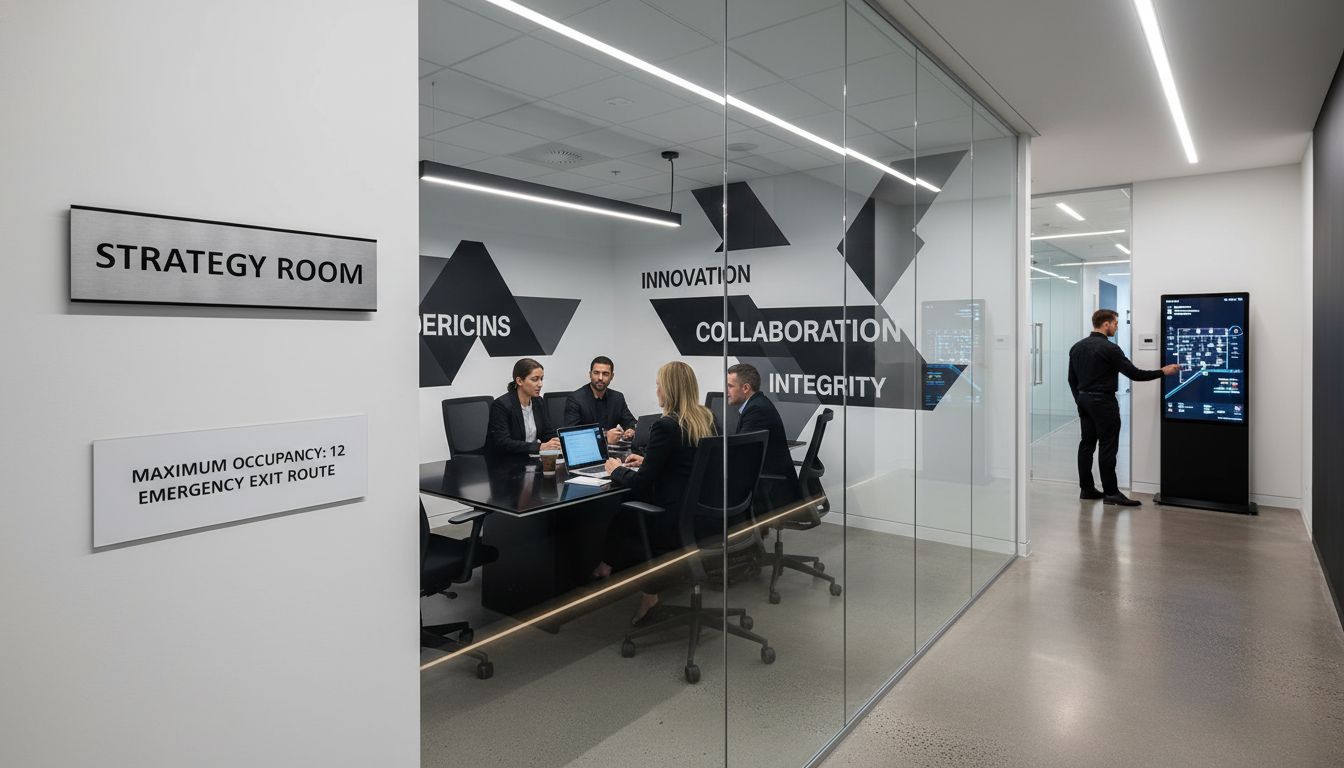
Main Factors Affecting Office Signage Costs
Office signage costs are influenced by a complex interplay of design, technical, and regulatory considerations. Key factors impacting pricing include materials, design complexity, size, installation requirements, and compliance with regulatory standards — each element contributing to the final investment businesses must consider.
The primary cost drivers for office signage can be categorised into several critical components:
- Material Selection: From basic acrylic to premium metal and glass finishes
- Size and Scale: Larger signs require more resources and complex manufacturing
- Design Complexity: Intricate graphics and custom branding increase production costs
- Installation Requirements: Mounting challenges, wall types, and accessibility impact pricing
- Technological Features: Advanced display technologies add significant expense
Display technology significantly impacts signage costs, with newer electronic solutions like LED and neon offering increasingly sophisticated visual experiences at varying price points. Digital signage can range from simple LED displays to complex interactive touchscreen systems, each representing a different investment level.
Foamex signs printing London represents one of the most cost-effective solutions for interior office identification and branding signs, offering excellent print quality and durability at accessible price points. For businesses seeking detailed insights into managing signage expenses, our cost of shop signage guide provides comprehensive strategies for balancing budget constraints with effective visual communication needs.
Installation, Maintenance, and Regulatory Costs
Office signage installation involves a complex ecosystem of expenses that extend far beyond initial production costs. Accessibility regulations significantly impact both installation processes and ongoing maintenance expenses, particularly for businesses committed to inclusive workplace design.
The key components of installation and maintenance costs include:
- Professional Installation Services: Skilled technicians required for precise mounting
- Site Preparation: Potential wall reinforcement, electrical work, or structural modifications
- Ongoing Maintenance: Regular cleaning, repairs, and technology updates
- Compliance Modifications: Periodic adjustments to meet changing regulatory standards
- Replacement of Worn Components: Wear and tear on mechanical or electronic elements
Safety signs require specific design and placement regulations, which directly influence installation and maintenance expenses. These regulatory requirements demand meticulous attention to detail, potentially increasing overall costs but ensuring workplace safety and legal compliance.
Working with experienced signage companies London helps businesses strategically manage these expenses by planning comprehensive signage solutions that balance immediate needs with long-term sustainability. Our signage for office interiors guide offers in-depth strategies for navigating the complex landscape of installation, maintenance, and regulatory compliance.
Comparing Office Signage to Alternative Solutions
Office communication strategies have evolved dramatically, presenting businesses with multiple navigation and information-sharing options. The diverse landscape of wayfinding systems now includes traditional signage alongside digital directories and mobile applications for guiding individuals through complex environments.
Key alternatives to traditional office signage include:
- Digital Directories: Interactive touchscreen displays
- Mobile Wayfinding Apps: Smartphone-based navigation solutions
- Augmented Reality Guidance: Technology-enhanced spatial information
- Smart Building Integration: Networked information systems
- Dynamic Electronic Displays: Real-time updatable information panels
Electronic signage offers significant advantages over static solutions, providing dynamic content capabilities with unprecedented flexibility and real-time information updates. These technological alternatives can offer more interactive and adaptable communication strategies compared to traditional fixed signage.
Large format printing London wall graphics and vinyl installations represent a cost-effective middle ground — combining the permanence and brand impact of traditional signage with the visual scale and flexibility of modern print technology. Businesses seeking comprehensive insights into navigating these communication options can explore our interior vs exterior signage guide, which provides strategic guidance on selecting the most effective visual communication solutions.
Unlock the True Value of Your Office Signage Investment
Understanding the full scope of office signage costs can feel overwhelming, especially when balancing design complexity, installation, and regulatory compliance. This guide highlights the challenges businesses face when trying to create signage that not only fits within budget but also enhances brand identity and workplace efficiency. If you want signage solutions that address these pain points and speak directly to your unique goals, you deserve a partner who makes the process effortless.
Start transforming your workspace today with our expert design, production, and installation services tailored for businesses across London, Essex, and Kent. Explore our bespoke signage options and discover how we combine creative innovation with practical expertise to deliver impactful office signage solutions.
Don’t let uncertainty about costs or compliance hold your business back. Visit us now at Promo Signs and take the first step towards signage that meets your needs perfectly.
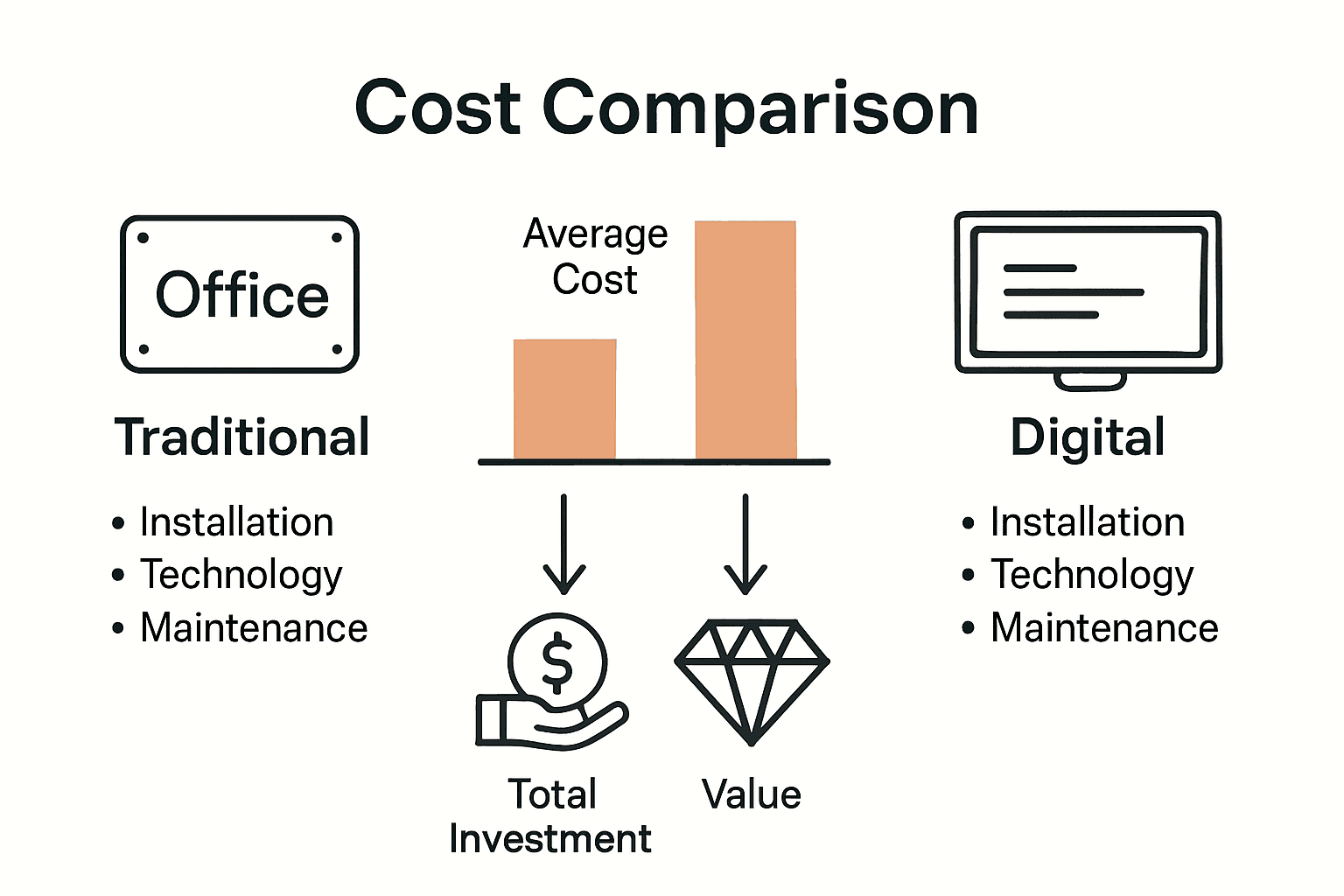
Frequently Asked Questions
What are the main factors that affect the cost of office signage?
Office signage costs are influenced by factors such as material selection, size and scale, design complexity, installation requirements, and technological features. Each aspect contributes to the overall investment businesses must consider.
How can businesses manage ongoing maintenance costs for office signage?
To manage maintenance costs, businesses should plan for regular cleaning, repairs, compliance modifications, and replacement of worn components. Creating a comprehensive signage solution that considers long-term sustainability is essential.
What types of office signage are most effective for workplace communication?
The most effective types of office signage include wayfinding signs for navigation, identification signs for marking specific areas, regulatory signs for workplace rules, and branding signs that reinforce company identity. Each type serves a unique purpose in enhancing workplace communication.
What are the advantages of electronic signage over traditional signage?
Electronic signage offers significant advantages, including dynamic content capabilities, real-time updates, and interactivity. This flexibility allows for more adaptive communication strategies compared to static signage solutions.
Recommended
- How Much Do Outdoor Business Signs Cost? | Promo Signs
- Cost of Shop Signage in London: 2025 Guide for Businesses – PromoSigns.co.uk
- What Is Office Signage? Guide for London Businesses 2025 – PromoSigns.co.uk
- How Much Does a Shop Front Sign Cost in the UK? – PromoSigns.co.uk
- Top Panneaux LED Publicitaires – Comparaison 2025 – MIRKIT LED
