
Over 80 percent of event planners say that effective signage is the key to a memorable attendee experience. The right signs guide guests, reinforce branding, and transform ordinary venues into standout spaces. Choosing event signage goes far beyond picking colors or fonts. This guide breaks down every essential step, helping you create signs that deliver clear messages and leave a lasting impression on your audience.
Table of Contents
Table of Contents
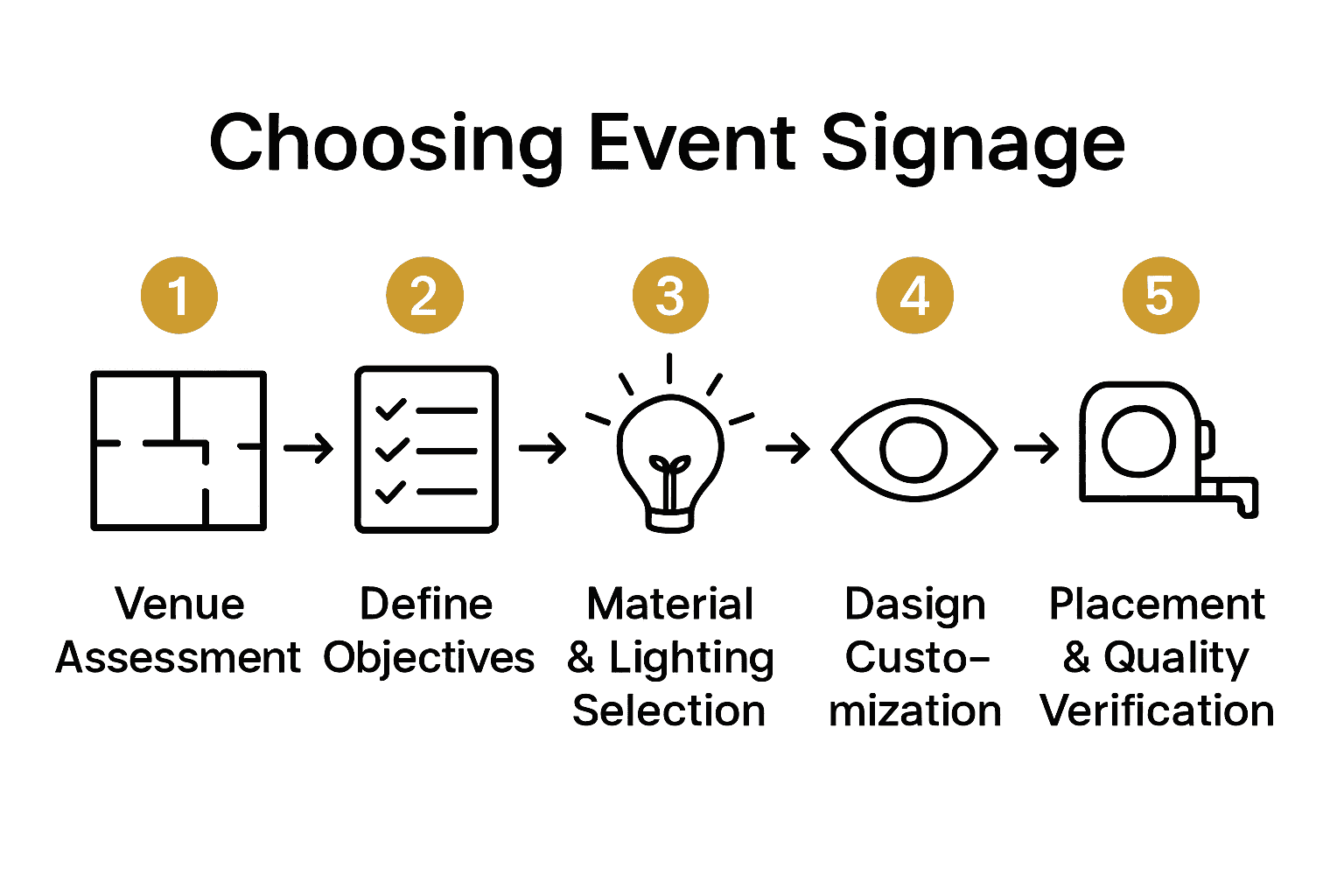
- Step 1: Assess Event Venue And Branding Needs
- Step 2: Define Objectives And Signage Types
- Step 3: Select Materials And Illumination Options
- Step 4: Customise Design For Maximum Visibility
- Step 5: Verify Placement And Quality Before Installation
Quick Summary
| Key Point | Explanation |
|---|---|
| 1. Assess venue and branding needs | Understand the venue’s size, layout, and atmosphere before designing signage. Accurate assessments lead to effective visual communication. |
| 2. Define clear objectives for signage | Set specific goals for your signage types, like navigation or brand recognition, based on event needs and audience demographics. |
| 3. Choose appropriate materials and lighting | Select durable materials and effective lighting to ensure your signage is visible and attractive under event conditions. |
| 4. Customize design for visibility | Focus on contrast, readability, and hierarchy to ensure your signage stands out and effectively conveys messages from various distances. |
| 5. Verify placement and quality before installation | Conduct checks for measurement, quality, and site suitability to avoid issues during the event and maximize impact. |
Step 1: Assess Event Venue and Branding Needs
Successfully selecting the right event signage begins with a thorough understanding of your venue and branding requirements. This critical first step will help you create visual communication that resonates with your event’s core objectives and audience expectations.
According to research from Formosa Publisher, venue selection fundamentally impacts event management success. The venue must accommodate event size, create the appropriate atmosphere, meet logistical needs, and reflect institutional values. When assessing your venue, start by measuring the physical space carefully. Note wall dimensions, ceiling heights, potential mounting locations, and any architectural features that might influence signage placement.
Your branding needs should directly inform signage design. Consider these key factors:
- Event purpose and target audience
- Colour palette and existing brand guidelines
- Message clarity and visibility from different angles
- Material durability based on venue conditions
- Potential lighting interactions
Research from arXiv emphasizes the importance of balancing spatial efficiency with diverse visual requirements. This means your signage should not just look attractive but also serve functional purposes within the event space.

Pro tip: Always request a venue floor plan and conduct a physical site visit before finalizing your signage strategy. Photographs and measurements will help you anticipate potential challenges and design more precise, impactful signage solutions.
Once you have thoroughly assessed your venue and branding needs, you are ready to move forward with selecting specific signage types that will enhance your event’s visual communication.
Step 2: Define Objectives and Signage Types
Defining clear event objectives and selecting appropriate signage types are crucial steps that will shape your event’s visual communication strategy. This stage transforms your initial venue assessment into a targeted signage approach that effectively communicates your message.
According to Brandable, event signage encompasses several critical types: directional, informational, decorative, branded, and portable signs. Each serves a unique purpose in enhancing attendee experience and reinforcing event branding. Start by mapping out your specific communication goals. Are you aiming to guide participants through a complex venue? Highlight key sponsors? Create immersive brand experiences? Your objectives will directly inform which signage types will be most effective.
Research from Style Vanity emphasizes the importance of aligning signage selection with audience demographics and event goals. Consider these strategic signage objectives:
- Wayfinding and navigation
- Brand recognition and messaging
- Creating visual atmosphere
- Facilitating information sharing
- Sponsorship acknowledgement
Pro tip: Always prioritize clarity and readability. A visually stunning sign that confuses attendees fails its primary communication purpose. Test your signage designs by viewing them from different distances and angles to ensure they effectively convey your intended message.
With your objectives clearly defined and signage types selected, you are now prepared to move into the detailed design and implementation phase of your event signage strategy.
Step 3: Select Materials and Illumination Options
Choosing the right materials and illumination for your event signage is a critical step that will determine visibility, durability, and overall visual impact. This stage transforms your conceptual design into a tangible communication tool that can withstand event conditions and capture audience attention.
According to Eventive, material selection and lighting are fundamental to creating impactful event branding. Different materials offer unique advantages depending on your event environment and objectives. Consider these primary material options:
- Acrylic: Lightweight and modern, excellent for indoor events
- Aluminium: Durable and weather resistant, ideal for outdoor settings
- Fabric: Soft, flexible, and great for creating immersive experiences
- Vinyl: Cost effective and versatile for temporary signage
- Wooden materials: Provides warmth and natural aesthetic
Research from Style Vanity emphasizes the importance of selecting materials that ensure readability and sustained impact throughout your event. Illumination plays an equally crucial role in enhancing visibility and creating atmosphere.
Illumination options range from subtle backlighting to dramatic LED displays. Consider these lighting strategies:
- Soft ambient lighting for elegant environments
- Bright direct lighting for information heavy spaces
- Colour changing LED for dynamic brand representation
- Spotlighting to highlight specific signage areas
- Integrated lighting that complements your overall design
Pro tip: Always conduct a lighting test in your actual venue. What looks perfect in design mockups might appear different under real event conditions.
With materials and illumination carefully selected, you are now ready to move into the detailed design and production phase of your event signage strategy.
Step 4: Customise Design for Maximum Visibility
Customising your event signage design is a strategic process that transforms visual communication into an attention grabbing experience. Your goal is to create signage that not only looks impressive but also effectively communicates your message across diverse viewing conditions.
Research from Eventive highlights the critical importance of strategic design elements. Bold colours, clear fonts, and thoughtful placement are fundamental to capturing attendee attention. When designing your signage, consider these key visual principles:
- Contrast: Create stark differences between background and text
- Readability: Use fonts that are easily comprehensible from various distances
- Hierarchy: Prioritise information through size and placement
- Colour psychology: Select colours that evoke desired emotional responses
- Simplicity: Avoid cluttered designs that overwhelm viewers
According to MDPI, understanding visual saliency involves complex factors including environmental context and viewer perception. Modern techniques like virtual reality and eye tracking can help predict how effectively your signage will capture attention.
Pro tip: Always test your design by viewing it from multiple angles and distances. What seems clear on a computer screen might become illegible in a crowded event space.
With your design now optimised for maximum visibility, you are prepared to move towards the final production and implementation stages of your event signage strategy.
Step 5: Verify Placement and Quality Before Installation
Verifying signage placement and quality is the critical final checkpoint that ensures your carefully designed communication strategy translates perfectly into the physical event space. This stage represents your opportunity to catch potential issues and make last minute refinements before final installation.
Research from Style Vanity emphasizes the importance of meticulous logistics in setting up and tearing down event signage. Conduct a comprehensive pre installation checklist that includes:
- Precise measurement of mounting locations
- Verification of structural support capabilities
- Assessment of potential viewing angles
- Checking for potential obstructions
- Confirming alignment with venue regulations
According to Brandable, verifying signage quality before installation is fundamental to ensuring clear communication and a positive attendee experience. This means examining each sign for:
- Print quality and colour accuracy
- Material integrity and durability
- Consistent branding elements
- Structural soundness
- Appropriate finishing and edges
Pro tip: Conduct a complete mock installation in a similar environment to your actual venue. This allows you to identify potential challenges like lighting interference, spatial constraints, or unexpected visual conflicts.
With your signage thoroughly verified and refined, you are now ready to execute a flawless installation that will deliver maximum impact at your event.
Elevate Your Event with Custom Signage That Speaks Volumes
Choosing impactful event signage involves more than just visuals. The real challenge lies in crafting designs that ensure clarity, visibility, and true alignment with your venue and brand needs — as the article highlights with concepts like material durability, illumination, and strategic placement. We understand how vital it is to convey the right message to your audience with signage that commands attention and withstands the event environment.
At Promo Signs, we specialise in designing, producing, and installing custom event signage across London, Essex, and Kent. Whether you need illuminated signs for striking visibility or large format prints that bring your brand atmosphere to life, we’re here to turn your vision into reality while easing your logistical challenges.

Don’t let confusing or low-quality signage hold your event back. Discover how our expert team can help you create signage that meets your precise objectives and leaves a lasting impact. Visit us today at Promo Signs and take the first step towards flawless event signage that truly represents your brand and guides your guests effortlessly.
Frequently Asked Questions
How can I assess my event venue for effective signage?
Start by measuring the physical dimensions of the space, noting wall sizes and potential mounting locations. Conduct a physical site visit to understand lighting and architectural features that can influence signage placement.
What objectives should I define when selecting event signage?
Identify clear communication goals, such as wayfinding, brand recognition, or sponsorship acknowledgment. Map out these objectives to choose the most effective signage types that align with your event’s purpose.
What materials should I consider for my event signage?
Choose materials based on event conditions and desired aesthetic—options include acrylic for indoor use, aluminum for outdoor durability, and fabric for immersive experiences. Evaluate the material’s readability and impact longevity to ensure it meets your event needs.
How do I customize my event signage for maximum visibility?
Use bold colors, clear fonts, and a well-structured layout to create eye-catching signage. Test your designs by viewing them from multiple distances to ensure they can be easily read across your venue.
What steps should I follow before installing event signage?
Verify the mounting locations and ensure structural support capabilities, as well as alignment with venue regulations. Conduct a mock installation to identify any potential issues with visibility or obstructions in the event space.
How can I ensure the quality of my event signage before it is installed?
Examine each sign for print quality, material integrity, and consistent branding elements. A thorough quality check will help catch any issues that could diminish clear communication at your event.
Recommended
- Event Signage Best Practices 2025: Essential Tips for London Businesses – PromoSigns.co.uk
- Event Signage Importance in 2025: Boosting Business in London – PromoSigns.co.uk
- Event Signage Checklist 2025: Essential Guide for London Businesses – PromoSigns.co.uk
- Blog Archives – Page 2 of 7 – PromoSigns.co.uk
