
Events present powerful opportunities to connect with audiences, showcase brands, and create memorable experiences. Success hinges significantly on strategic signage that captures attention, communicates messages clearly, and guides attendees seamlessly through event spaces.
This comprehensive guide explores everything you need to create impactful event signage and banners, from design principles to practical implementation, ensuring your event marketing delivers maximum visibility and engagement.
Table of Contents
Key Takeaways
| Point | Details |
|---|---|
| Distinction between Formats | Event Posters are ideal for indoor use and detailed information, while Event Banners are better suited for outdoor visibility and large audiences. |
| Material Selection Matters | Choose materials based on environmental factors, ensuring durability for outdoor and aesthetic appeal for indoor use. |
| Design with Purpose | Focus on legibility and visual hierarchy to enhance audience engagement and message retention. |
| Legal Compliance is Crucial | Ensure adherence to local regulations regarding signage to avoid legal issues and ensure best practices in design. |
Understanding Event Signage and Banners
What Makes Event Signage Effective?
Effective event banners serve multiple critical functions simultaneously:
Primary Functions:
- Brand visibility and recognition
- Attendee guidance and wayfinding
- Information communication
- Sponsor acknowledgment
- Atmosphere creation
- Photo opportunity provision
Strategic Benefits:
- Pre-event awareness building
- Day-of-event navigation
- Brand impression reinforcement
- Social media content generation
- Post-event marketing assets
- Reusable investment value
Types of Event Signage
Permanent vs. Temporary: Event signage requirements vary by duration and venue:
Temporary Event Solutions:
- Pop-up banners and displays
- Pull-up banners (quick setup)
- Hanging banners and suspended displays
- A-board signs (directional)
- Floor graphics and decals
- Window clings and posters
Semi-Permanent Options:
- Branded gazebos and marquees
- Tension fabric structures
- Modular exhibition stands
- Fence mesh banners
- Building wraps
- Vehicle graphics
Pre-Event Planning and Strategy
Defining Objectives
Successful event signage begins with clear goals:
Brand Awareness Objectives:
- Maximum logo visibility
- Consistent brand presence
- Photography-worthy displays
- Social media share potential
- Lasting impression creation
Functional Objectives:
- Clear wayfinding and navigation
- Registration area identification
- Schedule and program communication
- Sponsor recognition
- Safety and compliance messaging
Audience Analysis
Understanding attendees shapes signage decisions:
Demographic Considerations:
- Age range and visual preferences
- Cultural background and language needs
- Accessibility requirements
- Technical sophistication
- Expected attendance numbers
Behavioral Patterns:
- Arrival and flow patterns
- Dwell time expectations
- Information seeking habits
- Mobile device usage
- Social media engagement likelihood
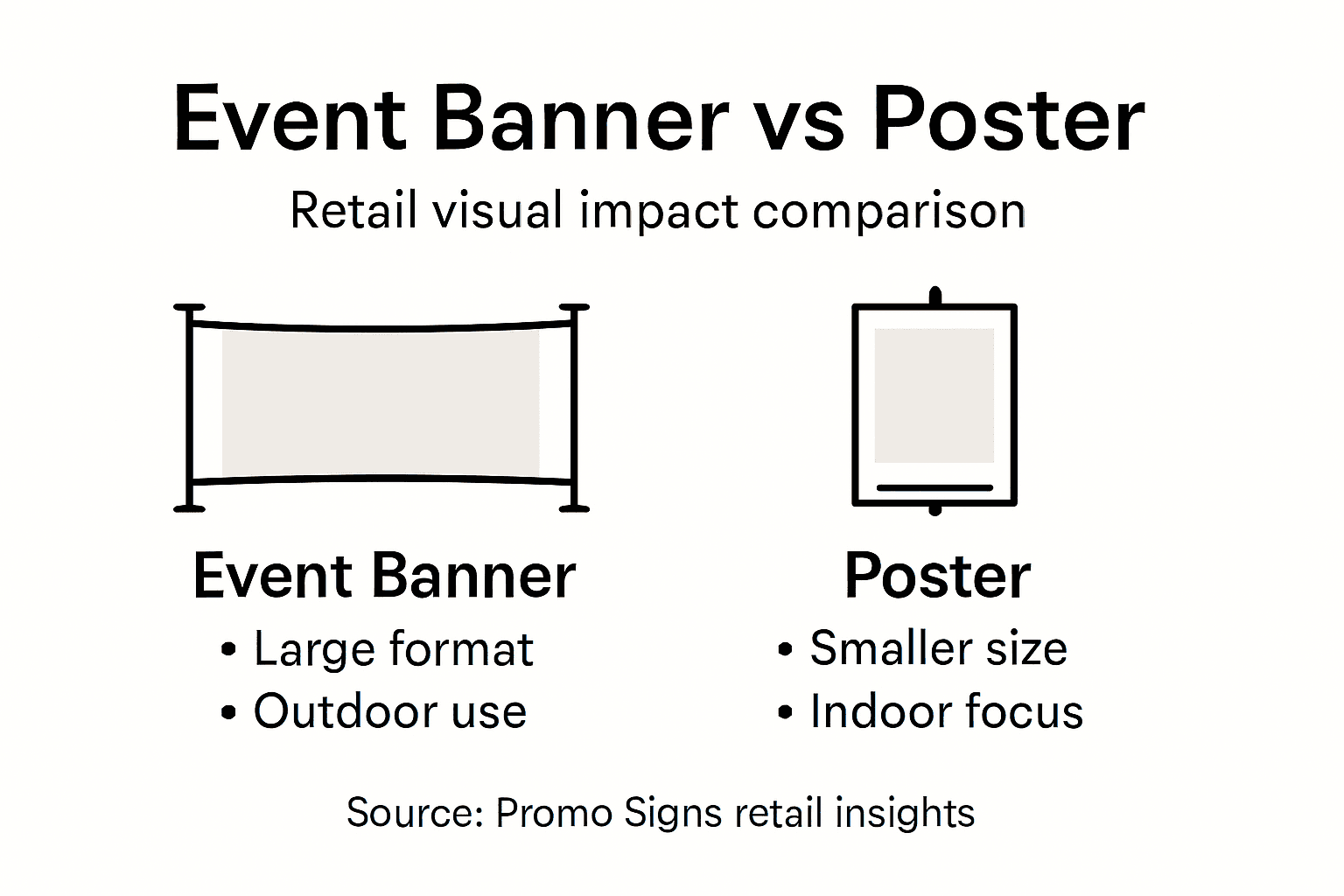
Here’s a structured comparison of event banners and posters to help clarify format selection based on key criteria:
| Criteria | Event Posters | Event Banners |
|---|---|---|
| Typical Material | Paper, lightweight card | Vinyl, mesh, heavy-duty fabric |
| Standard Usage | Indoor, close-range viewing | Outdoor, large venues |
| Design Focus | Detailed layouts, text-heavy | Bold graphics, minimal text |
| Durability | Limited, short-term use | Weather-resistant, long-lasting |
| Cost Efficiency | Economical for short events | Higher initial, reusable |
| Best Audience | Academic, retail, professionals | Public, large crowds, passer-by |
Banner Design Principles
Visual Hierarchy and Composition
Effective banner design implements clear information structure:
Primary Elements (Largest, Most Visible):
- Event name/title
- Logo and brand identity
- Key date and location
- Hero imagery
Secondary Information:
- Event tagline or theme
- Featured speakers/performers
- Schedule highlights
- Venue details
Tertiary Details:
- Website and social media
- Contact information
- Sponsor logos
- QR codes for additional info
Color Psychology for Events
Event Type Color Strategies:
Corporate Events:
- Professional blues and grays
- Brand color integration
- Clean, sophisticated palettes
- High-contrast combinations
Festival and Entertainment:
- Bold, vibrant colors
- High energy combinations
- Attention-commanding hues
- Youthful, dynamic palettes
Charity and Fundraising:
- Warm, approachable colors
- Trust-building blues and greens
- Emotionally resonant tones
- Cause-aligned color choices
Typography Best Practices
Readability at Distance: Apply the viewing distance formula:
- 1 inch of letter height per 10 feet of viewing distance
- 3-meter banner viewed from 30 meters = 300mm minimum letters
- Bold, sans-serif fonts for clarity
- High contrast text-to-background ratios
Font Selection:
- Maximum 2-3 font families
- Consistent hierarchy throughout
- Avoid decorative fonts for primary text
- Professional, clean letterforms
- Brand-aligned typography
Pull-Up Banner Solutions
Advantages of Pull-Up Banners
Portable convenience makes pull-ups ideal for events:
Key Benefits:
- Single-person setup (under 60 seconds)
- Compact transportation and storage
- No tools required for assembly
- Professional appearance
- Reusable across multiple events
- Cost-effective solution
Standard Sizes:
- 800mm × 2000mm (most common)
- 850mm × 2000mm (wide format)
- 1000mm × 2000mm (extra wide)
- 1200mm × 2000mm (maximum impact)
- Double-sided options available
Design Considerations for Pull-Up Banners
Technical Requirements:
- Safe area margins (50mm from edges)
- Bleed allowance (25mm minimum)
- Critical information above 200mm from base
- High-resolution imagery (minimum 150 DPI)
- RGB or CMYK color mode
Content Strategy:
- Single clear message
- Minimal text (50 words maximum)
- Large, bold headlines
- Strong visual focal point
- Clear call-to-action
Outdoor Event Banners
Weather-Resistant Materials
Vinyl Banner Material: Professional PVC banners provide:
- Water and weather resistance
- UV fade protection
- Tear and wind resistance
- Durable outdoor performance
- Professional appearance
- 2-5 year lifespan
Mesh Banner Applications: High-wind environments require:
- Perforated material (30-70% open)
- Wind load reduction
- Scaffolding and fence mounting
- Large-scale outdoor advertising
- Extended outdoor durability
Mounting and Installation
Eyelet Specifications:
- Brass or aluminum eyelets
- Welded or sewn hems
- 500mm spacing (standard)
- 250mm spacing (heavy-duty)
- Corner reinforcement
Fixing Methods:
- Bungee cord systems (flexibility)
- Cable ties (secure attachment)
- Rope and tensioners
- Banner clips and grommets
- Pole pocket options

Indoor Event Signage
Registration and Reception Areas
Welcome and Check-In: Essential signage includes:
- Event branding backdrop
- Registration desk identification
- Queue management signs
- Name badge collection
- Program and schedule displays
Material Choices:
- Foamex boards (lightweight, economical)
- Acrylic panels (premium appearance)
- Fabric banners (professional finish)
- Vinyl graphics (versatile application)
- Digital screens (dynamic content)
Wayfinding and Directional Signs
Navigation Essentials:
- Room and session identification
- Directional arrows and pointers
- Floor plans and “you are here” maps
- Facility location (toilets, catering, exits)
- Emergency exit identification
Consistency Requirements:
- Uniform design language
- Color-coded sections
- Clear typography
- Logical placement
- Appropriate scale
Sponsor Recognition Signage
Tiered Sponsor Display
Sponsorship Level Differentiation:
Title/Platinum Sponsors:
- Largest logo placement
- Premium positioning
- Individual branded areas
- Speaking backdrop inclusion
- Maximum visibility locations
Gold/Silver Sponsors:
- Prominent but secondary placement
- Grouped sponsor boards
- Category-specific recognition
- Standard size consistency
Bronze/Supporting Sponsors:
- Collective recognition panels
- Appropriate sizing
- Visible but not dominant
- Professional acknowledgment
Design Balance
Sponsor Integration:
- Maintain event brand prominence
- Professional sponsor presentation
- Contractual obligation fulfillment
- Aesthetic harmony preservation
- Clear hierarchy communication
Exhibition and Trade Show Applications
Booth and Stand Signage
Exhibition Stand Essentials:
- Company name and logo (high-level visibility)
- Product/service messaging
- Promotional offers
- Contact information
- Professional imagery
Backdrop Options:
- Pop-up display systems
- Tension fabric backdrops
- Modular exhibition walls
- Hanging banners
- Lightbox displays
Promotional Materials
Supporting Signage:
- Table covers and runners
- Brochure holders and displays
- Poster frames and stands
- Floor graphics and decals
- Counter displays
Branded Environments and Photo Opportunities
Social Media-Worthy Backdrops
Instagrammable Moments: Create shareable experiences through:
Step-and-Repeat Banners:
- Repeating logo pattern
- Professional photography backdrop
- Red carpet events
- Press conferences
- VIP areas
Creative Photo Walls:
- Event hashtag integration
- Branded design elements
- Interactive components
- Props and accessories
- Strategic lighting
Design Considerations:
- Visually appealing composition
- On-brand color schemes
- Shareable scale and proportion
- Clear, readable elements
- Professional quality
Digital Integration
QR Code Implementation
Enhanced Engagement: Integrate QR codes for:
- Event app downloads
- Schedule and session details
- Speaker biographies
- Sponsor information
- Feedback collection
- Social media connection
Design Integration:
- Strategic placement (accessible height)
- Clear call-to-action
- Adequate sizing (minimum 3cm × 3cm)
- High-contrast visibility
- Instructional text
Digital Signage Screens
Dynamic Content Display:
- Real-time schedule updates
- Social media feed integration
- Sponsor video rotation
- Live polling results
- Emergency messaging capability
Sustainable Event Signage
Eco-Friendly Materials
Environmental Considerations:
- Recyclable substrates
- FSC-certified materials
- Water-based inks
- Biodegradable options
- Reusable systems
Sustainable Practices:
- Design for multiple events
- Modular, adaptable components
- Digital alternatives where appropriate
- Responsible disposal programs
- Local production (reduced transport)
Budget Planning and Cost Management
Price Factors
Signage Cost Determinants:
- Quantity and volume
- Size and scale
- Material quality
- Design complexity
- Production timeframe
- Installation requirements
Typical Investment Ranges (UK):
- Pull-up banner: £80-£200
- PVC banner (per sqm): £25-£50
- Foamex board (per sqm): £30-£60
- Exhibition backdrop: £300-£1,500
- Complete event package: £1,000-£10,000+
Value Optimization
Cost-Effective Strategies:
- Reusable design templates
- Standard size selections
- Volume order discounts
- Early booking advantages
- Multi-event planning
Investment Priorities:
- Primary brand visibility (highest budget)
- Wayfinding essentials (moderate investment)
- Decorative elements (budget remaining)
- Sponsor obligations (contractual requirements)
Production Timeline and Logistics
Planning Schedule
6-8 Weeks Before Event:
- Finalize signage requirements
- Complete design concepts
- Approve artwork and messaging
- Place production orders
3-4 Weeks Before:
- Receive and inspect signage
- Arrange transportation
- Coordinate installation access
- Brief installation teams
1 Week Before:
- Final venue measurements
- Installation equipment preparation
- Backup materials organization
- Team briefings
Installation Planning
On-Site Considerations:
- Venue access times and restrictions
- Loading and delivery logistics
- Required equipment and tools
- Health and safety compliance
- Team coordination
Measuring Success
Key Performance Indicators
Quantitative Metrics:
- Attendee feedback scores
- Social media mentions and shares
- Photo backdrop usage
- Navigation efficiency (reduced inquiries)
- Sponsor satisfaction ratings
Qualitative Assessment:
- Professional appearance evaluation
- Brand consistency achievement
- Attendee experience feedback
- Team observations
- Photographic documentation
Post-Event Considerations
Storage and Reuse
Proper Maintenance:
- Clean before storage
- Roll banners (don’t fold)
- Climate-controlled environment
- Organized inventory system
- Condition documentation
Update Planning:
- Generic design elements (higher reusability)
- Date-agnostic messaging
- Modular component systems
- Digital file retention
- Supplier relationships
Return on Investment
Value Assessment:
- Cost per attendee impression
- Social media reach generated
- Multi-event usage potential
- Brand awareness increase
- Sponsor relationship value
Choosing Professional Event Signage Providers
Selection Criteria
Essential Capabilities:
- Event signage expertise
- Fast turnaround capacity
- Design services availability
- Quality manufacturing
- Reliable delivery
- On-site installation support
Portfolio Assessment:
- Event-specific experience
- Similar scale projects
- Creative problem-solving
- Client testimonials
- Emergency response capability
Common Mistakes to Avoid
Design Errors
Readability Failures:
- Too much information
- Insufficient contrast
- Small typography
- Poor color choices
- Cluttered composition
Technical Oversights:
- Incorrect file specifications
- Low-resolution images
- Missing bleed allowances
- Inappropriate safe areas
- Color mode errors
Logistical Problems
Installation Issues:
- Inadequate venue measurements
- Insufficient fixing points
- Missing installation equipment
- Tight access timeframes
- Weather complications (outdoor)
Conclusion
Strategic event banners and signage create memorable experiences, enhance brand visibility, and ensure seamless event execution. From initial planning through post-event storage, every signage decision impacts attendee experience, sponsor satisfaction, and overall event success.
Success requires clear objective definition, thoughtful design, appropriate material selection, professional production, and expert installation. Whether creating intimate corporate gatherings or large-scale public festivals, fundamental principles remain consistent: visibility, clarity, functionality, and brand alignment.
Investment in quality event signage delivers exceptional returns through enhanced attendee experience, increased brand exposure, social media content generation, and reusable marketing assets. Approached strategically and executed professionally, event signage transforms venues into branded environments that engage, inform, and inspire.
For organizations seeking to maximize their event impact through strategic signage solutions, partnering with experienced event signage specialists ensures access to design expertise, production quality, and logistical support that elevates events from functional to exceptional.
Recommended
- The Modern Age Visual Displays For Branding – PromoSigns.co.uk
- Tips for Designing Eye-Catching Roll-Up Banners – PromoSigns.co.uk
- 9 Key Types of Retail Signage That Can Transform Your Store
- Retail POP Display Signage Solutions for London Businesses in 2025 – PromoSigns.co.uk
- Promovarea online: Ghid complet pentru 2024
