
Business signage lifespan varies significantly by material, technology, environmental exposure, and maintenance quality, ranging from 3-7 years for vinyl graphics to 25+ years for premium metal structures. Strategic lifespan understanding enables accurate budget planning, prevents premature failure, optimizes replacement timing, and maximizes signage investment value through informed material selection, appropriate specification, and systematic maintenance implementation.
This comprehensive guide explores signage lifespan expectations, covering material durability, technology longevity, environmental factors, maintenance impact, replacement indicators, lifecycle costing, and planning strategies that enable businesses to optimize signage investment through realistic expectation setting and systematic lifecycle management.
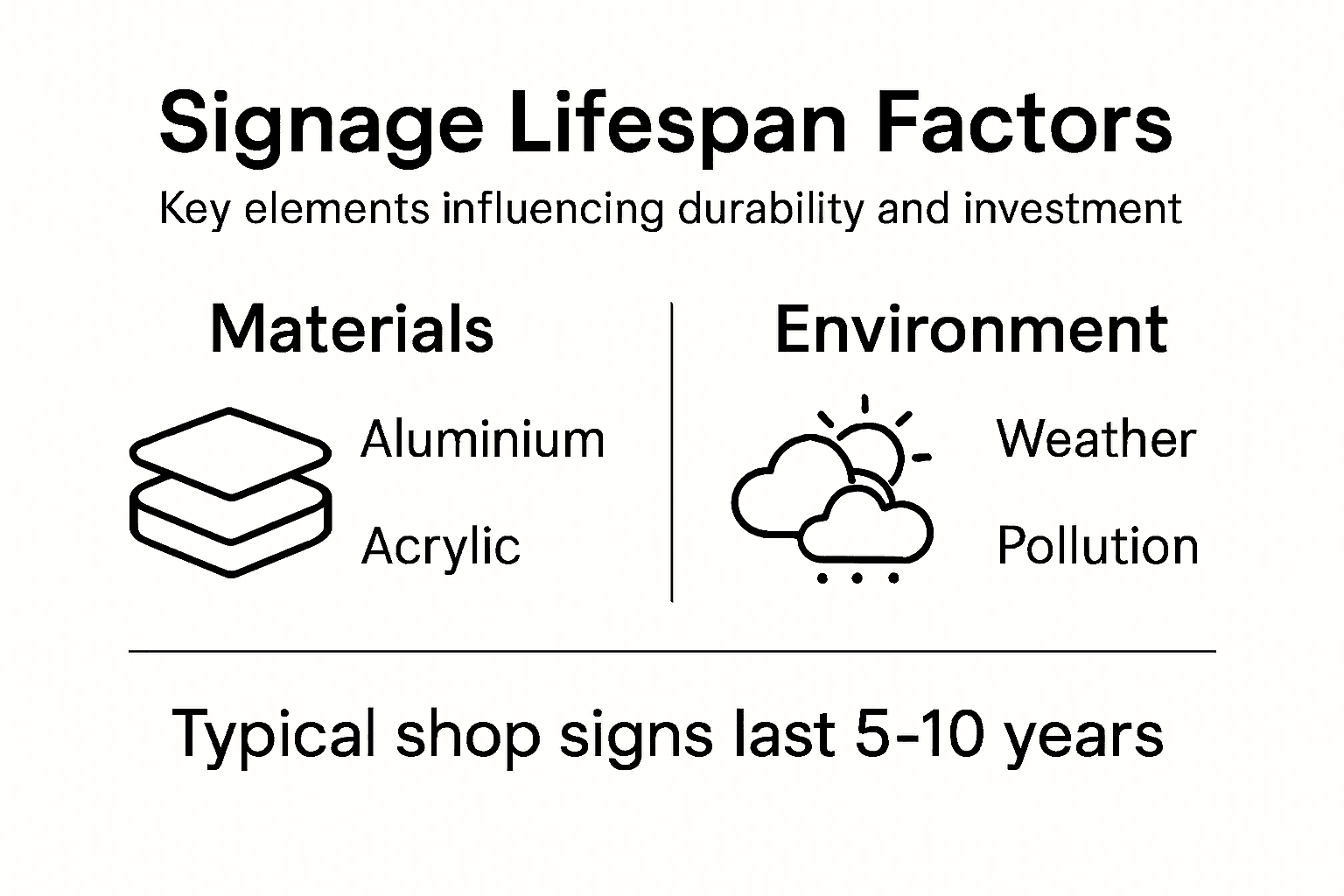
Table of Contents
Why Lifespan Matters
Budget Planning
Capital Investment Timing: Replacement cost anticipation:
Financial Planning:
- Accurate budgeting (replacement reserves, capital allocation, financial preparation)
- Cash flow management (scheduled investment, surprise avoidance, control maintenance)
- Lifecycle costing (total ownership understanding, informed decisions, value optimization)
- Depreciation planning (accounting accuracy, asset management, financial reporting)
Example: Shop Signs London installation £8,000:
- Lifespan: 15 years projected
- Annual depreciation: £533
- Replacement fund: £45/month (savings accumulation, budget preparation, affordability)
- Year 15: Replacement capital available (planned investment, no crisis, operational continuity)
vs. Uninformed:
- Year 15: Unexpected £10,000 expense (inflation-adjusted, emergency pressure, financial strain)
- Emergency funding (cash flow crisis, loan necessity, operational disruption)
Maintenance Optimization
Preventive Care: Lifespan extension strategies:
Maintenance Impact:
- Regular cleaning: +20-30% lifespan (appearance preservation, material protection, deterioration delay)
- Protective coatings: +30-50% lifespan (weather resistance, UV protection, damage prevention)
- Component replacement: +40-60% lifespan (proactive intervention, failure prevention, functionality maintenance)
- Professional service: +50-100% lifespan (expert care, comprehensive attention, issue identification)
ROI Example:
- Annual maintenance: £500 (cleaning, inspection, minor repairs, preventive action)
- Lifespan extension: 5 years (delayed replacement, continued operation, value preservation)
- Replacement deferral: £10,000 (capital preservation, future cost, inflation-adjusted)
- Return: 2,000% (£10,000 saving / £2,500 investment over 5 years)
Performance Expectations
Realistic Planning: Understanding degradation patterns:
Performance Curve:
- Years 1-3: Peak performance (optimal appearance, full functionality, maximum impact)
- Years 4-7: Gradual decline (minor fading, component wear, acceptable performance)
- Years 8-12: Noticeable aging (visible deterioration, repair frequency, degraded appearance)
- Years 13+: Replacement consideration (professional compromise, competitive disadvantage, decision point)
Quality Perception: Signage condition reflects business:
- Excellent: Success signal, quality commitment, professional standards
- Good: Maintained business, adequate care, acceptable presentation
- Fair: Declining investment, neglect suggestion, concern creation
- Poor: Business struggle, unprofessional appearance, customer deterrence
Material Lifespan Expectations
Metal Substrates
Structural Foundations: Long-term durability:
Aluminum:
Bare/Painted:
- Lifespan: 15-25 years (weather exposure, coating quality, maintenance-dependent)
- Factors: Coastal corrosion (salt exposure, accelerated deterioration, protective treatment)
- Maintenance: Repainting 7-10 years (protective renewal, appearance restoration, lifespan extension)
- Cost: £100-£300/sqm initial + £50-£150/sqm repaint
Powder-Coated:
- Lifespan: 20-30 years (superior protection, factory application, exceptional durability)
- Degradation: Minimal fading, chalk resistance (UV-stable formulation, quality advantage)
- Maintenance: Cleaning only (low-maintenance, cost-effective, convenience)
- Cost premium: 20-30% initial (lifecycle value, reduced maintenance, total ownership advantage)
Stainless Steel:
Brushed/Polished:
- Lifespan: 25-50 years (marine-grade, exceptional corrosion resistance, premium longevity)
- Maintenance: Periodic polishing (appearance maintenance, oxidation removal, aesthetic preservation)
- Applications: Prestige installations, coastal locations, architectural permanence
- Cost: £200-£500/sqm (premium investment, generational lifespan, heirloom quality)
Bronze/Brass:
Traditional Metals:
- Lifespan: 50-100+ years (heritage quality, patina development, living finish, character evolution)
- Aging: Desirable patina (verdigris, natural oxidation, authentic character, aesthetic enhancement)
- Maintenance: Minimal (self-protecting, natural preservation, traditional beauty)
- Cost: £250-£800/sqm (investment-grade, heritage value, permanent installation)
Plastic/Acrylic Materials
Lightweight Substrates: Cost-effective options:
Acrylic (Perspex/Plexiglass):
Standard:
- Lifespan: 7-15 years (UV exposure, quality grade, maintenance-dependent)
- Degradation: Yellowing, clouding, surface crazing (UV damage, aging effects, appearance deterioration)
- Applications: Illuminated Signs faces, panels, lightboxes (translucent requirement, light transmission)
- Cost: £40-£120/sqm (economical, adequate performance, replacement acceptance)
UV-Stabilized:
- Lifespan: 10-20 years (enhanced formulation, superior resistance, extended service)
- Benefits: Minimal yellowing, clarity retention (performance maintenance, appearance longevity)
- Cost premium: 30-50% (lifecycle justification, reduced replacement, quality investment)
PVC/Foamboard:
Lightweight Signs:
- Lifespan: 3-7 years (internal: 5-10 years, external: 3-5 years, exposure-dependent)
- Applications: Temporary, budget, internal signage (short-term, cost-sensitive, protected environments)
- Degradation: Warping, color fade, brittleness (environmental exposure, aging acceleration, failure modes)
- Cost: £20-£60/sqm (economical, disposable mentality, frequent replacement)
Vinyl Graphics
Applied Graphics: Most variable lifespan:
Cast Vinyl:
Premium Quality:
- Lifespan: 5-7 years external (quality-dependent, exposure-variable, maintenance-influenced)
- Characteristics: Conformable, durable, color-stable (application versatility, performance reliability)
- Applications: Vehicle wraps, complex curves, long-term installations (demanding environments, quality requirement)
- Cost: £35-£80/sqm (premium investment, extended service, quality assurance)
Calendared Vinyl:
Economy Option:
- Lifespan: 3-5 years external (shorter service, adequate performance, cost-trade-off)
- Characteristics: Rigid, flat-surface only (application limitation, technical constraint)
- Applications: Short-term, flat panels, budget projects (temporary campaigns, cost-priority, simple application)
- Cost: £25-£50/sqm (economical, acceptable temporary, replacement expectation)
Degradation Factors:
- UV exposure (primary aging, color fade, material breakdown, environmental assault)
- Weather extremes (temperature cycling, moisture, wind, stress acceleration)
- Surface preparation (adhesion foundation, longevity determinant, critical factor)
- Application quality (bubble-free, edge-sealed, professional execution, performance assurance)
Illumination Technology
Lighting Components: Technology-dependent lifespan:
LED Systems:
Modern Standard:
- LED lifespan: 50,000-100,000 hours (component rating, theoretical maximum, quality-dependent)
- Realistic service: 5-15 years (24/7 operation: 5-11 years, 12hr daily: 10-20 years, usage-variable)
- Degradation: 30% brightness loss at rated life (gradual decline, performance reduction, replacement trigger)
- Driver lifespan: 5-10 years (electrical component, typical failure point, service requirement)
- Cost: £50-£200/meter (initial investment, long-term value, efficiency benefit)
Fluorescent (Legacy):
Obsolete Technology:
- Tube lifespan: 10,000-20,000 hours (shorter service, frequent replacement, maintenance burden)
- Realistic service: 1-3 years (typical failure, ongoing cost, inefficiency)
- Ballast lifespan: 3-7 years (electrical failure, system component, reliability concern)
- Replacement trend: LED conversion (technology upgrade, efficiency gain, modernization)
- Cost: £30-£100/meter (apparent economy, hidden maintenance, lifecycle disadvantage)
Neon (Traditional):
Artisan Craft:
- Tube lifespan: 8-15 years (hand-made quality, skilled craftsmanship, variable performance)
- Maintenance: Transformer replacement, gas refill (specialist service, ongoing requirement, expense)
- Cost: £200-£800/meter (premium artisan, heritage aesthetic, niche application)
- Trend: LED neon simulation (modern alternative, cost-effective, maintenance reduction, aesthetic equivalence)
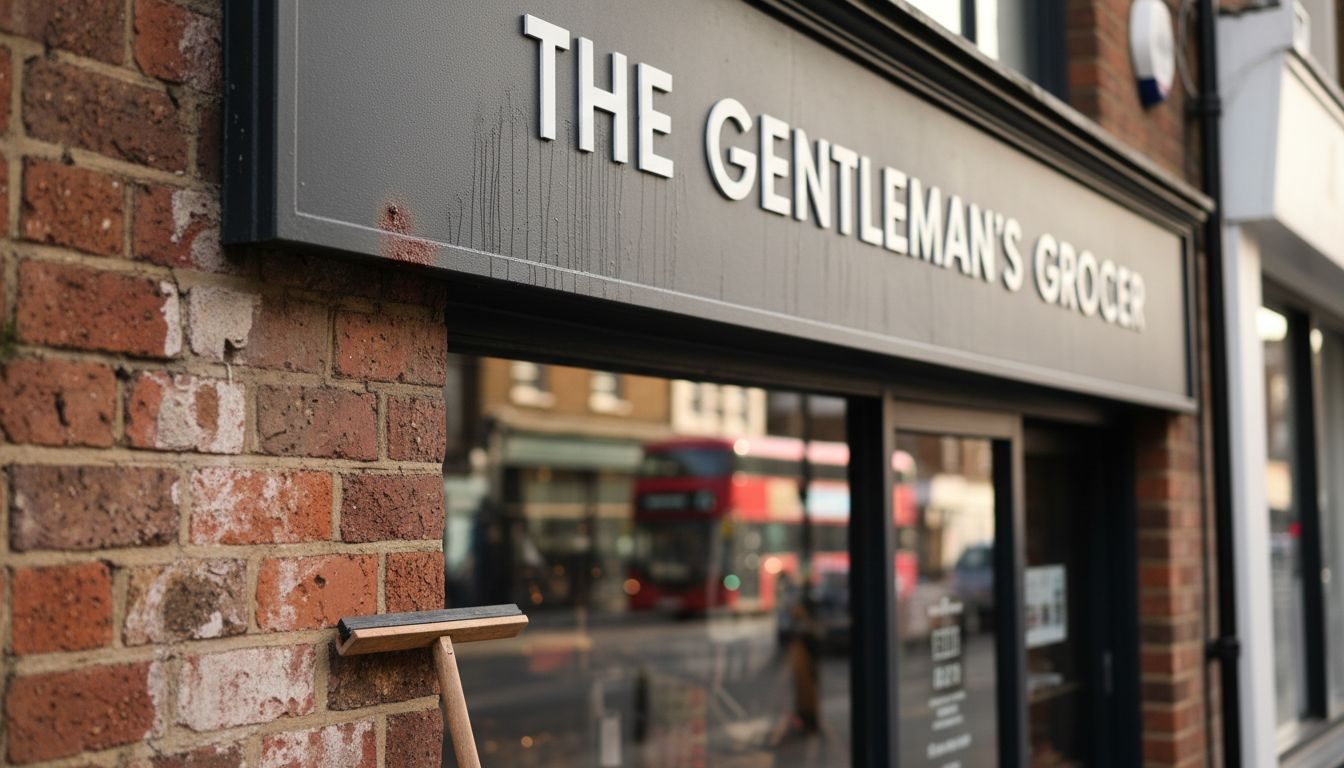 Here is a comparison of typical shop signage types and what impacts their expected lifespan in the UK climate:
| Sign Type | Typical Lifespan | Main Durability Risks | Longevity Boosters |
|---|---|---|---|
| Illuminated LED Sign | 8–12 years | LED failure, water ingress | Quality LEDs, sealed units |
| Fascia (Aluminium) | 7–10 years | Paint flaking, edge rust | Powder coating, edge sealing |
| Fascia (Timber) | 3–5 years | Rot, paint peel, water damage | Regular repainting, sealing |
| 3D Stainless Steel Letters | 10+ years | Vibration, fixings loosening | Robust anchoring, inspections |
| Acrylic Graphics | 5–7 years | UV yellowing, brittleness | UV-resistant acrylic, shade |
| Vinyl Graphics | 3–5 years | Fading, peeling at corners | High-grade vinyl, sheltered |
Environmental Factors
Location Impact
Exposure Severity: Environment affects longevity:
Coastal Locations:
Salt Exposure:
- Lifespan reduction: 30-50% (corrosion acceleration, aggressive environment, material challenge)
- Material selection: Marine-grade stainless, powder-coated aluminum (corrosion resistance, protective specification)
- Maintenance: Increased frequency (salt removal, protective renewal, vigilance necessity)
- Protection: Sacrificial coatings, regular washing (deterioration delay, appearance preservation, lifespan extension)
Urban/Industrial:
Pollution Exposure:
- Lifespan reduction: 20-40% (airborne contaminants, chemical exposure, degradation acceleration)
- Factors: Acid rain, industrial emissions, particulate matter (environmental assault, material attack, finish deterioration)
- Cleaning: More frequent (contaminant removal, surface protection, maintenance intensification)
- Materials: Sealed surfaces, resistant coatings (protection strategy, durability enhancement, specification optimization)
Sheltered/Internal:
Protected Environment:
- Lifespan extension: 50-100% (environmental protection, controlled conditions, degradation minimization)
- Minimal degradation (UV absence, weather exclusion, stable temperature, gentle aging)
- Applications: Reception signs, directories, Custom Signs (interior installations, protected locations, extended service)
- Maintenance: Cleaning only (dust removal, cosmetic care, minimal intervention)
Climate Considerations
Weather Extremes: Temperature and moisture:
Temperature Cycling:
- Daily fluctuations (expansion/contraction, material stress, fatigue acceleration)
- Freeze-thaw cycles (moisture expansion, structural damage, failure mechanism)
- Heat extremes (adhesive failure, material warping, performance degradation)
Moisture:
- Rainfall (water ingress, seal failure, corrosion initiation)
- Humidity (condensation, mold growth, material degradation)
- Snow/ice (weight loading, freeze expansion, damage potential)
UV Intensity:
- Southern exposure (maximum UV, accelerated fading, degradation intensity)
- Altitude (increased UV, exposure severity, protection requirement)
- Reflection (snow, water, buildings, amplification effect, compound stress)
This summary guides business owners in planning signage replacement strategies to minimise disruption and unplanned costs:
| Replacement Trigger | Financial Impact | Brand Consequence |
|---|---|---|
| LED sign dimming/flicker | Costly repairs possible | Less visible after dusk |
| Noticeable fading | Diminished value | Unprofessional, dated impression |
| Major structural damage | Emergency fees likely | Risk of business interruption |
| Rebranding requirements | Full redesign needed | New brand visibility, better fit |
| Escalating maintenance cost | Unwise spend increases | Focus shifts from growth efforts |
Maintenance Impact on Lifespan
Cleaning Frequency
Appearance Preservation: Regular attention extends life:
Recommended Schedule:
Monthly:
- Basic cleaning (dust, dirt removal, appearance maintenance, professional presentation)
- Glass wiping (clarity preservation, visibility maintenance, customer impression)
- Light check (illumination verification, functionality assurance, issue identification)
- Impact: +10-15% lifespan (contamination removal, material protection, aesthetic preservation)
Quarterly:
- Deep cleaning (comprehensive attention, detail focus, quality restoration)
- Protective treatment (wax, sealant application, defense enhancement, degradation delay)
- Component inspection (wear identification, preventive opportunity, early intervention)
- Impact: +15-25% lifespan (deterioration prevention, protection renewal, systematic care)
Annual:
- Professional service (expert assessment, comprehensive care, issue detection)
- Preventive repairs (component replacement, adjustment, optimization, failure prevention)
- Protective coating renewal (weather resistance, UV protection, longevity enhancement)
- Impact: +25-40% lifespan (proactive intervention, comprehensive maintenance, value maximization)
Component Replacement
Proactive Renewal: Selective intervention extends overall life:
Common Replacements:
LED Modules:
- Replacement trigger: 30% brightness loss (performance decline, competitive disadvantage, aesthetic compromise)
- Timing: 5-10 years typical (usage-dependent, quality-variable, predictable pattern)
- Cost: £200-£1,500 (component isolation, targeted investment, functionality restoration)
- Benefit: Complete system preservation (frame retention, structure continuity, cost avoidance)
Vinyl Graphics:
- Replacement trigger: Fading, peeling, brand inconsistency (appearance deterioration, professional compromise)
- Timing: 3-7 years typical (exposure-dependent, quality-variable, planned refresh)
- Cost: £300-£2,000 (size-dependent, design complexity, installation-included)
- Benefit: Contemporary appearance (brand evolution, market relevance, visual refresh)
Acrylic Panels:
- Replacement trigger: Yellowing, cracking, clarity loss (optical degradation, functional compromise)
- Timing: 7-15 years typical (quality-dependent, exposure-variable, gradual decline)
- Cost: £400-£3,000 (size-dependent, thickness-variable, fabrication-included)
- Benefit: Illumination restoration (brightness recovery, professional appearance, performance renewal)
Drivers/Transformers:
- Replacement trigger: Failure, flickering, electrical issues (component aging, reliability loss)
- Timing: 5-10 years typical (electrical component lifespan, predictable failure, planned intervention)
- Cost: £200-£1,000 (system complexity, capacity-dependent, electrical labor-included)
- Benefit: Operational continuity (functionality assurance, safety maintenance, system preservation)
Replacement Indicators
Physical Deterioration
Visible Signs: Replacement consideration triggers:
Structural:
- Frame corrosion (rust, oxidation, structural weakness, safety concern)
- Mounting looseness (vibration, wind damage, hazard creation, intervention necessity)
- Material cracking (substrate failure, weather damage, integrity loss, replacement requirement)
- Seal failure (water ingress, internal damage, deterioration acceleration, protection loss)
Aesthetic:
- Severe fading (brand color loss, professional compromise, competitive disadvantage)
- Vinyl peeling (edge lifting, graphic loss, unprofessional appearance, customer deterrence)
- Yellowing acrylic (optical degradation, illumination reduction, quality perception)
- Paint deterioration (chalking, flaking, cracking, neglect signal, appearance failure)
Functional:
- Illumination failure (>30% LEDs failed, darkness visibility, operational impact)
- Electrical issues (flickering, shorting, safety hazard, liability exposure)
- Operational problems (doors, moving parts, functionality loss, accessibility compromise)
Performance Decline
Functional Assessment: Effectiveness evaluation:
Visibility Reduction:
- Distance recognition decline (fading impact, competitive disadvantage, awareness reduction)
- Nighttime performance loss (illumination degradation, evening economy impact, operational limitation)
- Weather visibility (rain/fog penetration reduction, environmental performance, reliability decline)
Brand Impact:
- Professional appearance loss (quality signal degradation, customer perception, credibility erosion)
- Competitive disadvantage (neighbor comparison, market standards, relative positioning)
- Customer feedback (comments, questions, concern expression, perception indicator)
Economic Threshold
Repair vs. Replace: Financial decision framework:
Calculation:
- Repair cost vs. Replacement cost ratio (economic comparison, value assessment, decision guidance)
- Threshold: >50% replacement cost suggests full renewal (economic tipping point, investment optimization)
- Lifespan consideration (remaining service, future repairs, total ownership, strategic thinking)
Example:
- Repair estimate: £4,500 (component replacement, extensive intervention, significant investment)
- New signage: £8,000 (complete replacement, modern technology, comprehensive solution)
- Ratio: 56% (threshold exceeded, replacement favored, strategic decision)
- Decision: Replace (new warranty, technology upgrade, lifespan maximization, value optimization)
Lifecycle Cost Analysis
Total Ownership Calculation
Comprehensive Costing: Beyond initial purchase:
20-Year Analysis:
Premium Materials (Stainless Steel):
- Initial: £15,000 (high upfront, quality investment, premium specification)
- Maintenance (20 years × £300): £6,000 (minimal intervention, cleaning focus, low burden)
- Replacement: £0 (25-year lifespan, no renewal, durability advantage)
- Total: £21,000 (£1,050 annually, low lifecycle, value demonstration)
Standard Materials (Powder-Coated Aluminum):
- Initial: £8,000 (moderate upfront, balanced investment, adequate quality)
- Maintenance (20 years × £400): £8,000 (regular care, protective treatment, ongoing attention)
- Replacement (Year 15): £10,000 (inflation-adjusted, scheduled renewal, expected cost)
- Total: £26,000 (£1,300 annually, acceptable lifecycle, reasonable value)
Budget Materials (Painted Aluminum):
- Initial: £5,000 (low upfront, economy specification, cost-priority)
- Maintenance (20 years × £500): £10,000 (frequent repainting, intensive care, burden increase)
- Replacement (Years 10, 20): £12,000 (two renewals, frequency increase, cumulative expense)
- Total: £27,000 (£1,350 annually, false economy, lifecycle disadvantage)
Conclusion: Premium materials deliver lowest lifecycle cost (durability value, reduced replacement, total ownership optimization)
Conclusion
Business signage lifespan ranges from 3-7 years for vinyl graphics to 25+ years for premium metal structures, with durability determined by material selection, environmental exposure, maintenance quality, and technology specification. From economical Shop Front Signs requiring periodic refresh through permanent Projection Signs architectural installations and efficient Light up letters LED systems, strategic lifespan understanding enables accurate budget planning, maintenance optimization, and replacement timing that maximizes signage investment value.
Success requires realistic expectation setting, informed material selection, systematic maintenance implementation, proactive component replacement, and comprehensive lifecycle cost analysis that transforms signage from depreciating expense into strategic infrastructure asset. Whether specifying new installations or managing existing inventory, lifespan knowledge represents essential planning foundation delivering financial predictability, performance assurance, and sustained competitive advantage through intelligent signage lifecycle management.
For businesses seeking optimal signage longevity, partnering with experienced specialists ensures access to material expertise, maintenance program design, lifecycle cost analysis, and replacement planning guidance that protects investment value while maximizing operational lifespan through informed specification and systematic care.
Recommended
- How to Futureproof Signage for Maximum Business Impact – PromoSigns.co.uk
- Reduce Signage Costs: Smart Strategies for UK Retail
- How to Update Business Signage: Complete Step-by-Step UK
- Update Business Signage: 7 Essential Reasons UK
- Visual Branding Essentials: Impact On Business Success|BM
