
TL;DR:
- Signage in UK conservation areas is heavily regulated with strict application and material requirements.
- Proper preparation, including detailed documentation and early engagement with conservation officers, increases approval chances.
- Ongoing maintenance and adherence to conditions are essential to prevent enforcement actions and preserve heritage integrity.
Installing signage in a UK conservation area is not simply a matter of choosing a design and booking an installer. These protected zones carry strict advertisement regulations that go well beyond standard planning rules, and a single misstep can result in a refused application, an enforcement notice, or costly retrospective work. Property developers and business owners who skip the preparation stage often pay far more in time and money than those who get it right first time. This guide walks you through the legal framework, the documentation you need, the installation process itself, and how to keep your signage compliant long after it goes up.
Table of Contents
Key Takeaways
| Point | Details |
|---|---|
| Strict standards apply | You must meet five legal conditions and check for extra local restrictions before installing signs in conservation areas. |
| Prepare documents carefully | Gather permissions, detailed plans, and consult conservation officers to avoid delays or refusals. |
| Minimal, quality design wins | High-quality, unobtrusive signage is more likely to gain approval and longevity in heritage settings. |
| Maintain signs regularly | Keeping signage clean and well-kept will help avoid enforcement and fines. |
Understanding regulations for signs in conservation areas
Let’s begin by clarifying the special rules that apply to signage in these historic settings.
A conservation area is a designated zone where the character and appearance of the built environment are considered worthy of preservation or enhancement. Local planning authorities (LPAs) designate these areas under the Planning (Listed Buildings and Conservation Areas) Act 1990. Unlike standard commercial zones, conservation areas attract tighter controls on everything from window replacements to, crucially, external signage.
Signs in these areas are regulated under the Town and Country Planning (Control of Advertisements) (England) Regulations 2007. Many signs benefit from what is called deemed consent, meaning they can be displayed without a formal advertisement consent application, provided they meet specific conditions. However, conservation areas remove or restrict several of these deemed consent categories, which means more signs require express consent than you might expect.
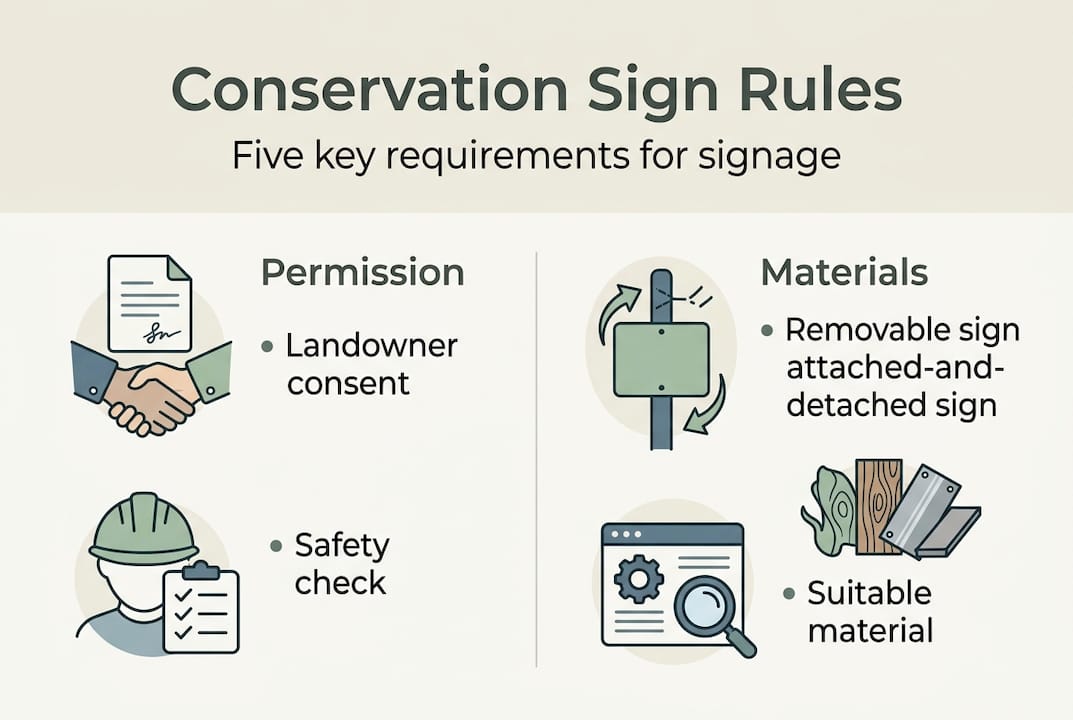
All shop signs London installations in conservation areas must meet five standard conditions: landowner permission, not endangering public or highway safety, being removable without cutting into the building fabric, and being kept well-maintained, clean, and tidy. These apply regardless of whether deemed consent or express consent is in place.
| Condition | What it means in practice |
|---|---|
| Landowner permission | Written consent from the property owner before installation |
| No safety risk | Sign must not obstruct sightlines, traffic signals, or pedestrian routes |
| Removable without cutting | Fixings must not permanently damage the building fabric |
| Well-maintained | Regular cleaning, repainting, and structural checks required |
| Clean and tidy appearance | No peeling, fading, or broken illumination permitted |
Two areas that are frequently misunderstood deserve particular attention. First, like-for-like replacements do not automatically carry deemed consent in conservation areas. If the original sign was itself subject to express consent, the replacement must go through the same process. Second, Article 4 Directions can remove permitted development rights that would otherwise apply, meaning even small signs may need full advertisement consent. Always check whether an Article 4 Direction is in force before assuming any consent is automatic.
Cumulative signage is another common pitfall. Councils regularly refuse applications not because a single sign is problematic, but because the combined effect of multiple signs on a building or street creates visual clutter that harms the character of the area. Understanding legal compliance for heritage signs before you design anything will save you significant time and expense.
For a broader overview of how advertisement regulations apply across different settings, our guide to UK outdoor signage regulations provides a useful reference point.
What you need before submitting a sign application
Now that you know the rules, it is crucial to gather everything needed prior to your planning submission.
Preparation is where most applications succeed or fail. Submitting an incomplete application wastes time, invites refusal, and can damage your relationship with the local planning authority before the project has properly begun. Here is what you need to have in place.
Required documentation checklist:
- Written confirmation of landowner consent (a signed letter or formal agreement)
- Completed advertisement consent application form (available via the Planning Portal)
- Scaled drawings showing the sign’s dimensions, position, and relationship to the building facade
- Photographs of the existing building and street scene
- A design and access statement explaining your material and colour choices
- Manufacturer’s specifications for any illuminated elements
- A location plan at 1:1250 scale showing the site in context
Signage is treated as advertisements, not as building works, so it is not exempt from consent even in conversion projects. Article 4 Directions may impose additional restrictions beyond the standard advertisement regulations, which is why checking the local authority’s planning constraints register is a non-negotiable first step.
Material choice is one of the most scrutinised aspects of any conservation area application. Working with experienced signage companies London who understand conservation requirements ensures your material selection is appropriate from the outset.
| Suitable materials | Unsuitable materials |
|---|---|
| Painted timber with hand-gilded lettering | Backlit plastic fascia panels |
| Brushed or patinated metal letters | Bright chrome or mirror-finish metals |
| Stone or slate engraved panels | Vinyl-wrapped aluminium composite |
| Powder-coated steel with muted tones | Fluorescent or neon-coloured substrates |
| Acrylic with heritage-style fonts | Flashing or animated LED displays |
Engaging with the conservation officer early is arguably the single most valuable step you can take. Conservation officers are employed by the LPA to advise on heritage matters, and they can provide informal pre-application guidance that shapes your design before you spend money on detailed drawings. Most LPAs offer a pre-application service, sometimes for a small fee, and the feedback you receive is invaluable.
Pro Tip: Before progressing any design work, search your local authority’s planning constraints map for Article 4 Directions. If one is in place, your sign will almost certainly require express advertisement consent regardless of its size or type. Missing this can add weeks to your programme.
For a clear walkthrough of how commercial signage projects progress from concept to installation, our step-by-step commercial sign installation guide covers the full process in detail.
Step-by-step: How to install compliant signs in conservation areas
With preparations in place, follow this step-by-step process to ensure your project meets all local requirements.
- Conduct a pre-application consultation. Contact the LPA’s conservation officer before committing to any design. Explain the nature of your business, the building type, and your initial ideas. Ask specifically whether an Article 4 Direction applies and what materials are likely to be acceptable. Record all advice in writing.
- Commission a heritage-sensitive design. Work with a signage specialist who understands conservation area requirements. The design should use muted, period-appropriate colours, traditional or restrained typefaces, and materials listed as suitable by the conservation officer. Avoid illumination unless the officer has indicated it may be acceptable, and if so, opt for halo-lit or externally lit options rather than internally illuminated box signs.
- Prepare your application documents. Compile all the items listed in the previous section. Ensure your scaled drawings are accurate, your photographs are current, and your design and access statement clearly explains why your chosen materials and format are appropriate for the conservation area context.
- Submit the advertisement consent application. Use the Planning Portal to submit your application. Double-check every field before submission. Incomplete applications are validated as invalid and returned, adding weeks to your timeline. Pay the correct fee, which for advertisement consent is currently £132 per application in England.
- Engage during the determination period. The standard determination period is eight weeks. During this time, respond promptly to any requests for additional information from the planning officer. If the officer raises concerns informally, consider whether minor amendments to the design could resolve them without requiring a full resubmission.
- Receive consent and review conditions. When consent is granted, read every condition carefully. Conditions often specify approved materials, maximum illumination levels, or maintenance obligations. Breaching a condition is treated as a breach of planning control, with the same consequences as having no consent at all.
- Appoint a professional installer. Use an installer experienced in conservation area work. Fixings must not damage the building fabric, and the installation method must match what was described in the application. Any deviation from the approved drawings can invalidate your consent.
- Document the installation. Photograph every stage of the installation, from the fixing positions to the completed sign. Keep copies of all consent documents, correspondence with the LPA, and installation records. This documentation is your evidence of compliance if questions arise later.
Custom signs London specialists with conservation area experience can guide you through each of these stages, ensuring your design and documentation meet the exact standard the LPA expects.
Pro Tip: Document every step of your project with dated photographs and written records. If enforcement queries arise months or years after installation, this evidence can demonstrate that the sign was installed in full accordance with the approved consent.
Maintenance, monitoring and dealing with enforcement
Even after successful installation, compliance does not end there. Here is what to do next.
Obtaining consent and completing installation is a significant achievement, but the obligations that come with it are ongoing. All signs must be well-maintained, clean, and tidy as a legal condition of their display. This is not a vague aspiration. It is an enforceable requirement, and councils do act on complaints from residents or their own officers.
Ongoing maintenance requirements:
- Visual inspections at least every three months, checking for peeling paint, faded vinyl, cracked lettering, or damaged fixings
- Cleaning appropriate to the material, using non-abrasive products on timber and metal surfaces
- Repainting or refinishing as soon as deterioration becomes visible, not when it becomes severe
- Illumination checks for any LED or external lighting elements, replacing failed components promptly
- Fixing integrity checks to confirm that brackets, bolts, and adhesive bonds remain secure, particularly after severe weather
Organise a simple maintenance log. Record the date of each inspection, what was checked, any issues found, and the remedial action taken. This log serves two purposes: it keeps you on schedule, and it provides documented evidence of compliance if the council ever raises a concern.
If you receive an enforcement notice, do not ignore it. The notice will specify the alleged breach, the steps required to remedy it, and the deadline for compliance. You have the right to appeal, but the appeal process takes time and does not automatically suspend the notice. In most cases, the fastest and least costly response is to remedy the breach promptly and confirm this in writing to the enforcement officer.
Large format printing London replacement graphics for approved sign structures in conservation areas can often be produced quickly to address deterioration before it triggers an enforcement complaint, making regular maintenance both practical and cost-effective.
Pro Tip: Routine upkeep costs a fraction of what retrospective enforcement action demands. A quarterly inspection and an annual repaint will almost always cost less than a single enforcement investigation, let alone the legal fees and remediation costs that can follow a formal notice.
Our perspective: The balance between visibility and preservation
Stepping back from process, it is important to consider the broader role signage plays in these areas.
Most guides on this subject focus almost exclusively on rules and restrictions, treating conservation areas as obstacles to be navigated. We think that misses the point entirely. Well-designed signage in a conservation area is not just a compliance exercise. It is an opportunity to create something genuinely distinctive that enhances the character of the street and strengthens the business’s reputation.
The businesses that struggle most are those that approach conservation areas with a standard commercial signage brief and then try to adapt it to meet heritage requirements. The business signs London projects that succeed are those that start from the character of the building and the area, and build their brand expression outward from there. The result is often more memorable and more effective than a generic illuminated fascia would ever be.
Collaborating early with planners and using heritage-sensitive materials consistently leads to fewer refusals and faster approvals in our experience. Councils respond positively to applicants who demonstrate genuine understanding of the area’s character. Restraint and quality often deliver stronger long-term results than maximum visibility at any cost.
Get expert help with compliant conservation area signage
If you are ready to apply these insights but want expert support, here is what to do next.
Navigating conservation area requirements is significantly easier when you work with a signage partner who has direct experience of the process. At PromoSigns, we support property developers and business owners from initial design concept through to planning application, manufacture, installation, and ongoing maintenance.
Our team understands what conservation officers look for, which materials pass scrutiny, and how to present an application that gives you the strongest possible chance of approval. Whether you need specialist signs for a listed building or want to understand how outdoor signage can attract customers without compromising heritage values, we provide end-to-end support tailored to your project. Get in touch at PromoSigns to discuss your requirements with our team.
Frequently asked questions
Is planning permission always required for signs in conservation areas?
Planning permission is not always required, but most signs in conservation areas need advertisement consent or must satisfy strict deemed consent conditions. Like-for-like replacements may carry deemed consent if the original sign was permitted, but Article 4 Directions can remove even these limited rights, so always verify with your local authority first.
What standard conditions must signage meet in protected areas?
Signs must have landowner consent, must not endanger public or highway safety, must be removable without cutting into the building, and must be kept clean and tidy. These five standard conditions apply to all displayed advertisements regardless of whether they are subject to deemed or express consent.
How can I make my signage application more likely to be approved?
Submit accurate scaled drawings, use high-quality minimal designs with heritage-appropriate materials, and contact the conservation officer before you finalise your design. Councils prioritise heritage preservation, so demonstrating that your sign respects the character of the area significantly improves your chances of approval.
What happens if my sign is poorly maintained or I ignore enforcement?
Neglected signage can result in formal enforcement action, financial penalties, or mandatory removal ordered by the council. Signs must be well-maintained as a legal condition of their display, and failure to comply is treated as a breach of planning control with the same seriousness as an unauthorised installation.
Recommended
- Outdoor Signage Regulations UK (2026) – Planning & Compliance
- Sign Visibility Guidelines: Enhancing Business Impact London
- Sign Permit Requirements London: Complete Business Guide
- Sign Permits in London: Complete Compliance Guide – PromoSigns.co.uk
