
TL;DR:
- Durable sign materials resist environmental and physical stresses to maintain clarity and structure over their service life. Selecting the right combination of substrate, coating, and laminate is essential, with aluminium and acrylic being top options for longevity outdoors. Proper installation, sealing, and maintenance significantly extend the lifespan, ensuring signs perform effectively in their intended environments.
Durable sign materials are defined as substrates and composites that resist UV radiation, moisture, temperature fluctuation, and physical impact to maintain visual clarity and structural integrity over their intended service life. For business owners, event organisers, and designers, the right material choice is not a cosmetic decision. It directly determines whether your signage retains brand impact after six months outdoors or begins to fade, warp, and delaminate. Aluminium, acrylic, and aluminium composite panels such as Dibond represent the industry’s leading long-lasting sign options, each suited to different budgets, environments, and service-life expectations.
Table of Contents
What makes a sign material durable?
Durability in signage is a system property, not a single characteristic. A substrate may be physically strong yet fail rapidly if its coating cannot withstand UV exposure. Durability is a system property where UV laminates combined with proper base materials dramatically extend sign lifespan. That means specifying the right combination of substrate, coating, and laminate from the outset.
The core performance criteria that determine whether a material qualifies as genuinely weatherproof signage material are:
- UV resistance: Prolonged sun exposure degrades pigments and weakens polymer bonds. Materials without UV-stable coatings yellow, crack, or lose colour within months in direct sunlight.
- Moisture resistance: Water ingress at edges, joints, or print layers causes delamination, rust, and substrate swelling. Sealed edges and waterproof substrates are non-negotiable for outdoor use.
- Temperature tolerance: Repeated freeze-thaw cycles and summer heat expansion stress interfaces and fixings. Materials with low thermal expansion coefficients perform better across UK seasonal ranges.
- Impact resistance: Physical knocks from pedestrians, vehicles, or wind-borne debris cause cracking and surface damage. Substrate thickness and material flexibility both contribute here.
- Surface coatings and laminates: PVDF coatings on aluminium can maintain colour retention for 20 to 30 years with minimal maintenance. UV protective films applied over printed graphics extend vibrancy and prevent chalking.
Construction quality matters as much as material grade. Durability failures frequently arise from edge and interface weaknesses rather than bulk material failure. A sign fabricated with poorly sealed edges or inadequate surface preparation will underperform regardless of how premium the substrate is.
Pro Tip: When briefing a signage supplier, ask specifically about edge sealing and interface treatment, not just the substrate grade. These details separate a sign that lasts three years from one that lasts fifteen.
Comparing the best materials for signs: aluminium, composites, acrylics, and plastics
Choosing between materials requires weighing lifespan, cost, weight, and visual output against your specific application. The table below summarises the most widely used durable sign materials in the UK market.
| Material | Typical outdoor lifespan | Weight | Best use case | Relative cost |
|---|---|---|---|---|
| Aluminium (coated) | 20+ years | Medium | Permanent outdoor signs, fascia | High |
| Aluminium composite (Dibond) | 5 to 10 years | Low | Retail displays, hoardings, semi-permanent | Medium |
| UV resistant acrylic | 10+ years | Low to medium | Illuminated signs, premium retail | Medium to high |
| HDPE | 5 to 10 years | Low | High-impact environments, outdoor events | Medium |
| PVC / corrugated plastic | 1 to 3 years | Very low | Temporary events, short campaigns | Low |
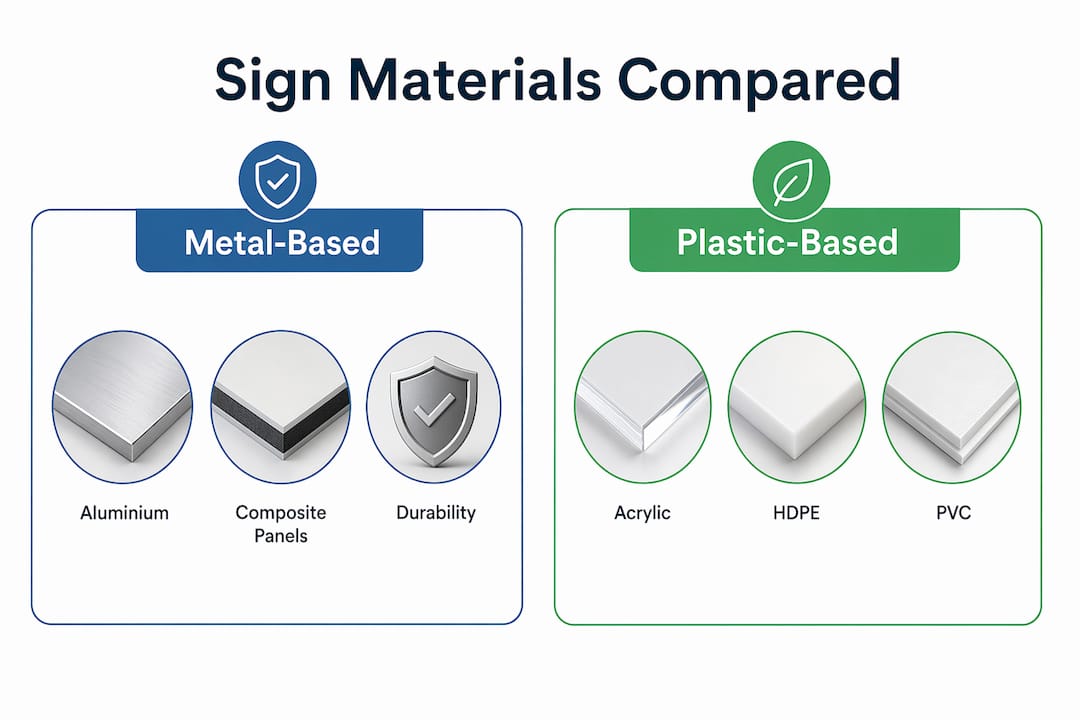
Aluminium is the gold standard for permanent outdoor signage. Aluminium paired with UV protection is the most durable choice for outdoor signs, offering a lifespan of 7 to 10 years or more with proper lamination. Uncoated aluminium is rustproof by nature, and when finished with PVDF or polyester powder coatings, it resists colour fade for decades. It suits shop fronts, fascia signs, and any application where permanence justifies the investment.
Aluminium composite panels, most commonly Dibond, bond two thin aluminium skins around a polyethylene core. The result is a rigid, lightweight board that is significantly easier to handle and install than solid aluminium sheet. It performs well in semi-permanent applications such as hoardings, retail displays, and construction site signage, typically delivering five to seven years in harsh conditions before showing visible wear.
UV resistant acrylic offers a premium visual finish with genuine long-term performance. UV resistant clear acrylic can last 10 or more years outdoors and is 17 times more impact resistant than glass. This makes it a practical choice for illuminated signs, retail fascias, and architectural lettering where clarity and colour depth matter. One critical point: UV resistance in acrylic depends on the internal chemical formulation, not just a surface treatment. Always verify the material grade specification before ordering for outdoor use.
HDPE (high-density polyethylene) offers an alternative durability profile suited to high-impact environments. HDPE’s energy dispersion properties make it particularly effective where physical knocks are frequent, such as event barriers, outdoor wayfinding, and construction zones.
PVC and corrugated plastic (often called Correx in the UK) serve a clear purpose: short-term, budget-conscious applications. PVC and corrugated plastic signs last roughly one to three years outdoors, making them appropriate for election boards, event directional signs, and short-term promotions. Using them for permanent signage is a false economy.
Pro Tip: For a detailed breakdown of how these materials perform across UK-specific manufacturing and installation conditions, the outdoor sign materials guide from Promosigns covers substrate selection by application type.
How to choose the right sign material for your project
Selecting weather-resistant sign materials is a decision that should be driven by four practical factors, applied in sequence.
-
Define your service life. The single most important question is how long the sign needs to perform. Material selection should be guided by anticipated campaign length and exposure severity. A three-month event requires corrugated plastic or PVC. A five-year retail installation warrants aluminium composite. A permanent shop front sign demands coated aluminium or high-grade acrylic. Matching material durability to service life prevents both overspending and premature failure.
-
Assess your environmental exposure. Coastal locations accelerate corrosion through salt-laden air. Urban environments introduce pollution and particulate abrasion. High-altitude or south-facing installations receive significantly more UV intensity than shaded or north-facing positions. Each of these factors should push your material specification upward. A sign that performs adequately in a sheltered London courtyard may fail within two years on an exposed Essex seafront.
-
Balance budget against long-term value. Affordable durable signage does not mean the cheapest upfront option. A corrugated plastic sign at £30 replaced annually costs more over five years than a Dibond panel at £120 installed once. Calculate cost per year of service life, not cost per sign. This reframe consistently shifts clients towards better materials and better outcomes.
-
Consider your visual and branding priorities. Gloss acrylic delivers a premium, high-clarity finish that suits luxury retail and hospitality. Brushed aluminium reads as architectural and corporate. Correx looks temporary because it is. Your material choice communicates brand values before anyone reads a word of your copy. For guidance on aligning material choice with long-term brand positioning, the futureproofing signage guide from Promosigns offers a practical framework.
-
Account for installation method and physical stress. Signs fixed to masonry with mechanical fixings tolerate heavier substrates. Suspended or cantilevered signs benefit from lightweight composites. Signs in high-footfall areas need impact-resistant edges and robust fixing points. Specify the installation method before finalising the substrate, not after.
How to extend the lifespan of your signage
Selecting the right substrate gets you most of the way there. Maintenance and protective practices cover the rest. The weatherproof signage solutions guide from Promosigns covers industrial-grade approaches in detail, but the core principles are straightforward.
- Apply UV laminates at production. Matching laminates to UV inks with controlled pressure and cleanliness significantly improves print longevity and prevents defects such as silvering. Laminate films must have compatible flexibility and shrinkage with the underlying ink layer. Mismatched laminates create internal tension that causes visible failure within months.
- Clean acrylic signs correctly. Acrylic scratches easily with abrasive cloths and degrades with solvent-based cleaners. Use a soft microfibre cloth with mild soapy water. Avoid ammonia-based products, which cloud the surface over time.
- Inspect fixings and edges seasonally. Water ingress at fixing points and unsealed edges is the most common cause of premature substrate failure. A brief annual inspection, tightening fixings and resealing exposed edges, adds years to a sign’s service life.
- Address surface contamination before it compounds. Adhesion failures on acrylic typically trace back to surface contamination during preparation, including fingerprints, mould-release agents, and polishing residue. The same principle applies in service: contamination that sits on a sign surface accelerates UV degradation and adhesion breakdown beneath laminates.
Pro Tip: For London-specific maintenance advice accounting for urban pollution and variable weather, the shop sign durability tips resource from Promosigns is worth bookmarking before your next installation.
What we have learnt from specifying materials across hundreds of projects
The most common mistake we see from clients approaching material selection is treating it as a cost decision rather than a performance decision. A business owner will specify corrugated plastic for a shop front because it is the cheapest option available, then return six months later frustrated that the sign looks tired and the graphics have faded. The material did exactly what it was designed to do. The problem was the specification.
The second pattern we see regularly is over-specification in the opposite direction. A client planning a three-month pop-up event does not need coated aluminium. Dibond or even high-quality PVC foam board will serve the purpose at a fraction of the cost and with no meaningful loss of visual impact over that timeframe.
What actually works is a tailored specification that starts with the question: what does this sign need to do, for how long, and in what conditions? From that answer, the material choice becomes straightforward. Aluminium for permanent outdoor use. Aluminium composite for semi-permanent retail and construction. Acrylic for premium illuminated or architectural applications. Correx and PVC for short campaigns and events.
We are also watching developments in recycled and bio-based substrates with genuine interest. Several manufacturers are now producing composite panels with significant recycled aluminium content that match the performance of virgin material. As sustainability requirements tighten across UK construction and retail procurement, these materials will move from niche to standard specification faster than most clients expect.
Professional consultation at the specification stage costs nothing and prevents expensive mistakes. If you are uncertain which material suits your project, ask before you order.
— Promo
How Promosigns can help you specify and produce durable signage
At Promosigns, we work with business owners, event organisers, and designers across London, Essex, and Kent to specify and produce signage that performs for its full intended service life. Whether you need a permanent shop front sign in coated aluminium, a semi-permanent hoarding in Dibond, or a premium acrylic fascia for a hospitality venue, our team advises on material selection based on your environment, budget, and branding priorities.

We manufacture and install bespoke signage with fast turnaround times and professional fitting across our service areas. Every project begins with a material specification conversation, not a catalogue. If you want signage that maintains its visual impact year after year, speak to the Promosigns team about your next project.
FAQ
What is the most durable material for outdoor signs?
Coated aluminium is the most durable outdoor sign material, with a service life of 20 or more years when finished with PVDF or UV protective coatings. Aluminium composite panels such as Dibond offer a lightweight alternative with a five to ten year lifespan.
How long do acrylic signs last outdoors?
UV resistant cast acrylic lasts 10 or more years outdoors and is 17 times more impact resistant than glass, making it a strong choice for illuminated and architectural signage. The key is specifying a grade with UV stabilisers built into the formulation rather than applied as a surface treatment only.
What is the cheapest durable sign material?
Aluminium composite (Dibond) offers the best balance of durability and cost for semi-permanent applications, typically lasting five to seven years at a moderate price point. PVC foam board is cheaper but suits only short-term or indoor use.
How do I choose between temporary and permanent sign materials?
Match material durability to your intended service life and environmental exposure. Use corrugated plastic or PVC for campaigns under two years, aluminium composite for two to ten year applications, and coated aluminium or high-grade acrylic for permanent installations.
Why do some outdoor signs fail early despite using quality materials?
Early failure most commonly results from edge and interface weaknesses, surface contamination during production, or mismatched laminates rather than bulk material failure. Proper surface preparation, sealed edges, and correctly specified UV laminates are as important as the substrate itself.
Recommended
- Signage Safety Considerations: Complete Guide for UK Businesses – PromoSigns.co.uk
- Shop Sign Durability Tips: Maximise Impact in London – PromoSigns.co.uk
- Business Signage Lifespan: Maximising Your Investment – PromoSigns.co.uk
- Outdoor vs Indoor Signage: Authoritative Complete Guide – PromoSigns.co.uk
