
Many retail and hospitality owners believe seasonal signage merely decorates their shopfront, yet strategic seasonal displays increase sales significantly when properly planned. The difference between forgettable and impactful seasonal promotions lies in understanding planning timelines, choosing appropriate signage types, measuring tangible returns, and implementing quick-swap systems. This article reveals proven methodologies for planning seasonal campaigns, clarifies when static versus digital signage delivers better value, explains ROI measurement frameworks, and provides practical solutions for UK businesses needing rapid seasonal refreshes across multiple locations.
Table of Contents
Key Takeaways
| Point | Details |
|---|---|
| Long term planning | Planning should begin six to twelve months ahead, with phased milestones to ensure timely delivery. |
| Static and digital mix | Combining static and digital signage offers cost efficiency with flexibility across campaigns. |
| Modular quick installs | Modular signage enables fast swaps between seasonal messages without full hardware replacement. |
| ROI measurement | Track footfall and sales to optimise promotional signage performance across sites. |
| Standardised templates | Use standardised templates across locations to maintain brand consistency while tailoring offers for each site. |
Planning effective signage for seasonal promotions
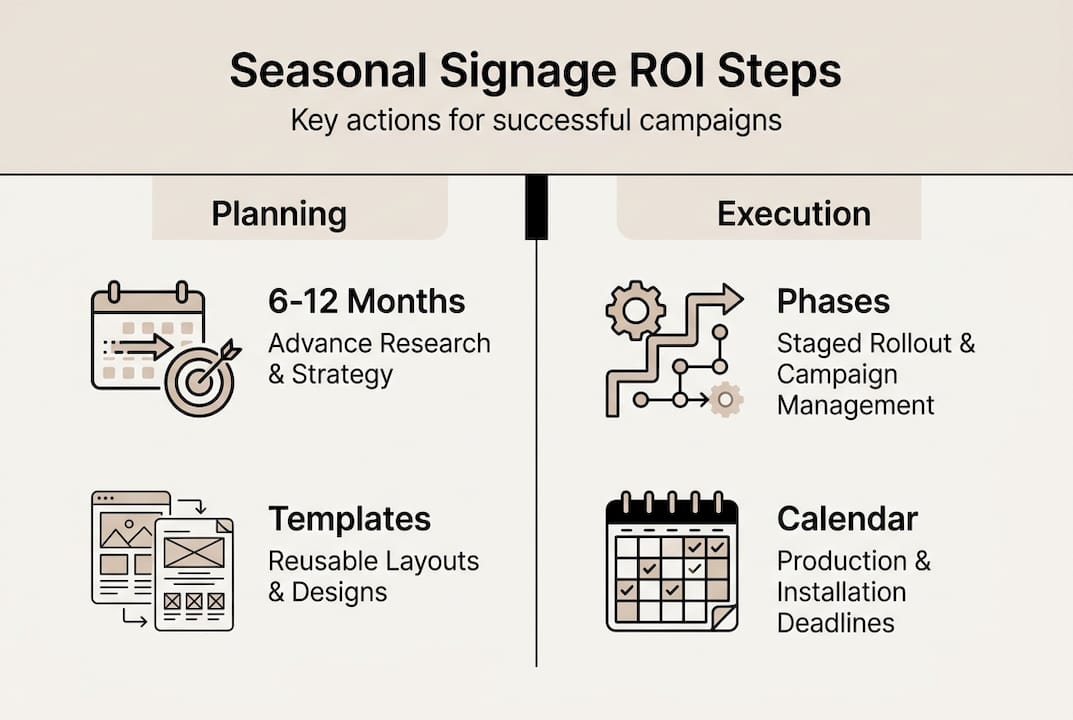
Successful seasonal campaigns require methodical planning that begins months before launch. Planning signage 6-12 months ahead with structured phases ensures your promotional materials arrive on time and align perfectly with customer expectations. This extended timeline accommodates creative development, supplier coordination, and installation logistics without last-minute compromises.
Structure your campaign into distinct phases that build momentum. Launch with teaser signage that sparks curiosity and anticipation amongst your target audience. Transition to full-launch materials that deliver complete promotional messaging with maximum visual impact. Close with last-chance signage that creates urgency and drives final conversions before the seasonal window closes. Each phase serves a specific psychological purpose in the customer journey.
Standardised templates prove invaluable for businesses operating multiple locations. Creating a cohesive visual framework allows you to maintain brand consistency whilst adapting specific offers or messaging for individual sites. This approach reduces design time for subsequent campaigns and ensures customers recognise your seasonal promotions instantly across different branches.
Schedule your creative approval 6-8 weeks before launch to allow sufficient review time without rushed decisions. Lock in production timelines 3-4 weeks prior to deployment, accounting for potential delays in manufacturing or shipping. These buffers protect your campaign from common supply chain disruptions that plague last-minute planners.
Retail signs signage modular systems offer remarkable flexibility for seasonal campaigns. These adaptable frameworks allow you to swap graphics, update messaging, or reconfigure layouts without replacing entire installations. The modular approach reduces waste, lowers long-term costs, and enables faster transitions between promotional periods.
Pro Tip: Create a master calendar mapping all seasonal campaigns for the year, including planning milestones, approval deadlines, and installation dates. This visual roadmap helps identify resource conflicts and ensures your signage planning process remains proactive rather than reactive.
Coordinate closely with your signage project management team to establish clear responsibilities and communication channels. Designate specific stakeholders for creative approval, budget authorisation, and installation oversight. Clear accountability prevents delays caused by unclear decision-making authority or miscommunication between departments.
Choosing between static and digital signage for seasonal promotions
Static signage delivers exceptional value for campaigns requiring infrequent updates and extended display periods. Traditional printed materials incur lower upfront costs and maintain visual quality throughout lengthy seasonal runs without ongoing content management. Their durability suits outdoor environments where weather resistance and consistent messaging matter more than real-time content changes.
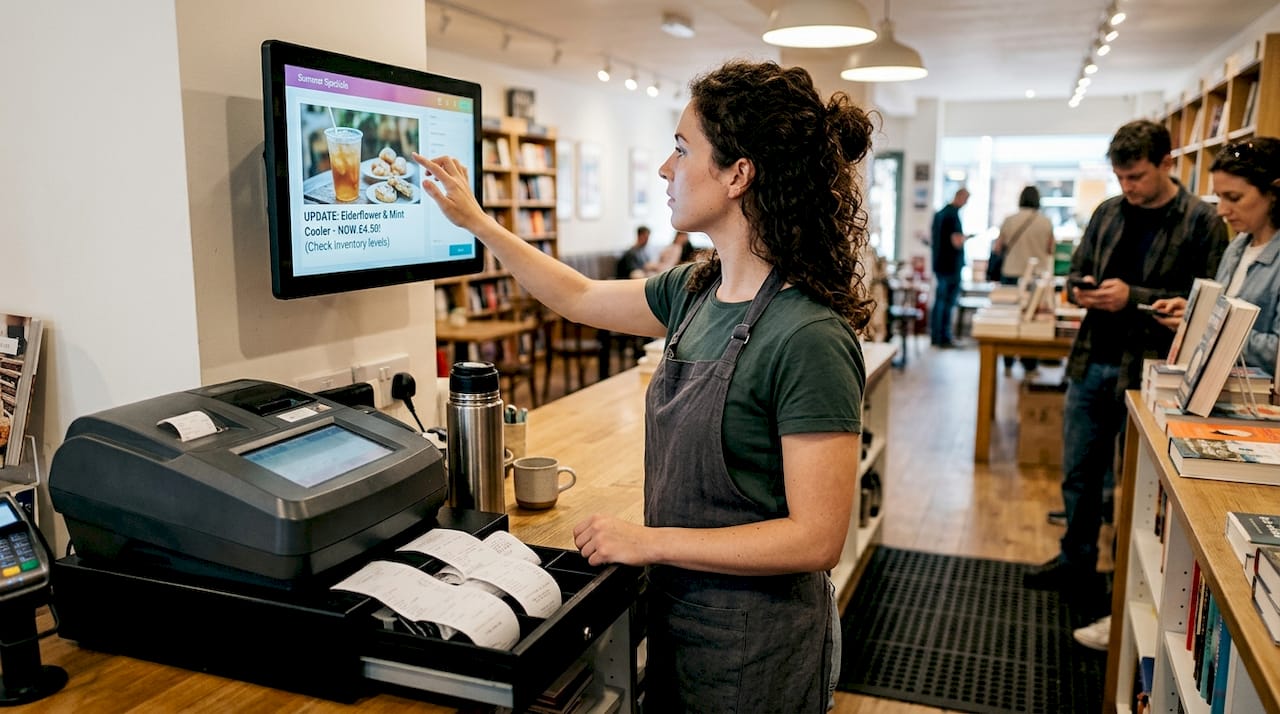
Digital signage transforms seasonal promotions through dynamic content capabilities and instant updates. You can adjust messaging based on time of day, inventory levels, or weather conditions without physical replacements. This flexibility proves particularly valuable for hospitality businesses promoting daily specials or retailers running flash sales within broader seasonal campaigns. The digital signage market in the UK grows at 9.2% annually as businesses recognise these advantages.
Hybrid approaches combine static foundations with digital enhancements for optimal impact. Install permanent structural elements using traditional materials whilst incorporating digital screens for variable content. This strategy balances cost-effectiveness with flexibility, allowing you to refresh specific promotional elements without replacing entire installations.
| Signage Type | Best For | Key Advantage | Primary Limitation |
|---|---|---|---|
| Static | Extended campaigns, outdoor durability | Low cost per impression over time | Cannot update without physical replacement |
| Digital | Dynamic content, multiple messages | Instant content changes | Higher initial investment |
| Hybrid | Balanced flexibility and cost | Combines strengths of both | Requires integrated planning |
Cost per thousand impressions (CPM) for static signage decreases dramatically over extended periods. A quality large format printing London display costing £500 that generates 100,000 impressions over three months achieves a CPM of £5, far below most digital advertising channels. This economic advantage makes static signage particularly attractive for budget-conscious seasonal campaigns.
Digital displays justify their higher initial investment through content versatility and reduced labour costs. Updating digital content takes minutes compared to hours of physical installation work. For businesses running multiple concurrent promotions or frequent seasonal updates, these digital signage advantages quickly offset equipment costs.
Pro Tip: Match your signage type to promotion length and update frequency. Static works brilliantly for 4-12 week seasonal campaigns with consistent messaging. Digital excels when you need daily or weekly content changes within the seasonal window.
Material durability affects long-term value regardless of signage type. Quality static materials withstand UV exposure and weather conditions for multiple seasonal deployments when properly stored. Digital screens require environmental protection and regular maintenance but deliver years of service with appropriate care. Factor these lifecycle considerations into your total cost analysis.
Explore strategies to reduce signage costs without compromising impact by selecting appropriate materials for each application. Reserve premium materials for high-visibility locations whilst using cost-effective options for secondary displays. This tiered approach optimises your budget allocation across multiple touch points.
Measuring ROI and optimising signage for seasonal campaigns
Quantifying signage effectiveness requires establishing clear baselines before deployment. Track footfall and sales during comparable periods without promotional signage to create accurate comparison benchmarks. This pre-campaign data becomes essential for isolating signage impact from other variables affecting business performance.
Seasonal fluctuations naturally affect customer behaviour and purchasing patterns. Adjust your metrics to account for these predictable variations by comparing performance against previous years rather than immediately preceding weeks. A 20% sales increase during December means something entirely different than the same increase in March.
Present ROI data in formats that resonate with decision-makers and justify future signage investments. Calculate return as a multiple of investment cost rather than just percentage increases. Demonstrating that £2,000 in signage generated £8,000 in additional revenue creates more compelling business cases than abstract percentage figures.
| Metric | Pre-Signage Baseline | Post-Signage Performance | Improvement |
|---|---|---|---|
| Daily footfall | 450 visitors | 585 visitors | +30% |
| Conversion rate | 18% | 24% | +33% |
| Average transaction | £42 | £48 | +14% |
| Daily revenue | £3,402 | £6,739 | +98% |
Capture qualitative feedback alongside quantitative metrics for comprehensive insight. Customer comments about noticing promotions, understanding offers, or being drawn into your location by signage provide valuable context that numbers alone cannot reveal. This combined approach strengthens your understanding of what drives signage effectiveness.
Implement systematic testing to refine future campaigns based on measured results. Try different colour schemes, messaging approaches, or placement strategies across locations to identify what resonates most with your audience. Document these learnings to build institutional knowledge that improves each successive seasonal campaign.
Pro Tip: Create a simple dashboard tracking key signage ROI measurement metrics that updates weekly during campaigns. Real-time visibility into performance allows mid-campaign adjustments rather than post-mortem analysis when opportunities have passed.
Attribute revenue increases carefully by considering other concurrent marketing activities. Isolate signage impact by surveying customers about what prompted their visit or purchase. This direct feedback helps separate signage effectiveness from email campaigns, social media, or other promotional channels running simultaneously.
Long-term value extends beyond immediate campaign results. Quality shop signs London builds brand recognition and customer familiarity that compounds across multiple seasonal deployments. Factor these cumulative benefits into ROI calculations rather than evaluating each campaign in isolation.
| Signage Type | Best For | Key Advantage | Primary Limitation |
|---|---|---|---|
| Static | Extended campaigns, outdoor durability | Low cost per impression over time | Cannot update without physical replacement |
| Digital | Dynamic content, multiple messages | Instant content changes | Higher initial investment |
| Hybrid | Balanced flexibility and cost | Combines strengths of both | Requires integrated planning |
Practical signage solutions for UK retail and hospitality seasonal promotions
Modular signage systems revolutionise seasonal campaign execution by enabling rapid content swaps without complete reinstallation. These versatile frameworks use standardised mounting hardware that accepts interchangeable graphic panels. You invest once in the structural components, then update only the visual elements for each new promotion.
Quick-install systems dramatically reduce labour costs and business disruption during busy retail periods. Traditional signage installation often requires extended work periods that interfere with trading hours. Modern quick-mount solutions allow trained staff to complete changes in minutes rather than hours, minimising impact on customer experience.
Standardised designs across multiple branches maintain brand consistency whilst accommodating local customisation. Develop master templates that specify colours, fonts, and layout structures, then allow individual locations to adapt specific offers or imagery. This balanced approach ensures customers recognise your brand instantly whilst respecting regional preferences.
Lightweight, durable banner printing London materials enhance reusability and simplify storage between seasonal deployments. Modern substrates like corrugated plastic or fabric systems withstand repeated installation cycles without degradation. Their reduced weight also lowers shipping costs when rotating signage between locations or returning materials to central storage.
Pro Tip: Implement a methodical labelling system for stored signage components that includes campaign name, installation location, and condition notes. This organisation accelerates future deployments and prevents confusion when managing multiple seasonal sets. Photograph installations before removal to document correct assembly for next year.
Plan logistics carefully to ensure timely signage swaps without last-minute scrambles. Schedule installations during low-traffic periods when possible, and maintain contingency plans for delayed deliveries or staffing shortages. The signage installation process benefits from documented procedures that any trained team member can follow.
Temporary shop window graphics offer flexibility for testing new promotional approaches without permanent commitments. These adaptable systems allow you to experiment with placement, messaging, or visual styles before investing in more permanent solutions. This iterative approach reduces risk whilst building knowledge about what works in your specific environment.
Coordinate signage updates with broader seasonal marketing campaigns to create cohesive customer experiences. Align visual themes, messaging tone, and promotional timing across all channels so customers encounter consistent branding whether they see your shopfront, receive emails, or browse social media. This integration amplifies impact beyond what isolated signage can achieve.
Explore professional signage solutions for your seasonal promotions
Partnering with experienced signage specialists ensures your seasonal campaigns achieve maximum impact through expert design and execution. Professional providers offer comprehensive consultation that aligns signage solutions with your specific promotional objectives, budget constraints, and installation requirements. Their technical knowledge helps you avoid common pitfalls whilst optimising visual effectiveness.
Access diverse signage types including illuminated displays, window graphics, and freestanding units tailored to your venue characteristics. Specialists maintain relationships with material suppliers and manufacturers that enable competitive pricing and faster turnaround times than individual businesses can negotiate independently. This network advantage proves particularly valuable during peak seasonal periods when production capacity tightens.
Benefit from installation expertise that ensures proper mounting, electrical connections, and weather protection for outdoor applications. Professional installers understand building regulations, safety requirements, and best practices that protect your investment whilst maintaining visual appeal. Their experience prevents costly mistakes that plague DIY installations.
Explore both outdoor signs solutions and interior options that work together to guide customers from street-level attraction through to point-of-purchase conversion. Coordinated signage creates seamless customer journeys that maximise promotional effectiveness at every touchpoint. Specialists help you identify optimal placement strategies based on traffic patterns and sightlines.
Leverage temporary signage solutions for seasonal campaigns that require flexibility without permanent alterations to your premises. These adaptable systems accommodate changing promotional needs whilst maintaining professional appearance standards that reflect well on your brand.
FAQ
How far in advance should I begin planning seasonal signage campaigns?
Start your signage planning process 6-12 months before launch to ensure adequate time for creative development, approvals, and production. Finalise creative concepts 6-8 weeks prior and lock in production schedules 3-4 weeks before deployment. This extended timeline accommodates potential revisions and supply chain variables without compromising campaign launch dates.
What campaign phases should I include in seasonal promotions?
Structure campaigns into three distinct phases: teaser signage that builds anticipation, full-launch materials delivering complete promotional messaging, and last-chance displays creating urgency before the season ends. Each phase serves specific psychological purposes in the customer journey and requires coordinated timing across all locations.
How do I maintain brand consistency across multiple locations?
Develop standardised templates specifying colours, fonts, and layout structures whilst allowing local customisation of specific offers or imagery. This balanced approach ensures instant brand recognition whilst respecting regional preferences and individual site requirements.
When does digital signage justify its higher initial cost?
Digital displays prove cost-effective when you need frequent content updates, multiple concurrent messages, or real-time responsiveness to inventory or weather conditions. The digital signage advantages include instant content changes without physical labour and reduced long-term update costs. Businesses running daily specials or flash sales within seasonal campaigns benefit most from digital flexibility.
What situations favour static signage over digital options?
Static signage delivers superior value for extended campaigns with consistent messaging, outdoor applications requiring weather resistance, and budget-conscious deployments. Cost per thousand impressions drops significantly over time, making static options economically attractive for 4-12 week seasonal runs.
Can I combine static and digital signage effectively?
Hybrid approaches install permanent structural elements using traditional materials whilst incorporating digital screens for variable content. This strategy balances cost-effectiveness with flexibility, allowing you to refresh specific promotional elements without replacing entire installations.
What metrics should I track to evaluate signage effectiveness?
Establish baselines by tracking footfall and sales during comparable periods without promotional signage. Monitor these same metrics during and after deployment, adjusting for predictable seasonal fluctuations by comparing against previous years rather than immediately preceding weeks. This approach isolates signage impact from other variables affecting performance.
How do I present ROI data to justify signage investments?
Calculate return as a multiple of investment cost rather than just percentage increases. Demonstrating that £2,000 in signage generated £8,000 in additional revenue creates more compelling business cases than abstract figures. Combine quantitative metrics with qualitative customer feedback about noticing promotions or being drawn into your location by signage for comprehensive insight.
Should I evaluate campaigns individually or cumulatively?
Consider long-term value beyond immediate campaign results, as quality signage builds brand recognition and customer familiarity that compounds across multiple seasonal deployments. Factor these cumulative benefits into ROI calculations whilst also tracking individual campaign performance to identify what works best.
Why are modular systems ideal for seasonal campaigns?
Modular sign systems use standardised mounting hardware accepting interchangeable graphic panels, allowing you to invest once in structural components then update only visual elements for each promotion. This approach reduces waste, lowers long-term costs, and enables faster transitions between promotional periods without complete reinstallation.
How do quick-install solutions reduce operational disruption?
Modern quick-mount systems allow trained staff to complete signage changes in minutes rather than hours, minimising impact on trading hours and customer experience. This efficiency proves particularly valuable during busy retail periods when extended installation work would interfere with normal operations.
What makes temporary signage valuable for seasonal promotions?
Temporary signage allows you to test new promotional approaches, placements, or visual styles without permanent commitments. This flexibility reduces risk whilst building knowledge about what works in your specific environment before investing in more permanent solutions.
Recommended
- Highlight Retail Offers with Signage: Complete Guide UK
- Signage ROI: Measuring Return on Investment Guide UK
- Outdoor Signs Can Reap Good Benefits – PromoSigns.co.uk
- Outdoor Signs Can Attract Customers – PromoSigns.co.uk
