
TL;DR:
Getting your shop front right is vital for your business’s visibility and compliance with UK council regulations, which aim to preserve local character and heritage. Ignoring these rules can lead to fines, enforcement notices, and costly removals, making early approval and documentation essential. Understanding which alterations need consent and adhering to design standards ensures your shop front is both effective and compliant, preventing delays and ensuring successful planning outcomes.
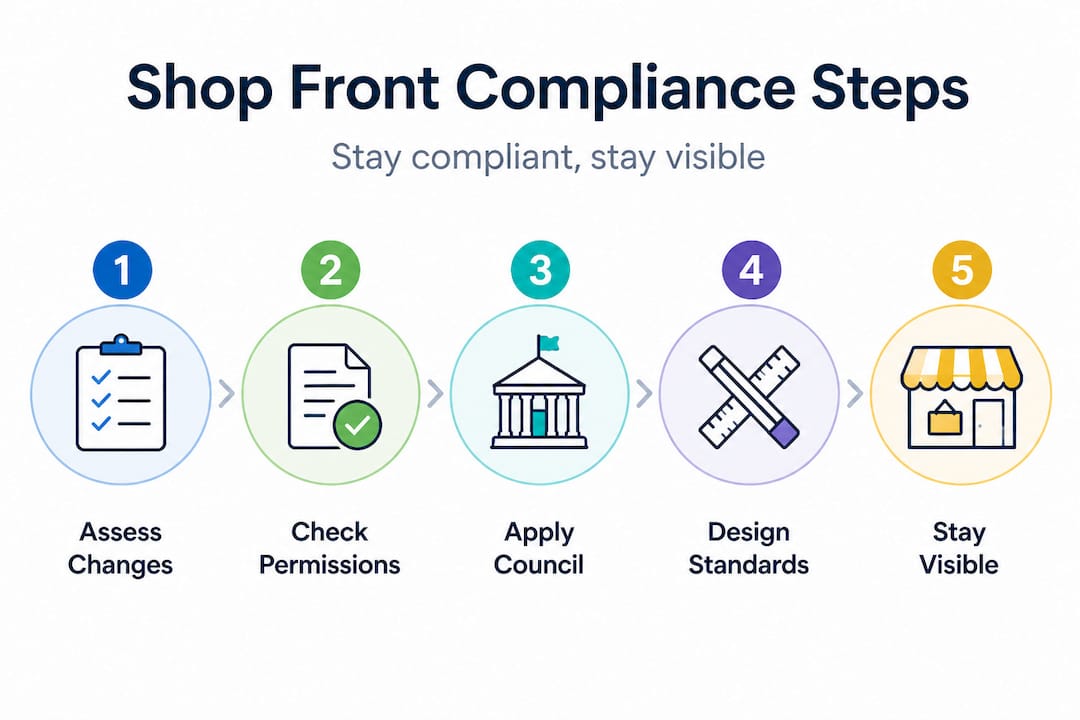
Getting your shop front right is one of the most commercially important decisions you can make as a business owner or property developer, yet council regulations in the UK can feel inconsistent, technical, and frankly difficult to interpret. Miss a consent, choose the wrong material, or install an oversized fascia, and you could face enforcement notices, costly removals, or fines that hit your bottom line hard. This guide cuts through the confusion, walking you through exactly which alterations need approval, what councils look for in compliant designs, how to navigate the planning process, and how to keep your business both visible and on the right side of the rules.
Table of Contents
Key Takeaways
| Point | Details |
|---|---|
| Know what’s regulated | Planning permission is required for significant shop front changes and signage in the UK. |
| Respect design rules | Compliant shop fronts use harmonious materials and proportions, avoiding over-large fascias or modern finishes like uPVC. |
| Get applications right | Detailed plans and pre-application advice improve approval chances and save time. |
| Non-compliance costs money | Ignoring council rules can mean fines, enforced changes, and business disruption. |
| Creativity is possible | Working within the rules does not prevent effective or unique shop front design. |
Why shop front regulations matter
Councils across the UK regulate shop fronts for reasons that go beyond bureaucracy. The core objectives are to preserve attractive streetscapes, protect heritage buildings, and ensure that all businesses contribute positively to the character of their local area. These rules create a framework where individual business branding must coexist with the visual identity of the wider community.
The consequences of ignoring these rules are real and financially serious. Non-compliance can lead to enforcement notices, fines of up to £3,000, and even forced removal of non-compliant signage or shop front alterations. Enforcement is not hypothetical. Councils have planning officers whose specific remit includes monitoring commercial premises for unauthorised changes.
Here is why complying from the outset is always the smarter choice:
- Enforcement costs far outweigh application fees. Paying £250 to £550 upfront for planning approval is far more manageable than paying £3,000 in fines and then funding the removal and replacement of your signage.
- Forced removals disrupt trading. If a council issues a removal order, your shop front may need to come down during your busiest trading period.
- Your reputation with the council matters. Developers and landlords who have a history of compliance tend to get faster, more cooperative responses from planning departments.
- Heritage designations add extra risk. Operating in a conservation area or beside a listed building increases the likelihood of scrutiny.
That frustration with inconsistent enforcement is understandable, but the most effective approach remains proactive engagement. Understanding how to improve shop signs London appeal within the framework of what councils permit is where commercially effective shop fronts begin.
What alterations need council approval?
Not every change to your shop front triggers a planning application, but knowing which ones do is critical. Planning permission is required for alterations that materially affect the external appearance of a building. This includes replacement of windows or doors, new signage, installation of awnings, and security shutters.
Beyond planning permission, there is a separate consent route that catches many business owners off guard: Advertisement Consent. This applies to signage specifically, and illuminated signs require separate Advertisement Consent. In sensitive areas such as conservation zones, illuminated signage is restricted further or outright refused.
| Type of alteration | Planning permission needed? | Advertisement Consent needed? |
|---|---|---|
| New fascia sign (non-illuminated) | Often yes | Possibly |
| New illuminated fascia | Yes | Yes |
| Replacement window | Yes, if materially different | No |
| New awning or canopy | Yes | No |
| Security shutters | Yes | No |
| Window graphics | Usually no | Sometimes |
| A-boards on pavement | No (but licence may apply) | No |
The grey areas are where many businesses come unstuck. Large format window graphics, for instance, are frequently assumed to be permitted development, but councils have discretion to pursue enforcement if they consider the display to materially alter the building’s appearance. Similarly, solid or perforated roller shutters often need approval even though many shop owners assume they are routine fixtures.
Pro Tip: Before commissioning any signage or shop front work, spend £50 to £150 on pre-application planning advice from your local council. This buys you a formal written response that identifies which consents apply to your specific premises. It is a genuinely worthwhile investment that can prevent expensive redesigns later.
Working with experienced signage companies London who understand compliance from the outset means your shopfront branding will be designed to meet council expectations before any application is submitted.
Design standards: key principles and material choices
Even once you know you need approval, the design itself must meet specific standards. Councils are not simply checking that paperwork has been filed. They are actively assessing whether your proposed shop front is sympathetic to its surroundings, proportionate to the building, and constructed from appropriate materials.
UK councils’ shop front design guidance consistently requires that designs must harmonise with the building’s upper floors, respect the street’s visual rhythm, and avoid large undivided expanses of glass. The traditional maximum fascia depth is 380mm, and designs that exceed this tend to be refused.
| Design element | Council preference | Common reason for refusal |
|---|---|---|
| Fascia depth | Max 380mm | Visually dominant, out of proportion |
| Glazing | Divided or framed | Large undivided glass disrupts rhythm |
| Colour palette | Complementary to building | Clashing colours in sensitive areas |
| Signage style | Restrained, proportionate | Overcrowded or oversized lettering |
| Lighting | Subtle, downward-lit | Intrusive or light-polluting in residential streets |

Material choices are equally scrutinised. Preferred materials include timber, stone, brick, and metal, particularly in conservation areas. Modern materials like uPVC are frequently rejected because they are considered aesthetically inconsistent with traditional building stock. Even if a uPVC installation looks perfectly serviceable to you, a conservation officer may refuse it on grounds of character and longevity.
Key design principles to build into your brief from the start:
- Respect the existing architecture. The shop front should feel like it belongs to the building above it, not like an independent structure inserted into the ground floor.
- Avoid oversized corporate branding. National chains sometimes push for dominant brand colours and logos. Councils routinely push back. A scaled-down, sympathetic version is more likely to succeed.
- Use traditional construction details. Corbels, pilasters, stallrisers, and cornices are not just decorative. They signal to planning officers that your design has been considered thoughtfully.
- Commission your signage from a supplier who understands compliance. Custom signs London specialists who design for durability, proportionality, and material suitability give your application the strongest foundation.
Pro Tip: If your premises are in a conservation area, request the council’s specific Conservation Area Appraisal document. It will list the exact characteristics that make the area distinctive and give you invaluable guidance on what materials and styles will be viewed favourably. Referencing this document in your application shows officers that you have done your research.
Navigating the planning process
A successful planning application is built on preparation. Councils expect a specific set of documents, and submitting an incomplete application is one of the most common reasons for delay or refusal. Here is the process broken down into clear steps:
- Carry out a pre-application consultation. Contact your local planning authority before submitting anything formal. Pre-application advice typically costs £50 to £150 and gives you site-specific guidance that is far more useful than general guidance documents.
- Prepare your technical drawings. Most councils specify detailed drawings at scales between 1:20 and 1:50, alongside a Design and Access Statement and site location plans.
- Draft a Design and Access Statement. This document explains your design rationale, how you have responded to the local context, and why the materials and scale are appropriate.
- Submit via the Planning Portal. This is the standard online submission route for the majority of councils in England. Application fees for shop front alterations typically range from £250 to £550.
- Allow 8 to 12 weeks for processing. This is the standard processing window for most shop front applications. Build this into your project timeline from day one, and communicate it clearly to your contractors and installers.
- Respond promptly to officer queries. Planning officers frequently raise questions or request amended drawings. A slow response from your side simply extends the timeline.
Key statistic: Planning fees for shop front works in England typically sit between £250 and £550, but the cost of enforcement, removal, and resubmission can run into thousands of pounds. The application fee is always the better investment.
Business signs London owners who engage a professional signage company during the application stage benefit from suppliers who can produce the correct technical drawings and material specifications that planning officers expect — reducing the risk of requests for additional information that delay the process.
Compliance checks, enforcement, and how to avoid common pitfalls
Even after installation, your obligations do not end. Councils have the power to inspect commercial premises and initiate enforcement action if they identify non-compliant works. Understanding how enforcement unfolds helps you avoid becoming a case study in what not to do.
The enforcement process typically follows this sequence:
- Initial warning or informal notice. A planning officer may visit and ask you to regularise the situation voluntarily, either by applying retrospectively or by removing the alteration.
- Formal enforcement notice. If you do not act on the informal approach, a formal notice is issued specifying the breach and requiring corrective action within a defined timeframe.
- Financial penalties. Fines of up to £3,000 can be imposed for non-compliance, and repeat or wilful breaches attract harsher treatment.
- Direct action by the council. In serious cases, the council can carry out the removal itself and charge the costs back to the property owner.
The most common pitfalls that trigger enforcement include:
- Installing oversized fascia signs that exceed permitted depth or lettering proportions
- Using illuminated signage without Advertisement Consent
- Choosing modern materials such as uPVC in conservation areas
- Assuming permitted development rights cover shutters, awnings, or large signage
- Failing to apply for consent because the previous tenant had similar signage (their consent does not transfer automatically)
Foamex signs printing London panels are a popular lightweight substrate for window and interior displays that typically fall outside the consent requirements applying to permanent fascia signs, making them a useful compliance-friendly option for businesses wanting to enhance visibility without triggering a planning application.
Pro Tip: Keep a dedicated folder, physical or digital, containing all council correspondence, application references, consent documents, and installation records. If a planning officer queries your shop front in the future, being able to produce documentation immediately demonstrates good faith and often prevents the situation from escalating.
Why consistency and creativity can coexist in shop front design
From our experience working with business owners, property developers, and architects across London, Essex, and Kent, we have observed a pattern: the businesses that engage with the planning process early and treat it as a design challenge rather than an obstacle consistently produce more effective shop fronts than those who resist or circumvent the rules.
The frustration with council inconsistency is valid. It is genuinely difficult to accept a fine for a design that a public authority used on the building next door. But focusing on that frustration tends to lead to adversarial relationships with planning departments, which slows everything down. The more productive mindset is to treat the design guide as a creative brief.
Some of the most commercially successful high streets in the UK are ones where heritage character has been maintained through exactly this kind of regulation. Independent retailers in conservation areas frequently report that their compliant, traditional shop fronts actually attract more footfall than chain-store competitors with generic corporate signage. The rules, applied thoughtfully, can enhance your brand’s perceived quality and trustworthiness.
We have seen businesses use bespoke timber fascias, hand-gilded lettering, and powder-coated metal projecting signs to create shop fronts that are both fully compliant and genuinely distinctive. These are not compromises. They are high-quality branding outcomes that happen to align with what councils want. Clever engagement with impactful shopfront improvements from the outset means you design for compliance and visibility simultaneously, not sequentially.
The most important shift is this: treat the council not as a gatekeeper to be bypassed, but as a collaborator whose sign-off makes your shop front more credible and permanent.
Need expert help with compliant shop front signage?
Navigating council regulations whilst trying to create a high-impact, commercially effective shop front is a significant challenge. At PromoSigns, we work with business owners and property developers across London, Essex, and Kent to deliver bespoke signage solutions that are designed with compliance in mind from the very first conversation.
We understand the difference between types of compliant signage that councils approve and the generic solutions that trigger enforcement. Our team designs, manufactures, and installs shop front signage to a professional standard, working within local authority guidelines and helping you prepare the documentation needed for a smooth application. Whether you are a retailer, hospitality operator, or property developer, our team is ready to help you get it right the first time. Get in touch at PromoSigns to discuss your requirements.
Frequently asked questions
Do all shop front changes need planning permission?
Not all changes require planning permission. Only those that materially alter the building’s external appearance, such as replacement shopfronts, new signage, awnings, or security features, typically trigger the requirement.
Do I need a separate consent for illuminated signs?
Yes. Illuminated signage requires separate Advertisement Consent in addition to any planning permission, and it faces stricter restrictions in conservation areas and other sensitive locations.
How long does the council planning process take?
Most shop front planning applications are processed within 8 to 12 weeks, so build this timeline into your project schedule well in advance of your intended installation date.
What happens if I don’t comply with council shop front rules?
You risk receiving a formal enforcement notice, fines up to £3,000, and potentially being required to remove or alter your shop front at your own expense.
What materials should I use for a new shop front?
Traditional materials such as timber, stone, brick, and metal are council favourites, particularly in conservation areas. Modern materials like uPVC are frequently refused on grounds of character and aesthetics.
Recommended
- Top Storefront Sign Visibility Tips for London Businesses 2025 – PromoSigns.co.uk
- Sign Visibility Guidelines: Enhancing Business Impact London
- Shop Signage Basics 2025: Essential Tips for London Businesses – PromoSigns.co.uk
- Retail Signage Compliance Guide 2025 for London Businesses – PromoSigns.co.uk
