
Safety signage represents the critical first line of defense in workplace protection, communicating hazards, guiding emergency responses, and preventing accidents through clear visual warnings. Strategic safety signage transforms environments from hazardous to secure, fulfills legal obligations, and demonstrates organizational commitment to employee and visitor wellbeing.
This comprehensive guide explores effective safety signage implementation, covering regulatory requirements, sign types, design principles, placement strategies, and maintenance approaches that maximize protection while ensuring full compliance with UK health and safety legislation.
Key Takeaways
| Point | Details |
|---|---|
| Importance of Safety Signage | Safety signage is crucial for preventing accidents in retail environments and fostering a proactive safety culture. |
| Types of Safety Signs | Retail spaces should utilise warning, prohibition, mandatory action, and emergency information signs to effectively communicate hazards and protocols. |
| Legal Compliance | Adhering to the Health and Safety (Safety Signs and Signals) Regulations 1996 is essential for retailers to avoid legal penalties. |
| Signage Strategy | Conduct regular audits and assessments to ensure visibility, legibility, and compliance of safety signs, enhancing overall safety. |
Table of Contents
Why Safety Signage Matters
Legal and Regulatory Obligations
UK Legal Framework: Multiple regulations mandate safety signage:
Key Legislation:
- Health and Safety (Safety Signs and Signals) Regulations 1996
- Regulatory Reform (Fire Safety) Order 2005
- Management of Health and Safety at Work Regulations 1999
- Workplace (Health, Safety and Welfare) Regulations 1992
- Construction (Design and Management) Regulations 2015
Employer Duties:
- Risk assessment and hazard identification
- Appropriate signage provision
- Employee training on sign meanings
- Regular inspection and maintenance
- Compliance documentation
Non-Compliance Consequences:
- Health and Safety Executive enforcement action
- Prohibition or improvement notices
- Unlimited fines (serious breaches)
- Director disqualification (severe cases)
- Criminal prosecution potential
- Public liability insurance complications
- Reputational damage
Accident Prevention Impact
Statistical Evidence: Proper safety signage saves lives:
Research Demonstrates:
- 60% reduction in workplace accidents with comprehensive signage
- 45% decrease in slip/trip incidents with warning signs
- 70% improvement in emergency evacuation times
- 80% of workers acknowledge signage influences safety behavior
- Clear hazard identification prevents 50% of potential incidents
Cost of Accidents: Beyond human suffering, workplace incidents carry financial burdens:
- Average injury claim: £12,000-£50,000
- Lost productivity during absence
- Investigation and reporting costs
- Potential legal fees
- Insurance premium increases
- Damaged reputation and recruitment difficulties
Employee Confidence and Morale
Psychological Safety: Visible safety commitment enhances workplace culture:
Benefits:
- Increased employee confidence
- Reduced workplace anxiety
- Demonstrated employer care
- Professional environment perception
- Enhanced recruitment and retention
- Positive safety culture development
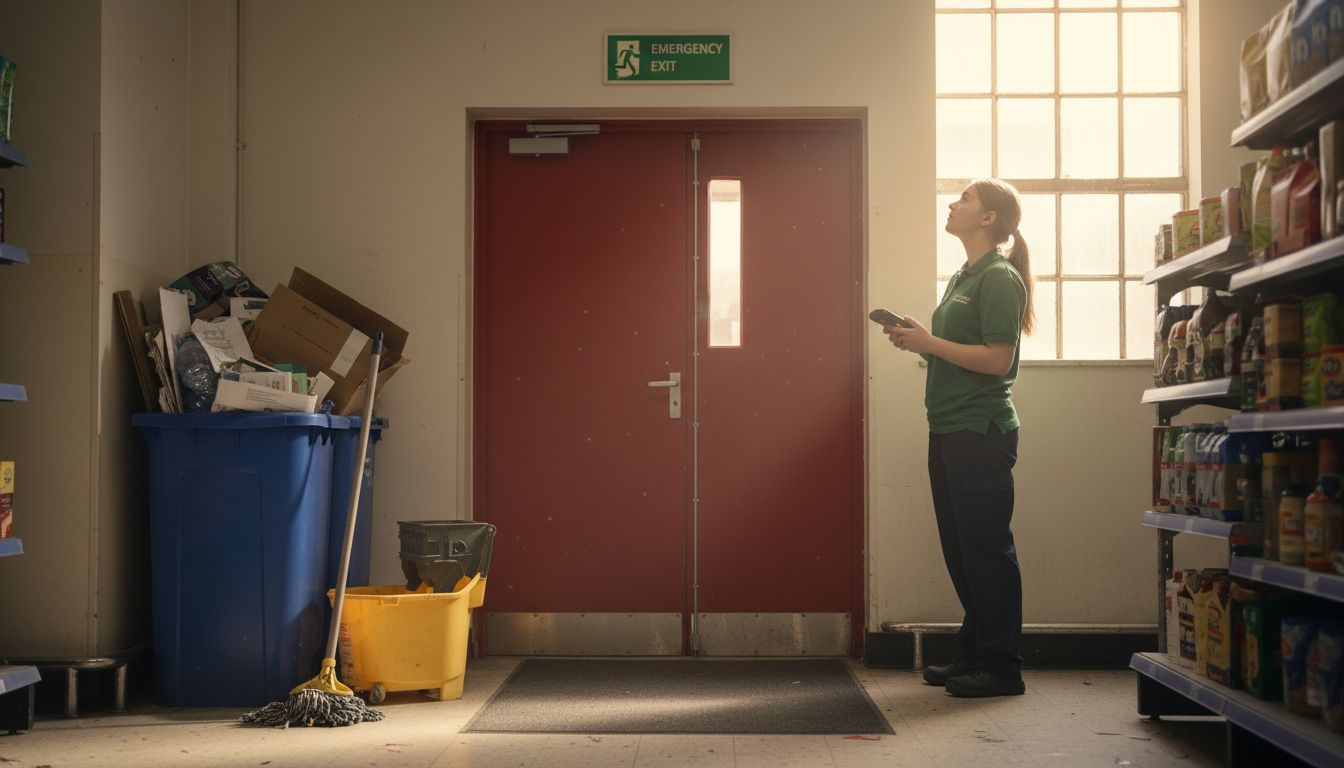
Types of Safety Signs
Prohibition Signs (Red Circle/Red Diagonal)
Purpose: Communicate actions or behaviors that must NOT be undertaken.
Standard Format:
- Red circular band and diagonal bar
- White background
- Black pictogram
- No text required (universally understood symbols)
Common Examples:
- No smoking
- No naked flames
- No access for unauthorized persons
- Do not use (equipment/area)
- No eating or drinking
- Pedestrians prohibited
- No mobile phones
Applications:
- Smoking restriction areas
- Hazardous zones
- Restricted access areas
- Clean rooms and laboratories
- Food preparation areas
- Explosive atmospheres
Warning Signs (Yellow Triangle)
Purpose: Alert to specific hazards or dangerous conditions.
Standard Format:
- Yellow triangular background
- Black border and pictogram
- Supplementary text permitted
Common Examples:
- Flammable materials
- Toxic substances
- Electrical hazard
- Slippery surface
- Trip hazard
- Low headroom
- Fork lift trucks operating
- Overhead loads
- Hot surface
- Radiation
- Biohazard
Critical Locations:
- Chemical storage areas
- Electrical installations
- Wet or uneven floors
- Loading bays
- Machinery zones
- Construction sites
- Laboratories
Mandatory Signs (Blue Circle)
Purpose: Indicate specific actions or behaviors that MUST be followed.
Standard Format:
- Blue circular background
- White pictogram
- Supplementary text permitted
Common Examples:
- Wear safety helmet
- Wear eye protection
- Wear hearing protection
- Wear safety footwear
- Wear high-visibility clothing
- Wear safety harness
- Wash hands
- Use handrail
Essential Applications:
- Construction sites (PPE requirements)
- Industrial facilities
- Laboratories
- Food preparation areas
- Noise hazard zones
- Height work areas
Emergency Escape/First Aid Signs (Green)
Purpose: Identify safety equipment, escape routes, and first aid facilities.
Standard Format:
- Green rectangular or square background
- White pictogram and text
- Directional arrows where appropriate
Common Examples:
- Fire exit
- Emergency exit
- First aid
- Emergency eye wash
- Emergency shower
- Assembly point
- Stretcher
- Rescue equipment
Critical Locations:
- All exit routes
- Stairwells and corridors
- First aid rooms
- Assembly points
- Emergency equipment storage
Fire Safety Signs (Red)
Purpose: Identify fire-fighting equipment and fire action information.
Standard Format:
- Red rectangular or square background
- White pictogram and text
Common Examples:
- Fire extinguisher location
- Fire hose reel
- Fire alarm call point
- Fire action notice
- Fire door – keep shut
- Fire door – keep locked
Essential Locations:
- Fire equipment positions
- Fire alarm points
- Fire doors
- Fire escape routes
- Assembly points
British Standards Compliance
BS 5499 and BS EN ISO 7010
Governing Standards: UK safety signage must comply with recognized standards:
BS 5499:
- Traditional UK safety sign standard
- Gradually superseded by international standard
- Still recognized and compliant
BS EN ISO 7010:
- International safety sign standard
- Harmonized European approach
- Standardized pictograms
- Universal understanding
- Recommended for new installations
Compliance Requirements:
- Correct colors (specified Pantone references)
- Standard pictograms (no custom designs)
- Appropriate sizing (visibility distance)
- Durable materials
- Photoluminescent where re
| Sign Type | Typical Colour Scheme | Main Function |
|---|---|---|
| Warning | Yellow and black | Alert to hazards such as wet floors |
| Prohibition | Red and white | Restrict entry or actions |
| Mandatory Action | Blue and white | Indicate required safety measures |
| Emergency Information | Green and white | Direct to exits and first aid |
Pro tip: Conduct regular visual inspections of safety signage to ensure signs remain clean, unobstructed, and positioned at optimal viewing heights for maximum visibility and comprehension.
The following table compares standard and bespoke safety sign solutions for retail:
| Solution Type | Customisation Level | Typical Benefit | Potential Drawback |
|---|---|---|---|
| Standardised | Low | Easy compliance, rapid install | May lack site specificity |
| Bespoke | High | Tailored to unique risks | Higher cost and development |
| Hybrid | Moderate | Combines clarity and relevance | Requires careful coordination |
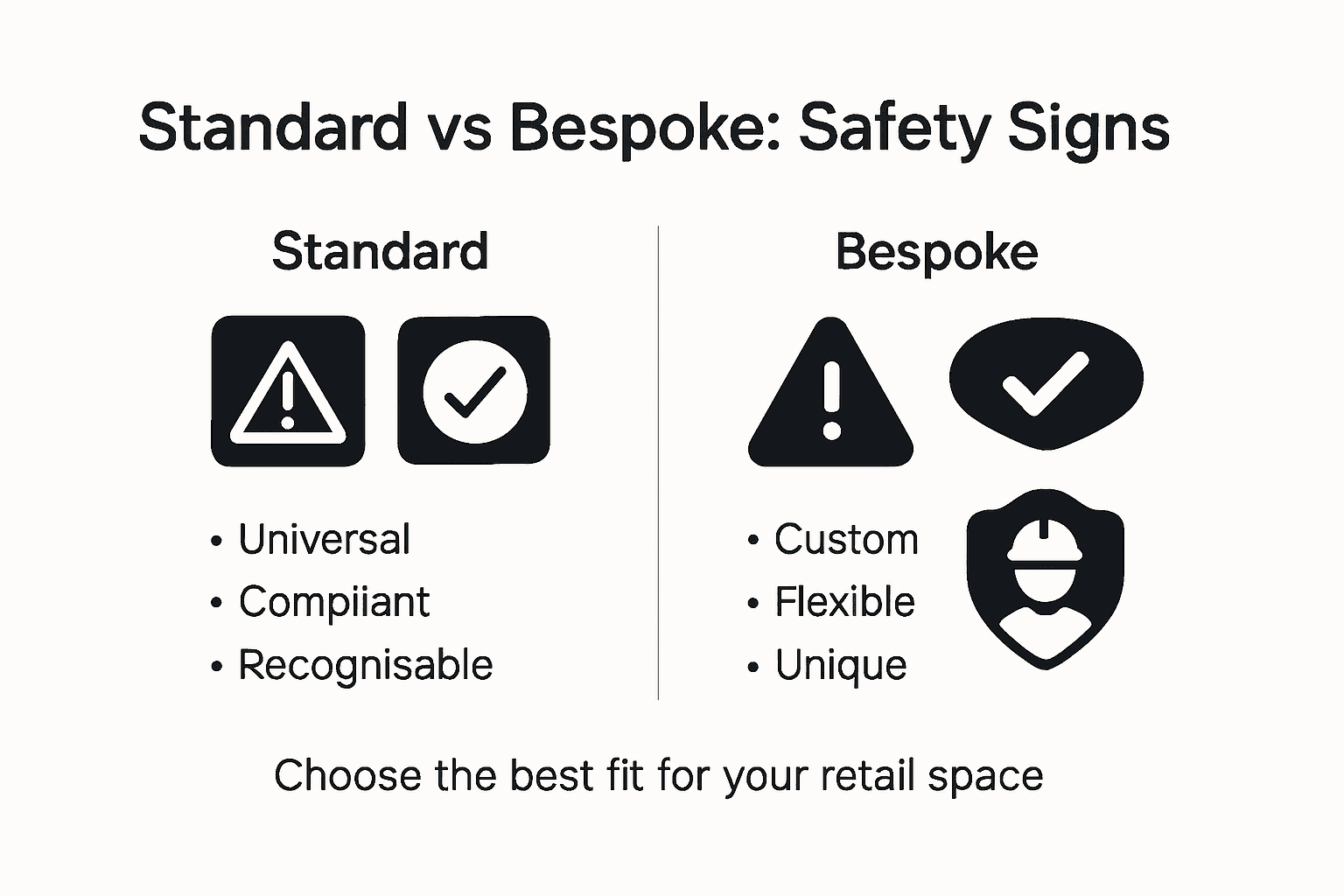
Pro tip: Consider implementing a hybrid approach that combines standardised safety iconography with custom design elements to maximise comprehension and site-specific relevance.
Design Principles for Effective Safety Signs
Visibility and Legibility
Distance Calculations: Sign size must relate to viewing distance:
Formula: Sign height (mm) = Viewing distance (m) × 25
Examples:
- 5m viewing distance = 125mm minimum sign height
- 10m viewing distance = 250mm minimum
- 20m viewing distance = 500mm minimum
Contrast Requirements:
- High luminance contrast (minimum 70%)
- Color contrast (complementary combinations)
- Non-glare surfaces
- Appropriate lighting (natural or artificial)
Pictogram Clarity
Symbol Selection:
- Use standardized ISO 7010 pictograms
- Avoid custom or ambiguous symbols
- Simple, recognizable imagery
- No text-only signs (language barriers)
- Supplementary text permitted (clarity enhancement)
Photoluminescent Properties
Glow-in-the-Dark Signs: Essential for emergency/exit signage:
Requirements:
- BS EN ISO 7010 compliant materials
- Minimum luminance levels
- Afterglow duration (60+ minutes)
- Regular charging (light exposure)
- Periodic testing
Applications:
- Fire exit signs
- Emergency escape routes
- Fire-fighting equipment
- First aid locations
- Stairwell identification
Strategic Placement
Location Principles
Effective Positioning: Safety signs must be positioned for maximum visibility:
General Rules:
- Eye level mounting (1400-1700mm center height)
- Clear sightlines (no obstructions)
- Decision points (before hazard/action required)
- Adequate lighting (natural or artificial)
- Multiple viewing angles (if necessary)
Specific Applications:
Hazard Warnings:
- Before hazard zone entry
- Visible from primary approach
- Repeated if hazard extends over distance
Emergency Signs:
- Every fire exit
- Regular intervals along escape routes
- Changes of direction
- Final exits clearly marked
Mandatory PPE:
- At access points to required areas
- Before hazard zones
- Changing/locker room areas
Quantity and Spacing
Adequate Coverage: Don’t rely on single signs:
Emergency Route Marking:
- Maximum 15m between directional signs
- Every change of direction
- Every fire door
- Final exit doors
Hazard Identification:
- All entry points to hazard zones
- Repeated at regular intervals
- Multiple approaches covered
Material Selection
Interior Signage Materials
Standard Options:
Rigid Plastic (PVC/Polypropylene):
- Cost-effective solution
- Lightweight and durable
- Easy mounting (adhesive or screws)
- Indoor applications
- Wide availability
Self-Adhesive Vinyl:
- Quick application
- Suitable for smooth surfaces
- Indoor use primarily
- Economical option
- Easy replacement
Aluminum:
- Premium durability
- Indoor and outdoor suitable
- Professional appearance
- Long lifespan
- Higher investment
Photoluminescent Materials
Glow-in-Dark Technology: Essential for emergency signage:
Options:
- Photoluminescent rigid plastic
- Photoluminescent vinyl (adhesive)
- Aluminum with photoluminescent face
Quality Standards:
- Class C certification minimum (BS EN ISO 7010)
- Verified afterglow duration
- Certified supplier materials
Outdoor and Harsh Environment Materials
Durable Solutions:
Weather-Resistant:
- Aluminum composite
- Heavy-duty rigid plastic
- Reflective materials (night visibility)
- UV-stable coatings
- Corrosion-resistant fixings
Industrial Environments:
- Chemical-resistant substrates
- High-temperature tolerant
- Impact-resistant
- Easy cleaning surfaces
Installation Requirements
Professional Mounting
Secure Fixing: Safety signs must remain securely positioned:
Methods:
- Permanent adhesive (smooth surfaces)
- Screw fixing (most reliable)
- Cable ties (temporary/movable installations)
- Magnetic mounting (metal surfaces, changeable)
Installation Best Practices:
- Surface cleaning and preparation
- Level positioning (professional appearance)
- Appropriate fixing selection (substrate)
- Accessible for inspection and maintenance
- No sharp edges or hazards created
Industry-Specific Requirements
Construction Sites
Extensive Safety Signage: High-risk environments demand comprehensive coverage:
Essential Signs:
- Site access restrictions
- PPE requirements (hard hat, high-vis, boots)
- Heavy plant warnings
- Excavation hazards
- Overhead loads
- Scaffold warnings
- Emergency assembly points
Healthcare Facilities
Infection Control and Safety: Hospitals and care facilities require specialized signage:
Specific Applications:
- Hand hygiene reminders
- Isolation room warnings
- Radiation areas
- Oxygen storage
- Biohazard warnings
- Emergency equipment locations
Warehouses and Logistics
Material Handling Safety: High-activity environments need clear warnings:
Critical Signs:
- Fork lift operating areas
- Pedestrian walkways
- Loading bay hazards
- Height restrictions
- Emergency exits and assembly points
- First aid locations
Manufacturing and Industrial
Machinery and Process Hazards: Complex safety signage systems:
Requirements:
- Machine-specific warnings
- Chemical storage identification
- Noise hazard zones
- Lock-out/tag-out procedures
- Emergency stop locations
- Confined space warnings
Maintenance and Inspection
Regular Inspection Schedule
Ongoing Compliance: Safety signage requires systematic checking:
Inspection Frequency:
- Monthly: Visual condition checks
- Quarterly: Detailed assessment
- Annually: Comprehensive audit
- Post-incident: Immediate review
Inspection Checklist:
- Sign visibility (not obscured)
- Physical condition (damage, fading)
- Photoluminescent function (emergency signs)
- Secure mounting
- Information accuracy
- Compliance with current standards
Replacement Triggers
When to Replace:
- Fading or discoloration (reduced visibility)
- Physical damage (cracks, tears, dents)
- Outdated pictograms (non-compliant)
- Changed facility layout or hazards
- Photoluminescent degradation
- Missing or stolen signs
Cost Considerations
Investment Ranges (UK)
Standard Safety Signs:
- Small rigid plastic (150-200mm): £3-£8 each
- Medium rigid plastic (300-400mm): £8-£15 each
- Large rigid plastic (450-600mm): £15-£30 each
Photoluminescent Signs:
- Small emergency signs: £8-£15 each
- Medium fire exit signs: £15-£25 each
- Large directional signs: £25-£50 each
Premium Materials:
- Aluminum signs: £15-£60 each
- Reflective outdoor signs: £20-£80 each
Complete Packages:
- Small office (20-30 signs): £300-£600
- Medium facility (50-100 signs): £800-£2,000
- Large industrial (200+ signs): £3,000-£10,000+
Long-Term Value
ROI Perspective: Safety signage represents essential investment:
Returns:
- Accident prevention (cost avoidance)
- Legal compliance (fine avoidance)
- Insurance premium benefits
- Employee confidence and productivity
- Reduced liability exposure
- Enhanced reputation
Training and Awareness
Employee Induction
Sign Recognition Training: Workers must understand safety signage:
Training Elements:
- Sign categories and meanings
- Pictogram interpretation
- Required actions/behaviors
- Emergency procedures
- Reporting damaged/missing signs
Documentation:
- Training records
- Competency assessment
- Refresher schedules
- Induction materials
Working with Safety Signage Providers
Selection Criteria
Essential Capabilities:
- Health and safety signage expertise
- British Standards knowledge
- Risk assessment support
- Design and specification services
- Compliant product supply
- Installation capability
- Maintenance programs
Quality Assurance:
- ISO 9001 certification (quality management)
- BS EN ISO 7010 product compliance
- Material certification
- Professional indemnity insurance
- Health and safety credentials
Common Mistakes to Avoid
Compliance Failures
Critical Errors:
- Using non-compliant pictograms
- Inadequate sign sizing
- Missing photoluminescent properties (emergency signs)
- Incorrect color specifications
- Text-only signs (no pictograms)
Practical Oversights
Implementation Problems:
- Insufficient quantity (coverage gaps)
- Poor positioning (obscured views)
- Neglected maintenance
- Outdated signage (standard changes)
- No employee training
Future Developments
Digital Safety Signage
Emerging Technology: Dynamic safety communication:
Capabilities:
- Real-time hazard updates
- Multi-language display
- Emergency mode activation
- Integration with safety systems
- Remote management
Conclusion
Professional safety signage provides essential workplace protection, legal compliance, and accident prevention that safeguards employees, visitors, and organizational reputation. From prohibition and warning signs to emergency escape and fire safety identification, comprehensive signage systems communicate critical information that saves lives and prevents injuries.
Strategic implementation requires understanding regulatory obligations, selecting compliant materials, ensuring proper placement, maintaining ongoing condition, and integrating with broader health and safety management systems. Whether managing construction sites, manufacturing facilities, healthcare environments, or office premises, safety signage represents non-negotiable investment in human wellbeing and legal compliance.
Investment in quality safety signage delivers immeasurable returns through protected lives, prevented accidents, avoided legal action, and demonstrated duty of care. For organizations seeking to optimize their safety signage systems, partnering with experienced safety signage specialists ensures access to compliance expertise, quality materials, and professional installation that transforms hazardous environments into protected, legally compliant workplaces.
Recommended
- Retail Sign Design Tips 2025: Essential Guide for London Businesses – PromoSigns.co.uk
- What Makes A Great Shop Sign – PromoSigns.co.uk
- 9 Key Types of Retail Signage That Can Transform Your Store
- Retail Signage Compliance Guide 2025 for London Businesses – PromoSigns.co.uk
- ERP for Retail Stores: Streamline Operations | Singleclic
- 7 Essentiële veiligheidstips voor webshops voor ondernemers | BYTE24
- Damaged Material Claim Instructions
