
Floor graphics represent one of the most innovative and underutilized marketing surfaces available to businesses, transforming walkways, aisles, and open spaces into powerful communication platforms. From directional wayfinding and promotional messaging to safety communication and brand storytelling, strategic floor graphics capture attention at unexpected touchpoints while maximizing spatial efficiency.
This comprehensive guide explores the applications, benefits, materials, installation techniques, and design principles for effective floor graphic implementation across diverse business environments.
Table of Contents
Understanding Floor Graphics
What Are Floor Graphics?
Floor graphics (also known as floor decals, floor stickers, or ground graphics) are printed adhesive materials applied directly to floor surfaces to communicate messages, direct traffic, enhance branding, or create visual interest.
Core Characteristics:
- Durable, slip-resistant surfaces
- High-traffic tolerance
- Vibrant, eye-catching designs
- Temporary or semi-permanent application
- Diverse substrate compatibility
- Safety-compliant construction
Common Applications:
- Retail promotional displays
- Wayfinding and directional guidance
- Social distancing markers
- Queue management systems
- Safety zone identification
- Brand activation campaigns
- Event and exhibition displays
- Sports venue decoration
Why Floor Graphics Deliver Impact
Unexpected Attention Capture: Floor placement surprises and engages:
Psychological Advantages:
- Novel positioning (breaks banner blindness)
- Downward gaze natural in walking
- 3D illusion capability
- High memorability
- Photo-worthy (social media content)
- Interactive engagement potential
Spatial Efficiency:
- Utilizes otherwise unused surface
- No wall or ceiling space required
- Flexible placement options
- Temporary installation capability
- Easy removal without damage
Key Takeaways
| Point | Details |
|---|---|
| Effective Floor Graphics | Utilise high-durability materials with slip-resistant surfaces to enhance customer safety and longevity of visuals. |
| Creative Applications | Leverage floor graphics for wayfinding, promotions, and brand reinforcement to effectively guide customer behaviour in retail spaces. |
| Legal Compliance | Adhere to safety standards and regulations to ensure floor graphics communicate important information clearly and reduce potential hazards. |
| Common Pitfalls | Avoid design clutter and low-quality materials to ensure graphics remain impactful and support a seamless shopping experience. |
Applications Across Industries
Retail Environments
Promotional Marketing: Floor graphics drive sales and awareness:
Strategic Uses:
- Product launch announcements
- Sale and offer promotion
- New arrival highlighting
- Directional guidance to featured products
- Brand storytelling journeys
- Seasonal campaign integration
Placement Strategies:
- Store entrance (immediate impact)
- Main aisles (high traffic)
- Department transitions
- Checkout queues (captive audience)
- Fitting room approaches
- Window displays (exterior sidewalk)
Shopping Centers and Malls
Wayfinding Enhancement: Complex environments benefit from ground-level guidance:
Applications:
- Directory and map integration
- Store location arrows
- Facility identification (restrooms, exits, lifts)
- Event location promotion
- Tenant advertising opportunities
- Seasonal decoration
Healthcare Facilities
Patient Navigation: Hospitals and clinics use floor graphics for:
Functional Benefits:
- Department identification
- Appointment location guidance
- Colored pathway systems
- Waiting area designation
- Social distancing compliance
- Accessibility route marking
- Pediatric engagement (colorful, playful)
Corporate and Office Environments
Brand Experience: Professional spaces incorporate floor graphics:
Applications:
- Reception area branding
- Corporate value communication
- Wayfinding in large campuses
- Conference and meeting room identification
- Employee engagement messaging
- Safety zone marking
Events and Exhibitions
Temporary Branding: Trade shows and events leverage flexibility:
Strategic Uses:
- Stand identification
- Product launch platforms
- Sponsor recognition
- Directional guidance
- Photo opportunity creation
- Interactive experiences
Supermarkets and Grocery
Aisle Navigation: Large format stores benefit from:
Applications:
- Department identification
- Special offer highlighting
- Queue management
- Social distancing markers
- Promotional campaigns
- New product introductions
Design Principles for Floor Graphics
Visual Impact Optimization
High-Contrast Design: Floor graphics compete with busy environments:
Design Essentials:
- Bold, simple graphics (quick comprehension)
- Limited text (3-7 words maximum)
- High-contrast color combinations
- Clear focal points
- Appropriate sizing (viewing angle consideration)
Viewing Angle Considerations: Floor graphics viewed at acute angles:
Adaptations Required:
- Vertically elongated designs (appear normal from standing position)
- Text orientation (readable from primary approach direction)
- Perspective illusion techniques
- Size calculations (larger than expected for impact)
3D Illusion Graphics
Depth Perception Effects: Sophisticated floor graphics create dimensional illusions:
Applications:
- Product dramatization (floating objects)
- Environmental scenes (chasms, water)
- Brand mascots (lifelike appearance)
- Interactive experiences
- Social media content generation
Design Requirements:
- Professional 3D rendering
- Precise perspective calculations
- Optimal viewing position consideration
- High-quality printing essential
- Professional photography integration
Directional and Wayfinding Graphics
Clear Communication: Functional floor graphics prioritize clarity:
Design Elements:
- Universally recognized symbols
- Clear directional arrows
- Simple, bold typography
- Color coding systems
- Distance information
- Sequential numbering
Materials and Construction
Vinyl Floor Graphics
Most Common Solution: Self-adhesive vinyl dominates floor graphic market:
Material Specifications:
- Thick vinyl substrate (8-12 mil typical)
- Textured, slip-resistant laminate
- Aggressive adhesive system
- Conformable (curved surface application)
- Removable or permanent options
Performance Characteristics:
- Indoor lifespan: 6-12 months (high traffic)
- Outdoor lifespan: 3-6 months
- Slip resistance: R10-R11 rating (British Standards)
- Traffic tolerance: Medium to heavy
- Cleaning compatible: Standard methods
Polyester Floor Graphics
Premium Alternative: Enhanced durability for demanding applications:
Advantages:
- Superior wear resistance
- Extended lifespan (12-24 months indoor)
- Higher traffic tolerance
- Excellent print quality
- Chemical resistance
Applications:
- Permanent installations
- Extreme high-traffic areas
- Industrial environments
- Long-term campaigns
Anti-Slip Certification
Safety Compliance: Commercial floor graphics must meet standards:
British Standards:
- BS 7976 (pendulum test method)
- R-Rating system (R9-R13)
- Minimum R10 rating commercial use
- Testing certification required
- Regular inspection recommended
Laminate Options:
- Matte finish (highest slip resistance)
- Textured surfaces (enhanced grip)
- Clear protective overlays
- Specialist coatings (heavy traffic)
Below is a comparison of the main types of retail floor graphics and how they impact customer experience:
| Type of Floor Graphic | Primary Purpose | Customer Experience Impact |
|---|---|---|
| Wayfinding Graphics | Guide shoppers through spaces | Reduces confusion, eases navigation |
| Promotional Decals | Highlight offers and launches | Drives impulse purchases, increases sales |
| Brand Identity Markers | Reinforce logos and branding | Strengthens brand recall and loyalty |
| Interactive Floor Displays | Engage customers interactively | Enhances engagement, creates memorable visits |
| Safety Signage | Convey safety instructions | Promotes compliance, reduces accidents |
Pro tip: When designing floor graphics, consider your specific retail environment and target audience to create visually compelling and functionally effective design solutions.
Installation Methods and Techniques
Surface Preparation
Critical Success Factor: Proper preparation ensures adhesion and longevity:
Preparation Steps:
- Surface cleaning (remove dirt, grease, wax)
- Drying (complete moisture removal)
- Smoothness verification (fill cracks, repair damage)
- Temperature stabilization (18-25°C ideal)
- Final inspection
Substrate Compatibility:
- Smooth concrete (ideal)
- Polished tiles (excellent)
- Vinyl flooring (good, some restrictions)
- Carpet tiles (possible with specialist products)
- Wood flooring (suitable, test adhesion)
- Rough or textured surfaces (challenging, may require preparation)
Professional Application
Installation Process: Expert application ensures quality:
Steps:
- Positioning and alignment
- Gradual backing removal
- Squeegee application (eliminate bubbles)
- Edge sealing and trimming
- Protective layer application
- Curing period (24-48 hours before traffic)
Tools Required:
- Squeegees (hard and soft)
- Precision cutting tools
- Heat guns (conformability)
- Rollers (edge sealing)
- Measuring and alignment equipment
DIY vs. Professional Installation
Complexity Assessment:
Suitable for DIY:
- Small, simple graphics (<1 sqm)
- Flat, smooth surfaces
- Low-stakes applications
- Temporary displays
- Budget constraints
Professional Installation Recommended:
- Large format graphics (>2 sqm)
- Complex shapes or 3D designs
- High-traffic commercial areas
- Safety-critical applications
- Premium brand presentations
- Uneven or challenging surfaces
Safety Considerations
Slip Resistance Standards
Legal Requirements: UK Health and Safety regulations demand:
Compliance Essentials:
- Appropriate coefficient of friction
- Certified anti-slip laminate
- Regular condition monitoring
- Immediate repair of damage
- Documentation and certification
Testing and Certification:
- Pre-installation testing
- Third-party certification
- Periodic re-assessment
- Maintenance verification
- Liability protection
Trip Hazard Prevention
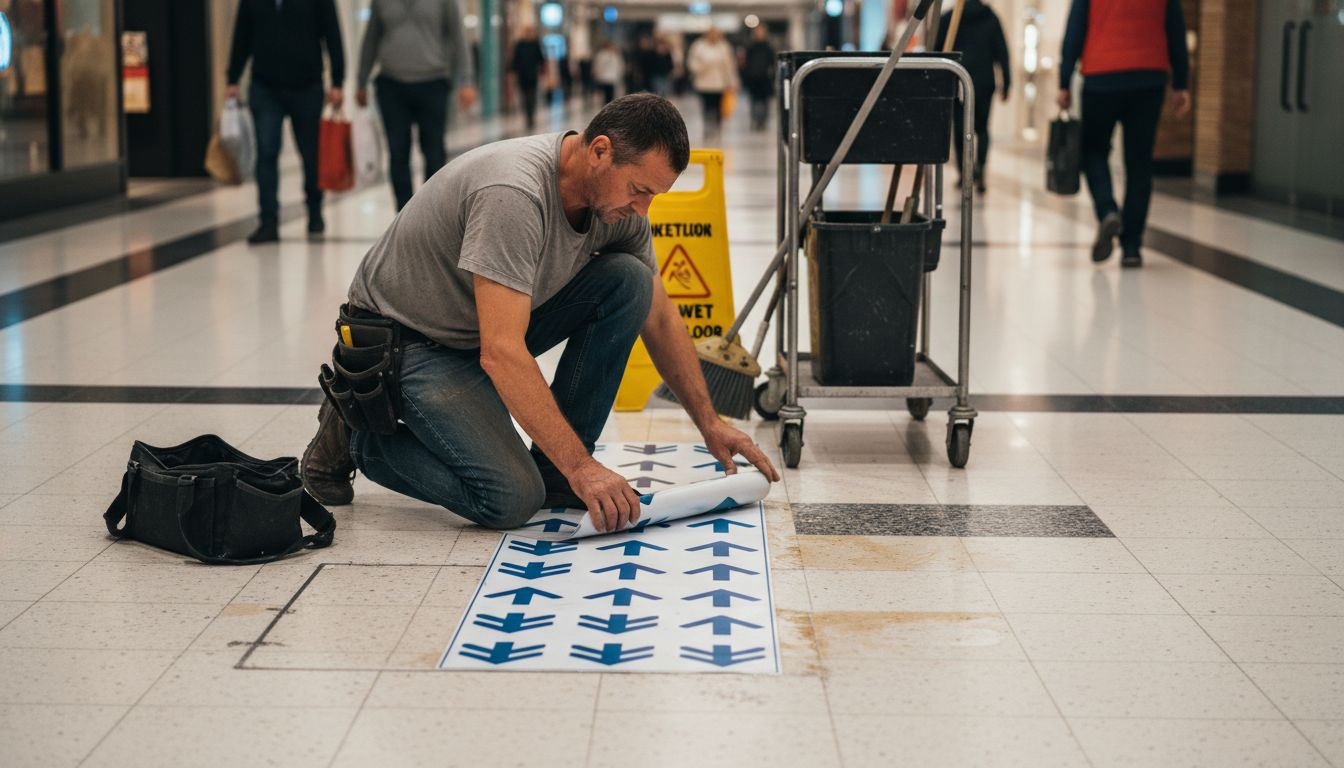
Edge Profile Management: Floor graphics must not create trip hazards:
Best Practices:
- Thin profile materials (<1mm preferred)
- Tapered edge treatments
- Secure perimeter adhesion
- Regular inspection schedules
- Prompt repair of lifting edges
- Warning signage during installation/removal
Public Liability Insurance
Risk Management: Commercial installations require:
Protection:
- Adequate public liability cover
- Installation contractor insurance
- Material certification documentation
- Regular safety audits
- Incident reporting procedures
Maintenance and Longevity
Cleaning Protocols
Regular Maintenance: Proper care extends lifespan:
Cleaning Guidelines:
- Daily: Sweep or vacuum (remove grit)
- Weekly: Damp mop (neutral pH cleaner)
- Monthly: Deep clean (appropriate products)
- Avoid: Harsh chemicals, abrasive tools, steam cleaners
Damage Prevention:
- Prompt spill cleanup
- Furniture protection (pads and coasters)
- Trolley and cart care
- High heel impact management
- Regular inspection
Expected Lifespan
Duration Factors: Floor graphic longevity varies:
Influencing Variables:
- Traffic volume (light/medium/heavy)
- Surface type (smooth/textured)
- Material quality (vinyl/polyester)
- Maintenance frequency
- Environmental conditions
Typical Lifespans:
- Indoor high-traffic retail: 3-6 months
- Indoor moderate traffic: 6-12 months
- Indoor light traffic: 12-24 months
- Outdoor applications: 1-3 months
- Event/temporary: Days to weeks
Removal and Replacement
Clean Removal Process: Professional removal prevents damage:
Steps:
- Heat application (softens adhesive)
- Gradual peeling (45-degree angle)
- Adhesive residue removal (appropriate solvents)
- Surface cleaning and preparation
- Inspection for damage
Surface Protection:
- Temperature control (avoid overheating)
- Gentle chemical selection
- Test area verification
- Professional expertise (valuable surfaces)
The following table summarises key material considerations for ensuring durable and effective floor graphics in retail environments:
| Material Factor | Why It Matters | Optimal Outcome |
|---|---|---|
| Abrasion Resistance | Prevents graphic image wear | Maintains clear visuals |
| Slip Resistance | Avoids slip hazards for customers | Ensures shopper safety |
| UV Protection | Prevents fading from light exposure | Sustains vibrant colours |
| Proper Surface Prep | Improves adhesion and longevity | Ensures graphics stay secure |
| Eco-Friendly Options | Reduces environmental impact | Supports sustainability goals |
Cost Considerations
Investment Ranges (UK)
Material and Production:
- Small vinyl graphics (<1 sqm): £80-£200
- Medium installations (1-5 sqm): £200-£800
- Large format (5-20 sqm): £800-£3,000
- Premium 3D graphics: £500-£2,000 per sqm
Installation Costs:
- DIY (materials only): £0
- Professional installation: £50-£150 per hour
- Large project rates: £200-£500 per day
- Surface preparation: £100-£400 (if required)
Total Project Investment:
- Small promotional graphic: £150-£400
- Medium retail campaign: £500-£1,500
- Large mall installation: £2,000-£10,000+
- Exhibition/event temporary: £300-£2,000
Return on Investment
Measurable Benefits: Floor graphics deliver strong ROI:
Impact Metrics:
- Attention capture rate: 70-90% (studies)
- Message recall: 60-80% (vs. 30-40% traditional)
- Dwell time increase: 15-40%
- Promotional response: 25-60% uplift
- Social media engagement: High shareability
- Cost per impression: Extremely low
Payback Period:
- Promotional campaigns: Days to weeks
- Permanent wayfinding: Months
- Brand activation: Immediate engagement value
Regulatory and Planning Considerations
Planning Permission
External Applications: Sidewalk and pavement graphics may require:
Approval Scenarios:
- Public highway placement
- Council-owned land
- Extended duration (>28 days typical limit)
- Commercial advertising content
Internal Applications: Generally no permission needed:
- Private property interiors
- Shopping center common areas
- Building tenant spaces
Accessibility Compliance
Inclusive Design: Floor graphics must not impede accessibility:
Considerations:
- Clear pathway maintenance (minimum widths)
- Color contrast (visual impairment)
- Tactile indicators (not obscured)
- Wheelchair maneuverability
- Guide dog navigation
Industry-Specific Applications
Retail Sector
Promotional Excellence: Stores use floor graphics for:
- Seasonal campaigns
- Product launches
- Cross-selling suggestions
- Click-and-collect zones
- Loyalty program promotion
Hospitality
Restaurants and Hotels: Unique applications include:
- Menu item promotion
- Reservation area designation
- Check-in/check-out guidance
- Amenity wayfinding
- Brand storytelling
Education
Schools and Universities: Floor graphics support:
- Campus navigation
- Department identification
- Safety messaging
- Student engagement
- Event promotion
Transportation
Airports and Stations: High-volume venues utilize:
- Terminal navigation
- Queue management
- Security zone designation
- Retail promotion
- Sponsorship advertising
Creative Applications and Innovations
Interactive Floor Graphics
Engagement Enhancement: Technology integration creates experiences:
Applications:
- Pressure-sensitive lighting
- Augmented reality triggers
- NFC/RFID integration
- Gamification elements
- Data collection points
Temporary Event Graphics
Short-Duration Impact: Events benefit from flexibility:
Uses:
- Conference pathways
- Exhibition stand identification
- Launch event theming
- Festival decoration
- Pop-up shop branding
Working with Professional Providers
Selection Criteria
Essential Capabilities:
- Floor graphic specialization
- Design expertise (3D, perspective)
- Safety certification knowledge
- Quality material supply
- Professional installation services
- Portfolio evidence
- Insurance and liability coverage
Project Management:
- Site survey and assessment
- Design and visualization
- Material recommendation
- Installation scheduling
- Quality assurance
- Maintenance guidance
Common Mistakes to Avoid
Design Errors
Visual Failures:
- Excessive text or complexity
- Poor viewing angle consideration
- Insufficient contrast
- Inappropriate sizing
- Low-quality images
Technical Oversights
Installation Problems:
- Inadequate surface preparation
- Rushed installation (bubbles, wrinkles)
- Wrong adhesive selection
- Insufficient curing time
- Missing safety certification
Maintenance Failures
Longevity Issues:
- Neglected cleaning
- Delayed damage repair
- Harsh cleaning chemicals
- Ignored wear indicators
- Extended use beyond lifespan
Future Trends
Digital Floor Displays
LED Floor Screens: Emerging technology offers:
- Dynamic content capability
- Real-time updates
- Interactive experiences
- High visual impact
- Premium investment (£5,000-£50,000+ per sqm)
Sustainable Materials
Environmental Innovation:
- Biodegradable substrates
- Recycled content materials
- Low-VOC adhesives
- Circular economy programs
- Carbon-neutral production
Conclusion
Floor graphics represent innovative, cost-effective marketing and communication solutions that transform underutilized surfaces into powerful engagement platforms. From retail promotions and event branding to wayfinding excellence and safety communication, ground-level graphics capture attention, convey messages, and create memorable experiences.
Strategic implementation requires understanding applications, selecting appropriate materials, ensuring safety compliance, employing professional installation, and maintaining ongoing care. Whether creating temporary promotional campaigns or permanent wayfinding systems, success demands thoughtful design, quality production, and expert execution.
Investment in professional floor graphics delivers exceptional returns through attention capture, message retention, spatial efficiency, and creative flexibility. For businesses seeking to maximize their visual marketing impact through innovative ground-level solutions, partnering with experienced floor graphics specialists ensures access to design innovation, material expertise, safety compliance, and installation quality that transforms spaces while engaging audiences.
Recommended
- Retail Window Graphics: The Secret to Attracting More Customers – PromoSigns.co.uk
- The Modern Age Visual Displays For Branding – PromoSigns.co.uk
- How Window Graphics Attract Customers: Smart Solutions for 2025 – PromoSigns.co.uk
- 9 Key Types of Retail Signage That Can Transform Your Store
- The Ultimate Guide to In Store Analytics for 2025 – ApusNest Blog | ApusNest
