
Custom signs can quietly transform how a business is seen on a crowded street or in a modern office. Yet many overlook just how much detail goes into getting a sign that captures the brand perfectly. What may surprise you is that professional sign makers require artwork in a minimum 300 dpi vector format just to ensure a sharp and clean finish. From hidden compliance rules to design pitfalls that can add unexpected delays, the process of ordering custom signage is more intricate than it seems.
Table of Contents
- Step 1: Assess Your Signage Needs
- Step 2: Choose The Right Sign Type
- Step 3: Gather Design Elements And Specifications
- Step 4: Select A Reputable Sign Maker
- Step 5: Place Your Order And Confirm Details
- Step 6: Verify Final Design And Ensure Delivery
Table of Contents
Quick Summary
| Key Point | Explanation |
|---|---|
| 1. Assess Signage Needs Thoroughly | Understand the purpose, location, and target audience to ensure effective sign design. |
| 2. Choose the Right Sign Type | Select a sign type based on functionality, environment, and communication goals. |
| 3. Gather Accurate Design Specifications | Document design elements and technical requirements to avoid errors during production. |
| 4. Select a Reputable Sign Maker | Research potential makers to ensure quality, craftsmanship, and reliability in delivery. |
| 5. Verify All Order Details | Carefully check specifications and financial details before confirming your order to avoid issues. |
Step 1: Assess Your Signage Needs
Designing custom signs begins with a comprehensive understanding of your specific requirements. Signage assessment is more than just selecting a design — it is about creating a strategic communication tool that represents your business effectively. Your initial step involves a thoughtful examination of multiple critical factors that will influence your final sign selection.
Start by considering the primary purpose of your sign. Are you looking to attract new customers, provide directional information, enhance brand visibility, or communicate specific messages? Each objective demands a unique approach to design, material selection, and placement. Business owners must carefully evaluate their commercial environment, target audience, and communication goals before proceeding with sign production.
Your location plays a significant role in determining sign specifications. Indoor signs require different considerations compared to outdoor signage. Factors such as lighting conditions, viewing distance, architectural constraints, and local regulations will directly impact your design choices. For instance, a sign intended for a busy high street storefront needs high visibility and durability, while an interior office sign might prioritize professional aesthetics and subtle branding.
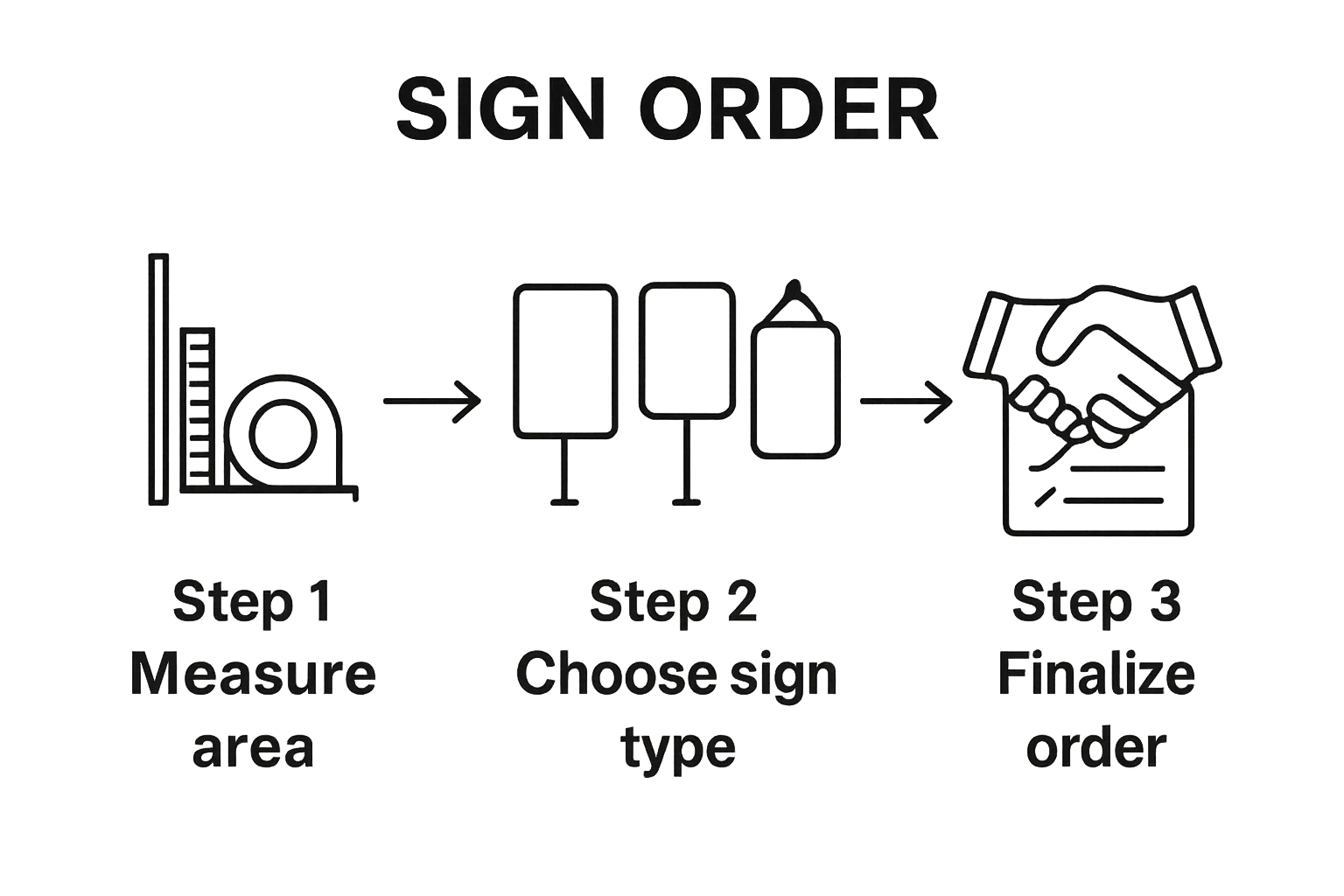
Take time to measure your designated sign area precisely. Accurate measurements prevent costly redesigns and ensure your custom sign fits perfectly in its intended space. Consider not just width and height, but also depth, mounting requirements, and potential obstructions. Professional measurements are crucial to achieving a seamless installation.
To streamline your signage planning, read our comprehensive guide on planning a signage project which offers additional insights into creating impactful visual communication. By methodically assessing your needs upfront, you will save time, reduce potential errors, and create a sign that truly represents your business vision.
Step 2: Choose the Right Sign Type
Selecting the appropriate sign type represents a critical decision that directly impacts your business visibility and communication strategy. Sign selection goes far beyond aesthetic preferences and requires strategic thinking about functionality, environment, and brand representation.
Commercial signage encompasses a wide range of options, each designed to serve specific purposes and suit different business environments. Exterior signs like illuminated storefront signs attract customer attention, while interior wayfinding signs provide critical navigation assistance. Regulatory signs such as ADA-compliant signage ensure accessibility and legal compliance. Temporary signs like banners and pop-up displays offer flexibility for promotional events or seasonal marketing campaigns.
Material selection plays a significant role in determining sign durability and performance. Aluminium signs offer lightweight strength and weather resistance, making them excellent for outdoor applications. Acrylic provides a modern, sleek appearance ideal for contemporary business interiors. Wooden signs create a warm, traditional aesthetic suitable for certain hospitality or artisanal business contexts. Vinyl graphics deliver cost-effective customisation for vehicle wraps, window displays, and temporary signage solutions.
Explore our comprehensive guide on choosing commercial signs to understand nuanced considerations for sign selection. The right sign type depends on multiple factors including budget, location, intended message, and target audience. Professional sign makers can provide tailored recommendations based on your specific business requirements, helping you navigate the complex landscape of signage options. For lightweight, budget-friendly temporary displays, foamex signs printing London offers an excellent solution for both indoor and outdoor short-term applications.
| Sign Type | Typical Use | Common Materials |
|---|---|---|
| Exterior Illuminated | Attract customers from street/road | Aluminium, Acrylic |
| Interior Wayfinding | Guide visitors or staff inside premises | Acrylic, Vinyl |
| Regulatory/ADA | Ensure accessibility and legal compliance | Acrylic, Aluminium |
| Temporary (Banners) | Promotions, events, short-term messaging | Vinyl |
| Shop Front/Fascia | Brand representation on high street/storefront | Aluminium, Acrylic, Wood |
| Vehicle Graphics | Mobile advertising and brand visibility | Vinyl |
| Wooden Signage | Artisanal or traditional business image | Wood |
Carefully evaluate your sign’s primary function. A sign intended to attract street traffic will differ significantly from an interior wayfinding solution or a regulatory compliance marker. Budget constraints and maintenance requirements should also factor into your decision making process. By methodically assessing these elements, you will select a sign type that not only looks impressive but effectively communicates your brand message.
Step 3: Gather Design Elements and Specifications
Designing a custom sign requires meticulous attention to detail and comprehensive preparation of design elements and technical specifications. This crucial stage transforms your conceptual vision into a precise blueprint that will guide sign production and ensure your final product meets exact business requirements.
Colour selection represents more than aesthetic preference — it communicates brand identity and emotional resonance. Professional designers recommend selecting colours that align with your brand palette while considering psychological impact and visibility from different distances. High contrast colour combinations enhance readability, ensuring your sign communicates effectively under varying lighting and environmental conditions.
Graphic elements demand equal scrutiny. Company logos, typography, and visual imagery must be provided in high resolution vector formats to guarantee crisp reproduction. Resolution and file quality are paramount — professional sign makers require minimum 300 dpi vector graphics to produce sharp, clean designs. If your existing logo files do not meet these specifications, consider working with a graphic designer to upgrade your digital assets.
Learn how to design impactful door signs that effectively communicate your brand message. Technical specifications extend beyond visual design. Precise measurements including sign dimensions, mounting requirements, viewing distances, and potential environmental constraints must be documented meticulously. Consider factors such as wall surface material, potential obstructions, lighting conditions, and local regulatory guidelines that might impact sign installation.
Certain signage must meet specific accessibility requirements, including tactile lettering, minimum font sizes, non-glare finishes, and colour contrast ratios for signs in public spaces. Compliance is not optional — it is a critical aspect of professional sign design that ensures your signage is both functional and legally sound. Working with experienced signage companies London ensures your designs meet all relevant UK planning and accessibility standards from the outset.
By comprehensively gathering and documenting design elements and specifications, you create a robust foundation for successful sign production. Your detailed preparation minimises potential errors, reduces revision cycles, and ensures the final product precisely matches your original vision.
Step 4: Select a Reputable Sign Maker
Choosing the right sign maker represents a pivotal moment in your custom signage journey. This decision will directly influence the quality, durability, and professional appearance of your final product. Professional sign makers are more than mere manufacturers — they are strategic partners who transform your vision into tangible visual communication.
Begin by conducting thorough research into potential sign makers. Examine their portfolio carefully, looking beyond aesthetic appeal to assess technical proficiency, material quality, and range of capabilities. A reputable sign maker should demonstrate versatility across different sign types, materials, and design complexities. Pay close attention to client testimonials, case studies, and industry certifications that validate their professional expertise.
Technical competence matters significantly. Request samples of previous work that closely match your project specifications. Professional sign makers should be willing to provide detailed consultations, offer material recommendations, and explain their production processes transparently. Look for businesses that invest in modern manufacturing technologies and maintain high standards of precision and craftsmanship.
Discover our professional commercial sign installation guide to understand the comprehensive considerations in sign production. Financial transparency is equally crucial. Request comprehensive quotes that break down costs for design, materials, manufacturing, and installation. Be wary of significantly lower prices, as these might indicate compromised quality or hidden additional expenses.
Evaluating potential sign makers should involve multiple verification steps. Contact their previous clients, review online ratings, and assess their responsiveness during initial consultations. A reliable sign maker demonstrates clear communication, professional conduct, and willingness to collaborate closely throughout the project. For businesses across the capital, large format printing London capabilities are a strong indicator of a supplier’s technical range and production quality.
Verify the sign maker’s capability to meet your specific requirements. This includes assessing their experience with your particular sign type, understanding of local regulatory standards, and ability to deliver within your desired timeframe. Comprehensive due diligence ensures you select a sign maker who will not just produce a sign, but create a powerful visual representation of your business identity.
Step 5: Place Your Order and Confirm Details
Placing your custom sign order represents the culmination of your careful preparation and strategic planning. This critical stage transforms your design concept into a tangible product through precise communication and comprehensive documentation. Attention to detail becomes paramount as you finalise the transaction with your chosen sign maker.
Carefully review every aspect of the order documentation before signing. Specification accuracy determines the success of your project. Verify dimensions, materials, colour specifications, design elements, and installation requirements with extreme precision. Request a detailed proof or digital mockup that allows you to visualise the final product before production begins. This visual confirmation provides an opportunity to identify and address potential discrepancies or design nuances that might have been overlooked during earlier planning stages.
Financial considerations require equally meticulous examination. Confirm the complete pricing structure, including design fees, material costs, manufacturing expenses, and installation charges. Understand the payment schedule, including deposit requirements and final payment terms. Some sign makers offer staged payment options, allowing you to manage cash flow while providing financial security for both parties.
Learn about professional commercial sign installation procedures to complement your ordering process and understand potential post-production considerations. Communication remains crucial during this phase. Establish clear channels for ongoing dialogue, ensuring you can quickly address any questions or modifications that might arise during production.
Documentation should comprehensively outline all project specifications. Request a written contract that explicitly details:
- Exact sign dimensions and specifications
- Materials to be used
- Colour specifications with precise matching references
- Production and delivery timelines
- Installation requirements
- Warranty and aftercare information
Formal documentation protects both parties, providing a clear reference point and minimising potential misunderstandings. By methodically confirming every detail, you significantly increase the likelihood of receiving a custom signs London product that precisely matches your original vision and business requirements.
Step 6: Verify Final Design and Ensure Delivery
The final verification stage represents your ultimate quality control checkpoint, transforming months of planning into a tangible, professional sign. Comprehensive inspection is crucial to ensure your custom sign meets every precise specification and aesthetic requirement you originally envisioned.
Upon receiving the final product, conduct a methodical and thorough examination. Check colour accuracy against your original design brief, ensuring precise colour matching and brand consistency. Inspect material quality, looking for smooth finishes, seamless junctions, and robust construction that will withstand environmental conditions. Visual alignment and typography demand particular scrutiny. Verify that text remains crisp, legible, and positioned exactly as approved in the original design mockup.
Dimensions and mounting specifications require meticulous verification. Measure the sign precisely, comparing it against the original agreed specifications. Test mounting hardware and installation mechanisms, confirming they align perfectly with your intended placement location. Pay special attention to weight distribution, potential stress points, and compatibility with your specific architectural environment.
Explore our professional sign installation guidelines to understand best practices for final positioning and setup. Lighting elements, if applicable, must be thoroughly tested. For illuminated signs, check electrical connections, luminosity, and evening visibility. Ensure any digital or electronic components function flawlessly under various lighting conditions.
Signage should meet specific quality and safety criteria. Your verification process should include:
- Colour accuracy check against original design
- Precise dimensional measurements
- Material quality inspection
- Mounting mechanism functionality
- Electrical component testing
- Visibility assessment from standard viewing distances
Documentation is key. Photograph the sign from multiple angles, capturing detailed views that can serve as reference points. Retain all packaging and delivery documentation. Should any discrepancies emerge, these records provide crucial evidence for potential warranty claims or replacements.
By approaching final verification with professional diligence, you transform a custom sign from a mere product into a powerful visual communication tool that represents your brand with precision and excellence.
| Verification Step | What To Check |
|---|---|
| Colour Accuracy | Colours precisely match brand specifications |
| Material Quality | Surfaces are smooth and construction robust |
| Dimensions | Measurements align exactly with original order |
| Typography & Layout | Text is crisp, legible and positioned correctly |
| Mounting Mechanism | Fixings suit intended installation environment |
| Electrical Functionality | Lighting and connections operate flawlessly |
| Visibility Assessment | Readable from intended viewing distances |
| Documentation & Records | Photographs and delivery paperwork retained |
Ready to Order Custom Signs With Confidence?
Struggling with accurate measurements, material choices, or finding a reliable sign maker as discussed in our step-by-step guide? You are not alone. Many business owners feel overwhelmed by the challenge of turning a simple idea into a professional, high-impact sign. You want clarity and confidence during the order process, with no costly errors or miscommunications. That is exactly where our expertise at PromoSigns makes a real difference.
Now is the perfect time to ensure your business stands out. Visit https://promosigns.co.uk to see how our experienced team takes you through every step from the first signage assessment to professional installation. From shop signs London to large-scale commercial installations, we deliver precision and quality every time. Let us help you create a custom sign that tells your story and attracts new customers. Take the next step and contact us today for a tailored solution.
Frequently Asked Questions
What factors should I consider when assessing my signage needs?
When assessing your signage needs, consider the primary purpose of the sign (e.g., attracting customers, providing directions), your location (indoor vs outdoor), the target audience, and any local regulations. Additionally, measuring the designated sign area accurately is crucial.
How do I choose the right type of sign for my business?
Selecting the right sign type depends on various factors, including the intended message, budget, location, and target audience. Consider the different options such as exterior signs, interior wayfinding signs, regulatory signs, and temporary signs to find the best fit.
What design elements are necessary for creating a custom sign?
Essential design elements include colour selection, graphic elements like logos and typography, and technical specifications, such as dimensions and mounting requirements. Ensure all graphics are in high resolution to maintain clarity and quality.
How can I verify the quality of my custom sign before finalising my order?
To verify sign quality, conduct a thorough inspection upon delivery. Check colour accuracy, material quality, dimensions, and ensure the sign’s components function as intended. It’s also advisable to keep documentation, including photographs and delivery records, for warranty purposes.
Recommended
- A Step-by-Step Guide to Professional Commercial Sign Installation – PromoSigns.co.uk
- Custom Sign Design Process for London Businesses: 2025 Guide – PromoSigns.co.uk
- How to Install Your Shop Front Sign Like a Pro – PromoSigns.co.uk
- How to Install Wall Signs for Your Business Effectively – PromoSigns.co.uk
