
Business evolution demands visual evolution. Whether responding to rebranding initiatives, addressing deterioration, updating messaging, or simply refreshing appearance, strategic signage updates maintain professional credibility, reflect current brand identity, and ensure continued marketing effectiveness.
This comprehensive guide explores when, why, and how to update business signage, covering assessment strategies, update options, implementation approaches, and cost considerations to maximize return on investment.
Table of Contents
Understanding When to Update Signage
Signs Your Signage Needs Updating
Visible Deterioration: Physical condition communicates business health:
Degradation Indicators:
- Faded colors (UV damage)
- Peeling vinyl graphics
- Cracked or damaged panels
- Broken illumination
- Rust or corrosion
- Dirty, stained surfaces
- Outdated design aesthetic
Professional Impact: Deteriorated signage suggests:
- Business decline or neglect
- Low quality standards
- Lack of investment
- Poor maintenance culture
- Unprofessional operation
Strategic Update Triggers
Rebranding Initiatives: Corporate identity changes necessitate signage updates:
Timing Considerations:
- Complete rebrand (immediate update essential)
- Logo evolution (phased approach possible)
- Tagline changes (quick turnaround achievable)
- Color palette shifts (visual consistency critical)
- Name changes (legal and practical priority)
Business Evolution: Operational changes require reflection:
- Service expansion or focus
- New product lines
- Market repositioning
- Ownership changes
- Premises relocation
- Multi-location growth
Regulatory Requirements: Compliance changes demand updates:
- Planning permission conditions
- Building regulation changes
- Safety standard evolution
- Accessibility law updates
- Industry-specific requirements
Quick Summary
| Key Point | Explanation |
|---|---|
| 1. Conduct a visual audit | Evaluate existing signage for legibility and brand alignment by photographing signs from various angles. |
| 2. Choose appropriate materials | Select signage materials that reflect your brand persona and endure environmental conditions for maximal visual impact. |
| 3. Ensure compliance with regulations | Review local UK signage regulations to avoid fines and confirm specifications for size, placement, and illumination. |
| 4. Coordinate professional installation | Collaborate with sign manufacturers for precise signage execution, ensuring accurate measurements and material choices. |
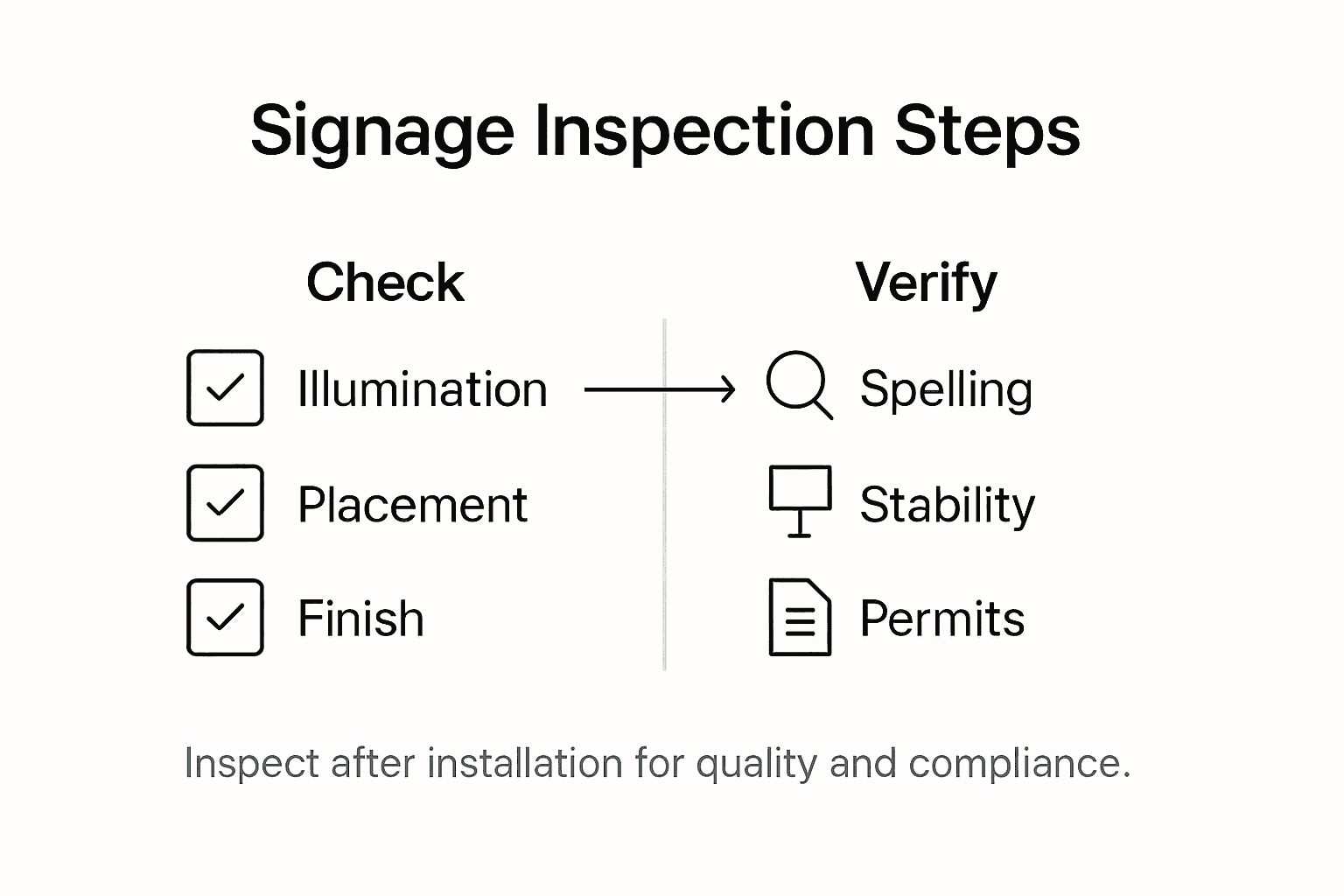
| 5. Inspect completed signage | Verify installation quality by checking positioning, colour accuracy, and structural integrity to ensure compliance and effectiveness. |
Assessment and Planning
Comprehensive Signage Audit
Complete Inventory: Document all existing signage:
Internal Signage:
- Reception and entrance signs
- Directional wayfinding
- Department identification
- Safety and compliance
- Promotional displays
External Signage:
- Building fascia signs
- Projecting signs (bracket-mounted)
- Window graphics
- Vehicle livery
- Site directional signs
Assessment Criteria: For each sign, evaluate:
- Current condition (1-10 rating)
- Brand alignment (compliant/non-compliant)
- Functionality (effective/ineffective)
- Update priority (critical/moderate/low)
- Replacement vs. refresh decision
Budget Planning
Comprehensive Cost Estimation:
Full Replacement Costs:
- Design and artwork
- Manufacturing
- Removal of existing
- Installation of new
- Waste disposal
- Contingencies (10-15%)
Partial Update Costs:
- Graphic overlay or vinyl replacement
- Component repair
- Professional cleaning
- Minor modifications
- Illumination upgrades
Phased Approach: Strategic sequencing manages investment:
- Year 1: Critical external signage
- Year 2: Major internal wayfinding
- Year 3: Secondary and promotional
- Ongoing: Maintenance and updates
Update Options and Approaches
Full Replacement
Complete New Signage: Comprehensive renewal approach:
When Appropriate:
- Severe deterioration
- Complete rebranding
- Structural issues
- Technology upgrades
- Regulatory non-compliance
- Major business changes
Advantages:
- Fresh, modern appearance
- Latest materials and technology
- Enhanced functionality
- Extended lifespan (10-20 years)
- Warranty protection
- Compliance assurance
Typical Investment:
- Small retail (3-5 signs): £2,000-£5,000
- Medium business (5-10 signs): £5,000-£15,000
- Large organization (10+ signs): £15,000-£50,000+
Graphic Refresh
Overlay and Vinyl Replacement: Cost-effective visual update:
Suitable For:
- Structurally sound signs
- Illuminated signs (cabinet condition good)
- Minor brand updates
- Message changes
- Budget-conscious projects
- Interim solutions
Process:
- Remove existing graphics
- Surface preparation and cleaning
- New vinyl application or digital print
- Professional finishing
- Quality inspection
Cost Savings:
- 40-60% less than full replacement
- Faster implementation
- Minimal disruption
- Retained infrastructure
- Professional appearance
Limitations:
- Existing structure constraints
- Size and shape fixed
- Illumination system unchanged
- Substrate condition dependent
Partial Updates
Selective Component Replacement: Strategic refresh of specific elements:
Update Options:
- Acrylic face replacement (illuminated signs)
- Vinyl graphic overlay
- Illumination upgrade (LED conversion)
- Frame refinishing or repainting
- Hardware and mounting updates
Applications:
- Mixed-condition signage
- Budget optimization
- Phased brand rollout
- Component-specific issues
- Incremental improvements

Here is a comparison of popular business signage materials and their benefits:
| Material | Durability | Visual Appeal | Typical Business Use |
|---|---|---|---|
| Aluminium | Highly weatherproof | Modern, clean finish | Corporate, tech, retail |
| Acrylic | Fade and scratch resistant | Sleek, glossy look | Boutiques, salons, offices |
| Wood | Sensitive to weather | Warm, traditional feel | Restaurants, heritage sites |
| PVC | Low maintenance | Versatile, vibrant | Pop-up shops, indoor signs |
Expert Recommendation: Request material samples and view them in your actual business environment to understand how they interact with natural and artificial lighting.
Update Process and Implementation
Design and Artwork Development
Professional Design Services: Essential for brand consistency:
Design Deliverables:
- Concept development
- Multiple design options
- 3D visualizations
- Technical specifications
- Production-ready artwork
- Brand guidelines compliance
Approval Process:
- Internal stakeholder review
- Brand custodian approval
- Legal and compliance verification
- Planning authority submission (if required)
- Final production authorization
Manufacturing and Production
Quality Control: Professional signage production ensures:
Material Selection:
- Appropriate substrate choice
- Weather resistance (external)
- UV-stable graphics
- Compliant construction
- Warranty-backed components
Production Timeline:
- Design and approval: 1-3 weeks
- Manufacturing: 2-4 weeks
- Installation scheduling: 1-2 weeks
- Total project duration: 4-9 weeks typical
Installation and Commissioning
Professional Installation: Expert installation ensures quality:
Pre-Installation:
- Site survey and measurement verification
- Access arrangement (scaffolding, lifts)
- Existing sign removal
- Surface preparation
- Safety planning
Installation Execution:
- Precise positioning and alignment
- Secure fixing and mounting
- Electrical connection (illuminated)
- Testing and commissioning
- Site cleanup and waste removal
Post-Installation:
- Client walkthrough
- Operational demonstration (illuminated signs)
- Documentation and warranty
- Maintenance guidance
- Photography for records
Technology Upgrades
LED Illumination Conversion
Energy Efficiency Enhancement: Upgrading traditional lighting to LED:
Benefits:
- 80% energy cost reduction
- 50,000+ hour lifespan
- Consistent brightness
- Minimal heat generation
- Reduced maintenance
- Environmental credentials
Investment:
- LED conversion (existing sign): £300-£1,500
- Payback period: 18-36 months (energy savings)
- Carbon footprint reduction
- Future-proofed infrastructure
Digital Signage Integration
Dynamic Content Display: Traditional-to-digital transformation:
Applications:
- Menu boards (restaurant signage)
- Promotional displays
- Wayfinding updates
- Real-time information
- Multi-message rotation
Considerations:
- Initial investment (£1,500-£5,000 per screen)
- Content management systems
- Ongoing maintenance
- Power and connectivity
- Design and animation
Specific Signage Type Updates
Illuminated Cabinet Signs
Face Replacement: Refresh without full replacement:
Process:
- Remove existing acrylic face
- Clean and inspect cabinet interior
- Install new printed or vinyl face
- Test illumination
- Seal and weatherproof
Cost:
- Face replacement: £200-£800 (size dependent)
- vs. Full replacement: £1,000-£4,000
Projecting and Hanging Signs
Bracket and Panel Update: Traditional sign refresh:
Options:
- Panel replacement (retain bracket)
- Complete sign and bracket
- Graphic refresh only
- Illumination addition
- Structural reinforcement
Regulatory Considerations:
- Planning permission verification
- Listed building consent (if applicable)
- Structural engineer assessment
- Safety certification
- Public liability insurance
Window Graphics
Seasonal and Promotional Updates: Flexible messaging capability:
Update Frequency:
- Core branding: 5-7 years
- Promotional overlays: Quarterly/seasonal
- Window graphics: Annual refresh typical
- Event-specific: As required
Cost-Effective Option:
- Vinyl removal and replacement: £150-£600
- Professional installation essential
- Minimal disruption
- Rapid turnaround (days, not weeks)
Vehicle Livery
Fleet Branding Updates: Mobile marketing refresh:
Approaches:
- Full vehicle wrap replacement
- Partial vinyl overlay
- Spot graphics update
- Magnetic signage (temporary)
Considerations:
- Vehicle condition assessment
- Simultaneous multi-vehicle scheduling
- Brand consistency across fleet
- Professional application essential
- Typical lifespan: 5-7 years
Managing Multi-Location Updates
Phased Rollout Strategy
Systematic Implementation: Large organizations require planning:
Sequencing Options:
- Geographic regions
- Flagship locations first
- High-traffic priorities
- Lease renewal alignment
- Budget availability
Consistency Maintenance:
- Centralized design control
- Approved supplier networks
- Quality verification processes
- Documentation and photography
- Regular compliance audits
Cost Management at Scale
Volume Advantages:
- Bulk production discounts (15-30%)
- Negotiated installation rates
- Consolidated project management
- Supply chain optimization
- Standardized specifications
Planning Permission Considerations
When Permission Required
Update Scenarios: UK regulations vary by change type:
Generally Not Required:
- Like-for-like replacement (same size, position, appearance)
- Minor repair and maintenance
- Internal signage changes
- Temporary displays (specific conditions)
Permission Typically Needed:
- Size changes
- Position changes
- Illumination addition
- New signage locations
- Conservation area properties
- Listed buildings (any change)
Application Process
Submission Requirements:
- Detailed specifications
- Technical drawings
- Photographs (existing and proposed)
- Supporting statements
- Heritage impact assessment (if applicable)
Timelines:
- Application processing: 8-12 weeks typical
- Decision notification
- Conditions compliance
- Implementation authorization
Cost-Benefit Analysis
Investment vs. Return
Quantifiable Benefits:
Customer Acquisition:
- Improved visibility and attraction
- Professional credibility enhancement
- Brand recognition strengthening
- Competitive differentiation
- Estimated traffic increase: 15-30%
Operational Efficiency:
- Reduced maintenance costs
- Lower energy consumption (LED)
- Decreased staff inquiry burden
- Enhanced wayfinding effectiveness
Brand Value:
- Consistent identity projection
- Market positioning reinforcement
- Customer confidence building
- Property value contribution
- Long-term asset development
Payback Period Calculation
Example Scenario:
- Update investment: £10,000
- Annual energy savings (LED): £800
- Estimated revenue increase (5%): £15,000
- Annual benefit: £15,800
- Payback period: 7.6 months
- 5-year ROI: 690%
Working with Professional Providers
Selection Criteria
Essential Capabilities:
- Signage update specialization
- Design expertise
- Multi-location experience
- Project management proficiency
- Installation capability
- Planning permission navigation
- Maintenance program availability
Portfolio Assessment:
- Update project examples
- Before/after documentation
- Similar industry experience
- Scale capability
- Problem-solving demonstrations
Comprehensive Service
Full-Service Providers Offer:
- Initial consultation and audit
- Design and concept development
- Planning application support
- Professional manufacturing
- Expert installation
- Waste disposal
- After-sales maintenance
- Warranty and support
This table summarises key inspection points for newly installed signage:
| Aspect | Why It Matters | How To Verify |
|---|---|---|
| Positioning | Ensures sightlines and visibility | Compare to approved plans |
| Colour Accuracy | Maintains brand integrity | Cross-check against brand palette |
| Structural Quality | Prevents damage and hazards | Inspect fixings and finish |
| Illumination | Maximises readability and effect | Test at different times of day |
Expert Recommendation: Document your inspection with comprehensive photographs and written notes to create a formal record of the final installation.
Sustainability Considerations
Environmentally Responsible Updates
Sustainable Practices:
Material Selection:
- Recyclable substrates
- Low-VOC finishes
- Sustainable timber sources
- Recycled content materials
- Responsible sourcing
End-of-Life Management:
- Proper disposal of removed signage
- Recycling programs
- Component reuse where possible
- Waste minimization
- Circular economy participation
Energy Efficiency:
- LED illumination priority
- Solar power consideration
- Smart controls integration
- Energy monitoring
- Carbon footprint reduction
Common Mistakes to Avoid
Planning Failures
Insufficient Assessment:
- Incomplete signage inventory
- Inadequate budget allocation
- Unrealistic timelines
- Poor sequencing decisions
- Stakeholder oversight
Design Errors
Brand Inconsistency:
- Deviation from guidelines
- Quality compromise
- Inappropriate materials
- Poor color matching
- Typography mistakes
Implementation Issues
Professional Oversight:
- DIY installation attempts
- Unqualified contractors
- Inadequate access equipment
- Safety non-compliance
- Incomplete testing
Conclusion
Strategic signage updates maintain professional business presence, reflect brand evolution, ensure regulatory compliance, and optimize marketing effectiveness. Whether implementing comprehensive replacements, cost-effective graphic refreshes, or selective component updates, thoughtful planning and professional execution deliver exceptional return on investment.
Success requires systematic assessment, appropriate budget allocation, design excellence, quality manufacturing, expert installation, and ongoing maintenance commitment. From independent retailers to multi-location enterprises, fundamental update principles remain: brand consistency, professional quality, strategic timing, and customer focus.
Investment in timely signage updates protects brand reputation, enhances customer attraction, improves operational efficiency, and sustains competitive advantage. For businesses seeking to maximize their signage investment through professional update services, partnering with experienced signage specialists ensures access to design expertise, technical knowledge, and execution quality that transforms visual identity while optimizing business performance.
Recommended
- Shop Sign Types Explained for UK Businesses in 2025 – PromoSigns.co.uk
- What Makes A Great Shop Sign – PromoSigns.co.uk
- Projecting Sign Benefits for London Businesses in 2025 – PromoSigns.co.uk
- How to Choose the Right Commercial Sign for Your Business – PromoSigns.co.uk
- How To Stand Out From Your Competitors – Summit Scale
