
Temporary event signage might seem straightforward. Yet professional organisers know that creating truly effective signs is about far more than just printing some basic directions or schedules. Surprisingly, the right signage can transform a space and even boost engagement, all while ensuring no one gets lost or overwhelmed. The real secret is that every impactful sign starts with strategic planning and an immersive focus on how people move and think.
Table of Contents
Table of Contents
- Step 1: Identify Your Signage Needs And Goals
- Step 2: Select Appropriate Materials And Formats
- Step 3: Design Your Signage To Capture Attention
- Step 4: Strategically Position Your Signage At Events
- Step 5: Evaluate The Effectiveness Of Your Signage
Quick Summary
| Key Point | Explanation |
|---|---|
| 1. Clarify Signage Needs and Goals | Understand the event context and target audience to determine specific signage requirements effectively. |
| 2. Select Suitable Materials and Formats | Choose materials that match the event’s duration and environment to enhance durability and appearance. |
| 3. Design for Immediate Comprehension | Establish a clear visual hierarchy and maintain brand consistency to convey crucial information effectively. |
| 4. Position Signage Strategically | Place signs in high-traffic areas, ensuring visibility and accessibility to guide participants intuitively. |
| 5. Evaluate Signage Effectiveness | Use qualitative and quantitative feedback to assess and improve signage performance for future events. |
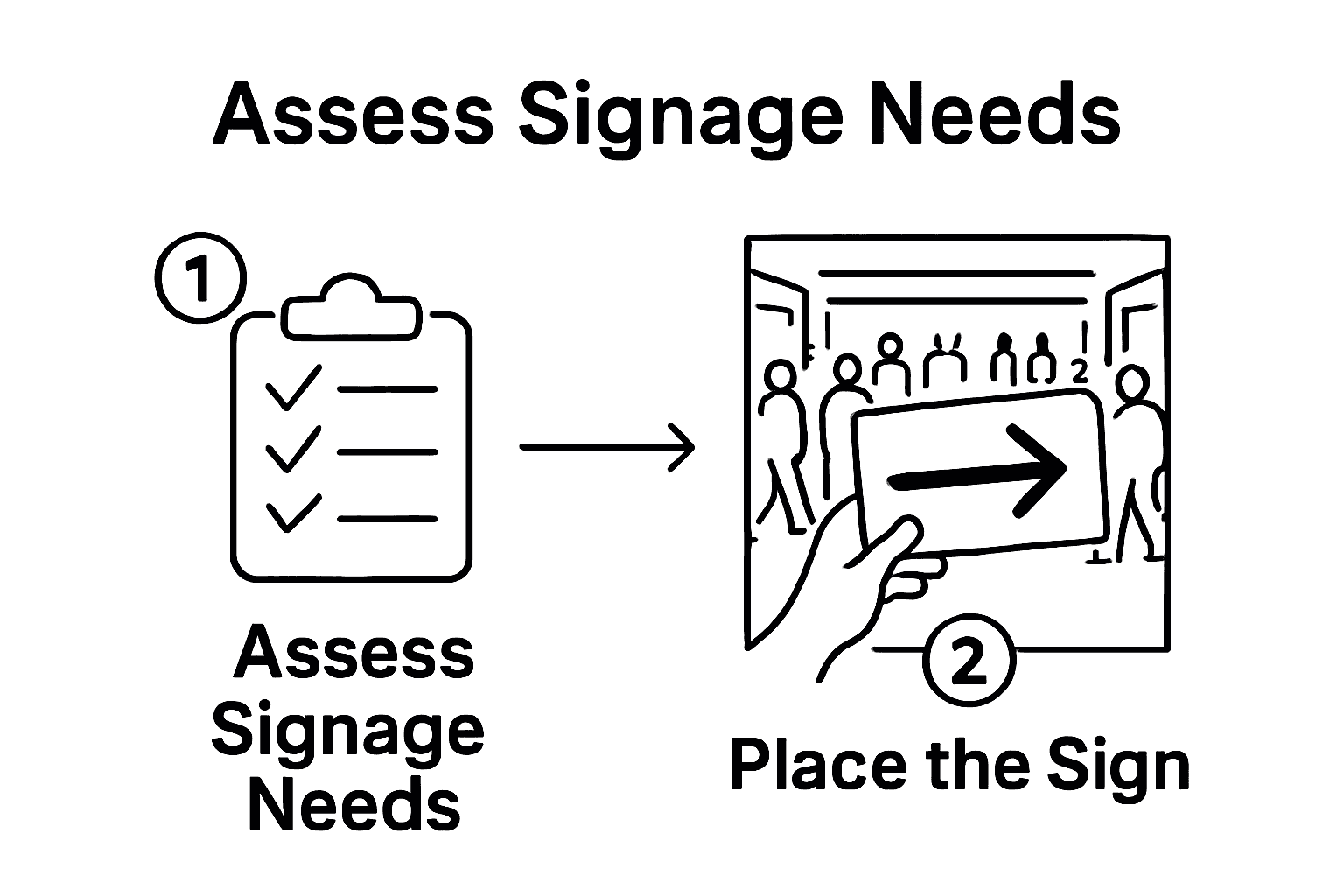
Step 1: Identify Your Signage Needs and Goals
Creating effective temporary signage for events starts with crystal clear planning. Before sketching designs or selecting materials, you must thoroughly understand your specific signage requirements and strategic objectives. This foundational step determines the success of your entire event communication strategy.
Begin by conducting a comprehensive event overview that examines the specific context and communication needs. Consider the event’s scale, audience demographics, venue characteristics, and primary messaging goals. Are you hosting a corporate conference, music festival, trade exhibition, or community gathering? Each event type demands a unique signage approach. Professional event organisers understand that signage is not just about information delivery but creating an immersive experience.
Your signage needs assessment should incorporate multiple strategic dimensions. Evaluate the functional requirements such as directional guidance, informational communication, branding representation, and crowd management. For instance, a large exhibition might need intricate wayfinding signs, schedule boards, sponsor recognition panels, and safety instruction displays. A smaller workshop might prioritise compact, multipurpose signage that can quickly communicate essential information.
Carefully map out your communication hierarchy by prioritising messages. What information is absolutely critical versus supplementary? Determine which details must be immediately visible and which can be positioned in secondary locations. This strategic approach prevents visual clutter and ensures your most important communications stand out.
To support your planning, learn more about strategic signage project planning which can provide additional insights into creating comprehensive communication strategies. Successful temporary signage requires meticulous preparation, understanding your audience’s navigation patterns, and anticipating potential information requirements.
Verify your signage needs assessment by asking these key questions:
- Does each sign serve a clear, specific purpose?
- Will the signage effectively communicate with your target audience?
- Have you considered the venue’s physical layout and potential visual obstructions?
- Can your signs be quickly understood within seconds of viewing?
By methodically working through these considerations, you establish a robust foundation for developing temporary signage that not only informs but enhances your event’s overall attendee experience.
Step 2: Select Appropriate Materials and Formats
Transitioning from needs assessment to material selection represents a critical phase in creating impactful temporary signage for events. Your material and format choices directly influence communication effectiveness, durability, and overall event aesthetic. Understanding the nuanced relationship between material properties and event requirements becomes paramount.
Signage materials must balance practical performance with visual appeal. Lightweight options like corrugated plastic, vinyl banners, and foam board offer excellent portability and cost effectiveness for short duration events. Conversely, events requiring extended display or outdoor placement demand more robust materials such as aluminium composite panels or weather resistant synthetic substrates. Professional event organisers recognise that material selection is not merely about appearance but involves strategic considerations of environmental conditions, handling requirements, and budget constraints.
Research on event communication technologies suggests selecting materials that complement your specific event context. An indoor corporate conference might prioritise sleek acrylic or digital display screens, while an outdoor music festival requires signage capable of withstanding wind, potential moisture, and substantial physical movement. Consider material characteristics like UV resistance, water repellency, and structural integrity when making your selections.
Format diversity plays an equally crucial role in effective communication. Standard rectangular signs work well for traditional information display, but creative formats like A-frames, hanging banners, pop up displays, and modular sign systems can dramatically enhance visual engagement. The goal extends beyond information transmission to creating an immersive visual experience that guides and inspires event participants.
When evaluating potential sign formats, assess these critical verification points:
- Can the selected material withstand anticipated environmental conditions?
- Does the format align with your event’s aesthetic and functional requirements?
- Will the signage remain legible and structurally sound throughout the event duration?
- Have you considered transportation and setup logistics for each sign format?
Successful temporary signage materialises through thoughtful integration of form, function, and strategic communication objectives. By methodically evaluating material properties and format possibilities, you transform simple signs into powerful event communication tools that guide, inform, and inspire your audience.
Step 3: Design Your Signage to Capture Attention
Transitioning from material selection to design represents the creative heartbeat of effective temporary event signage. Visual communication is an art form that demands strategic thinking and keen aesthetic sensibility. Your design must instantly communicate essential information while creating an emotional connection with event participants.

Begin by establishing a clear visual hierarchy that guides viewer attention precisely where you want it. Typography becomes your primary communication tool. Select fonts that are legible from multiple distances and angles, avoiding overly decorative or complex typefaces that might compromise readability. Professional designers recommend using sans serif fonts for maximum clarity, with font sizes large enough to be comprehended quickly. Colour selection plays an equally critical role in capturing attention and conveying mood. High contrast colour combinations ensure your signage remains visible across different lighting conditions and viewer distances.
Explore professional sign design techniques to understand the nuanced principles of creating visually compelling communications. Your design strategy should incorporate brand consistency, ensuring that event signage feels integrated with overall event messaging and aesthetic identity. This means maintaining consistent colour palettes, typography, and graphic elements that reinforce your event’s core visual language.
Beyond aesthetic considerations, functional design requires thoughtful spatial planning. Negative space is not empty space but a strategic design element that prevents visual clutter and enhances message comprehension. Successful signage designers understand that what you choose not to include is often as important as the information you present. Aim for clean, uncluttered designs that communicate essential details without overwhelming viewers.
Verify your design effectiveness by assessing these critical checkpoints:
- Can the sign be understood within 3 seconds of viewing?
- Is the most important information immediately visible?
- Does the design feel cohesive with the event’s overall visual identity?
- Would the sign be legible from the intended viewing distances?
Remember that temporary event signage is more than information transmission. It is an opportunity to create immersive visual experiences that guide, inspire, and engage your audience through strategic design choices.
Step 4: Strategically Position Your Signage at Events
Signage positioning transforms thoughtful design into practical communication, turning static visual elements into dynamic navigational tools. Strategic placement becomes the critical bridge between information creation and audience interaction. Understanding venue geography, human traffic patterns, and visual sightlines determines whether your signage will effectively guide or merely decorate event spaces.
Begin by conducting a comprehensive venue walkthrough, mentally mapping potential sign locations that maximise visibility and minimise visual interference. Prioritise high traffic zones such as entrances, intersections, central gathering areas, and transition points between different event spaces. Consider audience movement dynamics professional event organisers understand that sign placement is not about quantity but strategic positioning. A single well placed sign can be exponentially more effective than multiple poorly positioned alternatives.
Learn more about strategic event signage placement to refine your approach. Physical obstacles like pillars, furniture, or architectural features can dramatically impact sign effectiveness. Tall individuals, temporary structures, or unexpected crowd clustering might obscure critical information. Counteract these challenges by positioning signs at multiple heights, using elevated platforms or hanging mechanisms that ensure visibility across diverse audience perspectives.
Ergonomic considerations play a significant role in successful sign positioning. Signs should be placed at natural eye levels, typically between 1.2 to 1.8 metres for standing adults. For events with diverse audience demographics consider additional signs at lower heights for children or individuals using wheelchairs. Lighting conditions also dramatically influence sign readability. Avoid positioning signs directly in front of bright light sources or in deep shadows that might compromise visual clarity.
Verify your signage positioning effectiveness through these critical checkpoints:
- Can signs be seen from multiple approach angles?
- Are signs unobstructed by potential physical barriers?
- Do signs provide clear directional guidance?
- Are important information points visible within 3 seconds of approach?
Successful temporary event signage transcends mere information delivery. It creates an intuitive spatial language that guides, informs, and subtly enhances participant experience through intelligent, strategic positioning.
Step 5: Evaluate the Effectiveness of Your Signage
Effective temporary signage evaluation transforms passive design into a strategic communication tool. Measurement and analysis convert visual elements from static displays into dynamic feedback mechanisms that continuously improve event communication. Professional event organisers understand that signage effectiveness extends far beyond initial visual appeal.
Commence your evaluation process by establishing clear, measurable objectives during the initial planning stages. Quantitative metrics might include visitor interaction rates, wayfinding efficiency, information retention, and overall navigational clarity. Observe participant behaviour systematically, tracking how individuals interact with your signage. Do they pause, read completely, or rapidly move past? Are signs generating the intended directional responses or creating confusion? These nuanced observations provide profound insights into communication effectiveness.
Discover comprehensive sign performance assessment techniques to refine your evaluation methodology. Technological tools can augment traditional observation methods. Consider employing heat mapping technologies, time lapse photography, or discrete video recording to analyse participant interactions objectively. These sophisticated approaches reveal subtle behavioural patterns that manual observation might miss, providing data driven insights into sign performance.
Qualitative feedback represents another crucial evaluation dimension. Engage event participants through brief, targeted surveys or spontaneous conversations. Ask specific questions about sign clarity, visibility, and informational utility. Create an environment where participants feel comfortable providing honest, constructive feedback. Their perspectives offer unfiltered insights into the real world effectiveness of your signage design and positioning strategies.
Verify your signage evaluation through these critical assessment checkpoints:
- Did signs communicate intended information effectively?
- Were participants able to navigate the event space confidently?
- Did the signage design align with overall event aesthetic and objectives?
- Can you identify specific areas for future improvement?
Successful temporary event signage evaluation is an iterative process. Each event becomes a learning opportunity, refining your communication strategies through systematic observation, technological insights, and direct participant feedback. By approaching signage as a dynamic communication tool rather than a static display, you transform visual elements into powerful navigational and informational resources.
Below is a checklist table to help verify the effectiveness of your event signage based on assessment points outlined in the evaluation section.
| Verification Point | Yes/No | Notes |
|---|---|---|
| Did signs communicate intended information effectively? | ||
| Were participants able to navigate the event space confidently? | ||
| Did the signage design align with overall event aesthetic and objectives? | ||
| Can you identify specific areas for future improvement? | ||
| Was participant feedback positive regarding visibility and clarity? |
Ready For Event Signage That Truly Works?
Struggling to turn your event’s temporary signage plans into a seamless attendee experience? This article highlighted just how much hinges on clear planning, impactful designs, and flawless placement. Yet it is common for event organisers across London, Essex, and Kent to feel overwhelmed by the need to create professional signage that captures attention, withstands the day, and moves crowds with ease. Your brand image, wayfinding, and event flow all depend on getting it right. There is no room for time-consuming mistakes when every detail matters.

Trust PromoSigns to take the stress out of your next event. We deliver custom-made event signs, large format banners, and illuminated solutions that look sharp and work hard. Our expert team manages everything from design to installation, ensuring each sign is clear, durable, and in the right spot. Browse our signage planning resources and find answers to common event challenges. Do not let your next event down with guesswork. Contact us now to discuss your signage needs and secure professional support. Visit PromoSigns and let us help you shine at your next event.
Frequently Asked Questions
What are the key considerations when planning temporary signage for an event?
When planning temporary signage, you should consider your specific signage needs, audience demographics, venue characteristics, and messaging goals. Additionally, evaluate functional requirements like directional guidance, branding, and crowd management, and establish a communication hierarchy to highlight critical information.
How do I select the right materials for my temporary signage?
Choose materials based on durability, portability, and the environmental conditions of the event. Lightweight options like corrugated plastic and vinyl banners are ideal for short-term use, while more robust materials like aluminium composite panels are better for extended displays or outdoor settings.
What design elements are important for effective temporary signage?
Effective temporary signage should have a clear visual hierarchy, legible typography, and a cohesive colour palette that aligns with your event branding. Include high-contrast colour combinations and ensure the design is uncluttered to enhance readability and comprehension.
How can I ensure that my signage is strategically positioned at the event?
Conduct a venue walkthrough to identify high-traffic areas for sign placement, considering audience movement and visibility. Position signs at natural eye levels and be mindful of potential visual obstructions like pillars and furniture to ensure that your signage is effective and accessible.
Recommended
- Top Temporary Signage Uses for London Businesses in 2025 – PromoSigns.co.uk
- Event Signage Checklist 2025: Essential Guide for London Businesses – PromoSigns.co.uk
- Event Signage Best Practices 2025: Essential Tips for London Businesses – PromoSigns.co.uk
- Exhibition Signage Basics 2025: Essential Guide for Businesses – PromoSigns.co.uk
