
In the competitive landscape of commercial signage, few solutions match the visibility and impact of well-designed pole signs. These elevated displays command attention from considerable distances, guide customers to your location, and establish unmistakable brand presence in busy commercial environments.
This comprehensive guide explores everything you need to know about pole signs—from design principles to regulatory compliance—ensuring your signage investment delivers maximum return.

Table of Contents
What Are Pole Signs?
Definition and Core Characteristics
Pole signs (also known as pylon signs, totem signs, or freestanding signs) are elevated display structures mounted on one or more support poles, raising signage panels well above ground level for enhanced visibility.
Key Components:
- Vertical support structure (single or multiple poles)
- Sign cabinet or panel (illuminated or non-illuminated)
- Foundation and anchoring system
- Electrical infrastructure (for illuminated versions)
- Branding graphics and messaging
Typical Heights:
- Low-profile: 3-5 meters
- Standard: 5-10 meters
- High-visibility: 10-20 meters
- Highway/motorway: 20+ meters
How Pole Signs Differ from Other Signage
Versus Ground-Level Signs:
- Dramatically increased visibility distance
- Unobstructed sight lines above obstacles
- Greater brand presence
- Higher investment requirement
Versus Building-Mounted Signs:
- Independent of building architecture
- Visible from multiple directions
- Roadside positioning flexibility
- Earlier customer awareness
Versus Monument Signs:
- Taller profile for distance visibility
- Lighter visual weight
- Different aesthetic appeal
- Generally lower construction costs
Applications and Ideal Use Cases
Retail Environments
Shopping Centers and Retail Parks
- Multi-tenant directory displays
- Anchor store identification
- Wayfinding assistance
- Brand differentiation
- Distance visibility (1-2km possible)
Standalone Retail Locations
- Roadside visibility establishment
- Brand recognition building
- Customer navigation assistance
- Competitive presence
- 24/7 advertising (when illuminated)
Hospitality Sector
Hotels and Accommodation
- Highway visibility for travelers
- Brand identity establishment
- Wayfinding in complex locations
- Professional credibility
- Booking encouragement
Restaurants and Quick Service
- High-traffic road positioning
- Menu board integration possibilities
- Brand recognition
- Impulse visit generation
- Franchise standard compliance
Commercial and Industrial
Business Parks
- Directory signs for multiple tenants
- Professional image projection
- Visitor wayfinding
- Property identification
- Enhanced property value
Automotive Dealerships
- Brand prominence
- Long-distance visibility
- Professional positioning
- Competitive advantage
- Promotional messaging
Healthcare Facilities
Hospitals and Medical Centers
- Clear directional guidance
- Emergency entrance identification
- Multi-building campus navigation
- Professional credibility
- Accessibility compliance
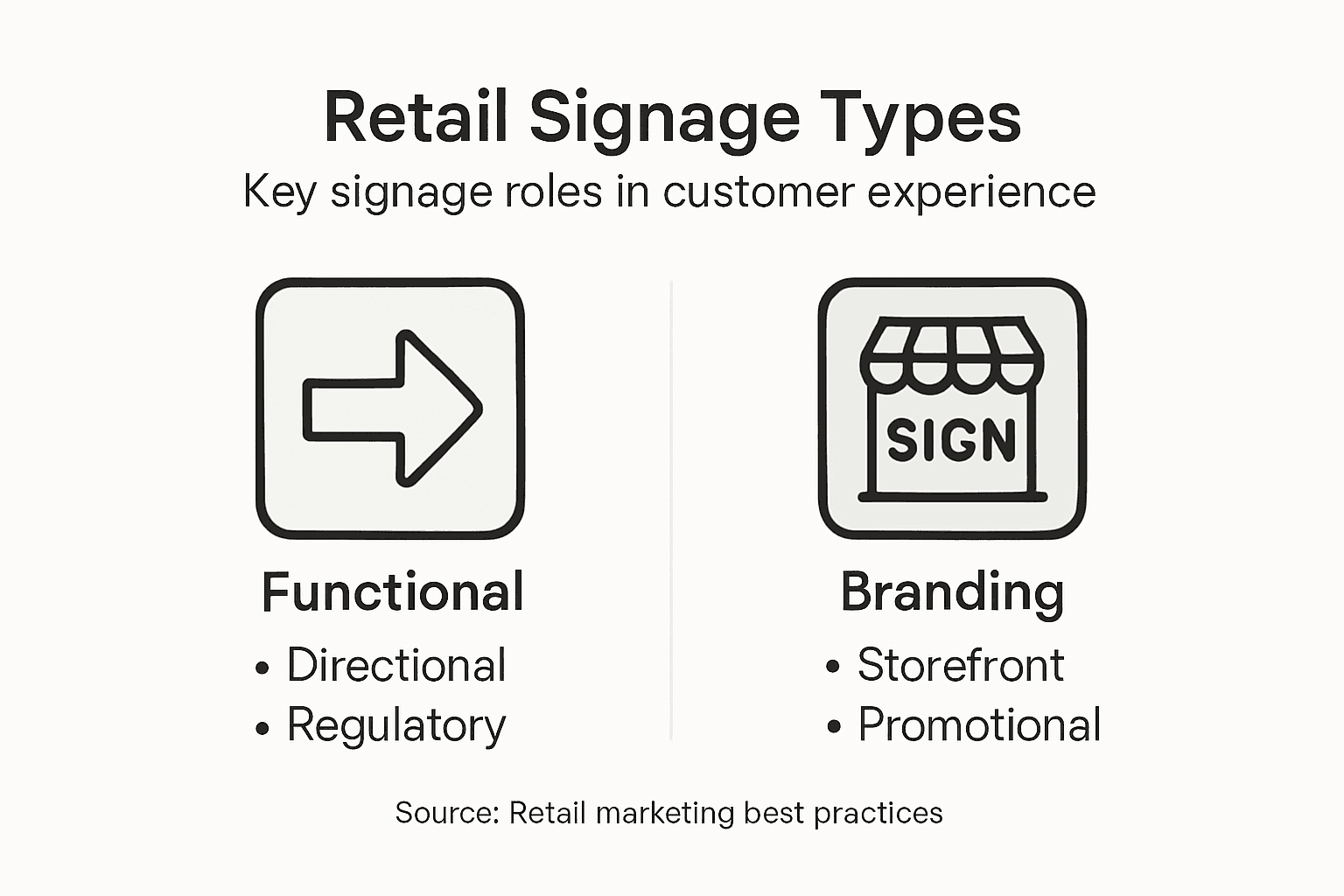
The following table summarises major retail signage types and their typical customer impact:
| Signage Type | Main Purpose | Typical Customer Effect | Example Location |
|---|---|---|---|
| Storefront Signs | Convey brand, attract entry | Reinforces first impression | Shop entrance |
| Wayfinding Systems | Guide movement, orientate | Reduces anxiety, aids navigation | Shopping centre |
| Promotional Signage | Highlight offers | Inspires impulse purchases | Product display area |
| Digital Displays | Offer dynamic info | Increases engagement, flexibility | Reception or entrance |
Design Principles for Maximum Impact
Visual Hierarchy and Branding
Effective pole sign design implements clear information structure:
Primary Elements (Largest, Most Prominent):
- Company logo
- Brand name
- Core service/product identifier
Secondary Information:
- Tagline or key messaging
- Operating hours
- Key services
Tertiary Details:
- Contact information
- Website/social media
- Additional locations
Readability and Viewing Distance
Distance-to-Height Ratio: Professional signage design follows the 100:1 rule:
- For every 100 meters of viewing distance
- Minimum 1 meter of letter height required
- Example: 5-meter letters visible from 500 meters
Typography Considerations:
- Bold, sans-serif fonts preferred
- High contrast ratios (minimum 70%)
- Generous letter spacing
- Appropriate stroke width
- Clear, simple letterforms
Color Strategy
High-Visibility Color Combinations:
- Black on yellow (highest contrast)
- Black on white
- Dark blue on white
- White on dark blue
- Red on white
Brand Consistency:
- Corporate color adherence
- Pantone/RAL matching
- Long-term fade resistance
- Day and night appearance
- Competitive differentiation
This table compares critical design mistakes with their direct impact on business effectiveness:
| Common Mistake | Typical Cause | Potential Impact on Business | Solution |
|---|---|---|---|
| Information Overload | Too many messages per sign | Customer confusion, message dilution | Prioritise simplicity and key points |
| Poor Visibility | Difficult fonts or sizing | Sign ignored, reduced engagement | Use clear, readable fonts and sizing |
| Inconsistent Branding | Varying colours or styles | Weak brand recognition and recall | Maintain unified design language |
Illumination Options
Internal Illumination
LED Cabinet Systems:
- Even, consistent lighting
- Energy efficiency (80% savings vs. fluorescent)
- 50,000+ hour lifespan
- Low maintenance requirements
- Superior color rendering
- Programmable control possibilities
Traditional Fluorescent:
- Lower initial investment
- Proven technology
- Adequate performance
- Higher energy consumption
- More frequent maintenance
External Illumination
Spotlight/Floodlight Systems:
- Architectural lighting effects
- Dramatic night presence
- Lower signage construction costs
- Higher energy consumption
- Directional light control
- Shadow and dimension creation
Halo/Backlit Effects:
- Premium appearance
- Modern aesthetic
- Dimensional depth
- Sophisticated branding
- Higher fabrication costs
Solar-Powered Solutions
Sustainable Illumination:
- Zero electricity costs
- Environmental benefits
- Remote location capability
- Battery backup systems
- Evolving technology
- Regulatory incentives
Materials and Construction
Structural Support Systems
Steel Poles:
- Superior strength-to-weight ratio
- Powder-coated finish durability
- Custom color matching
- Long service life (30+ years)
- Industry standard
Aluminum Poles:
- Corrosion resistance
- Lightweight advantages
- Modern aesthetic
- Higher material costs
- Coastal environment suitability
Concrete/Masonry:
- Maximum stability
- Architectural integration
- Premium appearance
- Higher construction costs
- Limited height applications
Sign Cabinet Materials
Aluminum Cabinet Construction:
- Lightweight durability
- Weather resistance
- Professional finish
- Modular design capability
- Standard industry choice
Acrylic Faces:
- Excellent light transmission
- Impact resistance
- UV stability
- Color consistency
- Professional appearance
Polycarbonate Alternatives:
- Superior impact resistance
- Vandalism deterrence
- Extreme weather tolerance
- Slightly lower light transmission
- Premium durability
Graphic Application Methods
Vinyl Graphics:
- Cost-effective solution
- Design flexibility
- Easy updates/changes
- 5-7 year exterior lifespan
- Professional installation required
Direct Digital Printing:
- Photographic quality possible
- Complex graphics capability
- Seamless large-format application
- UV-resistant inks
- Premium visual impact
Dimensional Letters:
- Premium appearance
- Enhanced visibility
- Sophisticated branding
- Depth and shadow effects
- Higher investment
Planning Permission and Regulations
UK Planning Requirements
Advertisement Consent: Most pole signs require planning permission:
- Local authority approval necessary
- Application fees applicable
- Neighbor consultation possible
- Design restrictions likely
- Heritage area considerations
Deemed Consent Exceptions: Limited scenarios allow installation without consent:
- Temporary displays (specific conditions)
- On-premises directional signs (size limits)
- Replacement of existing similar signage
- Specific business types (limited)
Size and Height Restrictions
Typical Local Authority Limits:
- Maximum height: Often 8-10 meters
- Sign face area: Frequently 2-6 square meters
- Distance from highway: Minimum setbacks
- Illumination restrictions: Time and intensity limits
- Number per site: Often limited to one
Conservation Areas:
- Stricter approval criteria
- Traditional design expectations
- Material restrictions
- Illumination limitations
- Enhanced scrutiny
Safety and Technical Standards
Structural Engineering:
- Wind load calculations required
- Foundation design specifications
- Professional engineering certification
- Building regulation compliance
- Structural warranty provision
Electrical Safety:
- Qualified electrician installation
- BS 7671 wiring regulations compliance
- Proper earthing/grounding
- RCD protection
- Periodic inspection requirements
Installation Process
Site Assessment and Preparation
Pre-Installation Requirements:
- Underground utility location (electricity, gas, water, telecoms)
- Ground condition analysis
- Access assessment
- Environmental considerations
- Temporary traffic management planning
Foundation Construction:
- Excavation depth: Typically 1.5-3 meters
- Concrete specification: Minimum C35
- Reinforcement requirements
- Anchor bolt installation
- Curing period (minimum 7 days)
Pole and Sign Installation
Crane Requirements:
- Appropriate capacity for pole weight and height
- Safe working area establishment
- Qualified operators
- Lift plan documentation
- Safety exclusion zones
Professional Installation Steps:
- Foundation inspection and preparation
- Pole alignment and leveling
- Secure anchoring and bolting
- Sign cabinet mounting
- Electrical connection and testing
- Final alignment and adjustment
- Safety inspection and sign-off
Testing and Commissioning
Completion Verification:
- Structural stability confirmation
- Electrical system testing
- Illumination functionality
- Alignment and level verification
- Weatherproofing inspection
- Documentation and certification
Maintenance and Longevity
Regular Maintenance Schedule
Monthly Inspections:
- Visual condition assessment
- Illumination functionality check
- Obvious damage identification
- Debris/obstruction removal
Annual Professional Service:
- Detailed structural inspection
- Electrical system testing
- Lamp/LED replacement (as needed)
- Cleaning and refinishing
- Bolt torque verification
- Graphics condition assessment
Common Maintenance Issues
Weather-Related Damage:
- Wind damage to graphics
- Water ingress to cabinets
- Corrosion at connection points
- UV fading of colors
- Storm impact damage
Preventive Measures:
- Quality construction specifications
- Professional installation
- Regular inspection regimes
- Prompt repair response
- Protective coatings maintenance
Expected Lifespan
Component Longevity:
- Steel structure: 30-50 years
- Aluminum structure: 25-40 years
- LED lighting: 10-15 years
- Cabinet and faces: 15-25 years
- Vinyl graphics: 5-7 years
- Digital prints: 7-10 years
Cost Considerations
Price Factors
Design Complexity:
- Single-face vs. double-face
- Illumination type and extent
- Custom shapes and sizes
- Graphic complexity
- Premium material selection
Height and Size:
- Taller poles require larger foundations
- Crane costs increase with height
- Material costs scale with size
- Engineering complexity
- Installation difficulty
Typical Investment Ranges (UK):
- Basic non-illuminated (3-5m): £3,000-£6,000
- Standard illuminated (5-8m): £8,000-£15,000
- Large illuminated (8-12m): £15,000-£30,000
- Premium/complex (12m+): £30,000-£100,000+
Long-Term Value
Return on Investment:
- Enhanced visibility drives traffic
- 24/7 advertising presence
- Property value increase
- Competitive advantage
- Brand establishment
- Reduced other marketing needs
Operational Costs:
- Electricity (LED: £50-150 annually)
- Annual maintenance: £200-£500
- Periodic graphic updates
- Insurance considerations
- Professional inspections
Digital and LED Technology Integration
LED Message Centers
Dynamic Messaging Capability:
- Real-time content updates
- Promotional messaging
- Time/temperature displays
- Event announcements
- Multiple advertiser rotation
Technology Considerations:
- Pixel pitch and resolution
- Viewing distance optimization
- Brightness adjustment (day/night)
- Content management systems
- Connectivity requirements
Regulatory Considerations for Digital Displays
Planning Restrictions:
- Static vs. changing content
- Update frequency limitations
- Brightness restrictions
- Operating hour constraints
- Highway distraction concerns
Environmental Considerations
Energy Efficiency
LED Advantages:
- 80% energy reduction vs. fluorescent
- Reduced carbon footprint
- Lower operational costs
- Heat reduction
- Longer replacement intervals
Solar Integration:
- Renewable energy utilization
- Off-grid capability
- Environmental credentials
- Incentive program eligibility
- Technology advancement
Sustainable Practices
Material Selection:
- Recyclable aluminum preferred
- Powder coating vs. wet paint
- LED vs. traditional lighting
- Responsible sourcing
- End-of-life recycling programs
Case Studies: Successful Pole Sign Implementations
Retail Park Multi-Tenant Directory
Challenge: 15-store retail park required unified wayfinding Solution: 8-meter double-faced illuminated directory pole sign Results:
- 35% reduction in customer inquiries
- Improved tenant satisfaction
- Enhanced property image
- Increased customer traffic
Roadside Restaurant
Challenge: New location 200 meters from busy A-road Solution: 10-meter illuminated pole sign with brand colors Results:
- Immediate brand recognition
- Traffic increase of 40% in first quarter
- Competitive advantage established
- ROI achieved within 18 months
Medical Center Campus
Challenge: Complex multi-building healthcare facility Solution: Series of directional pole signs with department identification Results:
- Reduced patient late arrivals
- Improved visitor experience
- Professional image enhancement
- Accessibility compliance
Choosing a Pole Sign Provider
Selection Criteria
Essential Qualifications:
- Planning permission expertise
- Structural engineering capability
- Proven installation experience
- Quality fabrication facilities
- Comprehensive insurance
- Professional accreditations
Portfolio Assessment:
- Similar project examples
- Height and complexity experience
- Illumination expertise
- Custom design capability
- Longevity of previous installations
Service Expectations
Comprehensive Project Management:
- Initial consultation and site survey
- Design development and visualisation
- Planning application support
- Professional installation
- Ongoing maintenance programs
- Warranty and support
Future Trends in Pole Signage
Technological Advances
Smart Integration:
- IoT connectivity
- Remote monitoring
- Predictive maintenance
- Energy optimisation
- Usage analytics
Display Innovation:
- Higher resolution LEDs
- Transparent display technologies
- Interactive capabilities
- Enhanced color accuracy
- Improved energy efficiency
Design Evolution
Architectural Integration:
- Slimmer pole profiles
- Artistic structural design
- Landscape integration
- Sustainable materials
- Premium aesthetics
Conclusion
Pole signs represent significant investments in business visibility, brand establishment, and customer attraction. When properly designed, permitted, and installed, they deliver exceptional long-term value through enhanced awareness, improved wayfinding, and professional credibility.
Success requires careful consideration of location, design, materials, illumination, and regulatory compliance. Working with experienced professionals ensures your pole sign investment achieves maximum impact while meeting all technical and legal requirements.
From initial concept through ongoing maintenance, every aspect of pole signage demands attention to quality, safety, and effectiveness. The result is a powerful marketing asset that works continuously to attract customers, build brand recognition, and differentiate your business in competitive commercial environments.
For expert guidance on planning, designing, and installing pole signs tailored to your specific requirements and location, consult with qualified signage specialists who combine creative excellence with technical expertise and regulatory knowledge.
Recommended
- 9 Key Types of Retail Signage That Can Transform Your Store
- What Makes A Great Shop Sign – PromoSigns.co.uk
- Retail POP Display Signage Solutions for London Businesses in 2025 – PromoSigns.co.uk
- The Modern Age Visual Displays For Branding – PromoSigns.co.uk
- The Ultimate Guide to In Store Analytics for 2025 – Affinsy Blog | Affinsy
- Customer Journey Mapping for CRO Marketers in 2025
