
Every British business aiming to stand out in London’s busy streets must address a crucial hurdle before installing signage. Without the right permit, even a well-designed shopfront can lead to fines or forced removal. More than half of applications face delays due to missing or inaccurate documentation. Knowing what authorities expect upfront helps owners avoid setbacks and keep their projects on track.
Table of Contents
Key Takeaways
| Point | Details |
|---|---|
| Sign Permits Required | Businesses in London must obtain official authorisation for exterior signage to meet regulatory standards related to size, placement, and visual impact. |
| Complex Application Process | Obtaining a sign permit involves detailed documentation including architectural drawings, which must comply with local building codes and regulations. |
| Variety of Sign Types | Different types of signs, especially illuminated and large-scale signs, have specific permitting requirements that involve technical compliance checks. |
| Costs and Timelines | Applicants should prepare for varied costs ranging from £150 to £450 for initial fees and anticipate processing times of three to eight weeks, depending on complexity. |
Defining Sign Permits in London
A sign permit is an official authorisation required by London businesses to legally display exterior signage in public spaces or commercial zones. These permits ensure that shop signs London meet specific regulatory standards related to size, placement, illumination, and visual impact. When considering installing a new sign, business owners must navigate a complex landscape of local signage regulations that protect urban aesthetics and public safety.
In the City of London, sign permits are regulated through specific administrative processes designed to maintain consistent urban design standards. The building permit requirements typically involve submitting detailed documentation about the proposed sign, including precise measurements, design specifications, materials, and intended location. Businesses must demonstrate that their signage complies with local building codes, zoning restrictions, and aesthetic guidelines before receiving official approval.
Key considerations for obtaining a sign permit in London include understanding spatial limitations, illumination restrictions, and structural requirements. The City of London requires businesses to obtain a Section 30 licence for special structures, which can include certain types of signage. This regulatory framework ensures that new signs integrate harmoniously with existing urban environments while maintaining public safety standards. Businesses must carefully assess their signage plans, considering factors such as proximity to historic buildings, visibility triangles at intersections, and potential impact on pedestrian and vehicular traffic flow.
Types of Signage Requiring Permits
Business signage in London is subject to complex regulatory requirements, with certain types of signs mandating official permits before installation. Exterior commercial signs typically require the most comprehensive permitting process, especially those located in prominent urban areas or historic districts. Commercial signage regulations encompass a wide range of sign types that businesses must carefully evaluate before implementation.
The primary categories of signage requiring permits include:
- Illuminated signs with electrical connections
- Projecting signs extending beyond building frontages
- Large-scale facade signs covering significant building areas
- Signs installed in conservation areas or heritage zones
- Advertisements that exceed standard size limitations
- Signs with dynamic or digital display elements
Special attention must be given to illuminated sign regulations, which have specific technical requirements beyond standard visual considerations. Business signs London with electrical components must consider factors such as light intensity, potential glare, energy efficiency, and nighttime visibility when designing signs. Digital signs, LED displays, and neon signage often demand more rigorous permitting processes due to their complex installation and potential impact on surrounding architectural environments.
The permit requirements vary significantly based on the sign’s location, size, and visual characteristics. Retail businesses, restaurants, offices, and commercial establishments must submit detailed documentation including architectural drawings, precise measurements, material specifications, and design renderings. Temporary signage, such as construction site signs or event banners, also require specific permits, with shorter-term authorisations that must be renewed periodically to maintain compliance with local regulatory standards.
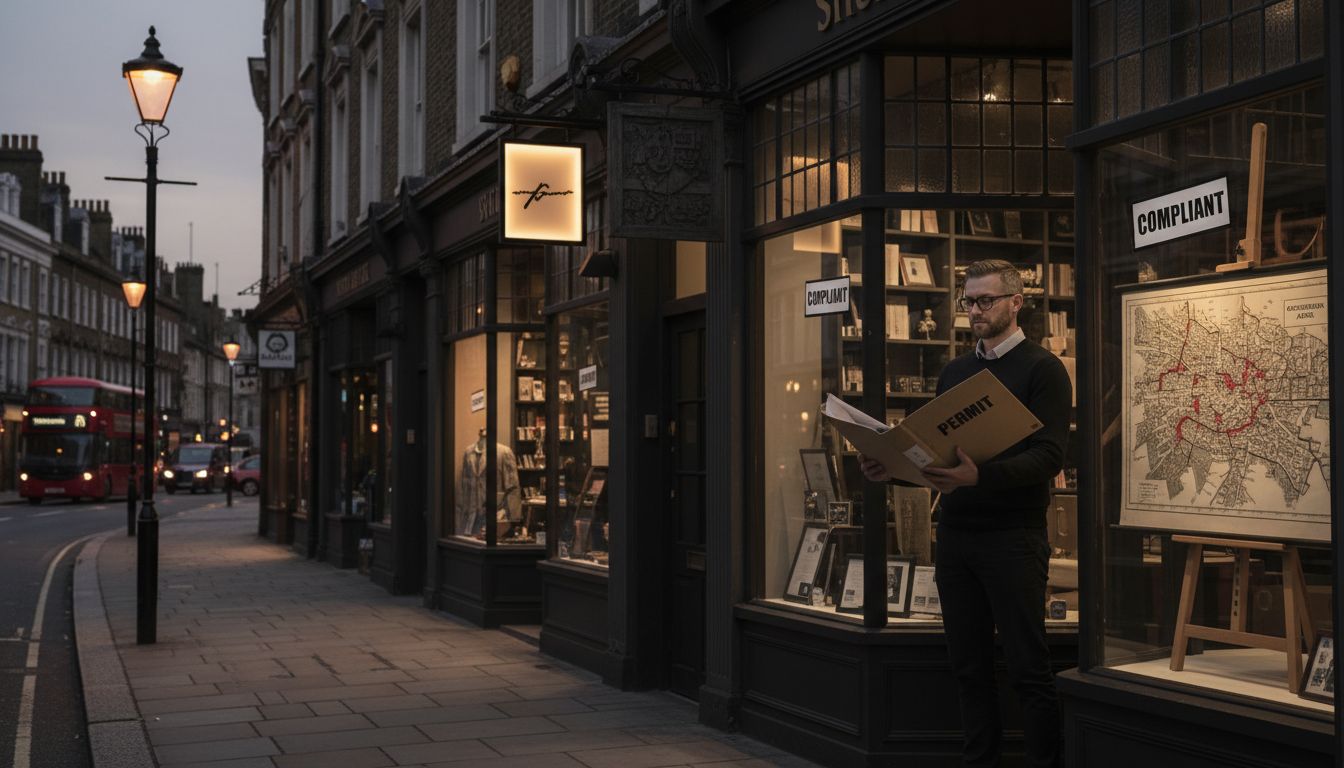
Key Application Steps and Procedures
Obtaining a sign permit in London requires a systematic approach that demands precision and thorough documentation. Building permit requirements involve a multi-step process designed to ensure comprehensive review of proposed signage installations. Business owners must navigate these procedures with meticulous attention to detail, understanding that each submission will be carefully evaluated against local regulatory standards.
The standard sign permit application typically involves the following key steps:
- Preliminary design preparation
- Create detailed architectural drawings
- Develop precise measurements and specifications
- Include material composition details
- Documentation compilation
- Prepare site plans
- Draft comprehensive project descriptions
- Gather relevant business registration documents
- Technical compliance verification
- Confirm electrical specifications for illuminated signs
- Verify structural integrity requirements
- Ensure compliance with local zoning regulations
Work approval procedures require applicants to submit a complete application package that includes a comprehensive description of the proposed work. The City of London mandates businesses to complete the designated application form for a Section 30 licence, which involves demonstrating adherence to safety standards and providing exhaustive documentation about the proposed signage installation.
Final submission requires businesses to pay the requisite application fees and await official review. The processing time can vary depending on the complexity of the sign, with typical turnaround ranging from two to six weeks. Applicants should be prepared to respond promptly to any additional information requests from local authorities, as incomplete or unclear submissions can significantly delay the permitting process.
Working with professional signage companies London who are experienced in permit applications can dramatically reduce delays and ensure your documentation meets all local authority requirements first time.
Legal Regulations and Planning Rules
Navigating the legal landscape of signage in London requires a comprehensive understanding of multiple regulatory frameworks that govern commercial visual communications. Commercial signage regulations are intricately designed to balance business visibility with urban aesthetic preservation, environmental considerations, and public safety standards.
The primary legal considerations for sign permits encompass several critical domains:
- Planning permission requirements
- Conservation area restrictions
- Listed building regulations
- Highway visibility standards
- Electrical safety compliance
- Environmental impact assessments
- Advertising standards and limitations
Illuminated sign regulations represent a particularly nuanced area of legal compliance, with specific technical and visual guidelines. Businesses must navigate complex requirements that address light pollution, energy efficiency, and potential visual disturbance to surrounding properties. The legal framework considers factors such as luminance levels, colour temperature, positioning, and potential glare impacts, ensuring that commercial signage integrates harmoniously with the urban environment.
Special consideration is given to signs in sensitive zones, including historic districts, conservation areas, and locations near heritage sites. Businesses must demonstrate not just technical compliance, but a thoughtful approach to visual integration that respects the architectural and cultural context of their specific location. Violations can result in significant penalties, including mandatory removal of non-compliant signage, substantial financial fines, and potential legal enforcement actions that could dramatically disrupt business operations.
Custom signs London designed by experienced professionals are created with these regulatory requirements built in from the outset, helping businesses avoid compliance failures before they occur.
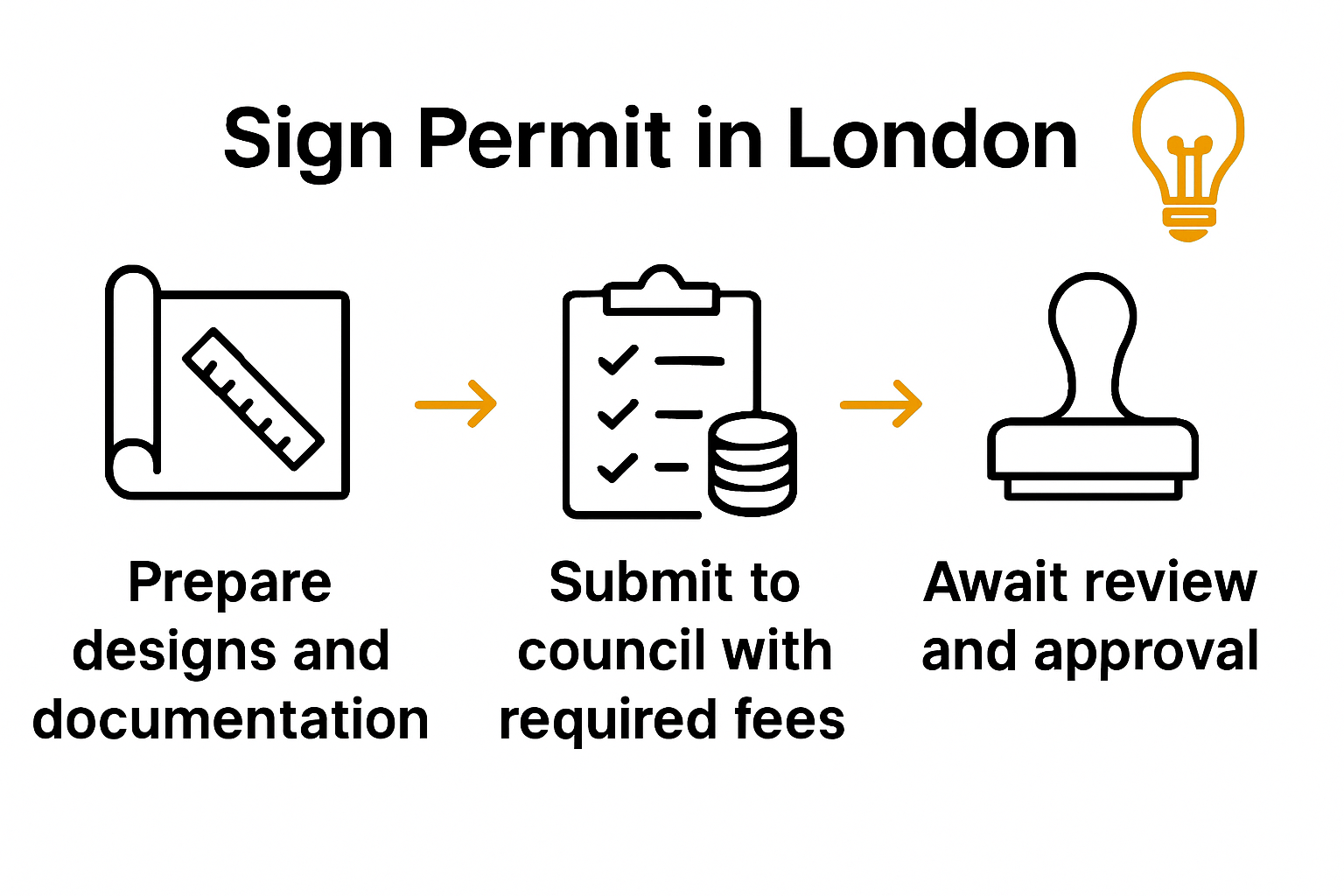
Costs, Fees and Typical Timelines
Navigation of sign permit expenses requires careful financial planning and understanding of the complex regulatory landscape. Building permit requirements involve variable costs that depend on multiple factors, including sign complexity, location, and specific municipal regulations. Business owners should anticipate a comprehensive financial commitment that extends beyond initial application fees.
Typical cost breakdown for sign permit applications includes:
- Initial application processing fee: £150–£450
- Technical review charges: £200–£750
- Inspection costs: £100–£300
- Additional compliance documentation fees: £75–£250
- Potential supplementary architectural review expenses: £250–£600
The standard processing period for sign permit applications ranges from three to eight weeks, with more complex submissions potentially requiring up to twelve weeks for comprehensive review. Factors influencing processing duration include:
- Completeness of initial documentation
- Sign complexity and structural requirements
- Location-specific regulatory considerations
- Current municipal administrative workload
- Potential need for additional technical assessments
Financial planning should include a contingency budget for potential revisions or additional documentation requests. Businesses must also factor in potential indirect costs, such as professional consultation fees, architectural drawing expenses, and potential delays in project implementation. For businesses requiring large format printing London alongside their signage installation, coordinating both timelines from the outset prevents costly gaps between permit approval and production readiness.
Common Pitfalls and Compliance Issues
Navigating sign permit regulations requires meticulous attention to detail and a comprehensive understanding of potential compliance challenges. Signage regulations highlight numerous complex areas where businesses frequently encounter obstacles, potentially jeopardising their permit applications and operational continuity.
The most prevalent compliance pitfalls include:
- Incomplete architectural documentation
- Inaccurate measurements and specifications
- Overlooking conservation area restrictions
- Misunderstanding electrical safety requirements
- Failing to account for heritage site proximity
- Inadequate visual impact assessments
- Neglecting light pollution considerations
Businesses often underestimate the intricate technical requirements surrounding sign installations. Technical non-compliance can result in immediate permit rejection, substantial financial penalties, and mandatory sign removal. Key technical challenges frequently involve:
- Incorrect luminance calculations
- Inappropriate material selections
- Structural integrity miscalculations
- Insufficient weatherproofing specifications
- Non-standard electrical integration
Proactive compliance strategies demand comprehensive preparation and professional guidance. Businesses must anticipate potential regulatory challenges by conducting thorough pre-application assessments, engaging specialist signage consultants, and maintaining rigorous documentation standards. Understanding the nuanced regulatory landscape is crucial for minimising potential disruptions and ensuring smooth sign permit approval processes.
Ensure Your London Signage Fully Complies with Ease
Navigating the complexities of sign permits in London requires precise understanding of regulations like Section 30 licences, illuminated sign rules, and conservation area restrictions. Many businesses struggle with detailed documentation, technical compliance, and lengthy approval timelines. Avoid costly delays and fines by partnering with professionals who specialise in compliant custom signage designed to meet all City of London requirements.
Discover how we can simplify your sign permit process with expert design, production, and installation services tailored to your needs. At PromoSigns, we guide you through building permit requirements, handle all technical details from illuminated signage compliance to heritage area considerations, and ensure your business sign enhances visibility without regulatory risk. Don’t wait until non-compliance threatens your operations. Take the first step towards hassle-free, fully legal signage solutions today by visiting our website and contacting our team for a personalised consultation.
Frequently Asked Questions
What is a sign permit in London?
A sign permit is an official authorisation required for businesses to display exterior signage legally. It ensures signage complies with local regulations regarding size, placement, and visual impact.
What types of signage require permits?
Signage that typically requires permits includes illuminated signs, projecting signs, large facade signs, signs in conservation areas, oversized advertisements, and signs with digital display elements.
What are the steps to apply for a sign permit?
The steps generally include preparing preliminary designs, compiling necessary documentation, verifying technical compliance, submitting the application package, and paying related fees.
What are common pitfalls when applying for a sign permit?
Common pitfalls include incomplete architectural documentation, inaccurate measurements, overlooking conservation area regulations, and misunderstanding electrical safety requirements.
Recommended
- Illuminated Sign Regulations: Key Rules for Businesses in 2025 – PromoSigns.co.uk
- Retail Signage Compliance Guide 2025 for London Businesses – PromoSigns.co.uk
- Understanding Building Permits for Shop Signs – PromoSigns.co.uk
- How to Design Building Signage: A 2025 Guide for London Businesses – PromoSigns.co.uk
- CCTV Regulations in Essex: Essential Guide – 247 CCTV Security Ltd
- Burglary Prevention Methods for Businesses and Homes UK – 247 CCTV Security Ltd
