
TL;DR:
- Sign size in London is regulated, with most signs over 0.3m² requiring formal consent.
- Conservation areas and listed buildings impose stricter sign regulations, demanding careful design and approval.
- Effective signage balances compliance with smart design, focusing on contrast, placement, and simplicity.
Many business owners assume that a bigger sign automatically means better visibility. In London, that assumption can lead to costly mistakes. The city’s layered planning regulations, conservation area rules, and local authority requirements mean that sign size is just one piece of the puzzle. Getting your signage right requires understanding what the law permits, how your location affects your options, and how smart design can make even a modest sign command attention. This guide walks you through the essential regulations, practical design strategies, and approval steps you need to create signage that genuinely works for your business.
Table of Contents
Key Takeaways
| Point | Details |
|---|---|
| Consent required for illuminated signs | All illuminated signs need advertisement consent in London, regardless of size. |
| Conservation area restrictions | Listed buildings and conservation areas demand stricter approvals and design respect. |
| Visibility needs strategic design | Effective signage means thoughtful placement, clear design, and legal compliance. |
| Avoid common approval mistakes | Careful documentation and awareness of pitfalls help speed up consent processes. |
| Expert support for business signage | Professionals streamline compliance and maximise sign impact with tailored solutions. |
Understanding the UK regulations on signage visibility
Before you invest in a new shop signs London installation, it pays to understand the legal framework that governs what you can display. In the UK, outdoor advertising is controlled primarily through the Town and Country Planning (Control of Advertisements) Regulations 2007. These regulations set out what requires formal permission and what falls under “deemed consent,” meaning it is automatically permitted if it meets certain conditions.
The threshold is lower than many business owners expect. Signs larger than 0.3 square metres or any illuminated signs require advertisement consent under the Town and Country Planning (Control of Advertisements) Regulations 2007. To put that in context, 0.3 square metres is roughly the size of an A3 sheet of paper. Most retail fascia signs, window graphics, and projecting signs will exceed this threshold, meaning formal consent is the norm rather than the exception.
Understanding outdoor signage regulations is essential for any retail or property project in London. The government signage guidelines outline the full scope of what is permitted and what requires an application, and they are well worth reading before you begin any project.
Here is a summary of the key consent categories:
| Sign type | Deemed consent | Advertisement consent required |
|---|---|---|
| Small non-illuminated sign (under 0.3m²) | Yes, if conditions met | No |
| Illuminated sign (any size) | No | Yes |
| Fascia sign (most retail) | No | Yes |
| Projecting sign | Conditional | Often yes |
| Conservation area sign | No | Yes |
Key points every business owner should be aware of include:
- Advertisement consent is a separate process from standard planning permission
- Local authorities assess signs on amenity and public safety grounds
- Illumination type, brightness, and hours of operation are all subject to review
- Non-compliance can result in enforcement notices and removal at your cost
- Approval timelines typically run eight weeks for standard applications
Familiarising yourself with UK sign regulations and using the London sign permit guide as a reference will help you plan your project with confidence and avoid unnecessary delays.
Special considerations for conservation areas and listed buildings
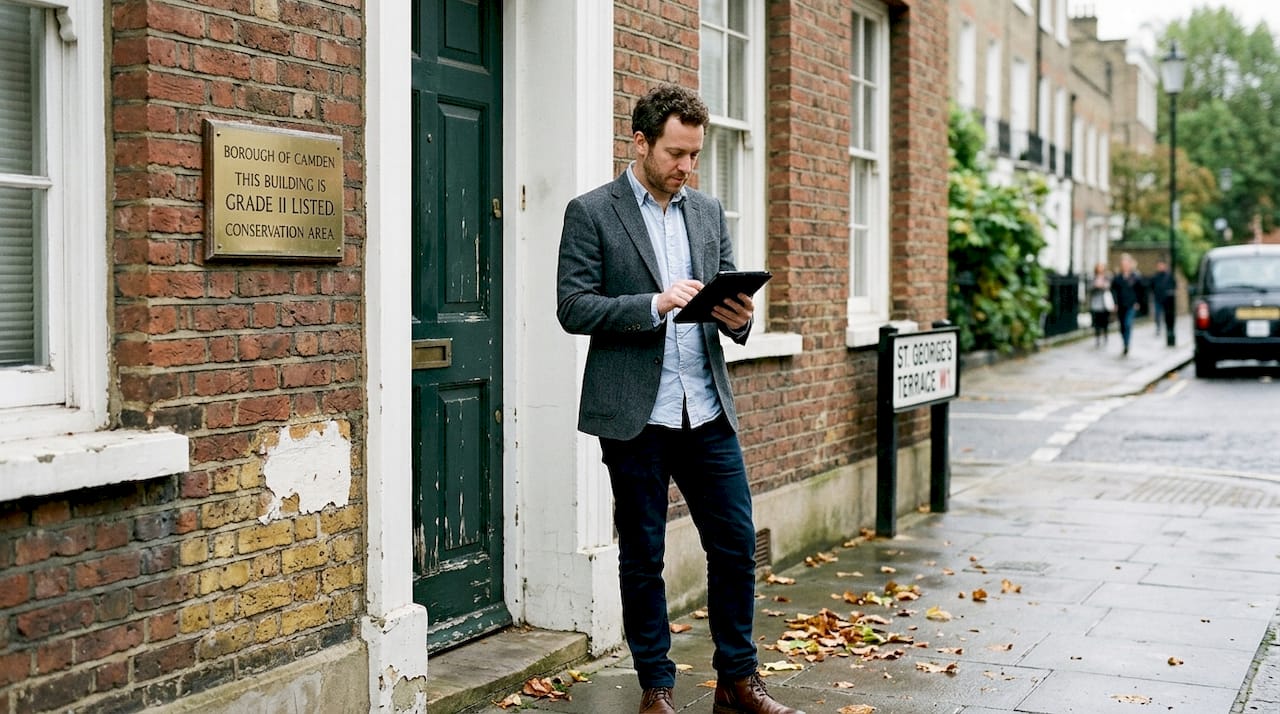
With standard regulations explained, it is essential to recognise how special locations come with extra hurdles. London has more than 1,000 conservation areas and thousands of listed buildings, many of which sit in prime retail locations. If your premises fall within one of these designations, the rules become considerably stricter.
In conservation areas or listed buildings, stricter rules apply: no deemed consent, extra permissions are needed, and you must avoid obstructing architectural features. This means that even a small, non-illuminated sign that would be permitted elsewhere requires a formal application in a conservation area.
| Consideration | Standard location | Conservation area or listed building |
|---|---|---|
| Deemed consent available | Yes (if conditions met) | No |
| Illuminated signs | Consent required | Consent required, stricter criteria |
| Design scrutiny | Moderate | High, must respect architecture |
| Application complexity | Standard | More detailed, longer review |
| Risk of refusal | Lower | Higher without specialist input |
For heritage building signage compliance, the design of your sign must respect the character of the building and its surroundings. Local planning officers will assess whether the sign’s materials, fixings, colours, and scale are sympathetic to the existing architecture. Anything that obscures original features such as cornices, pilasters, or decorative stonework is likely to be refused.
“The most successful signage in conservation areas works with the building, not against it. Restraint in scale and material choice often produces the most enduring and approved results.”
Pro Tip: Engage a planning consultant or specialist signage companies London with conservation area experience before submitting your application. Pre-application advice from the local authority is often available and can save significant time and cost by identifying issues before you formally apply.
Design strategies to maximise sign visibility
Once permissions and limitations are clear, it is time to focus on making signage stand out in practice. Compliance sets the boundaries, but design determines whether your sign actually drives footfall and reinforces your brand.
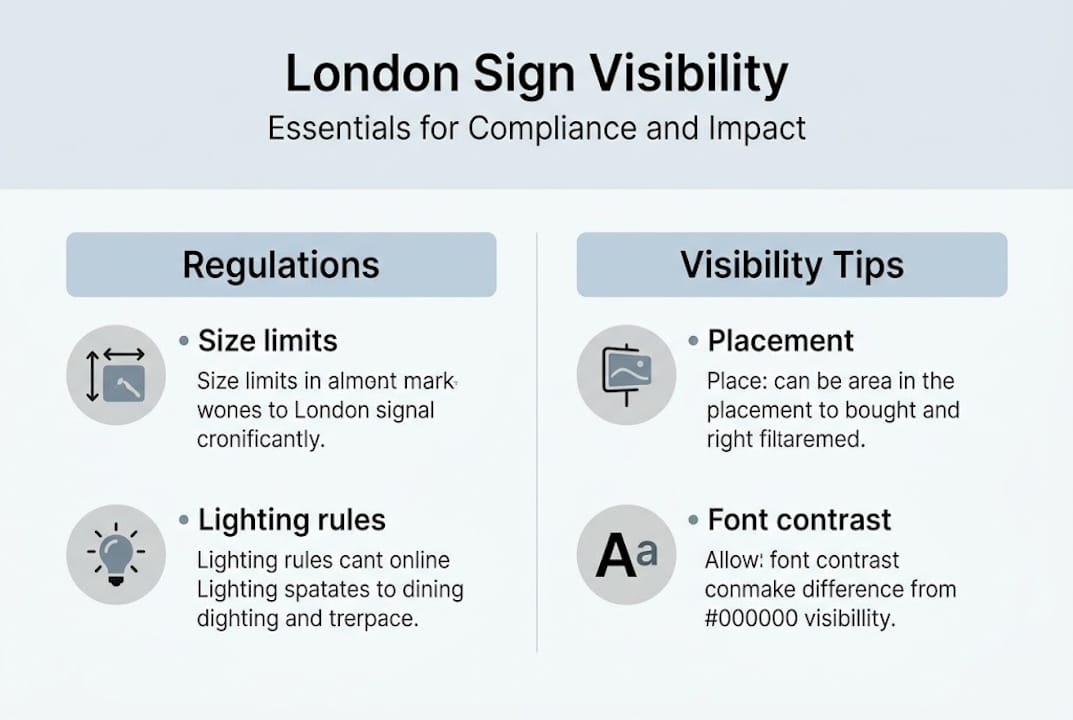
The most visible signs are not always the largest. Research consistently shows that clarity, contrast, and placement outperform sheer size when it comes to attracting customer attention. A well-designed sign at eye level with strong colour contrast can outperform a much larger sign positioned poorly or cluttered with information.
Here are the core design principles to follow:
- Colour contrast: Use colours that stand out against your building facade. Light lettering on a dark background, or vice versa, improves legibility at distance
- Font choice: Bold, clean typefaces read more easily than decorative scripts, especially from a moving vehicle or across a busy street
- Placement: Position your sign where natural sightlines from the pavement and road converge. Height matters; too high and pedestrians miss it
- Lighting: Designing illuminated signs for your shop requires balancing brightness with local restrictions. Halo-lit letters and LED channel signs offer strong visibility without excessive glare
- Simplicity: Limit your sign to your brand name, logo, and one clear descriptor. Clutter reduces impact
- Material quality: Foamex signs printing London and aluminium, acrylic, and brushed steel options all project professionalism and withstand the British weather
For business signs London owners operating in competitive retail environments, investing in quality materials and professional design pays dividends over time. Bear in mind that signs requiring advertisement consent include all illuminated options, so factor approval timelines into your project schedule.
Pro Tip: Think about futureproofing signage from the outset. Modular sign systems that allow you to update your branding or messaging without a full replacement save money and reduce the need for repeat consent applications.
Practical steps for securing consent and avoiding pitfalls
With the best strategies in hand, understanding approval procedures keeps your signage project on track. Many businesses lose time and money by starting fabrication before consent is secured, or by submitting incomplete applications that trigger delays.
Follow these steps to keep your project moving:
- Assess your location. Confirm whether your premises are in a conservation area, an Article 4 direction area, or adjacent to a listed building. Your local authority’s planning portal will have this information.
- Review the regulations. Check sign permit requirements for London and confirm whether your proposed sign falls under deemed consent or requires a formal application.
- Prepare your application. You will need scaled drawings of the proposed sign, photographs of the existing facade, a location plan, and details of materials, colours, and any illumination.
- Submit to the local authority. Applications are submitted via the Planning Portal or directly to the local borough. Standard decisions take up to eight weeks.
- Address any queries promptly. Planning officers may request amendments or additional information. Responding quickly keeps the process on schedule.
- Await approval before fabrication. Beginning manufacture or installation before consent is granted risks enforcement action.
For illuminated options, reviewing illuminated signage regulations before finalising your design will help you avoid specification changes late in the process. The advertisement consent guide provides detailed guidance on what supporting documents are required.
If your premises are in the City of London, the shopfront consent process has specific requirements that differ from outer London boroughs. Always check with the relevant authority directly.
Pro Tip: Submit a pre-application enquiry before your formal submission. Most London boroughs offer this service, and officer feedback at this stage can significantly reduce the risk of refusal and shorten the overall timeline.
Key reminder: Signs over 0.3 square metres and all illuminated signs require advertisement consent. In conservation areas, no deemed consent applies and stricter criteria govern every application.
A fresh perspective on sign visibility in London
Having covered the guidelines and strategies, it is worth considering what truly sets visible, memorable signage apart within the regulations. In our experience working with retail businesses and property developers across London, the businesses that achieve the most impact are not those with the largest signs. They are the ones that treat signage as a customer experience tool rather than a compliance exercise.
A sign that is technically within every regulation but poorly designed, badly lit, or inconsistent with the brand does little for your business. Conversely, a modest, well-crafted custom signs London installation in a conservation area that works with the architecture can become a genuine landmark. The regulations, when understood properly, are not an obstacle. They are a framework that encourages thoughtful design.
The real opportunity lies in futureproofing signage impact by integrating brand strategy with compliance from the very start of a project. When design and regulation inform each other, the result is signage that is both approved and genuinely effective.
Get expert signage solutions for London businesses
Navigating London’s signage regulations while delivering maximum visual impact is exactly what we do at PromoSigns. Whether you are fitting out a new retail unit, refreshing an existing shop front, or managing a multi-site property development, our team handles everything from initial design through to consent applications and professional installation.
We understand that every project has unique constraints, whether that means working within a conservation area, meeting a tight launch deadline, or creating outdoor business signage that stands out in a competitive high street. Our end-to-end service covers shop signs Barnet and across London, Essex, and Kent. Explore the advantages of illuminated signage for your business, or get in touch with our team today for tailored guidance and a no-obligation quote.
Frequently asked questions
Do illuminated signs in London need special consent?
Yes, all illuminated signs require advertisement consent regardless of their size, as set out under the Town and Country Planning regulations. There is no deemed consent route available for illuminated signage.
What are the rules for signs in conservation areas or listed buildings?
Conservation areas and listed buildings have stricter standards with no deemed consent available, meaning you must seek explicit permission and demonstrate that your sign respects the character of the building and its surroundings.
How can I maximise sign visibility while complying with regulations?
Choose strategic placement, high-contrast colours, clean fonts, and appropriate lighting, always ensuring your sign meets the legal requirements for size and consent. Even modest signs can achieve strong visibility with the right design approach.
What is the process for securing signage consent in London?
Submit a formal advertisement consent application to your local authority with scaled drawings, photographs, and material details, ensuring compliance with both general regulations and any location-specific rules for conservation areas or listed buildings.
Recommended
- Event Signage Best Practices 2025: Essential Tips for London Businesses – PromoSigns.co.uk
- Why Signage Matters in 2025: Essential for London Businesses – PromoSigns.co.uk
- Site branding essentials: boost sales 25% in London – PromoSigns.co.uk
- Top Storefront Sign Visibility Tips for London Businesses 2025 – PromoSigns.co.uk
- Drive engagement with digital signage solutions: 5 examples
