
Did you know that businesses throw away over 100 million pounds of signage every year? With growing concerns about waste and resource use, many companies are searching for smarter ways to make a visual impact while protecting the planet. Sustainable signage solutions offer a practical answer, blending eco-friendly materials and new production methods that limit harm to the environment while supporting bold, effective communication.
Table of Contents
Table of Contents
- Defining Sustainable Signage Solutions
- Types of Eco-Friendly Signage Materials
- Production Methods and Environmental Impact
- Sustainable Signage Applications for Businesses
- Legal, Health, and Safety Regulations
- Cost, Lifespan, and Common Pitfalls
Key Takeaways
| Point | Details |
|---|---|
| Focus on Eco-Friendly Materials | Sustainable signage emphasizes the use of biodegradable, recyclable, and sustainably sourced materials to minimize environmental impact. |
| Innovative Production Methods | Employing energy-efficient techniques and water-based inks contributes to lower carbon footprints and waste during manufacturing. |
| Strategic Applications for Businesses | Companies can enhance their brand image and appeal to eco-conscious consumers by adopting digital signage and LED technologies. |
| Compliance with Regulations | Sustainable signage must meet legal, health, and safety standards, ensuring accessibility and the use of non-toxic materials. |
Defining Sustainable Signage Solutions
Sustainable signage solutions represent a progressive approach to creating visual communication tools that prioritize environmental responsibility. According to elitesignsolutions, these solutions fundamentally involve using eco-friendly materials and production methods designed to minimize environmental impact while maintaining high-quality visual communication.
At its core, sustainable signage encompasses several key principles. capitalwraps highlights that this approach focuses on utilizing environmentally friendly materials and production techniques that reduce the overall ecological footprint. These solutions typically involve:
- Selecting biodegradable and recyclable substrates
- Implementing energy-efficient manufacturing processes
- Reducing waste during production and installation
- Choosing materials with minimal environmental degradation
The goal of sustainable signage is not just environmental preservation but also creating durable, effective communication tools that align with modern businesses’ increasing commitment to ecological responsibility. By integrating sustainable practices, companies can demonstrate their environmental consciousness while still achieving compelling visual communication strategies that capture attention and convey essential messages.
Types of Eco-Friendly Signage Materials
Exploring eco-friendly signage materials reveals an exciting range of sustainable options that combine environmental responsibility with practical functionality. europeanbusinessreview highlights several innovative materials that are transforming the signage industry, including recycled plastics, bamboo, reclaimed wood, and biodegradable substances like cornstarch-based plastics.
According to duncan-parnell, sustainable signage materials offer remarkable versatility and durability. These environmentally conscious options encompass:
- FSC-certified wood
- Recyclable aluminum
- Corrugated cardboard
- Polypropylene
- Biodegradable cornstarch plastics
- Reclaimed and sustainably sourced timber
Each material brings unique advantages to sustainable signage production. Recycled and biodegradable materials reduce waste and carbon footprint, while maintaining the structural integrity and visual appeal required for effective signage. By selecting these eco-friendly alternatives, businesses can demonstrate their commitment to environmental stewardship without compromising on quality or visual communication effectiveness. Understanding Eco Friendly Signage Solutions can provide further insights into making sustainable material choices for your signage needs.
Here’s a comparison of popular eco-friendly signage materials:
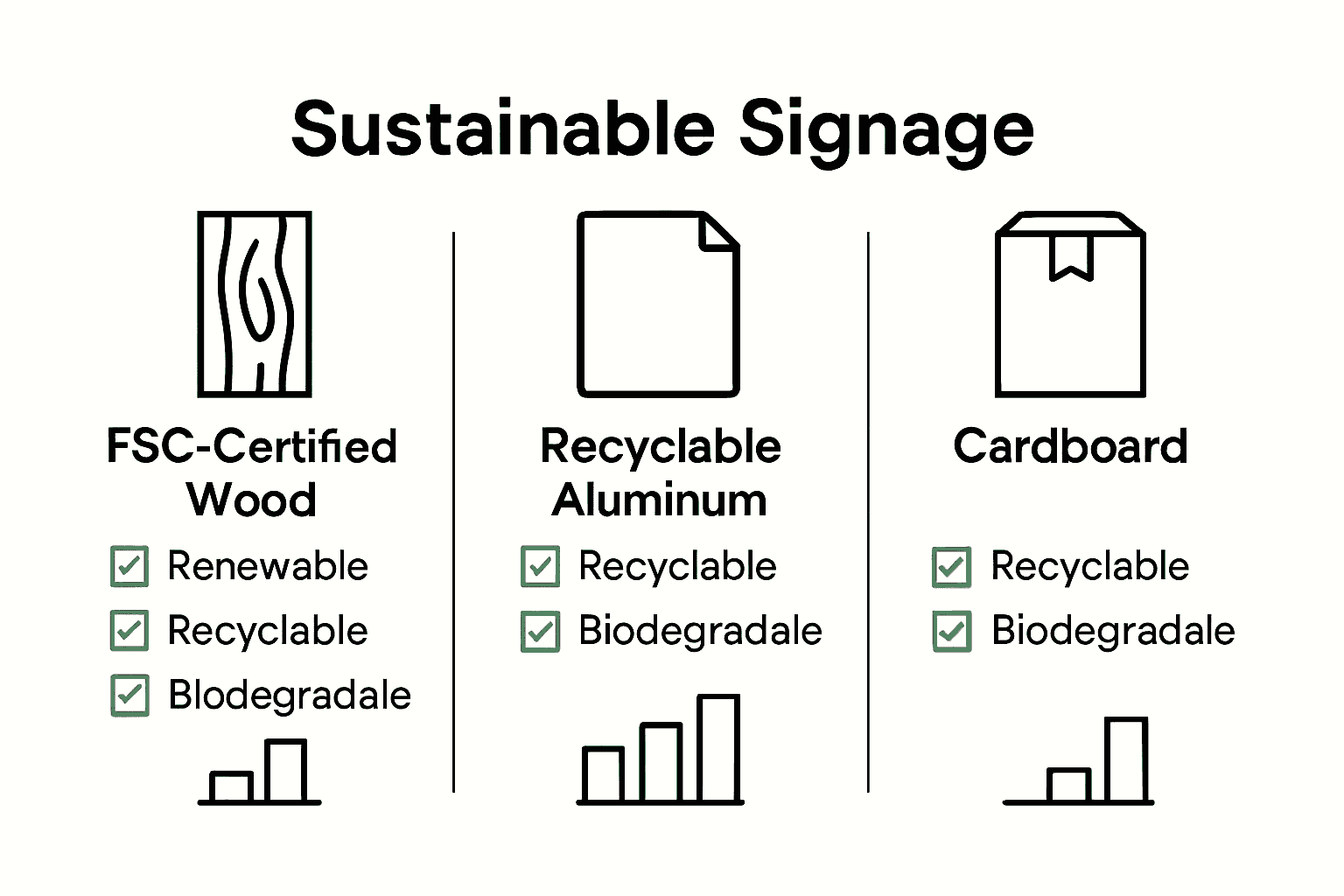
| Material | Environmental Benefits | Common Uses |
|---|---|---|
| FSC-certified wood | Renewable Biodegradable |
Shop signs Wall plaques |
| Recyclable aluminium | High recyclability Durable |
Exterior signs Panels |
| Corrugated cardboard | Biodegradable Lightweight |
Event displays Temporary signs |
| Polypropylene | Recyclable Long-lasting |
Display boards Indoor signs |
| Biodegradable cornstarch plastics | Compostable Low impact |
Point-of-sale Short-term signage |
| Reclaimed or sustainable timber | Upcycled Minimal footprint |
Feature signs Rustic branding |
Production Methods and Environmental Impact
Sustainable signage production goes far beyond material selection, encompassing comprehensive manufacturing processes that minimize environmental footprint. e-arc highlights innovative approaches such as utilizing recyclable substrates like Falconboard and ImageMax, which are constructed from 100% recycled materials, significantly reducing waste and energy consumption.
According to pbsigns, sustainable production methods involve strategic techniques that promote resource efficiency. These advanced approaches include:
- Utilizing water-based or soy-based inks
- Implementing modular signage systems for easy updates
- Reducing overall material waste
- Minimizing energy consumption during manufacturing
- Designing for long-term durability and recyclability
The environmental impact of sustainable signage production is substantial.
IMAGE:descriptive_key_1] By adopting these eco-conscious methods, businesses can dramatically reduce their carbon footprint, conserve resources, and demonstrate a genuine commitment to environmental stewardship. [Understanding Eco Friendly Signage Solutions provides deeper insights into how innovative production techniques can transform traditional signage manufacturing into a more sustainable practice.
Sustainable Signage Applications for Businesses
Sustainable signage strategies are transforming how businesses communicate their brand while demonstrating environmental responsibility. signshouse reveals innovative approaches that enable companies to enhance their visual communication while minimizing ecological impact, including digital and interactive signs, LED-lit channel letters, and unique materials like bamboo and recycled concrete for monument signs.
According to ecofriendlyprinter, businesses can strategically align their branding efforts with sustainability goals through thoughtful signage choices. These sustainable applications encompass:
- Implementing digital and interactive signage systems
- Using LED-powered illumination technologies
- Selecting FSC-certified wood for signage materials
- Creating monument signs from recycled or sustainable materials
- Adopting recyclable substrate options
By integrating these eco-friendly signage solutions, businesses not only reduce their environmental footprint but also appeal to increasingly environmentally conscious consumers.
Exhibition Signage Basics 2025 offers additional insights into how sustainable signage can effectively communicate a brand’s commitment to environmental stewardship across various business contexts.
Legal, Health, and Safety Regulations
Sustainable signage compliance requires navigating a complex landscape of legal and safety requirements that go beyond environmental considerations. greendotsign highlights the critical importance of adhering to accessibility standards, particularly the Americans with Disabilities Act (ADA), which mandates specific design features to ensure signage is inclusive and functional for all users.
According to elitesignsolutions, meeting health and safety standards involves a comprehensive approach to material selection and production. Key considerations include:
- Selecting non-toxic materials
- Using low-VOC (volatile organic compound) inks
- Implementing FSC-certified wood sources
- Ensuring accessibility for individuals with disabilities
- Maintaining rigorous safety standards in design and installation
Businesses must balance environmental responsibility with legal compliance, creating signage that is not only sustainable but also meets stringent health, safety, and accessibility requirements. Health and Safety Signage: Essential Guide for UK Businesses 2025 provides additional insights into navigating these critical regulatory considerations while maintaining eco-friendly practices.
Cost, Lifespan, and Common Pitfalls
Sustainable signage investments require a nuanced understanding of long-term financial implications and potential challenges. pbsigns reveals that while eco-friendly signage materials often present higher initial costs, they typically offer extended lifespans and significantly reduced maintenance expenses, making them a strategically sound investment for forward-thinking businesses.
According to duncan-parnell, businesses should carefully evaluate sustainable signage options, considering both potential benefits and inherent challenges. Key considerations include:
- Higher upfront material costs
- Limited availability of specialized eco-friendly materials
- Long-term durability of sustainable substrates
- Potential maintenance and replacement expenses
- Environmental and financial trade-offs
Navigating the complex landscape of sustainable signage requires a balanced approach that weighs initial investment against long-term value. By understanding potential pitfalls and strategically selecting materials like aluminum and polypropylene, businesses can create signage solutions that are both environmentally responsible and financially prudent. 9 Key Types of Retail Signage That Can Transform Your Store offers additional insights into making informed signage investment decisions.
Elevate Your Brand with Truly Sustainable Signage Solutions
Struggling to find signage that aligns with your business’s green values without compromising quality or durability is a common challenge. The article explores key pain points like selecting eco-friendly materials, ensuring compliance with legal and safety standards, and balancing upfront costs against long-term benefits. At Promo Signs, we understand these concerns and specialise in delivering bespoke shop signs, illuminated options, and large format printing crafted with sustainability in mind across London, Essex, and Kent.

Discover how our expert team can help you implement signage that not only captures attention but also reflects your commitment to the environment. Don’t wait to make your business stand out responsibly. Visit Promo Signs now to explore your sustainable signage options and learn more from our Understanding Eco Friendly Signage Solutions page. Take the first step towards eco-conscious branding that combines innovation with compliance and durability.
Frequently Asked Questions
What are sustainable signage solutions?
Sustainable signage solutions prioritize environmental responsibility by using eco-friendly materials and production methods that minimize ecological impact while ensuring effective visual communication.
What types of eco-friendly materials are commonly used in sustainable signage?
Common eco-friendly materials for sustainable signage include FSC-certified wood, recyclable aluminum, corrugated cardboard, polypropylene, biodegradable cornstarch plastics, and reclaimed timber, all of which offer various environmental benefits.
How do sustainable signage production methods impact the environment?
Sustainable signage production methods, such as using water-based inks and reducing waste, significantly lower carbon footprints, conserve resources, and promote overall environmental stewardship during the manufacturing process.
What are the potential challenges associated with investing in sustainable signage?
Investing in sustainable signage can involve challenges such as higher upfront material costs, limited availability of eco-friendly materials, and considerations regarding the long-term durability and maintenance of these materials.
Recommended
- Understanding Eco Friendly Signage Solutions – PromoSigns.co.uk
- Exhibition Signage Basics 2025: Essential Guide for Businesses – PromoSigns.co.uk
- How to Design Building Signage: A 2025 Guide for London Businesses – PromoSigns.co.uk
- Shop Sign Types Explained for UK Businesses in 2025 – PromoSigns.co.uk
