
Signage in event spaces is more than just a decoration. These visual cues act as silent guides, shaping the way people move, connect, and remember each occasion. Yet while most notice clever graphics or a flash of colour, the true magic is deeper. Well-designed signage can increase attendee engagement by up to 65 percent and boost brand recall by nearly half. Not what you might expect from something as simple as a sign, but the impact goes far beyond pointing the way.
Table of Contents
Table of Contents
- What Is Signage For Event Spaces And Its Importance?
- Why Effective Signage Matters In Event Management
- Types Of Signage Used In Event Spaces
- The Role Of Signage In Enhancing Visitor Experience
- Key Considerations For Designing Event Space Signage
Quick Summary
| Takeaway | Explanation |
|---|---|
| Signage improves event navigation. | Clear signage reduces confusion and helps attendees locate areas easily, ensuring a smoother event experience. |
| Effective signage enhances brand visibility. | Well-designed signage can increase brand recall significantly, reinforcing organisational values and identity throughout the event. |
| Digital signage engages attendees dynamically. | Interactive displays and screens create immersive experiences, capturing attention and enriching participation in events. |
| Strategic placement is crucial for clarity. | Positioning signs at key decision points enhances visibility and helps guide attendees effectively, promoting navigational ease. |
| Accessibility is vital for inclusivity. | Designing signage that accommodates diverse needs ensures all attendees can comprehend information easily, promoting an inclusive environment. |
What Is Signage for Event Spaces and Its Importance?
Signage for event spaces represents a critical communication tool that goes far beyond mere visual decoration. These strategic visual elements serve as silent communicators, guiding attendees, conveying essential information, and creating memorable experiences within professional and public environments.
The Fundamental Purpose of Event Space Signage
At its core, signage for event spaces functions as a comprehensive navigation and information system. These visual markers help participants orient themselves, understand event layouts, and access critical details quickly and efficiently. Whether in conference centres, exhibition halls, or corporate venues, effective signage transforms complex spatial environments into intuitive, user-friendly experiences.
Key functional aspects of event space signage include:
- Providing clear directional guidance
- Communicating event schedules and programme details
- Highlighting safety and emergency information
- Reinforcing branding and event identity
Strategic Impact and Communication Dynamics
Signage does more than simply point the way. According to Event Industry Research Institute, well-designed signage can increase attendee engagement by up to 65% and reduce confusion by creating clear, visually appealing communication pathways. Professional event organisers understand that strategic signage is a powerful tool for managing crowd flow, expectations, and overall event experience.
Moreover, modern event spaces leverage signage not just as functional elements but as interactive and dynamic communication platforms. Digital displays, interactive wayfinding screens, and customised directional signs transform traditional signage into engaging, informative experiences that capture attendees’ attention and enhance their overall event participation.
For those interested in exploring this topic further, read our comprehensive guide on event signage design.
Why Effective Signage Matters in Event Management
Event management is a complex orchestration of logistics, communication, and participant experience. At the heart of this intricate process lies signage, a critical yet often underestimated element that can significantly influence an event’s success and attendee satisfaction.
Navigational Efficiency and Participant Experience
Effective signage transforms potential confusion into seamless navigation. In large event spaces like conference centres, exhibition halls, and corporate venues, clear directional signs act as essential wayfinding tools. These visual guides help participants rapidly understand spatial layouts, locate specific areas, and move efficiently without feeling overwhelmed or lost.
Key navigational benefits include:
- Reducing participant anxiety and stress
- Minimising time spent searching for locations
- Creating a professional and organised event atmosphere
- Enhancing overall attendee satisfaction
Strategic Communication and Brand Representation
Beyond navigation, signage serves as a powerful communication and branding instrument. According to International Event Management Research Centre, well-designed event signage can increase brand recall by up to 48% and create lasting impressions on participants. Signage becomes an extension of an event’s visual identity, communicating professionalism, theme, and organisational values.
Modern event management recognises signage as more than just directional markers. They are strategic communication tools that can:
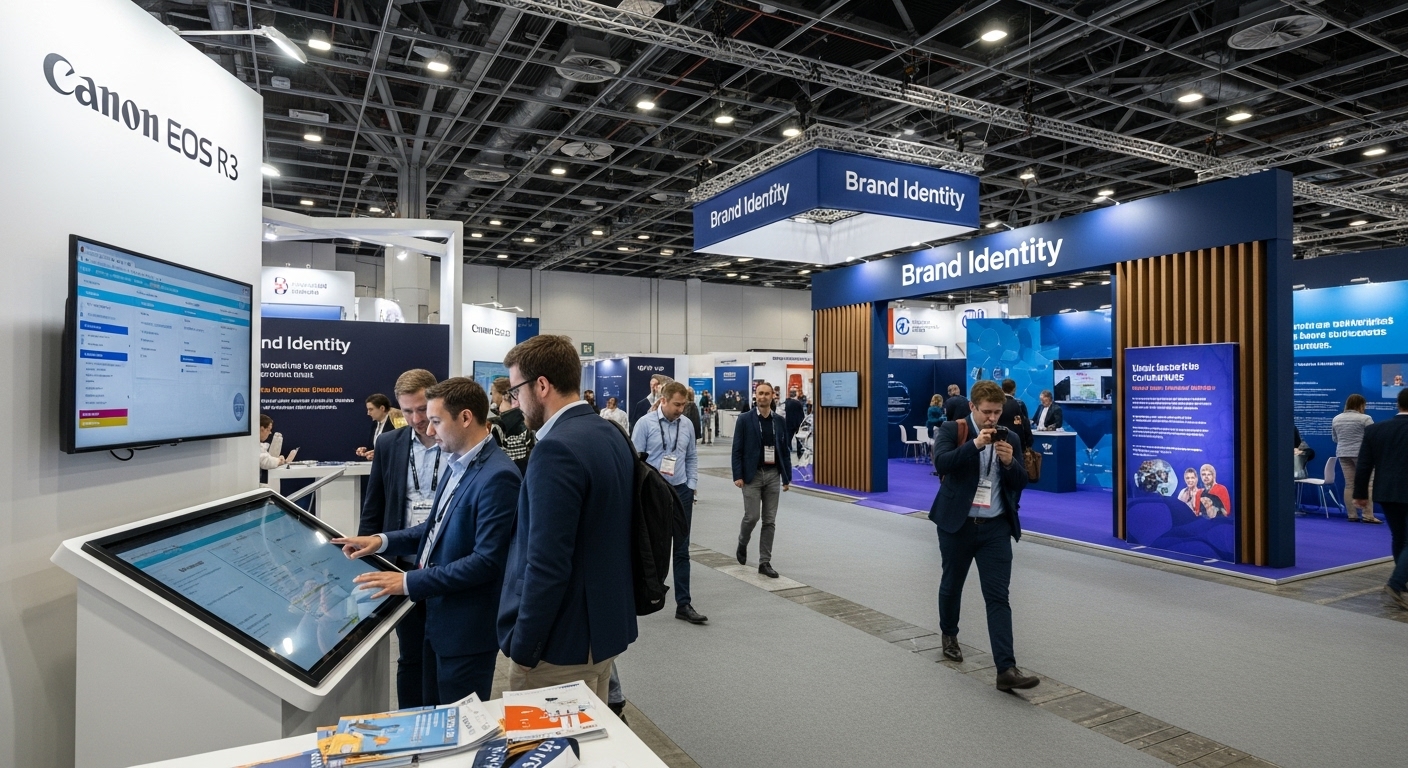
- Reinforce event branding
- Provide real-time information updates
- Create emotional connections with attendees
- Support marketing and promotional objectives
For event organisers looking to elevate their signage strategy, check out our comprehensive event signage best practices guide to transform your approach to visual communication.
Types of Signage Used in Event Spaces
Event spaces employ a diverse range of signage solutions, each designed to serve specific communication and navigation purposes. Understanding these varied types helps event organisers create comprehensive visual communication strategies that enhance attendee experiences and support event objectives.
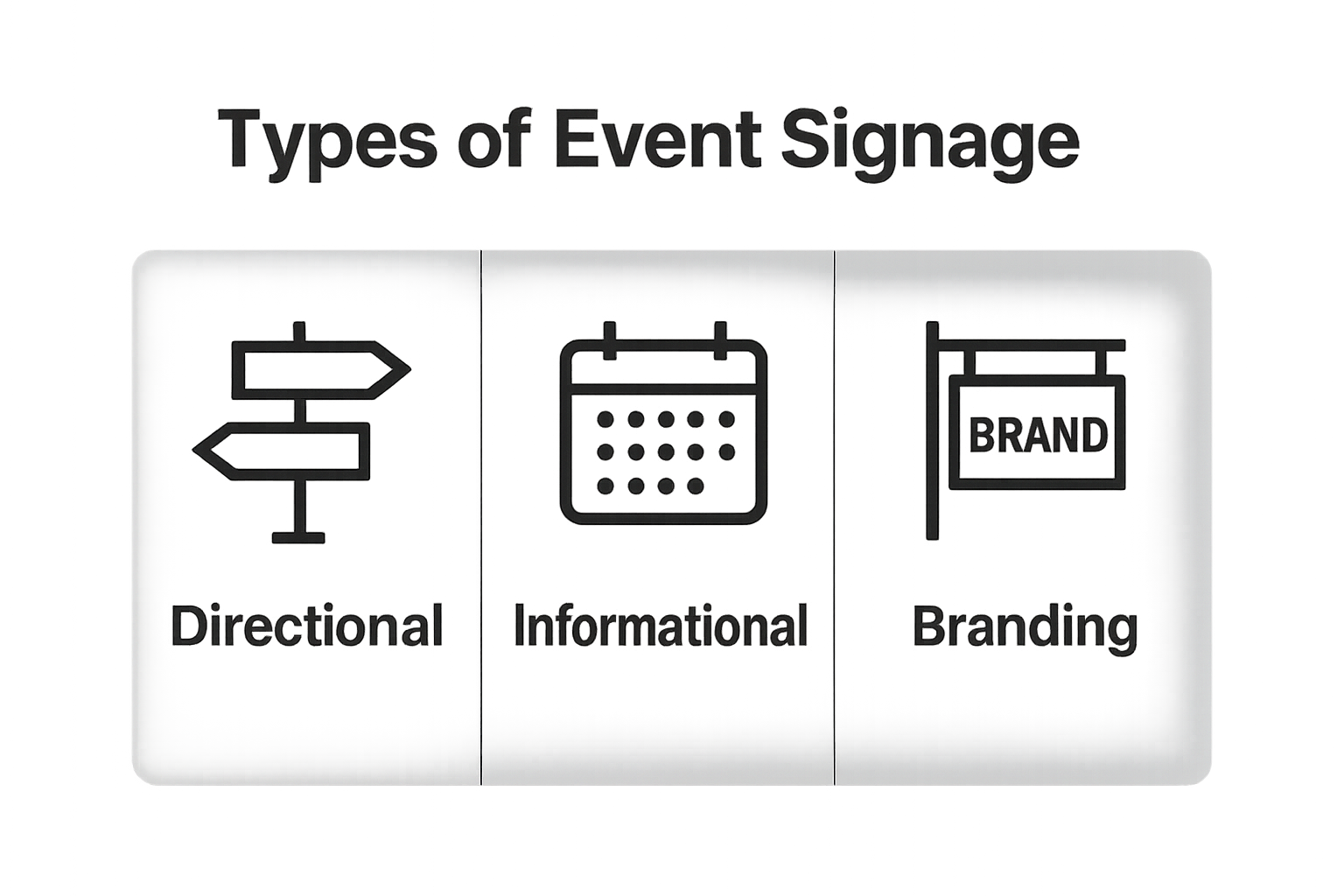
The table below compares the main types of signage used in event spaces, summarising their core characteristics and typical applications.
| Type of Signage | Core Purpose | Key Features | Typical Application |
|---|---|---|---|
| Directional & Wayfinding | Guide attendees through the venue | Clear typography, high-contrast, strategic placement | Main entrances, corridors, junctions |
| Informational | Communicate essential event information | Schedule details, session info, safety notices | Meeting rooms, lobbies, session areas |
| Branding | Reinforce brand identity and event theme | Logos, colour branding, sponsor acknowledgements | Registration desks, feature backdrops |
| Digital & Interactive | Engage attendees dynamically, update info | Touchscreens, real-time updates, AR features | Exhibition halls, info kiosks |
| Health & Safety | Highlight emergency procedures and guidelines | Universal symbols, bold colours | Emergency exits, stairwells |
Directional and Wayfinding Signage
Directional signage represents the foundational communication tool in event environments. These signs guide participants through complex spatial layouts, helping them navigate conference centres, exhibition halls, and corporate venues with minimal confusion. Effective wayfinding signage transforms potentially overwhelming spaces into intuitive, user-friendly environments.
Key characteristics of directional signage include:
- Clear, legible typography
- High-contrast colour schemes
- Consistent design language
- Strategic placement at decision points
- Universally understood symbols and icons
Informational and Branding Signage
Beyond navigation, event spaces utilise informational and branding signage to communicate critical details and reinforce organisational identity. According to International Conference Design Research, strategic signage can increase event engagement by up to 55% through targeted visual communication.
Informational signage typically encompasses:
- Schedule and programme details
- Speaker and session information
- Safety and emergency guidelines
- Sponsor and partner acknowledgements
- Interactive digital displays
Specialised Digital and Interactive Signage
Modern event management increasingly leverages digital and interactive signage technologies. These advanced solutions transform traditional static signs into dynamic, engaging communication platforms. Digital displays, touchscreen wayfinding systems, and augmented reality interfaces provide real-time information and create immersive attendee experiences.
For event professionals seeking deeper insights into designing effective signage solutions, explore our comprehensive exhibition signage guide to elevate your event communication strategy.
The table summarises key statistics from event industry research referenced in the article, highlighting the impact of well-designed signage in event environments.
| Statistic | Value | Context/Source |
|---|---|---|
| Increase in attendee engagement | Up to 65% | Event Industry Research Institute |
| Improvement in brand recall | Up to 48% | International Event Management Research Centre |
| Boost in event engagement via targeted signage | Up to 55% | International Conference Design Research |
| Enhancement of overall event satisfaction | Up to 47% | Visitor Experience Research Centre |
| Improved navigation efficiency with placement | Up to 60% | Event Design and Wayfinding Research Institute |
The Role of Signage in Enhancing Visitor Experience
Signage transcends its traditional role of mere direction and information, emerging as a powerful psychological and experiential tool that fundamentally shapes visitor interactions within event spaces. By carefully designing visual communication strategies, event organisers can transform passive environments into engaging, intuitive landscapes that emotionally connect with participants.
Psychological Impact of Navigational Design
Effective signage acts as a silent guide, reducing cognitive load and alleviating visitor anxiety. When participants enter unfamiliar spaces, clear and strategically placed signs provide immediate reassurance, creating a sense of control and comfort. This psychological support is crucial in complex event environments where attendees might feel overwhelmed by multiple activities, zones, and information streams.
Key psychological benefits of well-designed signage include:
- Reducing visitor stress and uncertainty
- Creating a sense of familiarity in new environments
- Promoting feelings of confidence and independence
- Establishing trust in event organisational capabilities
Creating Immersive and Memorable Experiences
According to Visitor Experience Research Centre, thoughtfully crafted signage can enhance overall event satisfaction by up to 47%. Beyond functional navigation, signs become narrative elements that contribute to the event’s storytelling and emotional landscape.
Strategic signage design can:
- Reinforce event themes and brand identity
- Create unexpected moments of visual delight
- Provide contextual information that enriches understanding
- Generate social media sharing opportunities
Technology and Interactive Visitor Engagement
Modern signage integrates advanced technologies to create more dynamic, personalised visitor experiences. Interactive digital displays, augmented reality wayfinding, and responsive information systems transform traditional signage into intelligent communication platforms that adapt to individual visitor needs.
For event professionals seeking to elevate their visitor experience design, explore our comprehensive guide on interior design signage solutions and discover innovative approaches to creating memorable event environments.
Key Considerations for Designing Event Space Signage
Designing effective signage for event spaces requires a strategic approach that balances aesthetic appeal, functional clarity, and user experience. Event organisers must carefully consider multiple design elements to create visual communication systems that guide, inform, and engage participants seamlessly.
Visual Design and Readability Principles
Successful event signage hinges on creating visually clear and instantly comprehensible communication. Typography, colour selection, and spatial arrangement play crucial roles in ensuring that signs can be understood quickly and effortlessly. The goal is to minimise cognitive load while maximising information transmission.
Key visual design considerations include:
- Selecting high-contrast colour combinations
- Using sans-serif fonts for maximum legibility
- Maintaining consistent design language across all signs
- Ensuring appropriate text size for different viewing distances
- Incorporating universal symbols and icons
Spatial Context and Strategic Placement
According to Event Design and Wayfinding Research Institute, strategic sign placement can improve navigation efficiency by up to 60%. Understanding the spatial dynamics of event venues is critical in determining where and how signs should be positioned to provide optimal guidance.
Strategic placement principles encompass:
- Positioning signs at critical decision points
- Ensuring visibility from multiple angles
- Creating logical navigation pathways
- Avoiding visual clutter and information overload
- Considering audience movement patterns
Accessibility and Inclusive Design Considerations
Modern event signage must prioritise accessibility, ensuring that information is comprehensible to diverse audience members, including those with visual impairments or language barriers. This involves implementing universal design principles that accommodate various cognitive and physical needs.
For event professionals seeking comprehensive insights into creating inclusive and effective signage solutions, explore our detailed event signage checklist to elevate your visual communication strategy.
Unlock the Power of Impactful Event Signage With a Trusted London Partner
Are you facing confusing layouts or overwhelmed guests at your events? As highlighted in our article, poor signage can leave attendees stressed and your brand easily forgotten. Effective signage transforms a complex space into a welcoming, memorable experience by delivering clarity, guiding visitors and amplifying your identity.
We design, produce and install event signage that brings your vision to life. Turn passive guests into engaged participants with high-quality graphics, clear wayfinding and bold statements that make your event stand out in London, Essex and Kent. For inspiration and ideas, discover more about our expertise on the Promosigns website or review our insights on event signage best practices.

Ready to transform your next event with effortless navigation, brand cohesion and professional impact? Do not miss the opportunity to make a lasting impression. Get a bespoke solution started today by connecting with our signage specialists at Promosigns.
Frequently Asked Questions
What is the primary purpose of signage in event spaces?
Signage in event spaces serves as a comprehensive navigation and information system, guiding attendees, conveying essential information, and enhancing the overall experience.
How can effective signage improve attendee engagement?
Well-designed signage can increase attendee engagement by up to 65% by providing clear communication pathways and reducing confusion during events.
What types of signage are commonly used in event spaces?
Common types of signage in event spaces include directional and wayfinding signage, informational and branding signage, and specialised digital and interactive signage.
How does signage contribute to the psychological experience of event attendees?
Effective signage reduces cognitive load and visitor anxiety, creating a sense of control and comfort for attendees navigating unfamiliar environments.
Recommended
- Event Signage Importance in 2025: Boosting Business in London – PromoSigns.co.uk
- Exhibition Signage Basics 2025: Essential Guide for Businesses – PromoSigns.co.uk
- Event Signage Best Practices 2025: Essential Tips for London Businesses – PromoSigns.co.uk
- Event Signage Checklist 2025: Essential Guide for London Businesses – PromoSigns.co.uk
- Understanding Event Design Terminology Explained
- Creating Productive Spaces: How Office Stock Transforms Your Workplace Experience in South Africa – Office Stock
