
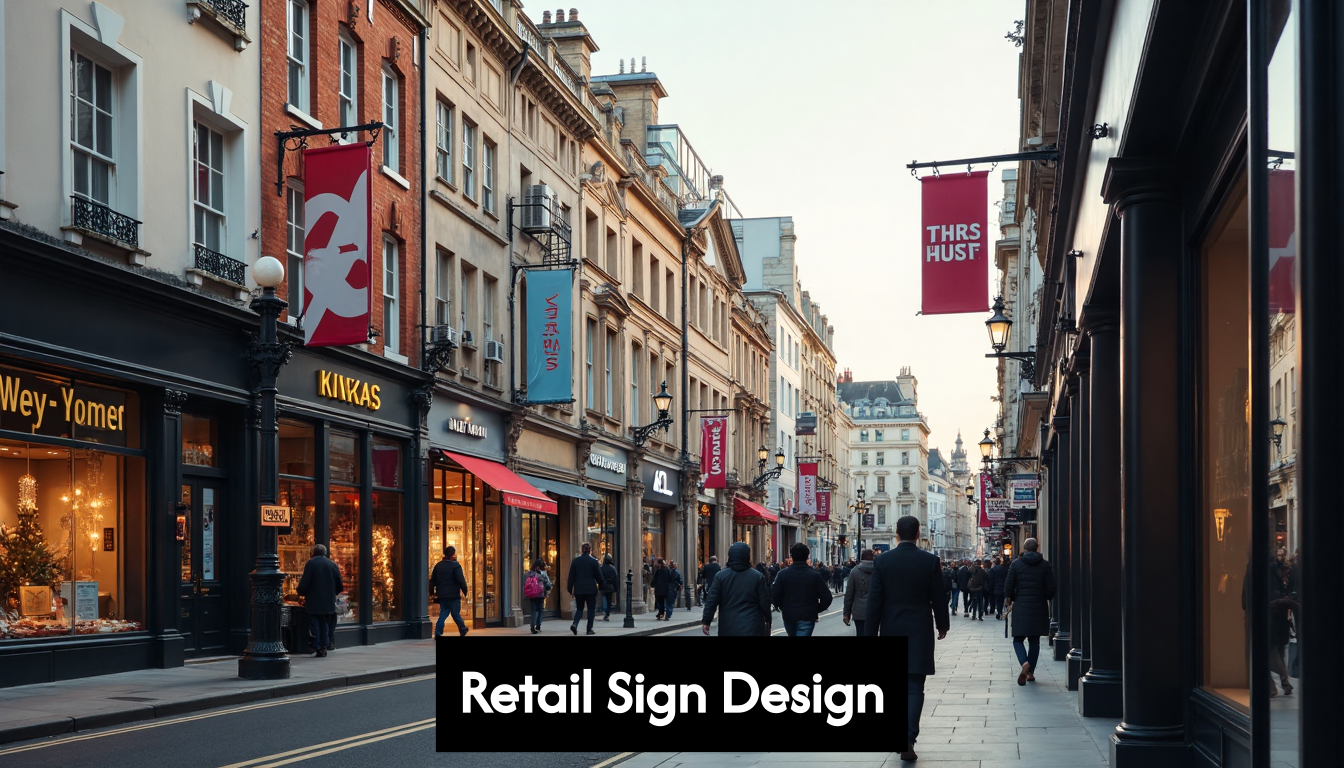
Retail signage across London is under the microscope for 2025. Around 75% of shoppers still prefer physical signs over digital alternatives, despite the buzz around digital tech. That figure might seem shocking given the rush to everything online. Yet the real competitive edge is not just about larger or brighter signs, but about subtle design choices that make your message instantly clear and approachable to every person passing your storefront. Here’s where most shops get it wrong and how the smartest brands are setting themselves apart.
Table of Contents
Table of Contents
- Understanding Retail Sign Design Principles
- Choosing The Right Materials And Styles
- Tailoring Signs For Your London Audience
- Compliance, Placement, And Maintenance Best Practices
Quick Summary
| Takeaway | Explanation |
|---|---|
| Effective Communication Requires Clarity | Retail signs must instantly convey essential information using simple, clean fonts and minimal clutter to facilitate quick comprehension by potential customers. |
| Strategic Placement is Crucial | Signs should be positioned at optimal angles and heights to enhance visibility, utilising colour psychology to create inviting emotional responses. |
| Sustainability in Material Selection | In 2025, businesses should prioritize sustainable choices like recycled or biodegradable materials for their signs, reflecting values of environmental consciousness and innovation. |
| Cultural Sensitivity is Essential | Tailoring signs to resonate with London’s diverse demographic involves inclusive language and symbols, ensuring all communities feel welcomed. |
| Regular Maintenance is Key | Ongoing inspections and updates are vital to maintain sign integrity, relevance, and compliance with legal standards, ensuring they continue to effectively serve their purpose. |
Understanding Retail Sign Design Principles
Retail sign design is a critical communication tool that bridges the gap between businesses and potential customers. The principles of effective signage go far beyond mere visual decoration, serving as a strategic element of brand communication and customer engagement.
Visual Communication Fundamentals
At the core of retail sign design lies the principle of clear, immediate communication. Signs must instantly convey essential information while reflecting the brand’s unique personality. Our guide on creating impactful shop signs highlights that successful signage combines aesthetic appeal with functional clarity.
According to research from signage experts, font selection plays a crucial role in sign effectiveness. Simple, clean fonts like Arial and Times New Roman ensure maximum readability. Complex or overly decorative typefaces can create visual noise, making it difficult for potential customers to quickly comprehend the message.

Strategic Placement and Visibility
The positioning of retail signs is as important as their design. Optimal sign placement requires careful consideration of customer sight lines and environmental context. Research indicates that signs should be positioned at a 45-degree angle and within the average consumer’s eye line to maximize visibility and impact.
Color psychology plays a significant role in sign design. Warm, inviting colors create positive emotional responses and can subtly encourage customer engagement. Cool tones should be used sparingly, as they can create psychological distance between the business and potential customers.
Design Principles for Maximum Impact
Effective retail sign design follows several key principles. First, simplicity reigns supreme. A cluttered sign overwhelms viewers and diminishes the core message. Second, consistency with brand identity ensures that the sign feels like a natural extension of the business’s visual language.
Contrast is another critical design element. High contrast between text and background ensures readability from a distance. This means selecting colour combinations that stand out clearly, whether in bright daylight or evening lighting conditions.
Beyond aesthetic considerations, signs must also communicate practical information quickly and efficiently. They should answer fundamental customer questions: Who are we? What do we offer? Why should you choose us?
The most successful retail signs transform from mere informational tools into powerful brand ambassadors. They speak volumes about a business’s personality, professionalism, and commitment to customer experience before a single word is read or a product is touched.
By understanding and applying these fundamental design principles, London businesses can create signs that not only attract attention but also build meaningful connections with their target audience.
Choosing the Right Materials and Styles
Selecting the appropriate materials and styles for retail signage is a critical decision that directly impacts brand perception, durability, and overall visual communication strategy. The choices businesses make in this realm go far beyond aesthetic preferences, representing a sophisticated intersection of design, functionality, and brand identity.

Sustainable and Innovative Material Selection
In 2025, material selection for retail signs has transformed into a strategic decision that reflects corporate values and environmental consciousness. Emerging design trends indicate a significant shift towards sustainable materials that communicate both visual appeal and ecological responsibility.
Businesses are increasingly adopting innovative materials such as recycled plastics, biodegradable composites, and renewable resources like bamboo. These materials not only reduce environmental impact but also signal to customers that the brand is forward-thinking and socially responsible. According to retail design experts, incorporating natural elements through biophilic design can significantly improve customer engagement and reduce perceived stress in retail environments.
Typography and Visual Style Considerations
Contemporary retail sign design in 2025 emphasizes bold, expressive typography that serves as both informational and artistic elements. Research from design institutes reveals a strong preference for geometric sans-serif fonts and expressive serif typefaces that create powerful visual statements.
Minimalist design principles continue to dominate, with an emphasis on clean lines, strategic use of negative space, and high-contrast color schemes. This approach ensures that signs are not just informative but also aesthetically compelling. The goal is to create signs that function as visual ambassadors for the brand, communicating personality and values at a glance.
Durability and Practical Performance
Beyond aesthetic considerations, material selection must prioritize durability and performance. Signs must withstand varying environmental conditions, from bright sunlight to rain and temperature fluctuations. Advanced materials like weather-resistant composites, UV-stabilized acrylics, and corrosion-resistant metals provide long-lasting solutions that maintain their visual integrity over time.
LED technology has revolutionized sign illumination, offering energy-efficient options that enhance visibility while reducing operational costs. Modern LED signs can be integrated seamlessly with various materials, providing versatility in design while maintaining optimal performance.
The most successful retail signs in 2025 will be those that harmoniously blend sustainability, cutting-edge design, and practical functionality. They will not merely inform but will tell a story, engage customers emotionally, and reflect the progressive spirit of the brand.
By carefully considering material selection, typography, and technological integration, London businesses can create retail signs that are not just communication tools, but powerful brand experiences.
Tailoring Signs for Your London Audience
In the dynamic and diverse landscape of London’s retail environment, creating signs that resonate with a sophisticated and multicultural audience requires nuanced strategic thinking. Successful signage goes beyond visual communication, serving as a critical bridge between businesses and their unique local customer base.
Cultural Sensitivity and Demographic Insights
London’s extraordinary demographic diversity demands signage that speaks to multiple cultural perspectives. Our expert London sign design guide emphasizes the importance of creating inclusive visual communication that feels welcoming to different communities.
According to research on urban consumer behaviour, 75% of consumers still prefer physical signage over digital alternatives, underscoring the continued importance of traditional communication methods. This preference highlights the need for signs that are not just informative, but culturally intelligent and visually engaging.
Technology and Multilingual Considerations
Modern London businesses must consider technological integration and linguistic diversity when designing signs. Digital signage trends indicate a growing preference for dynamic, adaptable display solutions that can seamlessly incorporate multiple languages and update content in real-time.
For businesses serving diverse neighbourhoods, multilingual signage is no longer optional but essential. This might include strategically placed signs with translations or using internationally recognizable symbols that transcend language barriers. The goal is to create an inclusive environment that makes every potential customer feel acknowledged and welcomed.
Localization and Urban Context
Effective signage in London must reflect the city’s unique urban character. This means considering architectural styles, neighbourhood aesthetics, and local regulations. Research on urban design suggests that signs should not just communicate information but also contribute to the visual narrative of the surrounding environment.
Particularly in areas with historic significance or strict planning guidelines, signs must balance modern communication needs with respect for architectural heritage. This might involve using materials, colours, and design elements that complement the local streetscape while maintaining brand identity.
Technology offers innovative solutions for urban signage. For instance, digital displays integrated into shopfront glass can provide dynamic, updatable information without disrupting the architectural aesthetic. Electric vehicle charging point signage represents another emerging trend, with plans to introduce standardized symbols to support London’s sustainable transportation goals.
Understanding your London audience means recognizing that signage is more than a communication tool. It’s a statement of cultural awareness, technological adaptability, and respect for the city’s rich, diverse urban fabric. Successful signs will not just attract attention but will create meaningful connections with the sophisticated, multicultural communities that define London’s vibrant retail landscape.
By thoughtfully designing signs that reflect local nuances, technological trends, and cultural sensitivities, businesses can transform simple communication into a powerful tool for engagement and brand building.
Compliance, Placement, and Maintenance Best Practices
Retail signage extends far beyond aesthetic design, encompassing critical considerations of legal compliance, strategic placement, and ongoing maintenance. Businesses must navigate a complex landscape of regulations, visual ergonomics, and preservation to ensure their signs remain effective, accessible, and legally sound.
Legal Compliance and Accessibility Standards
Recent updates to accessibility guidelines mandate rigorous standards for retail signage. In 2025, businesses must implement signs that meet enhanced visibility requirements, including specific contrast ratios, tactile lettering dimensions, and comprehensive emergency signage protocols.
For retail spaces, compliance is not optional but a fundamental operational requirement. Accessibility regulations emphasize that businesses must remove barriers through readily achievable modifications. This might include adding Braille text to permanent room signs, ensuring directional signage supports accessible paths, and maintaining clear, readable typography that supports diverse user needs.
Strategic Sign Placement and Visibility
Effective sign placement requires a nuanced understanding of human movement patterns and visual perception. Signs must be positioned to provide clear, unobstructed information without creating physical barriers or visual clutter. This involves carefully considering sightlines, lighting conditions, and potential obstructions that might compromise readability.
Consider factors such as viewing distance, angle of approach, and potential environmental challenges. Signs near entrances, within high-traffic areas, and at critical decision points require particular attention to ensure maximum comprehension and utility.
Ongoing Maintenance and Performance
Sign maintenance is a continuous process that directly impacts brand perception and functional effectiveness. Regular inspections should assess multiple dimensions: structural integrity, colour vibrancy, material degradation, and alignment with current branding guidelines.
Environmental factors in urban settings like London demand robust maintenance strategies. Moisture, temperature variations, air pollution, and constant foot traffic can accelerate sign deterioration. Businesses should implement proactive maintenance schedules, potentially using weather-resistant materials and protective coatings to extend signage lifespan.
Digital and illuminated signs require additional technical maintenance. This includes checking electrical connections, replacing LED components, ensuring software updates for digital displays, and verifying consistent brightness and colour calibration.
Beyond technical considerations, maintenance also involves keeping signage contextually relevant. As businesses evolve, signs must reflect current branding, pricing, offerings, and operational information. An outdated sign can be more detrimental than no sign at all, potentially misleading customers and undermining professional credibility.
Successful retail signage in 2025 represents a holistic approach combining legal compliance, strategic design, and meticulous maintenance. By treating signs as dynamic communication tools rather than static objects, businesses can create powerful, lasting impressions that support operational goals and enhance customer experiences.
Ultimately, great signage is an ongoing commitment to clarity, accessibility, and professional excellence.
Frequently Asked Questions
What are the key principles of effective retail sign design?
Effective retail sign design hinges on clarity, simplicity, and brand consistency. Signs should convey information instantly using clean fonts and minimal clutter to engage customers immediately.
How important is strategic placement for retail signs?
Strategic placement is crucial; signs should be positioned at optimum angles and heights to enhance visibility. Consider sightlines and colour psychology to create inviting emotional responses from potential customers.
What materials should I consider for retail signs in 2025?
In 2025, businesses should prioritise sustainable materials such as recycled plastics, biodegradable composites, and renewable resources. Durability and weather resistance are also important for long-lasting signage.
How can I tailor signs to London’s diverse audience?
To tailor signs for London’s diverse audience, incorporate inclusive language and symbols, consider multilingual options, and ensure designs reflect local cultural sensitivities and urban context.
Transform Your London Shopfront with Expert 2025 Signage Solutions
Is your business struggling to grab attention on busy London streets? The article highlights a real concern for local retailers: unclear design, poor placement, and outdated materials can push customers away before they step inside. With retail sign design set to become even more crucial in 2025, you need signs that are culturally sensitive, environmentally conscious, and visually striking. That means bold fonts, sustainable materials, and strategic installation—all tailored for London’s diverse audiences.

Let our specialists bring these proven concepts to life for your business. At PromoSigns, we use the latest design principles and compliance knowledge to craft custom shop signs, illuminated displays, and large format prints that truly stand out. Trust us with everything from creative design to expert installation across London, Essex, and Kent. Make your business unforgettable and keep your signage ahead of the trends. Get your free consultation now and elevate your presence on the high street.
Recommended Articles
- Blog Archives – Page 3 of 7 – PromoSigns.co.uk
- Poster Printing London | Large Poster Printing | PromoSigns.co.uk
- Signs and Posters for Trendy Advertising – Promo Signs
- Welcome to Our Blog Page | Latest Signs News | Promo Signs LTD
- Blog Archives – PromoSigns.co.uk
