
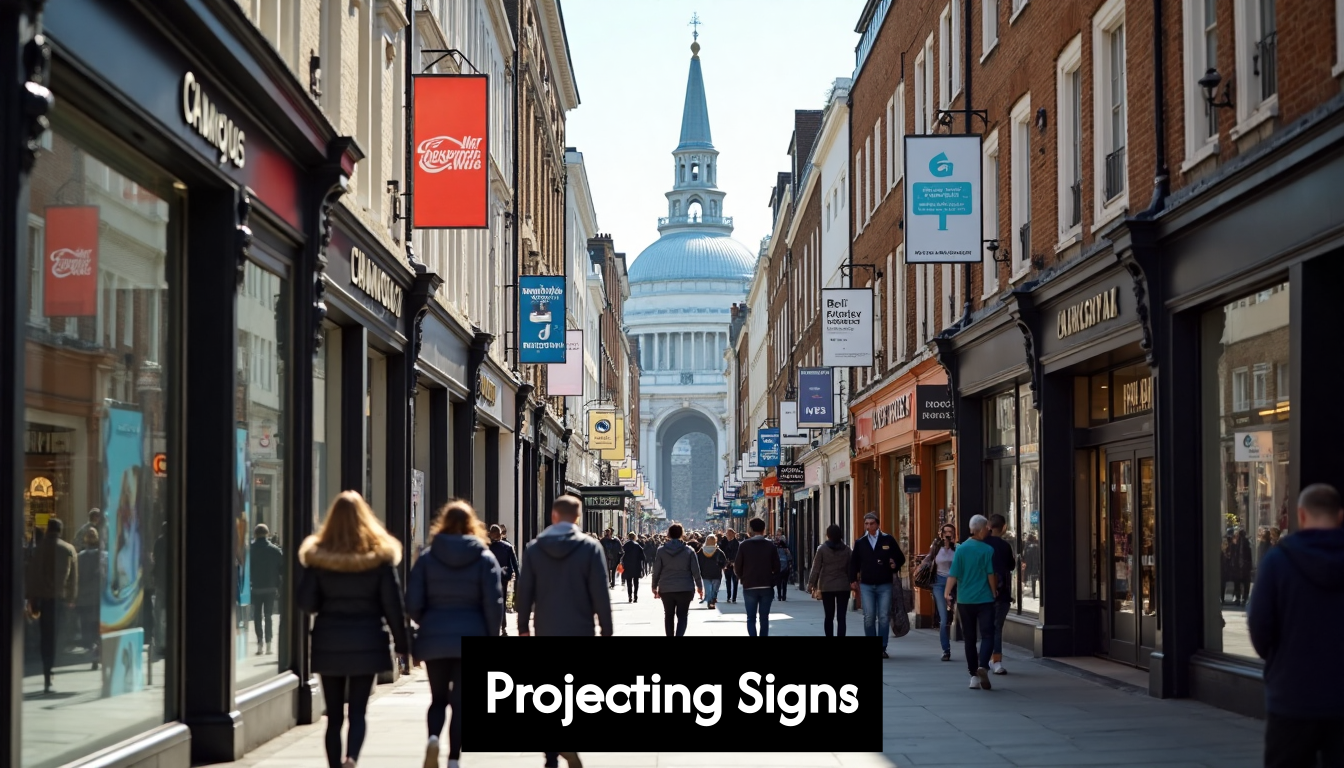
Projecting signs are more than just a branding accessory for UK businesses. Many are surprised to find that the global sign market is set to hit $118.92 billion in 2025, fuelled by these very signs drawing in foot traffic where flat signage can fall flat. Yet, it is not the impressive market size or the eye-level glitz that matters most. The real power lies in how these signs can cleverly sidestep urban visual clutter and bring attention from all directions, making them a quietly strategic tool in the battle for street presence.
Table of Contents
Table of Contents
- Projecting Signs Explained: Types And Benefits
- Key Uses For Businesses And Events
- Design, Placement, And Legal Regulations
- Choosing The Right Projecting Sign In London
Quick Summary
| Takeaway | Explanation |
|---|---|
| Strategic Visibility | Projecting signs enhance street-level visibility by drawing attention from multiple angles, making them ideal for urban environments with intense competition for customer attention. |
| Versatile Applications | These signs serve multiple purposes across sectors, from guiding customers in retail settings to providing wayfinding solutions at events, enhancing overall communication strategies. |
| Design and Compliance | Businesses must balance aesthetic design with legal requirements, ensuring that projecting signs are visually appealing while adhering to local regulations and safety standards. |
| Material Considerations | Selecting materials that reflect sustainability and durability is crucial; options like recycled acrylic and solar-powered LEDs are recommended for eco-friendly, effective signage. |
| Professional Installation | Proper installation is vital for sign performance and compliance, with an emphasis on strategic thinking regarding visibility, location, and urban context to maximise effectiveness. |
Projecting Signs Explained: Types and Benefits
Projecting signs represent a strategic visual communication tool for businesses seeking to enhance their street-level visibility and brand presence. These distinctive signs extend outward from a building’s facade, creating a powerful visual statement that captures attention from multiple angles. Explore our comprehensive projecting sign solutions to understand how these versatile signage options can transform your business’s marketing approach.
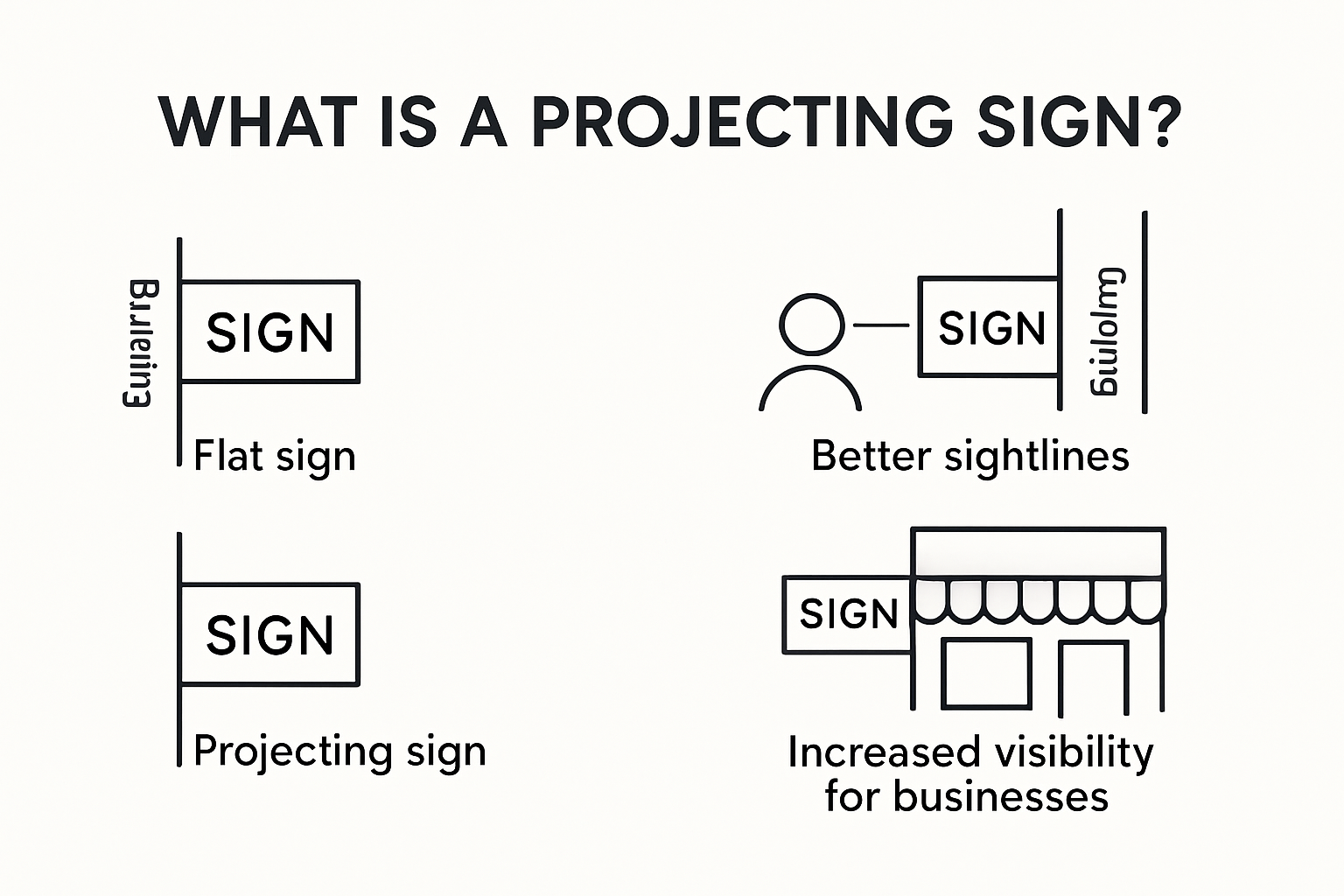
Understanding Projecting Sign Configurations
Businesses have two primary configurations when considering projecting signs. The first is modern projecting sign trays, which offer a sleek contemporary aesthetic perfect for businesses wanting a clean, professional look. These signs typically feature crisp lines and minimalist design elements that complement modern architectural styles. Traditional hanging signs represent the second configuration, providing a classic approach that connects with historical architectural contexts and businesses seeking a more timeless visual identity.
According to Butler Signs research, projecting signs are particularly effective at cutting through visual clutter on busy streets. They function as natural attention magnets, guiding potential customers directly to a business’s entrance with remarkable precision. The strategic positioning allows these signs to be visible from multiple perspectives, ensuring maximum exposure regardless of pedestrian or vehicle traffic patterns.
Strategic Benefits for UK Businesses
Projecting signs deliver multiple strategic advantages for businesses. They provide exceptional multi-angle visibility, which is crucial in densely populated urban environments where competition for customer attention is intense. Unlike flat signage mounted directly on building surfaces, projecting signs create depth and dimensionality that naturally draw the human eye.
The versatility of projecting signs allows for significant customization. Businesses can select materials ranging from traditional metal and wood to contemporary acrylic and digital printing techniques. This flexibility enables precise brand alignment, ensuring the sign reflects the company’s unique visual identity and professional ethos. Discover how custom 3D signs can elevate your brand presence to understand the full potential of innovative signage solutions.
From retail shops and restaurants to professional services and cultural institutions, projecting signs offer a universal communication tool. They transcend mere directional functionality, serving as powerful branding elements that communicate professionalism, creativity, and attention to detail. Whether illuminated for evening visibility or crafted with intricate design elements, these signs represent a sophisticated marketing investment that continues working for businesses around the clock.
Key Uses for Businesses and Events
Projecting signs have emerged as a versatile communication tool across diverse business sectors and event environments, offering strategic advantages beyond traditional signage solutions. Explore our comprehensive event signage solutions to understand how these dynamic visual elements can transform your business communication strategy.
Retail and Commercial Applications
In the retail sector, projecting signs serve multiple critical functions. They act as powerful visual beacons that guide potential customers through complex commercial spaces, creating intuitive navigation experiences. According to global market research, the sign market is experiencing significant growth, driven by expanding retail and hospitality industries. Businesses strategically deploy these signs to enhance street-level visibility, differentiate their brand, and create memorable visual experiences that distinguish them from competitors.
Retail environments leverage projecting signs for various purposes. High-end boutiques might use elegant, minimalist designs that reflect their brand aesthetic, while vibrant restaurants and cafes might opt for more dynamic, colorful projecting signs that capture the energy of their establishment. These signs function not just as directional tools but as integral brand communication elements that tell a visual story about the business’s identity and personality.

Event Management and Wayfinding
Event organizers have increasingly recognized projecting signs as essential tools for creating seamless attendee experiences. From conferences and exhibitions to cultural festivals and corporate events, these signs provide critical wayfinding information while maintaining aesthetic appeal. Research indicates that the global sign market is projected to grow from $112.41 billion in 2024 to $118.92 billion in 2025, reflecting the increasing importance of sophisticated signage solutions.
Digital and traditional projecting signs offer remarkable flexibility for event management. They can be quickly customized to display dynamic information such as event schedules, directional guidance, sponsor acknowledgments, and real-time updates. Interactive features and LED technologies have further enhanced their utility, allowing event organizers to create engaging, informative environments that smoothly guide participants through complex spatial layouts.
Professional Services and Public Spaces
Beyond retail and events, projecting signs play crucial roles in professional service environments and public spaces. Law firms, medical practices, educational institutions, and government buildings utilize these signs to provide clear, professional communication. They help visitors navigate complex buildings, identify specific departments or offices, and create a sense of institutional credibility.
Public spaces such as museums, libraries, and cultural centers leverage projecting signs to enhance visitor experience. These signs can provide multilingual information, highlight accessibility features, and create intuitive navigation systems that make complex environments more approachable. The versatility of projecting signs allows for creative implementations that blend functional communication with aesthetic design, transforming mundane directional information into engaging visual experiences.
As businesses and event organizers continue to seek innovative communication solutions, projecting signs represent a dynamic, adaptable tool that meets the evolving needs of modern visual communication strategies.
Design, Placement, and Legal Regulations
Projecting signs represent a complex intersection of creative design, strategic placement, and stringent legal requirements. Businesses must navigate these multifaceted considerations to ensure their signage is not only visually compelling but also fully compliant with local regulations. Learn more about our professional sign installation process to understand the comprehensive approach needed for successful signage implementation.
Design Considerations and Best Practices
Designing an effective projecting sign requires a nuanced understanding of visual communication and brand representation. The sign must balance aesthetic appeal with functional clarity, considering factors such as material selection, color psychology, typography, and overall visual impact. Businesses should consider the architectural context of their building, ensuring the sign complements rather than conflicts with existing structural elements.
Materials play a crucial role in sign design. Options range from traditional materials like metal and wood to contemporary choices such as acrylic, LED-integrated panels, and digital displays. Each material offers unique advantages in terms of durability, visibility, and aesthetic expression. According to planning regulations, the choice of material must also meet specific safety and maintenance standards.
Legal and Placement Regulations
Navigation of legal requirements is paramount when installing projecting signs. The Town and Country Planning (Control of Advertisements) Regulations 2007 provide a comprehensive framework for signage installation. Local planning authorities assess projecting sign applications with rigorous criteria focusing on both visual amenity and public safety.
Businesses must meet five fundamental conditions for legal signage compliance: signs must be kept clean and tidy, maintained in a safe condition, have explicit consent from property owners and relevant highway authorities, avoid obscuring official signs, and remain removable upon planning authority request. This complex regulatory landscape demands careful planning and often requires consultation with local planning departments before installation.
Strategic Placement and Visibility Considerations
Effective projecting sign placement goes beyond mere legal compliance. It requires strategic thinking about visibility, pedestrian flow, and urban context. Signs should be positioned to maximize visibility while avoiding potential obstructions or safety hazards. Height, projection angle, and distance from the building entrance are critical factors that influence a sign’s effectiveness.
Urban environments present unique challenges and opportunities for sign placement. Businesses must consider factors such as street width, pedestrian traffic patterns, potential visual competition from neighboring signs, and the specific sightlines of their target audience. In historic or conservation areas, additional restrictions may apply, potentially limiting design choices and requiring more nuanced approaches to signage.
The intersection of design, legal compliance, and strategic placement represents a sophisticated challenge for businesses. Successful projecting signs are not merely decorative elements but sophisticated communication tools that require careful planning, creative design, and meticulous attention to regulatory requirements. By understanding and expertly navigating these complex considerations, businesses can create powerful visual communications that enhance their brand presence while fully respecting legal and aesthetic standards.
Choosing the Right Projecting Sign in London
Selecting the ideal projecting sign for a London business requires a strategic approach that balances aesthetic appeal, functional effectiveness, and regulatory compliance. Discover our comprehensive projecting sign solutions to navigate the complexities of urban signage selection with confidence.
Material Selection and Sustainability Considerations
Modern businesses must consider both performance and environmental impact when choosing projecting signs. According to sustainable signage trends for 2025, eco-friendly materials are becoming increasingly important. Businesses can now select from innovative options such as recycled acrylic, sustainable bamboo, and repurposed metals that reduce environmental footprint while maintaining high-quality visual communication.
The choice of material directly impacts a sign’s durability and effectiveness. Aluminium offers lightweight strength and corrosion resistance, ideal for London’s variable weather conditions. Acrylic provides excellent clarity and can be fabricated in multiple finishes, while wooden signs can offer a classic aesthetic particularly suitable for traditional or heritage business locations. Exterior sign experts recommend considering factors such as local architectural context, brand identity, and long-term maintenance requirements when making material selections.
Urban Visibility and Design Considerations
London’s competitive business environment demands projecting signs that capture attention while respecting urban design principles. Signage regulations emphasize the importance of signs that enhance rather than disrupt the visual landscape. Businesses must carefully consider factors such as projection angle, height, and illumination to maximize visibility without creating visual clutter.
Illumination plays a crucial role in urban sign design. LED technologies offer energy-efficient solutions that provide excellent visibility during evening hours while reducing operational costs. Solar-powered options are emerging as an innovative approach for businesses seeking sustainable lighting solutions. The sign’s design should complement the building’s architectural style, creating a cohesive visual identity that stands out in London’s diverse urban environment.
Practical Considerations and Installation Strategies
Successful projecting sign selection extends beyond initial design considerations. Businesses must evaluate practical aspects such as maintenance requirements, durability, and compliance with local planning regulations. According to urban signage experts, professional installation is critical to ensuring long-term performance and safety.
Budget considerations should balance initial investment with long-term value. While premium materials and advanced design features may require higher upfront costs, they often provide better durability and more effective brand communication. London businesses should view projecting signs as strategic marketing investments rather than mere functional necessities.
The process of selecting the right projecting sign requires a holistic approach that considers aesthetic appeal, functional effectiveness, sustainability, and regulatory compliance. By carefully evaluating material options, design considerations, and practical requirements, businesses can create powerful visual communication tools that effectively represent their brand in London’s dynamic urban landscape.
Frequently Asked Questions
What are projecting signs?
Projecting signs are distinctive signage solutions that extend outward from a building’s facade, providing enhanced visibility from multiple angles. They are effective tools for attracting foot traffic and promoting brand presence in urban environments.
What are the benefits of using projecting signs for businesses in the UK?
Projecting signs offer strategic visibility, versatile applications across various sectors, and can effectively communicate a business’s identity while complying with legal regulations. They help businesses stand out in crowded areas and can serve multiple purposes, such as wayfinding and branding.
How do I ensure my projecting sign complies with legal regulations in the UK?
To comply with UK regulations, businesses must adhere to the Town and Country Planning (Control of Advertisements) Regulations 2007. This includes obtaining explicit consent from property owners, maintaining sign safety and cleanliness, and ensuring the sign does not obstruct public signs or pathways.
What materials are recommended for projecting signs to ensure durability and sustainability?
Quality materials for projecting signs include aluminium for its lightweight strength, acrylic for clarity, and recycled options for sustainability. Special attention should be given to environmental impact, durability, and suitability to the business’s visual identity.
Stand Out With Projecting Signs That Get Results
Is your business struggling to be noticed on busy high streets or crowded urban corners? This guide covered how projecting signs cut through visual clutter, draw attention from every direction, and put your brand front and centre. But while the benefits are clear, actually choosing, designing, and installing the right projecting sign in line with legal requirements can feel overwhelming.

Let us handle the hard work so you can relax and focus on your business. With PromoSigns, you gain experts who specialise in everything from illuminated projecting signs to precise, regulation-compliant installations. We craft bespoke solutions that match your brand and help you rise above the competition. Ready to see your business truly stand out? Get started today and make your next projecting sign the one everyone remembers.
Recommended Articles
- Projecting Signs London | Hanging Double Sided Projecting Signs
- Custom Sign Design Process for London Businesses: 2025 Guide – PromoSigns.co.uk
- A Step-by-Step Guide to Professional Commercial Sign Installation – PromoSigns.co.uk
