
Corporate identity signage is shaping how businesses are recognised in crowded streets and sleek office lobbies. Yet most people miss just how powerful these signs can be. Consistent visual branding has been shown to lift revenue by up to 23 percent and that is only scratching the surface of what great signage can do for your organisation.
Table of Contents
Table of Contents
- Defining Corporate Identity Signage: The Basics
- The Importance Of Corporate Identity Signage In Branding
- Elements And Design Principles Of Effective Signage
- How Corporate Identity Signage Influences Customer Perception
- Real-World Examples Of Corporate Identity Signage Success
Quick Summary
| Takeaway | Explanation |
|---|---|
| Corporate identity signage enhances brand recognition. | Consistent visual branding can lead to a 23% increase in revenue through improved recognition and professional perception. |
| Effective signage communicates core values. | High-quality materials and design convey professionalism and reliability, establishing trust with potential customers. |
| Psychological factors impact customer perceptions. | Visual branding elements shape perceptions instantly, creating emotional connections and influencing brand recall. |
| Strategic design is key to engaging customers. | Integrating colour psychology, typography, and spatial positioning in signage communicates complex brand messages effectively. |
| Long-term investment in signage boosts brand equity. | High-quality corporate identity signage contributes to a memorable visual identity that resonates with diverse audience segments. |
Defining Corporate Identity Signage: The Basics
Corporate identity signage represents more than just visual markers identifying a business location. These strategic visual communication tools encapsulate an organisation’s brand personality, values, and professional image through carefully designed graphic elements and signage solutions.
What Exactly is Corporate Identity Signage?
Corporate identity signage encompasses all visual elements that communicate a company’s brand across different physical touchpoints. These include exterior building signs, interior wayfinding systems, reception area displays, branded environmental graphics, and consistent visual branding across multiple platforms. Learn more about brand consistency in signage to understand how these elements work together.
Key characteristics of effective corporate identity signage include:
Below is a table summarising the essential characteristics of effective corporate identity signage as described in the section, making it easy to reference the primary design features involved.
| Characteristic | Description |
|---|---|
| Consistent colour palette | Uses brand-specific colours to ensure visual consistency across platforms. |
| Clear typography | Fonts reflect organisational personality and promote legibility. |
| Strategic placement | Signs are positioned for maximum visibility by the intended audience. |
| High quality materials | Choice of materials demonstrates professional standards and durability. |
- Consistent colour palette matching company branding
- Clear typography reflecting organisational personality
- Strategic placement for maximum visibility
- High quality materials demonstrating professional standards
Why Corporate Identity Signage Matters
Beyond mere identification, corporate identity signage serves critical business communication functions. Research from Design Management Institute suggests that businesses with consistent visual branding can increase revenue by up to 23% through enhanced recognition and professional perception.
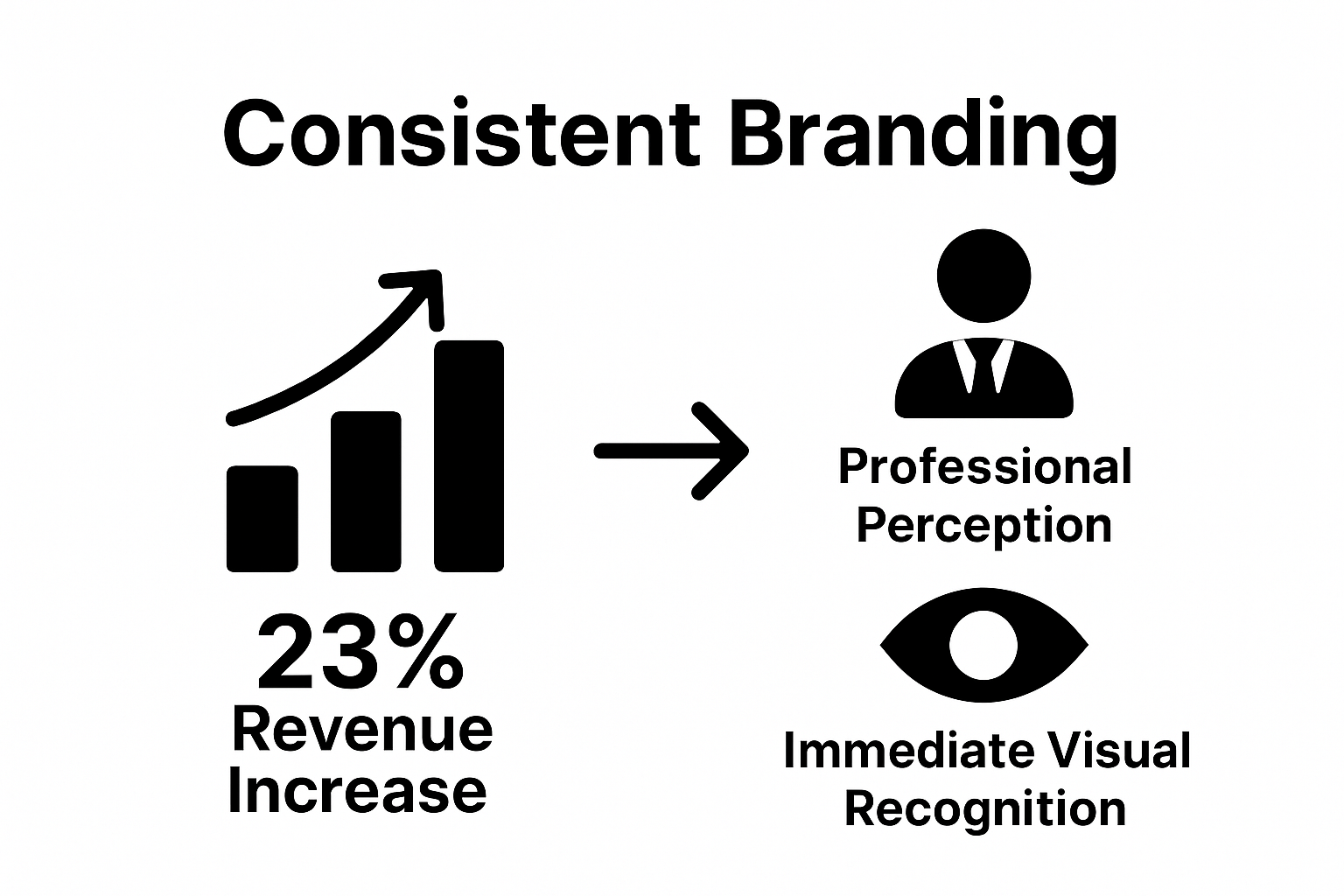
Companies leverage corporate identity signage to:
This table compares the distinct strategic purposes and outcomes of corporate identity signage, providing a clear overview of how signage contributes to brand success in different ways.
| Purpose | Description | Outcome |
|---|---|---|
| Immediate visual recognition | Instantly identifies and differentiates a brand in a crowded environment | Increased brand recall and awareness |
| Communicate organisational values | Uses visual elements to reflect company ethos and philosophy | Builds credibility and emotional connection |
| Establish professional credibility | Conveys quality and reliability through design standards and materials | Generates trust and confidence |
| Differentiate from competitors | Unique design distinguishes brand from others in the market | Enhances competitive advantage |
- Create immediate visual recognition
- Communicate organisational values
- Establish professional credibility
- Differentiate from competitors
Design Principles for Effective Corporate Identity Signage
Successful corporate identity signage requires thoughtful design integrating both aesthetic and functional considerations. This means selecting materials, colours, and design elements that not only look appealing but also communicate the organisation’s core identity and values effectively.
Professional designers focus on creating signage solutions that are memorable, scalable across different contexts, and capable of telling a compelling visual story about the business brand.

The Importance of Corporate Identity Signage in Branding
Corporate identity signage transcends mere visual communication, serving as a powerful strategic tool that transforms businesses from anonymous entities into recognisable, memorable brands. These visual markers create powerful psychological connections between organisations and their target audiences.
Building Brand Recognition and Trust
Effective corporate identity signage acts as a silent ambassador for a company, communicating professionalism, reliability, and core values without uttering a single word. Discover how signage impacts brand recognition in London businesses to understand its strategic importance.
Research from Environmental Psychology Journal indicates that visual branding elements can significantly influence potential customers’ perceptions within milliseconds of exposure. Key psychological impacts include:
- Establishing immediate credibility
- Creating emotional connections
- Triggering brand recall
- Differentiating from competitors
Strategic Visual Communication
Corporate identity signage functions as a comprehensive communication platform that extends beyond traditional marketing channels. It provides a tangible, physical representation of a brand’s narrative, integrating design elements like colour psychology, typography, and spatial positioning to convey complex organisational messages.
Companies strategically leverage these visual tools to:
- Reinforce brand positioning
- Create consistent visual language
- Enhance spatial user experience
- Communicate organisational culture
Long Term Brand Investment
Investing in high quality corporate identity signage represents more than an aesthetic choice it is a strategic business decision with measurable long term benefits. Professional signage solutions contribute to brand equity, helping organisations establish a strong, memorable visual identity that resonates across diverse audience segments and market environments.
Elements and Design Principles of Effective Signage
Corporate signage design represents a complex intersection of visual communication, brand psychology, and strategic messaging. Successful signage goes far beyond aesthetic appeal, functioning as a critical communication tool that connects organisations with their target audiences through carefully orchestrated visual elements.
Visual Composition and Brand Language
The foundational elements of effective corporate signage require meticulous attention to design principles that communicate brand personality. Explore advanced graphic design tips for business signage to understand nuanced design strategies.
Research from Safety+Health Magazine highlights critical design considerations:
- Clear, legible messaging
- Strategic colour selection
- Appropriate typography
- Consistent brand representation
- Proper visual hierarchy
- Compliance with regulatory standards
Technical Considerations in Signage Design
Technical elements play an equally crucial role in creating impactful corporate signage. Designers must balance aesthetic considerations with practical requirements such as visibility, durability, and adaptability across different environmental contexts.
Key technical factors include:
- Material selection
- Lighting integration
- Scale and proportionality
- Viewing distance optimization
- Environmental adaptability
Strategic Visual Communication Framework
Effective signage design operates as a sophisticated visual communication system that translates complex organisational narratives into immediate, comprehensible visual language. Professional designers approach signage as a strategic tool that communicates brand values, creates emotional connections, and guides user interactions within physical spaces.
The ultimate goal transcends mere visual representation it aims to create memorable, meaningful brand experiences that resonate with audiences instantaneously and authentically.
How Corporate Identity Signage Influences Customer Perception
Customer perception represents a complex psychological process where visual stimuli play a critical role in forming immediate and lasting impressions about an organisation. Corporate identity signage serves as a powerful mechanism for shaping these perceptions through strategic visual communication.
Psychological Foundations of Visual Branding
The human brain processes visual information exponentially faster than textual content, making corporate signage a profound tool for instantaneous brand communication. Check out our essential indoor sign design tips to understand how design nuances impact perception.
Research from Journal of Consumer Psychology reveals critical psychological mechanisms through which signage influences customer perception:
- Triggers immediate emotional responses
- Establishes subconscious trust indicators
- Creates perceptual shortcuts about brand quality
- Communicates organisational values without verbal explanation
Perception Transformation Mechanisms
Corporate identity signage operates through sophisticated perceptual transformation mechanisms that convert visual elements into meaningful brand narratives. Colour schemes, typography, spatial design, and material selection work synergistically to communicate complex organisational characteristics within milliseconds.
Key perception transformation elements include:
- Colour psychology engagement
- Spatial positioning strategies
- Material quality signalling
- Design consistency reinforcement
- Subliminal messaging techniques
Strategic Perception Management
Effective corporate identity signage transcends aesthetic considerations, functioning as a strategic perception management tool. Professional organisations understand that every visual element communicates a narrative about their brand culture, professionalism, and commitment to quality.
By meticulously crafting visual communication strategies, businesses can proactively shape customer perceptions, transforming passive visual interactions into powerful brand engagement experiences that resonate deeply with target audiences.
Real-World Examples of Corporate Identity Signage Success
Corporate identity signage represents more than theoretical design principles it embodies tangible strategic communication that transforms organisational perception and customer engagement. Successful implementations demonstrate how thoughtful visual branding can create profound connections between businesses and their audiences.
Healthcare and Professional Services Transformation
Healthcare and professional service organisations have pioneered innovative approaches to corporate identity signage. Explore modern visual displays for branding to understand cutting-edge implementation strategies.
Research from Nakhon Phanom University highlights compelling case studies of successful corporate identity development:
- Comprehensive visual communication strategies
- Integrated design approaches
- Stakeholder perception alignment
- Narrative driven visual identity
Corporate Environments and Spatial Branding
Modern organisations increasingly recognise corporate identity signage as a critical spatial communication tool. By transforming physical environments into immersive brand experiences, businesses create memorable interactions that extend beyond traditional marketing approaches.
Key successful implementation strategies include:
- Consistent visual language across environments
- Strategic placement of identity markers
- Adaptive design for different spatial contexts
- Multisensory brand experience creation
- Psychological engagement through design
Technology and Innovation Sector Approaches
Technology companies have been particularly innovative in developing corporate identity signage that reflects their dynamic and forward thinking ethos. These organisations understand that visual communication must evolve continuously to remain relevant and engaging.
Successful corporate identity signage in technology sectors demonstrates how visual branding can communicate complex organisational values through sophisticated design language that resonates with technologically sophisticated audiences.
Ready to Transform Your Brand’s First Impression?
Are you struggling to make your business stand out in today’s crowded market? The article showed how crucial corporate identity signage is for increasing trust, boosting recognition, and telling your brand’s story visually. With so many businesses vying for attention, relying on outdated or generic signage will not help you achieve professional credibility or customer loyalty. If you want your London, Essex, or Kent location to make a bold statement and reflect your company’s true identity, custom-designed signage is a must. See how strong visuals and strategic placement can reshape the way potential customers see your organisation by browsing the expertise at PromoSigns.

Take the next step and let real experts turn your brand values into striking sign solutions. Discover how custom signage and large format printing can help you establish lasting brand recognition. Contact us today and let’s create a visual identity that puts your business in front, now when every impression counts.
Frequently Asked Questions
What is corporate identity signage?
Corporate identity signage includes all visual elements that represent a company’s brand across various physical touchpoints, including exterior signs, interior wayfinding systems, and branded graphics.
Why is corporate identity signage important for a business?
Corporate identity signage is crucial because it enhances brand recognition, communicates organisational values, establishes professionalism, and helps differentiate a business from its competitors.
What are the key design principles for effective corporate identity signage?
Effective corporate identity signage should feature clear typography, a consistent colour palette, strategic placement for visibility, and high-quality materials that reflect professional standards.
How does corporate identity signage influence customer perception?
Corporate identity signage impacts customer perception by triggering emotional responses, establishing trust, and creating cognitive associations about brand quality, often within milliseconds of exposure.
Recommended
- Workplace Signs London | Studio Signages | Branding Solutions
- How to Choose the Right Commercial Sign for Your Business – PromoSigns.co.uk
- What Makes A Great Shop Sign – PromoSigns.co.uk
- Signage and Brand Recognition: Boost Your London Business in 2025 – PromoSigns.co.uk
