
Shop signage shapes the way customers see a business before they even step through the door and in such a noisy high street, standing out is a battle of impressions. Here is something most owners never expect. Effective signage can increase visibility by up to 40 percent according to the British Retail Consortium. That means the sign above your shop is not just decoration, it could be the difference between foot traffic and a missed opportunity.
Table of Contents
Table of Contents
- What Is Shop Signage And Its Importance?
- Factors Influencing The Cost Of Shop Signage
- Types Of Shop Signage And Their Costs
- The Role Of Design And Quality In Signage Pricing
- Real-World Examples Of Shop Signage Costs In The UK
Quick Summary
| Takeaway | Explanation |
|---|---|
| Shop signage enhances brand identity | Effective signage communicates a brand’s purpose and establishes its professional image to attract customers. |
| Quality materials impact pricing | The choice of materials significantly affects the durability and cost of signage, influencing overall investment. |
| Design complexity raises costs | More intricate designs require advanced techniques and increase production expenses, affecting final pricing. |
| Effective signage boosts visibility | Well-designed signs can increase business visibility by up to 50%, leading to higher foot traffic and revenue potential. |
| Consider long-term value | High-quality signage is a strategic investment that boosts brand perception and provides ongoing marketing benefits. |
What is Shop Signage and Its Importance?
Shop signage represents a critical communication tool for businesses, serving as a visual representation of a brand’s identity, purpose, and professional image. These strategically designed visual elements help businesses attract potential customers, provide essential information, and create a memorable first impression in the competitive marketplace.
The Core Purpose of Shop Signage
Shop signage functions as a silent yet powerful marketing instrument that communicates key business details instantly. Explore our comprehensive guide on what makes a great shop sign to understand the nuanced art of effective visual communication. These visual markers do far more than simply display a business name; they convey brand personality, communicate business type, and provide crucial navigational information for customers.
Key functions of effective shop signage include:
- Attracting customer attention
- Establishing brand identity
- Providing essential business information
- Creating a professional first impression
- Differentiating from competitors
Economic and Marketing Significance
According to research from the British Retail Consortium, effective signage can increase business visibility by up to 40%, directly impacting foot traffic and potential revenue. Well-designed shop signs act as a 24/7 marketing tool, communicating business offerings even when the premises are closed.
In the UK retail landscape, shop signage represents more than a mere decorative element. It is a strategic investment that reflects a business’s professionalism, creativity, and commitment to customer engagement. By combining aesthetic appeal with clear communication, businesses can transform their exterior appearance into a powerful marketing asset that speaks volumes about their brand identity and customer promise.
The table below compares key materials used for shop signage in the UK, highlighting their main characteristics and typical influence on project cost and durability.
| Material | Main Characteristics | Durability | Relative Cost |
|---|---|---|---|
| Aluminium | Lightweight, corrosion-resistant | High | Moderate |
| Acrylic | Versatile, modern appearance | Good | Mid-range |
| Stainless steel | Premium look, very durable | Very high | Higher |
| Wood | Traditional aesthetic, variable finish | Variable (depends on quality) | Variable |
| Composite | Blend of durability and cost-effectiveness | Good | Moderate |
Factors Influencing the Cost of Shop Signage
The overall cost of shop signage is determined by a complex interplay of multiple factors, each contributing significantly to the final pricing structure. Business owners must understand these variables to make informed decisions about their signage investments and budget effectively.
Material Selection and Quality
The choice of materials represents a primary driver of shop signage costs. Different materials offer varying levels of durability, aesthetic appeal, and long-term performance. Discover comprehensive insights into shop signage options for business success to understand how material selection impacts pricing.
Key material considerations include:
- Aluminium: Lightweight, corrosion-resistant, moderate cost
- Acrylic: Versatile, modern appearance, mid-range pricing
- Stainless steel: Premium look, high durability, higher expense
- Wooden signs: Traditional aesthetic, variable pricing based on quality
- Composite materials: Blend of durability and cost-effectiveness
Design Complexity and Manufacturing Requirements
Government regulations on commercial signage highlight that design intricacy directly influences production costs. More complex designs requiring advanced manufacturing techniques, intricate cutting, multiple colour layers, or specialized printing processes will inevitably increase overall expenses.
Additional factors affecting design complexity include:
- Number of colours used
- Intricacy of logo or graphic elements
- Need for custom fabrication
- Requirement for precision engineering
- Integration of advanced features like illumination
Installation and Additional Technical Specifications
Beyond materials and design, installation requirements and technical specifications significantly impact shop signage costs.
Factors such as location complexity, mounting surface, local planning permissions, and electrical requirements for illuminated signs can substantially modify the total investment.
Comprehensive pricing also considers professional design consultation, site survey, manufacturing, transportation, and expert installation. Business owners should view shop signage as a strategic investment that communicates brand identity and attracts potential customers, rather than merely a functional expense.
Types of Shop Signage and Their Costs
Shop signage encompasses a diverse range of visual communication solutions, each designed to meet specific business needs and aesthetic requirements. Understanding the various types of signage helps businesses make informed decisions about their visual branding and marketing investments.
Exterior Signage Options
Explore our comprehensive guide on shop front sign costs to gain deeper insights into exterior signage pricing. Exterior signs serve as the primary point of interaction between a business and potential customers, making their design and quality crucial for attracting foot traffic.
Key exterior signage types include:
- Fascia signs: Mounted directly on the building facade
- Projecting signs: Extending perpendicularly from the building
- Awning signs: Integrated with building entrance coverings
- Freestanding signs: Located near building entrances or on property
- Window graphics: Utilising storefront glass for additional messaging
Illuminated and Digital Signage Solutions
Research from the UK Retail Consortium indicates that illuminated signs can increase business visibility by up to 50% during evening hours. Modern signage technologies offer advanced options for businesses seeking dynamic and attention-grabbing visual communications.
Illuminated signage categories comprise:
- LED illuminated signs: Energy-efficient, bright, and long-lasting
- Neon signs: Classic aesthetic with vibrant colour options
- Backlit signs: Providing soft, even illumination
- Digital display signs: Offering dynamic content capabilities
- Lightbox signs: Creating uniform, high-visibility messaging
Interior and Supplementary Signage
Beyond exterior displays, businesses benefit from comprehensive signage strategies that extend inside their premises. Interior signs play crucial roles in wayfinding, branding, and creating cohesive visual experiences for customers.
Interior signage varieties include directional signs, menu boards, reception area displays, and branded wall graphics. Each type contributes to the overall customer experience and reinforces brand identity. The cost of these signs varies based on size, complexity, materials, and installation requirements, making it essential for businesses to carefully evaluate their specific signage needs and budget constraints.
The Role of Design and Quality in Signage Pricing
Design and quality represent pivotal determinants in shop signage pricing, transcending mere aesthetic considerations to become strategic business investments. The intricate relationship between design complexity, material selection, and manufacturing precision directly influences the overall cost and effectiveness of commercial signage.
Design Complexity and Customisation
Learn more about our comprehensive signage solutions for businesses to understand how design intricacy impacts pricing. Design complexity emerges as a critical factor in signage cost calculations, with more sophisticated designs requiring advanced technical expertise, precision manufacturing, and specialised production techniques.
Key design complexity considerations include:
- Intricate logo integration
- Multiple colour layers
- Advanced graphic elements
- Custom typography
- Unique structural configurations
Material Quality and Manufacturing Precision
Research from the Design Council highlights that superior material selection and manufacturing precision significantly enhance a sign’s longevity and visual impact. High-quality materials and meticulous production processes contribute substantially to the overall investment, reflecting a commitment to professional brand representation.
Primary quality factors influencing pricing include:
- Material durability
- Corrosion resistance
- Precision engineering
- Surface finish quality
- Manufacturing tolerances
Long-Term Value and Brand Perception
Business owners must view signage as a strategic investment rather than a mere expense. Professional, high-quality signage communicates brand credibility, attracts potential customers, and provides long-term marketing value. The initial higher cost of premium design and manufacturing translates into enhanced brand perception, increased visibility, and potential customer engagement.
Ultimately, the relationship between design, quality, and pricing is nuanced. While superior signage demands a higher initial investment, it delivers substantial returns through improved brand recognition, customer attraction, and a professional corporate image. Businesses should prioritise design quality and manufacturing precision as critical components of their visual marketing strategy.
Real-World Examples of Shop Signage Costs in the UK
Understanding the practical pricing landscape for shop signage requires examining real-world scenarios across different business types and signage requirements. These examples provide concrete insights into the financial investments businesses make to create impactful visual communications.
Small Business and Retail Signage Costs
Discover essential signage tips for London businesses to understand pricing nuances. Small businesses typically encounter a range of signage investment options that balance budget constraints with professional presentation.
Typical cost ranges for small business signage include:
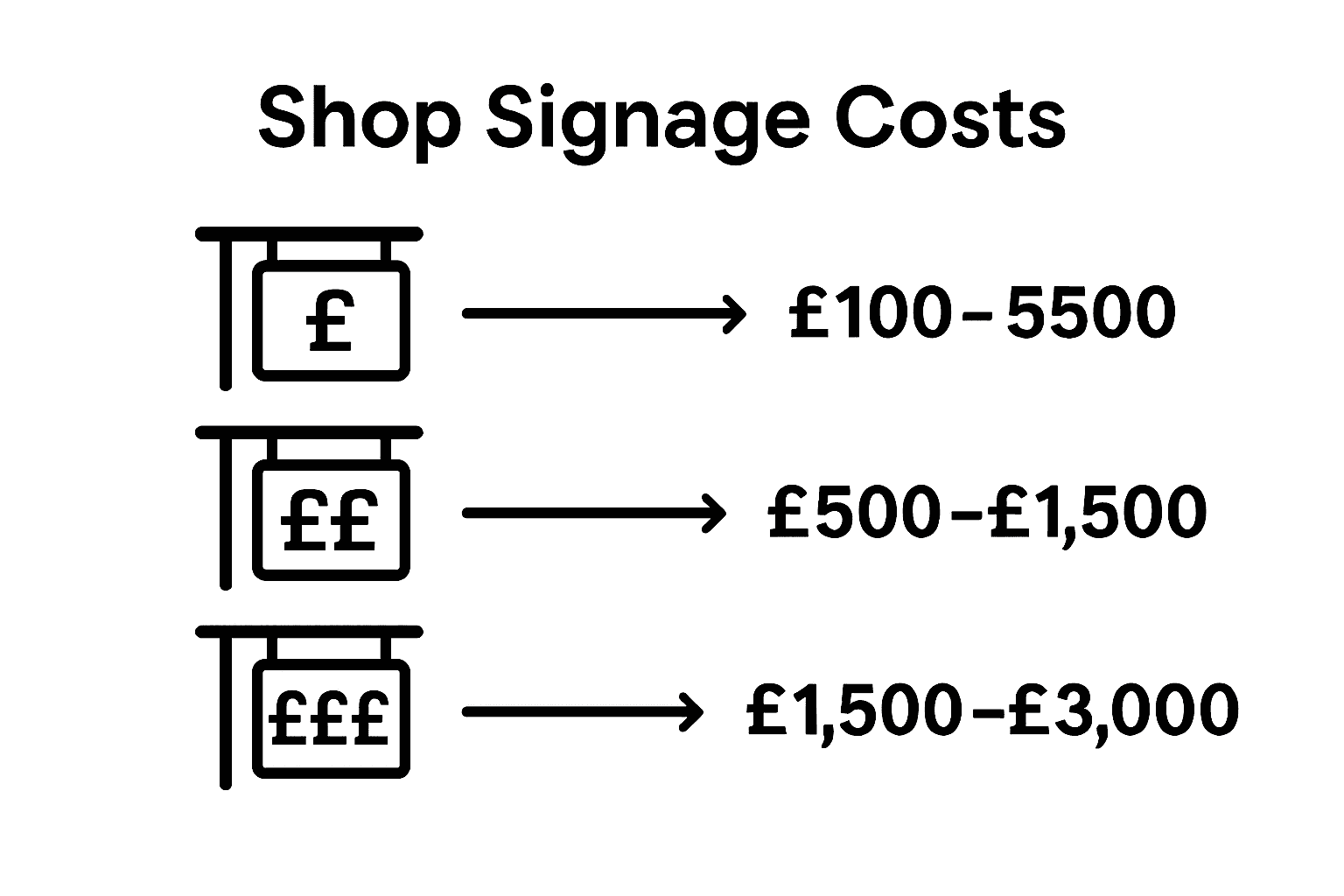
- Basic fascia signs: £500 – £1,500
- Simple window graphics: £250 – £750
- Projecting signs: £600 – £1,800
- Illuminated storefront signs: £1,200 – £3,500
- Customised branded signs: £800 – £2,500
Commercial and Corporate Signage Investments
Market research from the British Retail Consortium reveals that larger businesses and corporate entities invest significantly more in sophisticated signage solutions. These investments reflect the complex branding and communication requirements of established organisations.
Corporate signage pricing typically encompasses:
- Comprehensive building facade signs: £5,000 – £15,000
- Advanced digital display systems: £3,500 – £25,000
- Multi-location branding packages: £10,000 – £50,000
- High-end illuminated corporate signage: £7,500 – £30,000
- Complex architectural signage solutions: £8,000 – £40,000
Factors Affecting Real-World Pricing
Beyond basic categorisations, multiple variables influence actual signage costs. Location, complexity, materials, local regulations, and installation challenges contribute to pricing variations. Urban centres like London typically experience higher production and installation expenses compared to smaller towns, reflecting increased labour and material costs.
Businesses should approach signage investments strategically, recognising that while upfront costs might seem significant, professional signage delivers substantial long-term marketing value. The right sign not only communicates brand identity but also serves as a continuous, silent ambassador for the business, attracting potential customers and establishing professional credibility.
The following table summarises typical cost ranges for different types of shop signage in the UK, offering a quick reference for small business and corporate signage investments.
| Signage Type | Typical Cost Range (Small Business) | Typical Cost Range (Commercial/Corporate) |
|---|---|---|
| Basic fascia sign | £500 – £1,500 | £5,000 – £15,000 |
| Window graphics | £250 – £750 | £1,000 – £5,000 |
| Projecting sign | £600 – £1,800 | £2,500 – £7,500 |
| Illuminated storefront sign | £1,200 – £3,500 | £7,500 – £30,000 |
| Customised branded sign | £800 – £2,500 | £8,000 – £40,000 |
| Digital display system | N/A | £3,500 – £25,000 |
| Multi-location branding package | N/A | £10,000 – £50,000 |
Ready for Shop Signage Solutions That Make an Impact?
Worried about the complex costs and materials involved in quality shop signage, as outlined in the article above? You are not alone. Many UK businesses struggle to balance budget, brand professionalism and long-term value. Poor signage can limit foot traffic and fail to create that essential first impression. Fortunately, our team understands the real challenges of selecting materials and design features that bring your vision to life. At PromoSigns, we specialise in delivering custom signs that work for your audience and budget.

Take the confusion out of shop signage investments and partner with specialists who guide you from first ideas to flawless installation. Our bespoke solutions cover everything from illuminated signs to large format printing for London, Essex and Kent. Do not risk your brand visibility or investment with generic options. Visit our website now and request your free consultation. Make your signage project a strategic asset that draws attention every day.
Frequently Asked Questions
What factors influence the cost of shop signage?
The cost of shop signage is influenced by material selection, design complexity, manufacturing requirements, and installation specifications. Each of these factors can significantly modify the overall pricing.
How can shop signage enhance my business’s visibility?
Effective shop signage can enhance business visibility by attracting customer attention, establishing brand identity, and providing essential information, potentially increasing foot traffic by up to 40%.
What types of materials are commonly used for shop signage?
Common materials include aluminium, acrylic, stainless steel, wood, and composite materials. Each offers varying levels of durability, aesthetic appeal, and cost implications.
Why is the design of shop signage important?
The design of shop signage is crucial as it communicates brand personality and message. Complex designs often require higher investment but can lead to enhanced customer engagement and brand perception.
Recommended
- Cost of Shop Signage in London: 2025 Guide for Businesses – PromoSigns.co.uk
- How Much Does a Shop Front Sign Cost in the UK? – PromoSigns.co.uk
- How Much Do Outdoor Business Signs Cost? | Promo Signs
- Shop Signage Basics 2025: Essential Tips for London Businesses – PromoSigns.co.uk
- Infos – MIRKIT LED
